
When we test our latest sprayer models in the fields outside Xi’an, we see firsthand how vital clear video feeds are hop frequencies 1. A blurry image can cause a pilot to miss a power line, leading to costly crashes and downtime during the critical spraying season critical spraying season 2.
To ensure operational safety, ask vendors for specific digital resolutions like 1080p or 720p rather than vague "HD" labels. You must also inquire about latency metrics and field of view (FOV) to ensure the camera supports real-time obstacle avoidance effectively.
Here is how you can evaluate these technical specifications to ensure you get the right equipment.
What is the minimum FPV resolution I need for effective field monitoring and safety?
Our engineering team often finds that pilots struggle to spot thin wires on standard screens. Without sharp visuals, avoiding power lines and fences becomes a dangerous guessing game avoiding power lines 3 that puts your entire investment at risk.
For safe field monitoring, prioritize a digital resolution of at least 720p (1280×720) or 1080p (1920×1080). If the system uses analog transmission, insist on a minimum of 600 TVL. This level of clarity is essential for identifying thin obstacles like fences and power lines from a safe distance.
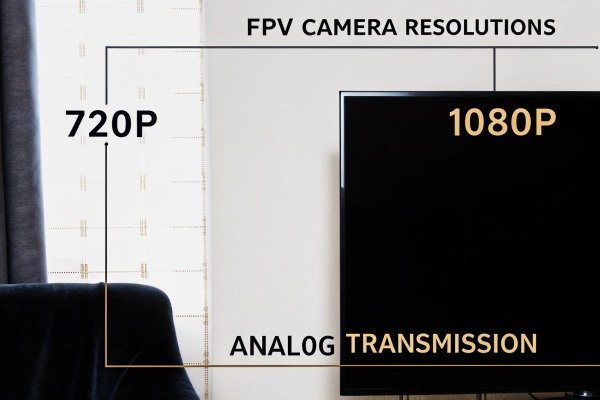
To truly understand what you are buying, you must distinguish between the camera's sensor resolution and the transmission resolution. Many suppliers will list a "4K camera" on the spec sheet, but the video link to your ground station might only support 720p. For agricultural pilots, the resolution you see on the screen is the only one that matters for safety.
Analog vs. Digital Systems
In the drone industry, we generally categorize FPV systems into two types: Analog and Digital. While analog systems have historically been popular for their low latency, the agricultural sector is moving rapidly toward digital high-definition systems.
- Analog Systems: Measured in TV Lines (TVL). A rating Lux rating 4 of 600 TVL is the practical limit for standard analog transmission. Anything advertised above 1000 TVL often yields diminishing returns because the transmission bandwidth cannot carry that much detail.
- Digital Systems: Measured in pixels. A 1080p (1920×1080) feed provides significantly more detail than analog. This allows you to spot "negative obstacles" like ditches or "thin obstacles" like guy wires on utility poles.
Field of View (FOV) Interactions
Resolution does not exist in a vacuum. You must ask about the Field of View (FOV). Field of View 5 A very wide FOV (e.g., 150 degrees) stretches the image, which can make objects in the center appear smaller and pixelated. For agriculture, we recommend a balance. A FOV between 120° and 130° usually offers good peripheral awareness without distorting the center of the image where you are flying.
Why 480p is Dangerous
In our export experience, we have seen buyers choose cheaper models with 480p resolution. At 5 meters per second, a 480p feed turns a power line into a blur that blends into the background trees. By the time the pilot realizes the obstacle is there, it is often too late to brake. Investing in 1080p is not just about pretty pictures; it is an insurance policy against collisions.
Comparison of FPV System Standards
| الميزة | Analog Standard | Digital Standard (Entry) | Digital Standard (Pro) |
|---|---|---|---|
| Measurement | TV Lines (TVL) | Pixels | Pixels |
| Common Spec | 600 – 800 TVL | 720p (1280×720) | 1080p (1920×1080) |
| Clarity | Grainy, prone to static | Clear, sharp edges | Very sharp, high detail |
| أفضل حالة استخدام | Racing, very low latency needs | General scouting | Precision spraying, complex environments |
| Wire Visibility | Poor (< 10 meters) | Good (10-20 meters) | Excellent (> 20 meters) |
How does high FPV resolution affect the stability of the video transmission link?
We calibrate our flight controllers to carefully balance image clarity with transmission speed. High-definition video is useless if the signal lags, freezes, or disconnects when the drone flies behind a row of trees.
High resolution demands more bandwidth, which can destabilize the video link at long ranges or in areas with interference. You should ask if the system supports dynamic resolution adjustment to maintain a stable, low-latency connection (<40ms) when signal strength fluctuates.

When you ask suppliers about resolution, you must immediately follow up with questions about bitrate and latency. A 1080p video feed requires a large amount of data to be sent wirelessly from the drone to the remote controller. In an open field, this works perfectly. However, on a farm with tall crops, farm buildings, or hills, the signal can degrade.
The Bandwidth Trade-off
If a camera is locked at 1080p/60fps, it floods the transmission channel. If the signal gets weak, the video will freeze. In agriculture, a frozen screen for even two seconds can result in the drone drifting into a crop canopy or an obstacle.
- Static Bitrate: The camera forces high resolution regardless of signal strength. This is risky.
- Dynamic Bitrate: The system automatically drops the resolution (e.g., from 1080p to 720p) or frame rate to keep the video fluid.
Acceptable Latency Limits
For agricultural spraying, the drone is often flying close to the ground (1.5 to 3 meters). At this altitude, reaction time is critical.
- Ideal Latency: Below 40ms. This feels instantaneous to the human brain.
- Acceptable Latency: 40ms to 80ms. Usable for standard automated routes.
- Dangerous Latency: Above 120ms. If you move the stick and the drone on the screen reacts half a second later, you cannot manually fly safely.
Transmission Technology
Ask your supplier what transmission protocol they use. Modern systems use OcuSync (DJI) or similar proprietary technologies OcuSync 6 that hop frequencies (2.4GHz/5.8GHz) to find the clearest channel. A high-resolution camera paired with an old Wi-Fi-based transmission system is a recipe for disaster. The resolution is only as good as the link that carries it.
Impact of Resolution on Performance
| Resolution Setting | Bandwidth Required | Latency Risk | Ideal Environment |
|---|---|---|---|
| 1080p @ 60fps | عالية جداً | متوسط | Open fields, Line-of-sight (LOS) |
| 1080p @ 30fps | عالية | منخفضة | Standard farm operations |
| 720p @ 30fps | متوسط | منخفضة جداً | Long-range, obstacle-heavy areas |
| 480p (Analog) | منخفضة | Near Zero | Racing or extreme interference zones |
Should I prioritize low-light sensitivity over resolution for early morning flights?
Farmers using our drones often prefer to spray at dawn or dusk when the wind is calm. However, we have found that high megapixel counts often fail if the sensor cannot handle these dim lighting conditions.
Yes, prioritize low-light sensitivity and Wide Dynamic Range (WDR) over pure pixel count for dawn or dusk operations. A 1080p sensor with a high lux rating provides better visibility in shadows than a 4K camera with poor dynamic range.

Resolution tells you how many pixels are in the image, but it does not tell you the quality of those pixels. In the early morning or late evening, light is scarce. A camera with extremely high resolution (like 4K) often packs tiny pixels onto a small sensor. These small pixels capture less light, resulting in a dark, grainy image where obstacles are hidden.
Understanding Lux Ratings
When reviewing specifications, look for the "Minimum Illumination" or Lux rating Lux rating 7.
- Standard Camera: 1.0 Lux or higher. Needs daylight.
- Low-Light Camera: 0.01 Lux to 0.1 Lux. Can see clearly at twilight.
- Starlight Camera: < 0.001 Lux. Can see with just moon or starlight.
For agricultural drones, a "Starlight" or superior low-light sensor is more valuable than 4K resolution. It allows you to extend your working hours, starting earlier in the morning and finishing later in the evening.
The Importance of WDR (Wide Dynamic Range)
Agricultural fields are high-contrast environments. high-contrast environments 8 You might be flying towards a rising sun (extremely bright) while looking down at dark green crops in a shadow.
- Without WDR: The sky is white (blown out) and the ground is black (underexposed). You cannot see the electricity pole in the shadow.
- With WDR: The camera balances the light, allowing you to see details in both the bright sky and the dark shadows simultaneously.
Sensor Size Matters
Ask the manufacturer about the sensor size sensor size 9. A 1/2-inch sensor is generally better than a 1/3-inch sensor because it has a larger surface area to collect light. Do not be fooled by marketing that screams "20 Megapixels" if the sensor is tiny. A 2MP (1080p) camera with a large sensor will outperform a 20MP camera with a small sensor every time in low-light scenarios.
How can I confirm the actual FPV image quality before placing a large order?
Before we ship huge orders to the US or Europe, we encourage clients to look beyond the spec sheet. Specifications on paper often differ from real-world performance, especially regarding how the video feed handles vibration and glare.
Request raw flight footage recorded directly from the ground station rather than promotional videos. Ask for a live video demonstration to verify latency and clarity in varying lighting conditions, ensuring the feed matches your operational requirements.

It is common for marketing videos to use footage from a separate, high-quality GoPro or action camera mounted on the drone, rather than the actual FPV feed the pilot sees. This can be misleading. To protect your purchase, you need to verify the feed that actually controls the drone.
The "DVR" Test
Ask the supplier for "DVR footage" or "screen recording footage" from the remote controller. This footage shows exactly what the pilot sees, including:
- OSD (On-Screen Display): Battery voltage, height, speed overlays.
- Interference: Digital breakup or static.
- Real Resolution: The actual sharpness of the video link.
If the supplier refuses or only sends cinematic 4K video files, be cautious. They may be hiding poor transmission quality.
Chemical Resistance Checks
This is a specific question for agricultural drones that many buyers forget. The FPV camera lens will be exposed to pesticide mist pesticide mist 10.
- اسأل: "Is the camera lens glass or plastic?"
- اسأل: "Does it have a coating resistant to agricultural chemicals?"
Plastic lenses can get etched by harsh chemicals over time, turning permanently cloudy. Glass lenses with proper coatings are essential for long-term durability.
Live Demonstration Protocol
If you cannot visit the factory, arrange a live video call via WhatsApp or Zoom. Ask the sales representative to:
- Turn on the drone and connect the remote.
- Wave their hand in front of the camera to show latency.
- Point the camera at a bright window and then a dark corner to test the WDR and auto-exposure speed.
Verification Checklist for Buyers
| خطوة التحقق | ما الذي تطلبه | تحذير العلم الأحمر |
|---|---|---|
| Footage Source | "Send me a screen recording from the remote controller." | Vendor sends a clean .MP4 file with no flight data overlay. |
| Latency Check | "Wave your hand in front of the camera on a live video call." | Significant delay between the hand moving and the screen updating. |
| المتانة | "What is the IP rating and lens material?" | Vendor says "standard plastic" or cannot confirm IP67 protection. |
| الاهتزاز | "Show me a flight at full speed." | The video image shakes or has "jello" effects (rolling shutter issues). |
الخاتمة
Correctly asking about FPV resolution requires looking beyond simple megapixel numbers. By verifying the digital resolution, checking low-light performance (Lux/WDR), confirming transmission latency, and demanding raw ground station footage, you ensure your agricultural drone is safe and efficient for daily operations.
الحواشي
1. Educational resource explaining frequency hopping technology. ︎
2. Official government resource on crop production cycles. ︎
3. Official safety guidance on avoiding overhead power lines during agricultural work. ︎
4. ISO standard for measuring low-light performance in electronic imaging. ︎
5. General background on the concept of FOV in optical systems. ︎
6. Technical documentation for DJI’s proprietary long-range transmission technology. ︎
7. Industry leader definition of light sensitivity ratings. ︎
8. Educational explanation of dynamic range in digital imaging sensors. ︎
9. Major manufacturer explanation of image sensor technology. ︎
10. Government guidelines on pesticide safety and exposure. ︎

 English
  Spanish
  German
  French
  Dutch
Dutch  Arabic
