
When our production team ships out طائرات زراعية بدون طيار 1, quality concerns keep buyers awake at night. You spend months finding the right supplier, only to receive units with faulty motors or sensors that fail mid-flight. This damages your reputation with farmers and costs thousands in returns.
To set AQL standards for agricultural drones, define critical defects at 0% acceptance (flight safety issues), major defects at 1.0-2.5% (sensor accuracy, motor performance), and minor defects at 4.0% (cosmetic issues). Document these thresholds in your purchase contract and conduct pre-shipment inspections using ISO 2859-1 sampling tables.
Below, we break down exactly how to choose the right AQL levels, define defects properly, align your OEM requirements, and verify supplier compliance. Let’s get into the details.
What AQL levels should I choose to ensure the durability of my agricultural drones?
Durability failures in agricultural drones cost distributors more than initial defects. Our engineers have seen drones returned after just one season because buyers chose lenient AQL levels. The real problem starts when components degrade faster than expected.
For agricultural drone durability, select AQL 0% for critical flight systems (battery management, ESCs), AQL 1.0% for major components (motors, GPS modules, spray pumps), and AQL 2.5-4.0% for minor parts (housing, decals). Tighter AQL levels on wear-prone components prevent costly field failures and warranty claims.

Understanding AQL Basics for Drone Buyers
AQL stands for Acceptance Quality Limit 2. It tells you the maximum percentage of defective units you will accept in a batch. When our quality control team tests a shipment of 500 drones, we pull a sample of 50 units. If the defects exceed your agreed AQL threshold, the batch fails inspection.
إن ISO 2859-1 standard 3 provides sampling tables. These tables tell you how many units to inspect and how many defects are acceptable. Here is a simplified reference:
| Lot Size | Sample Size | AQL 1.0% Accept/Reject | AQL 2.5% Accept/Reject | AQL 4.0% Accept/Reject |
|---|---|---|---|---|
| 151-280 | 32 | 1/2 | 2/3 | 3/4 |
| 281-500 | 50 | 1/2 | 3/4 | 5/6 |
| 501-1200 | 80 | 2/3 | 5/6 | 7/8 |
Matching AQL Levels to Drone Components
Not all parts deserve the same AQL level. Flight-critical systems need zero tolerance. A single battery management failure can cause a crash that destroys a $15,000 drone and damages crops.
| فئة المكوّنات | أمثلة | Recommended AQL | Reason |
|---|---|---|---|
| Critical Safety | Battery cells 4, ESC boards, flight controllers | 0% | Any failure causes crashes or fires |
| Major Performance | Brushless motors, GPS modules, spray pumps, RTK systems | 1.0% | Failures stop operations, require field repairs |
| Minor Functional | Landing gear, LED indicators, wire harnesses | 2.5% | Failures cause inconvenience, not danger |
| Cosmetic | Paint finish, decals, packaging | 4.0% | Visual issues only, no functional impact |
Why Tighter AQL Costs Less Long-Term
Some buyers push for AQL 4.0% across all components to reduce unit price. This is a mistake. When we track warranty claims, drones inspected at AQL 1.0% for motors have 60% fewer returns in the first year. The slightly higher inspection cost saves thousands in shipping, repairs, and customer complaints.
Agricultural drones face harsh conditions. Dust, humidity, and chemical exposure accelerate wear. Setting strict AQL levels on motors and seals ensures your products survive real farm use.
How do I define critical and major defects for drone components in my quality inspection plan?
Without clear defect definitions, inspections become arguments. Our export team has seen buyers reject entire shipments over scratches while ignoring loose motor mounts. The solution is a written defect classification before production starts.
Define critical defects as any issue causing safety hazards or total product failure (battery swelling, broken propeller locks, faulty emergency stops). Major defects impair core functions (GPS drift beyond 2cm, spray rate variance over 10%, motor current draw outside spec). Minor defects affect appearance or non-essential features only.

Creating Your Defect Classification Document
A defect classification document 5 lists every potential issue and assigns it a category. This document becomes part of your purchase contract. Both you and your supplier sign it before production.
Start with three columns: defect description, category, and acceptance criteria. Be specific. "Motor problem" is too vague. "Motor draws more than 15A at 50% throttle" is measurable.
Sample Defect Classification for Agricultural Drones
| Defect Description | الفئة | معايير القبول |
|---|---|---|
| Battery cell swelling or leakage | الحرجة | 0% – Reject any unit |
| Propeller lock mechanism fails to secure | الحرجة | 0% – Reject any unit |
| Emergency stop button non-functional | الحرجة | 0% – Reject any unit |
| GPS module position drift exceeds ±5cm RTK mode | الرائد | AQL 1.0% |
| Spray pump flow rate varies more than ±10% from calibration | الرائد | AQL 1.0% |
| Motor KV rating outside ±3% of specification | الرائد | AQL 1.0% |
| Camera gimbal has visible wobble at rest | الرائد | AQL 2.5% |
| Landing gear leg has cosmetic scratch | قاصر | AQL 4.0% |
| Decal placement misaligned by more than 5mm | قاصر | AQL 4.0% |
Testing Methods for Each Defect Type
Your classification document should also specify how to test for each defect. This prevents disputes during inspection.
For battery cells, require a capacity test at 0.5C discharge rate. For GPS accuracy 6, demand a 10-minute static test with PDOP logging. For spray pumps, specify a calibration test at three flow rate settings.
When we prepare drones for export to the United States, our QC team runs a 47-point checklist. Each point has a defined test method, pass/fail criteria, and category assignment. This clarity speeds up inspections and eliminates subjective judgments.
Involving Your Supplier in Defect Definition
Share your draft classification with your supplier before finalizing. Good manufacturers will suggest additions based on their production experience. They know which components have higher defect rates and can recommend appropriate AQL levels.
This collaboration builds trust. It also ensures your supplier understands exactly what you expect. When inspection day arrives, there are no surprises.
What steps should I take to align my OEM branding requirements with strict AQL standards?
OEM branding adds complexity to quality control. When you put your logo on a drone, your reputation depends on that product. Our OEM clients often discover that branding defects hurt their image more than functional issues.
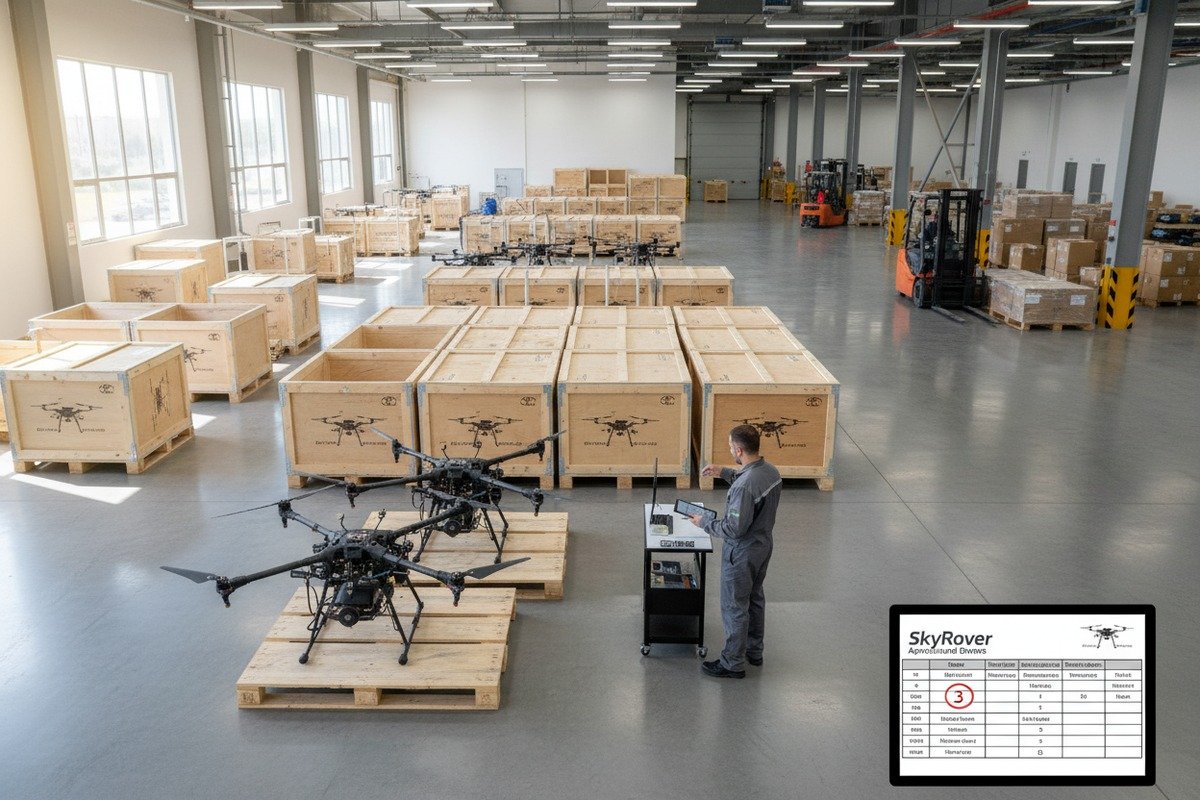
To align OEM branding with AQL standards, add branding elements to your defect classification (logo placement, color accuracy, packaging quality), set AQL 2.5% for major branding defects and 4.0% for minor cosmetic variations, require pre-production samples for approval, and include brand standards in your quality control checklist.
Why Branding Quality Matters for Distributors
Your customers see the logo first. A crooked decal or faded print signals low quality before they even power on the drone. When we work with US distributors, they consistently rank branding consistency as a top-five concern.
The challenge is that branding happens late in production. Decals go on after assembly. Packaging comes last. If you only inspect flight systems, you might receive perfectly functional drones in damaged boxes with peeling logos.
Branding Elements to Include in AQL Inspection
| Branding Element | Major Defect Criteria | Minor Defect Criteria |
|---|---|---|
| Logo decal | Missing, wrong color, placement error >10mm | Placement error 5-10mm, minor bubbling |
| Product label | Missing required info, illegible text | Minor scratches, slight misalignment |
| Packaging box | Structural damage, wrong product name | Scuffed corners, minor printing variation |
| دليل المستخدم | Missing pages, wrong language | Minor typos, slight color variation |
| Remote controller branding | Logo missing or wrong | Logo slightly off-center |
Pre-Production Sample Approval Process
Never skip sample approval. Before mass production begins, request two or three fully branded units. Inspect them carefully. Check logo colors against your brand guidelines. Measure decal placement. Review packaging print quality.
Our production team provides digital proofs and physical samples to OEM clients. This catches problems early. Changing a logo position costs almost nothing before production. Changing it after 500 units are assembled costs a fortune.
Integrating Brand Standards into Your QC Checklist
Your third-party inspector needs brand references. Send them your logo files, Pantone color codes, and placement diagrams. Without these references, they cannot accurately judge branding defects.
Include branding inspection as a separate section in your QC checklist. Do not bury it under "cosmetic defects." Branding deserves its own attention because it directly affects your market reputation.
When we ship OEM orders, our final inspection includes a brand compliance check. We photograph every labeled surface and compare against approved samples. This documentation protects both parties if disputes arise later.
How can I verify that my Chinese supplier is consistently meeting my agreed-upon AQL benchmarks?
Trust but verify. Even good suppliers have bad days. When our export team works with repeat customers, we recommend ongoing verification rather than one-time inspections. Consistency matters more than a single good batch.
Verify supplier AQL compliance through pre-shipment inspections by third-party agencies, regular factory audits, statistical tracking of defect rates across shipments, and contractual penalties for AQL failures. Require inspection reports with photos, measurements, and defect counts for every order.

Choosing a Third-Party Inspection Agency
Do not rely solely on your supplier's internal QC reports. Third-party inspectors 7 provide independent verification. Companies like SGS, Bureau Veritas, and Intertek have offices in China and experience with drone inspections.
When selecting an agency, ask about their drone inspection experience. General inspectors may miss technical defects. Look for agencies that can test flight systems, not just count scratches.
What to Include in Your Inspection Protocol
| Inspection Stage | التوقيت | Focus Areas |
|---|---|---|
| Initial Production Check | After 10-20% completion | Raw materials, component quality, assembly process |
| During Production Inspection | At 50-60% completion | Workmanship, defect trends, production pace |
| فحص ما قبل الشحن | After 100% completion, before packing | Final product quality, AQL sampling, branding |
| Loading Supervision | During container loading | Packaging integrity, quantity verification |
Tracking Defect Rates Over Time
One inspection tells you about one batch. Patterns tell you about supplier reliability. Keep a spreadsheet of defect rates from every shipment. Track by defect category and component type.
If motor defects increase from 0.5% to 2.0% over three orders, something changed. Maybe the supplier switched to a cheaper motor vendor. Maybe a skilled technician left. Either way, the data tells you to investigate.
Our quality team maintains defect databases for every client. When rates trend upward, we identify root causes before the next production run. This proactive approach catches problems early.
Contractual Protections for AQL Compliance
Your purchase agreement 8 should include AQL requirements and consequences for non-compliance. Common terms include:
- Supplier pays for re-inspection if first inspection fails
- Buyer can reject entire lot if critical defects found
- Supplier covers rework costs for defects above agreed AQL
- Repeated AQL failures allow contract termination without penalty
These terms create accountability. Suppliers who know you will enforce AQL standards maintain higher quality than those who expect you to accept whatever ships.
Building Long-Term Supplier Relationships
Verification does not mean distrust. The best supplier relationships combine clear standards with open communication. When we work with long-term clients, we share production schedules, QC reports, and improvement initiatives voluntarily.
Visit your supplier's factory at least once. See their production line, meet their QC team, and discuss quality expectations face-to-face. This investment in the relationship pays dividends through better communication and faster problem resolution.
الخاتمة
Setting AQL standards for agricultural drones protects your investment and reputation. Define clear defect categories, choose appropriate AQL levels for each component, document everything in your purchase contract, and verify compliance through independent inspections. These steps ensure the drones you purchase perform reliably in the field.
الحواشي
1. Discusses the various uses and benefits of drones in agriculture. ︎
2. Provides a comprehensive definition and explanation of the Acceptance Quality Limit (AQL). ︎
3. Links to the official International Organization for Standardization page for ISO 2859-1. ︎
4. Offers information on safety standards and regulations for battery cells. ︎
5. Explains the process and importance of identifying and classifying product defects in quality control. ︎
6. Provides detailed information on GPS accuracy, factors affecting it, and performance standards. ︎
7. Describes the services and benefits of engaging third-party inspectors for quality control. ︎
8. Outlines essential quality clauses and requirements typically found in a purchase agreement. ︎

 English
  Spanish
  German
  French
  Dutch
Dutch  Arabic
