
Every week, our engineering team receives calls from infrastructure managers who lost thousands after drone data breaches NDAA-compliant hardware 1. The fear is real. Unsecured firefighting drones can expose critical facility layouts to hackers.
To prioritize data security when sourcing firefighting drones, demand NDAA-compliant hardware, AES-256 encryption for all data links, air-gapped operational modes, and Zero-Trust Network Architecture integration. Verify vendor certifications, conduct firmware audits, and ensure encrypted onboard storage with auto-wipe capabilities.
This guide walks you through every step. We will cover verification methods, required certifications, custom software development, and secure update protocols Zero-Trust Network Architecture 2. Let’s protect your infrastructure together.
How can I verify that the drone's data transmission protocols are secure enough for my critical infrastructure projects?
When we ship firefighting drones to power plants and chemical facilities, clients always ask this question first. They worry about data interception. They fear GPS spoofing 3. These concerns are valid.
Verify transmission security by testing AES-256 end-to-end encryption on telemetry and video feeds, checking for RF fingerprinting against spoofing, confirming air-gapped flight modes, and requesting documented penetration test results from your vendor.
Understanding Transmission Vulnerabilities
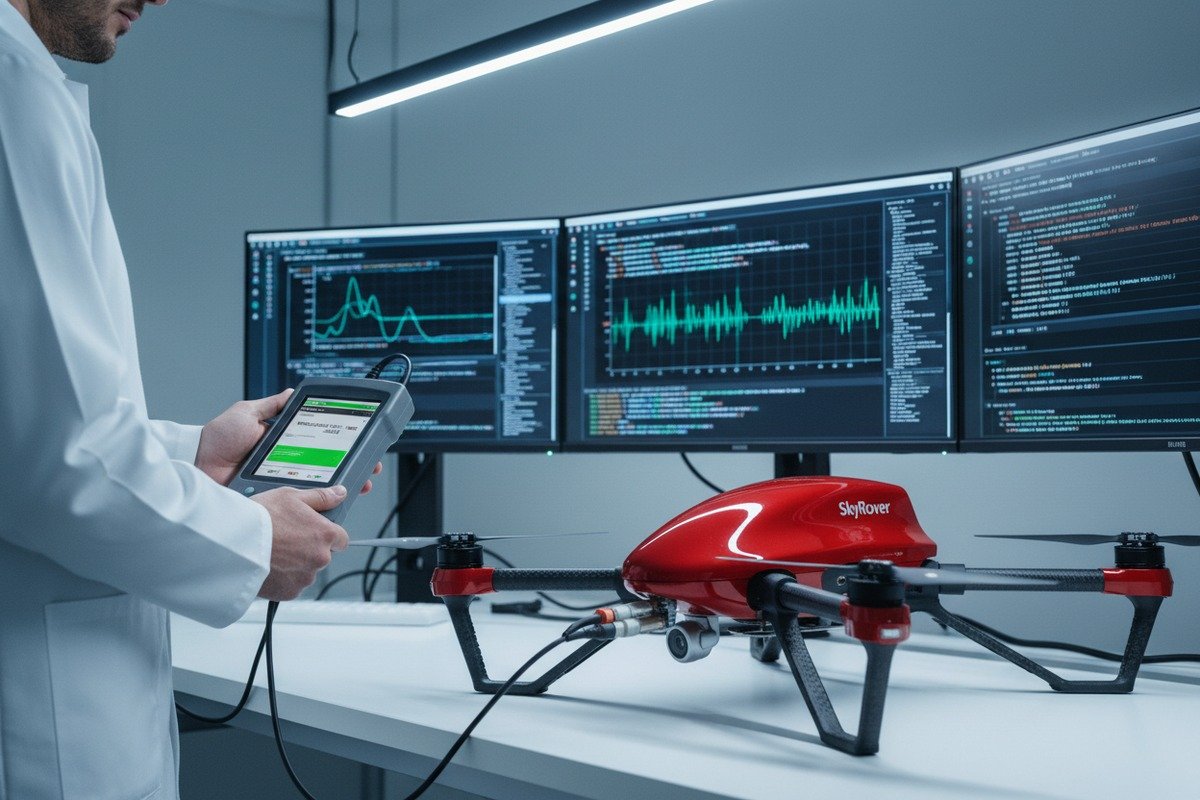
Firefighting drones transmit three main data types: telemetry, command signals, and video feeds. Each channel presents attack surfaces. Unencrypted links allow hackers to intercept thermal imaging data of your facility. GPS spoofing can redirect your drone into restricted zones. RF jamming can disable your fleet mid-mission.
Our production line tests every drone against these threats before shipping. But you should verify these protections yourself. Here is what to check.
Key Verification Steps
First, request encryption documentation. Your vendor must prove AES-256 bit encryption covers all data channels. This includes the C2 link between pilot and drone. It includes live video streams. It includes stored flight logs.
Second, test air-gapped modes. Your drone should operate without internet connection. Data should stay on local encrypted storage. This prevents cloud-based interception during sensitive missions.
Third, verify anti-spoofing measures. RF fingerprinting technology 4 helps your drone recognize legitimate control signals. It rejects fake GPS coordinates from attackers.
Verification Checklist Table
| Security Feature | What to Request | ما أهمية ذلك |
|---|---|---|
| Encryption Standard | AES-256 certification documents | Prevents data interception |
| Air-Gapped Mode | Live demonstration without internet | Stops cloud-based attacks |
| RF Fingerprinting | Technical specification sheets | Blocks GPS spoofing |
| Penetration Testing | Third-party audit reports | Confirms real-world security |
| Signal Obfuscation | Protocol documentation | Defeats RF jamming attempts |
Practical Testing Methods
When our clients visit the factory, we run live demonstrations. We attempt mock attacks on our own drones. We show clients that encrypted channels resist interception. You should demand similar demonstrations.
Ask your vendor to simulate a GPS spoofing attack. Watch how the drone responds. A secure drone will reject false coordinates. It will alert the operator. It will maintain its mission.
Also request penetration test reports. Independent security firms should have tested the drone's software stack. These reports reveal vulnerabilities. They show how the vendor fixed them.
What specific security certifications should I demand from a drone manufacturer to ensure my data remains private?
Our export team prepares certification packages for every shipment to the US and Europe. Without proper certifications, your drone may violate federal procurement rules. Your data may flow through compromised components.
Demand NDAA Section 848 compliance, TAA certification for trusted component sourcing, FCC authorization for RF emissions, and SOC 2 Type II audits for data handling. Also require a Software Bill of Materials listing all third-party code components.

Essential Hardware Certifications
The National Defense Authorization Act matters most. NDAA Section 848 6 bans federal agencies from buying drones with components from certain countries. Even private infrastructure operators should follow this standard. It ensures your drone's chips and sensors come from trusted supply chains.
Trade Agreements Act certification proves component origin. TAA-compliant drones use parts from approved nations. This reduces backdoor risks in hardware.
FCC certification confirms your drone's radio frequencies meet US standards. It also ensures the drone won't interfere with other critical systems at your facility.
Software and Data Certifications
SOC 2 Type II certification 7 addresses data handling. A vendor with this certification has proven security controls over time. Not just at one audit. Over continuous operation.
The Software Bill of Materials 8 is critical. This document lists every piece of code in your drone. Every library. Every open-source component. Our engineering team maintains detailed SBOMs for all products. This transparency lets your security team vet each element.
Certification Comparison Table
| التصديق | ما يغطيها | Who Needs It |
|---|---|---|
| NDAA Section 848 | Hardware component origin | Federal contractors, critical infrastructure |
| TAA Compliance | Manufacturing location verification | Government suppliers |
| FCC Authorization | Radio frequency standards | All US drone operators |
| SOC 2 Type II | Data security controls | Organizations handling sensitive data |
| ISO 27001 | Information security management | Enterprise clients |
| علامة CE | European safety standards | European market operations |
Red Flags to Watch
Be cautious of vendors who cannot provide certification documents quickly. Legitimate manufacturers keep these ready. We send certification packages within 24 hours of request.
Watch for vague answers about component sourcing. If a vendor cannot specify where their cameras or processors originate, walk away. Your infrastructure security depends on supply chain transparency.
Also verify certification validity dates. Expired certifications mean the vendor stopped maintaining standards. Current certifications show ongoing commitment.
Industry-Specific Requirements
Different infrastructure types need different certifications. Nuclear facilities require additional NRC compliance documentation. Pipeline operators should verify PHMSA compatibility. Power grid operators need NERC CIP alignment.
When we develop drones for specific industries, we build these requirements into the design phase. Your vendor should demonstrate similar specialization.
Can I collaborate with the engineering team to develop customized, encrypted software for my firefighting drone fleet?
Our developers work with infrastructure clients every month on custom software projects. One power company needed unique encryption protocols. A pipeline operator required specialized data sanitization. We built both.
Yes, reputable manufacturers offer custom encrypted software development. You can specify encryption algorithms, data handling rules, edge-processing parameters, and integration protocols. Require source code escrow, security audits of custom code, and ongoing maintenance agreements.
What Custom Development Includes
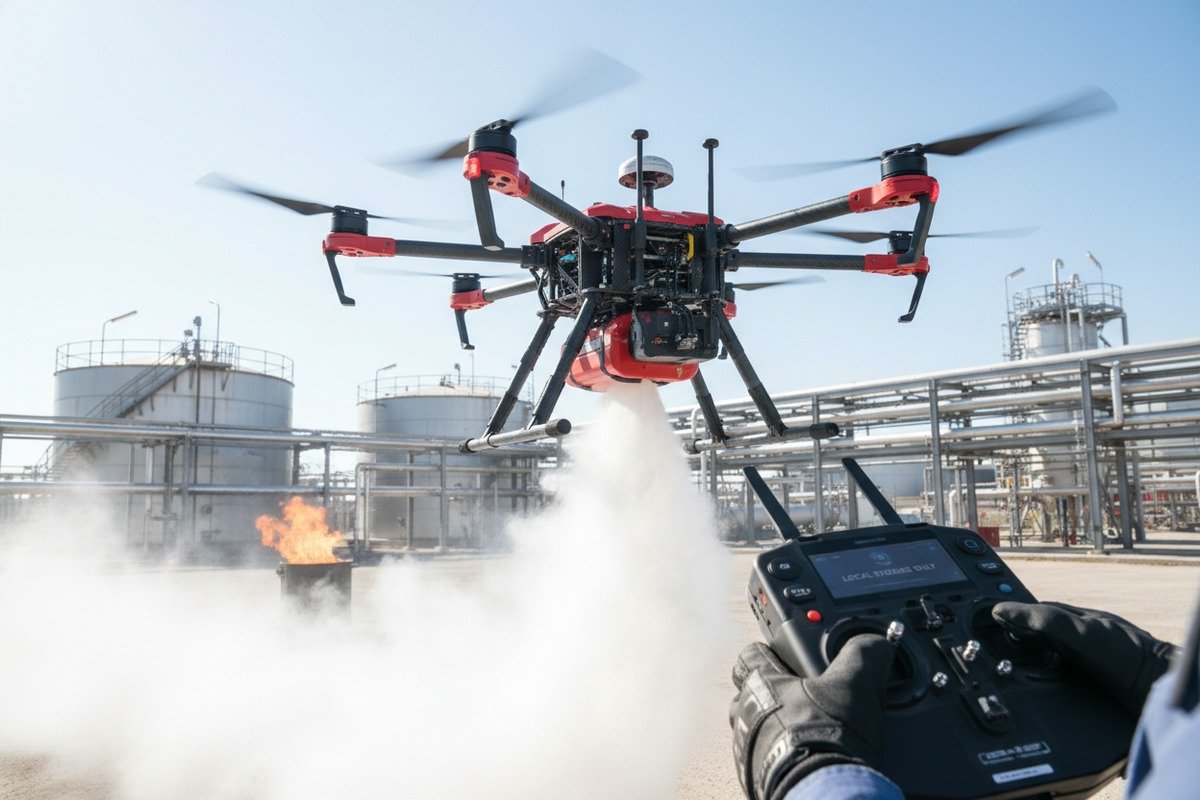
Custom software development covers several areas. You can modify how your drone encrypts data. You can change where data gets stored. You can add features that sanitize sensitive information before transmission.
Edge-processing customization is powerful. This means your drone processes data onboard before sending it anywhere. You can strip GPS coordinates from thermal images. You can redact personnel information in real-time. The data that leaves your drone contains only what you allow.
Development Process Overview
When clients approach our engineering team, we follow a structured process. First, we document your security requirements. What encryption standards does your organization mandate? What data must never leave the drone? What integration points exist with your current systems?
Second, we design the solution architecture. Our engineers create technical specifications. You review and approve before coding begins.
Third, we develop in stages with regular security reviews. Each module gets tested against penetration attempts before integration.
Custom Feature Options Table
| فئة الميزة | Customization Options | Security Benefit |
|---|---|---|
| التشفير | Algorithm selection, key management | Matches your existing infrastructure |
| Data Sanitization | PII redaction, metadata stripping | Prevents sensitive data exposure |
| Storage | Local-only, encrypted partitions | Eliminates cloud vulnerabilities |
| Authentication | MFA methods, biometric options | Blocks unauthorized access |
| Integration | API security, protocol matching | Seamless secure connection |
| Reporting | Audit logs, compliance formats | Meets regulatory requirements |
حماية استثمارك
Demand source code escrow. This means a third party holds your custom code. If your vendor disappears, you retain access. Your investment stays protected.
Require security audits of all custom code. Independent firms should test your modifications. They find vulnerabilities your vendor might miss.
Negotiate ongoing maintenance agreements. Security threats evolve. Your custom software needs updates. Lock in support terms before development begins.
Collaboration Best Practices
Assign a dedicated technical contact from your organization. This person communicates directly with our engineers. Clear communication prevents misunderstandings.
Establish security requirements documentation before starting. Write down every encryption standard. Every data handling rule. Every compliance requirement. This document guides all development decisions.
Plan for testing phases. Real-world testing at your facility matters. Controlled environment tests cannot replicate actual operational conditions. Budget time for field validation.
How do I ensure that remote technical support and software updates won't compromise my network security?
When our support team assists clients remotely, we follow strict protocols. We understand that every connection to your network creates risk. One poorly managed update can open doors to attackers.
Ensure secure updates by requiring air-gapped update methods, demanding cryptographically signed firmware, implementing Zero-Trust Network Architecture for drone endpoints, and establishing update staging environments. Verify support personnel through multi-factor authentication before granting any access.
The Update Security Challenge
Software updates are necessary. They patch vulnerabilities. They add features. They fix bugs. But each update creates an attack window. Hackers target update mechanisms. They inject malicious code into legitimate-looking patches.
Remote support creates similar risks. A technician connecting to your system has temporary access. If their credentials get stolen, attackers gain entry. If the connection is unencrypted, data flows openly.
Secure Update Methods
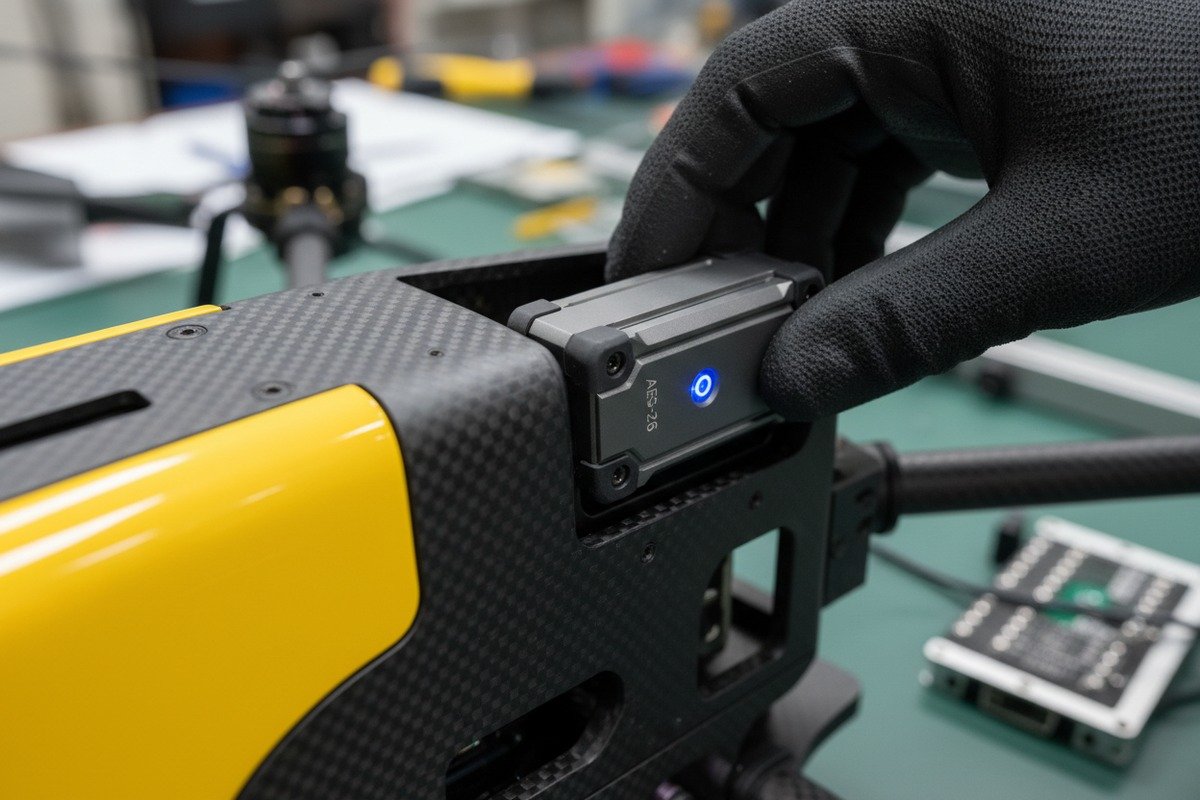
Air-gapped updates eliminate network exposure. Your vendor provides updates on encrypted physical media. You transfer updates through isolated systems. No internet connection touches your drone fleet during updates.
When air-gapping isn't practical, require cryptographically signed firmware. Each update must carry a digital signature. Your drone verifies this signature before installing anything. Unsigned or incorrectly signed updates get rejected automatically.
Update Staging Protocol
Never push updates directly to operational drones. Create a staging environment. Test updates on isolated units first. Verify functionality. Check for security regressions. Only then deploy to your fleet.
Our recommended protocol includes three stages. First, vendor testing confirms basic functionality. Second, your security team reviews the code or tests in sandbox environments. Third, limited field testing validates real-world performance.
Zero-Trust Implementation Table
| Zero-Trust Principle | Implementation Method | Protection Provided |
|---|---|---|
| Never Trust | Treat drones as untrusted endpoints | Assumes compromise, limits damage |
| Always Verify | Continuous authentication for data packets | Blocks spoofed communications |
| Least Privilege | Minimal access rights for updates | Reduces attack surface |
| Micro-Segmentation | Isolate drone network segment | Contains breaches |
| Continuous Monitoring | Real-time traffic analysis | Detects anomalies quickly |
Remote Support Security Controls
Establish identity verification protocols. Support personnel must authenticate through multiple factors before accessing your systems. Not just passwords. Hardware tokens. Biometric verification. Time-limited access codes.
Record all support sessions. Video recordings of screen activity create accountability. Audit logs track every command executed. If something goes wrong, you can trace the cause.
Limit support access scope. Technicians should only reach the specific drone or system needing attention. No broad network access. No persistent credentials. Session-specific permissions only.
Network Architecture Considerations
Implement network segmentation. Your drone fleet should operate on an isolated subnet. If attackers compromise a drone, they cannot pivot to other critical systems.
Deploy intrusion detection on the drone network segment. Unusual traffic patterns trigger alerts. New connection attempts get flagged. Your security team responds before breaches spread.
Consider on-premise support options for most sensitive operations. Some of our clients fly our engineers to their facilities for hands-on support. No remote connections at all. This costs more but eliminates network exposure entirely.
الخاتمة
Data security must drive every decision when sourcing firefighting drones for critical infrastructure. Verify encryption, demand proper certifications, explore custom development, and control update pathways. Your infrastructure protection depends on these choices.
الحواشي
1. Explains the importance of NDAA compliance for drone hardware and supply chain integrity. ︎
2. Replaced with the official NIST publication defining Zero Trust Architecture, an authoritative government source. ︎
3. Explains what GPS spoofing is, how it works, and its potential disruptions. ︎
4. Explains radio fingerprinting as a method to identify transmitters by unique signal characteristics. ︎
5. Provides a detailed explanation of AES-256 encryption, its security, and applications. ︎
6. Explains the prohibition of foreign-made UAS components under NDAA Section 848. ︎
7. Explains SOC 2 Type II as an audit of information security controls over time. ︎
8. Defines SBOM as a nested inventory of software components for security and risk management. ︎

 English
  Spanish
  German
  French
  Dutch
Dutch  Arabic
