
When our production lines are running at full capacity to meet urgent orders, nothing frustrates us more than watching those drones sit at a congested port for weeks supply chain management 1. Fire departments need equipment fast. Lives depend on it. Yet global shipping bottlenecks keep delaying critical deliveries.
To manage port congestion delay risks when procuring firefighting drones, buyers should diversify shipping routes, partner with logistics-experienced manufacturers, build procurement schedules with buffer time, and leverage door-to-door delivery services that include customs handling and alternative routing capabilities.
Port congestion 2 has become a serious challenge in the firefighting drone supply chain. This guide will walk you through practical strategies to protect your procurement timeline and ensure your department gets the equipment it needs on time.
How can I choose the best shipping routes to avoid port congestion for my firefighting drone order?
In our experience shipping to fire departments across North America and Europe, we have seen firsthand how a single congested port can derail an entire procurement schedule. One delayed shipment can leave a fire department waiting months for critical thermal imaging equipment 3. The solution lies in strategic route selection.
Choose shipping routes by analyzing real-time port congestion data, diversifying entry points across multiple ports, considering multimodal transport options, and working with manufacturers who maintain relationships with carriers at various gateways to ensure flexibility when bottlenecks occur.

Understanding Port Congestion Patterns
Port congestion follows predictable patterns. Major gateways like Los Angeles, Long Beach, and Rotterdam often experience peak delays during holiday seasons and post-pandemic recovery periods. Our logistics team monitors these patterns constantly.
Fire departments should request congestion reports from their suppliers before finalizing shipping arrangements. Ask your manufacturer which ports they typically use and what alternatives exist. A good supplier will have relationships with freight forwarders at multiple entry points.
Multimodal Transportation Options
Do not rely on الشحن البحري 4 alone. When we ship firefighting drones to time-sensitive customers, we often recommend a hybrid approach.
| Transport Mode | السرعة | التكلفة | الأفضل لـ |
|---|---|---|---|
| Ocean Freight | 25-40 days | منخفضة | Standard orders with flexible timelines |
| الشحن الجوي 5 | 5-10 days | عالية | Urgent deployments, critical components |
| Ocean + Rail | 20-30 days | متوسط | Inland destinations, avoiding coastal congestion |
| Ocean + Truck | 22-35 days | متوسط | Flexible final-mile delivery |
Air freight costs more but can save your procurement timeline when port delays threaten. For a single high-value firefighting drone with thermal imaging payload, the extra shipping cost is often worth the reliability.
Selecting Alternative Port Gateways
Smart procurement managers ask their suppliers about backup ports. Instead of routing everything through Los Angeles, consider Oakland, Seattle, or even East Coast ports like Savannah or Charleston for final destinations in central states.
Our team has successfully rerouted shipments mid-transit when congestion reports indicated trouble ahead. This flexibility requires a supplier who actively monitors shipping conditions and maintains carrier relationships at multiple ports.
What logistics expertise should I look for in a drone manufacturer to minimize my shipping risks?
When our engineers finish calibrating a firefighting drone's thermal sensors and GPS systems, our job is only half done. Getting that drone safely to your fire station requires serious logistics capability. Not every manufacturer has this expertise. Choose wrong, and you will face delays, damaged equipment, or customs nightmares.
Look for drone manufacturers with documented export experience, established freight forwarder partnerships, in-house customs documentation teams, real-time shipment tracking systems, and a history of successfully navigating complex international shipping requirements for sensitive aviation equipment.

Export Documentation Capabilities
Firefighting drones are not simple consumer products. They contain lithium batteries, sensitive electronics, and sometimes restricted technology components. Proper export documentation 6 is essential.
Our documentation team handles these requirements daily:
- Commercial invoices with accurate HS codes 7
- Packing lists with detailed component breakdowns
- Certificates of origin for trade compliance
- Lithium battery shipping declarations
- Technical specifications for customs classification
Ask potential suppliers to show you sample documentation from previous exports. A manufacturer who hesitates probably lacks experience.
Freight Forwarder Relationships
Strong relationships with freight forwarders make a huge difference. Our company works with multiple forwarders who specialize in aviation equipment. They understand the special handling requirements for drones and can navigate congested ports more effectively.
| Logistics Capability | ما أهمية ذلك | Questions to Ask |
|---|---|---|
| Multiple carrier relationships | Provides alternatives during disruptions | How many carriers do you work with? |
| Bonded warehouse access | Enables faster customs processing | Do you use bonded facilities? |
| Real-time tracking | Allows proactive problem-solving | Can I track my shipment online? |
| Insurance coverage | Protects against loss or damage | What insurance do you provide? |
| Customs brokerage | Speeds clearance at destination | Do you handle customs documentation? |
Technology for Shipment Visibility
Modern logistics requires technology. When we ship a firefighting drone, customers can track it through every stage. This visibility lets procurement managers anticipate delays and adjust their planning.
Ask manufacturers about their tracking capabilities. Can they provide real-time updates? Do they alert you proactively when problems arise? A manufacturer who only tells you about delays after they happen is not managing your risks effectively.
Experience with Aviation Equipment
Drones face unique shipping challenges. Battery restrictions limit some transport options. Fragile components require careful packaging. Customs officials often scrutinize aviation technology imports.
Our team has developed specialized packaging that protects propellers, gimbals, and thermal cameras during transit. We understand which airlines accept lithium battery shipments and which routes avoid problematic transshipment points. This experience prevents the surprises that delay less experienced shippers.
How do I plan my procurement schedule to account for potential delays at the port?
Our production team can build a firefighting drone in weeks, but shipping can take months if things go wrong. Every fire department procurement manager needs to understand this reality. Planning your schedule with realistic buffers is not pessimism. It is professional risk management.
Plan your procurement schedule by adding 30-50% buffer time beyond quoted delivery estimates, initiating orders during low-congestion seasons when possible, establishing milestone checkpoints throughout the process, and maintaining communication with your supplier about real-time shipping conditions.

Building Realistic Timelines
Standard ocean freight from China to the United States takes 20-35 days under normal conditions. Port congestion can add 2-6 weeks. Customs clearance adds more time. Smart procurement managers plan for worst-case scenarios.
Here is how we recommend structuring your timeline:
| Procurement Phase | المدة النموذجية | Buffer Recommended | Total with Buffer |
|---|---|---|---|
| Order processing and production | 2-4 أسابيع | 1 week | 3-5 أسابيع |
| Export documentation | 3-5 days | 3 days | 6-8 days |
| Ocean freight | 20-35 days | 14-21 days | 34-56 days |
| Port processing and customs | 3-7 days | 7 days | 10-14 days |
| Final delivery | 2-5 days | 2 days | 4-7 days |
Total procurement time can range from 8 weeks under ideal conditions to 14 weeks when delays occur. Plan accordingly.
Seasonal Considerations
Shipping congestion follows seasonal patterns. The period between August and November sees highest volumes due to holiday inventory movement. Chinese New Year in January-February disrupts production schedules.
For firefighting drone procurement, consider placing orders in March-May or September-October to avoid peak congestion periods. Wildfire season preparation should begin months earlier than you might expect.
Milestone Tracking Systems
Do not wait until the expected delivery date to check on your order. Establish milestone checkpoints throughout the process.
When we ship to fire departments, we provide updates at these stages:
- Production completion confirmation
- Quality inspection clearance
- Export documentation submission
- Vessel departure notification
- Transshipment updates (if applicable)
- Arrival at destination port
- Customs clearance status
- Final delivery scheduling
Each milestone gives you an opportunity to identify problems early and adjust plans if necessary.
Contingency Planning
What happens if your drone is stuck at a congested port during wildfire season? Fire departments need backup plans.
Consider these contingencies:
- Emergency air freight upgrade options (pre-negotiate pricing with your supplier)
- Rental or loaner equipment arrangements
- Regional stockpile access through cooperative purchasing agreements
- Prioritization agreements with suppliers for expedited production of replacement orders
Our team offers expedited shipping options for customers facing genuine emergencies. Having these arrangements in place before problems occur makes response much faster.
Can my supplier's door-to-door delivery service help me manage the uncertainty of international shipping?
When we first started offering door-to-door delivery 8 for our firefighting drones, customers asked why they should pay more than basic FOB shipping. The answer became clear after several customers experienced nightmare scenarios with partial shipments stranded at ports. Door-to-door service transfers complexity and risk to experts who handle it daily.
Yes, door-to-door delivery services significantly reduce shipping uncertainty by placing logistics responsibility with experienced professionals, providing single-point accountability, including customs clearance handling, and offering problem-solving capability when disruptions occur at any point in the supply chain.
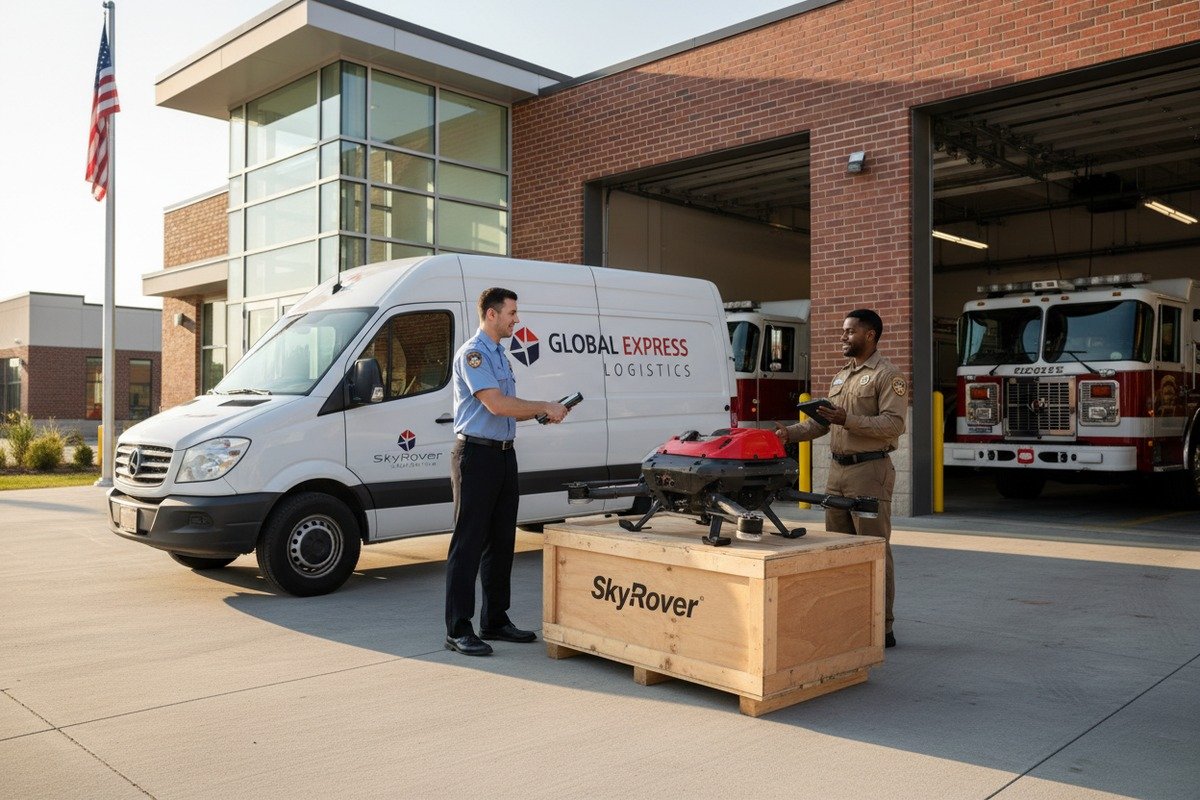
What Door-to-Door Service Includes
Door-to-door delivery is more than just shipping. It is comprehensive logistics management. When fire departments use our door-to-door service, we handle everything from our factory floor to your fire station loading dock.
Services typically included:
- Export packaging and labeling
- Freight booking and carrier coordination
- Export customs clearance
- Ocean or air freight management
- Import customs clearance and duties
- Final-mile delivery coordination
- Insurance coverage for the entire journey
Single-Point Accountability
With traditional shipping terms like FOB or CIF, responsibility transfers at specific points. If something goes wrong at a port, you may need to coordinate between multiple parties who each blame each other.
Door-to-door service means one party is responsible for the entire journey. When delays occur, you make one phone call. Your supplier solves the problem instead of pointing fingers at freight forwarders or customs brokers.
Customs Expertise
Import customs clearance is where many firefighting drone shipments get stuck. Incorrect HS codes, missing documentation, or improper battery declarations can trigger inspections and delays.
Our door-to-door service includes customs expertise. We know which documents customs officers want to see. We classify products correctly. We handle the paperwork that confuses first-time importers.
Cost-Benefit Analysis
Door-to-door service costs more than basic shipping terms. Is it worth it?
| العامل | FOB Shipping | Door-to-Door Service |
|---|---|---|
| Upfront cost | أقل | أعلى |
| Hidden costs | Customs broker fees, delivery coordination, problem-solving time | متضمنة |
| Risk exposure | Buyer assumes most risk | Supplier manages risk |
| Time investment | High (you coordinate everything) | Low (supplier coordinates) |
| Problem resolution | You manage multiple parties | Single contact point |
| Predictability | متغير | More consistent |
For fire departments with limited procurement staff, door-to-door service often saves money when you account for staff time and reduced delay risks.
Choosing the Right Service Level
Not every shipment needs full door-to-door service. Consider your situation:
- First-time importers: Door-to-door service strongly recommended
- Experienced procurement teams: May prefer more control with partial services
- Urgent orders: Door-to-door with expedited options provides best reliability
- Budget-constrained orders: Basic shipping acceptable if you have customs expertise in-house
We offer flexible service levels because different customers have different needs. The key is matching your capability with the appropriate service level.
الخاتمة
Port congestion delays are real risks for firefighting drone procurement, but they are manageable risks. By diversifying routes, choosing logistics-capable suppliers, building schedule buffers, and leveraging door-to-door services, fire departments can protect their equipment timelines and maintain operational readiness.
الحواشي
1. Defines supply chain management and outlines its key processes and importance in global economies. ︎
2. Explains the causes, impacts, and solutions for port congestion in global shipping. ︎
3. Replaced with a Wikipedia article on thermal imaging cameras, which is relevant to firefighting applications mentioned in the article. ︎
4. Explains the process of ocean freight shipping, types of cargo, and its role in international trade. ︎
5. Details the process of air cargo handling, IATA regulations, and its importance in global trade. ︎
6. Outlines the essential documents and procedures required for exporting goods from the U.S. ︎
7. Explains the Harmonized System (HS) codes, their structure, and their role in international trade classification. ︎
8. Defines door-to-door shipping, its inclusions, and benefits for comprehensive logistics management. ︎

 English
  Spanish
  German
  French
  Dutch
Dutch  Arabic
