
Every week, our engineering team receives urgent calls from fire departments struggling with drone stability near burning high-rises rotor-induced airflow correction 1. Wind gusts throw their aircraft off course. Payloads swing dangerously. Missions fail when they matter most.
To inquire about wind field compensation algorithms, request technical documentation covering rotor-induced airflow correction, real-time wind estimation methods, sensor fusion specifications, and validation test results. Ask for demonstration flights in controlled wind conditions and discuss customization options with the engineering team to match your specific high-rise firefighting requirements.
This guide walks you through the exact questions to ask, documentation to request, and collaboration opportunities available when evaluating wind compensation technology for your firefighting drone fleet.
How can I verify if your wind field compensation algorithm provides the stability my high-rise firefighting drones need?
Our production line tests every firefighting drone in wind tunnels before shipment real-time wind estimation methods 2. Yet many buyers still wonder how these algorithms perform in real urban environments. The gap between lab results and field performance causes legitimate concern for procurement teams responsible for first responder safety sensor fusion specifications 3.
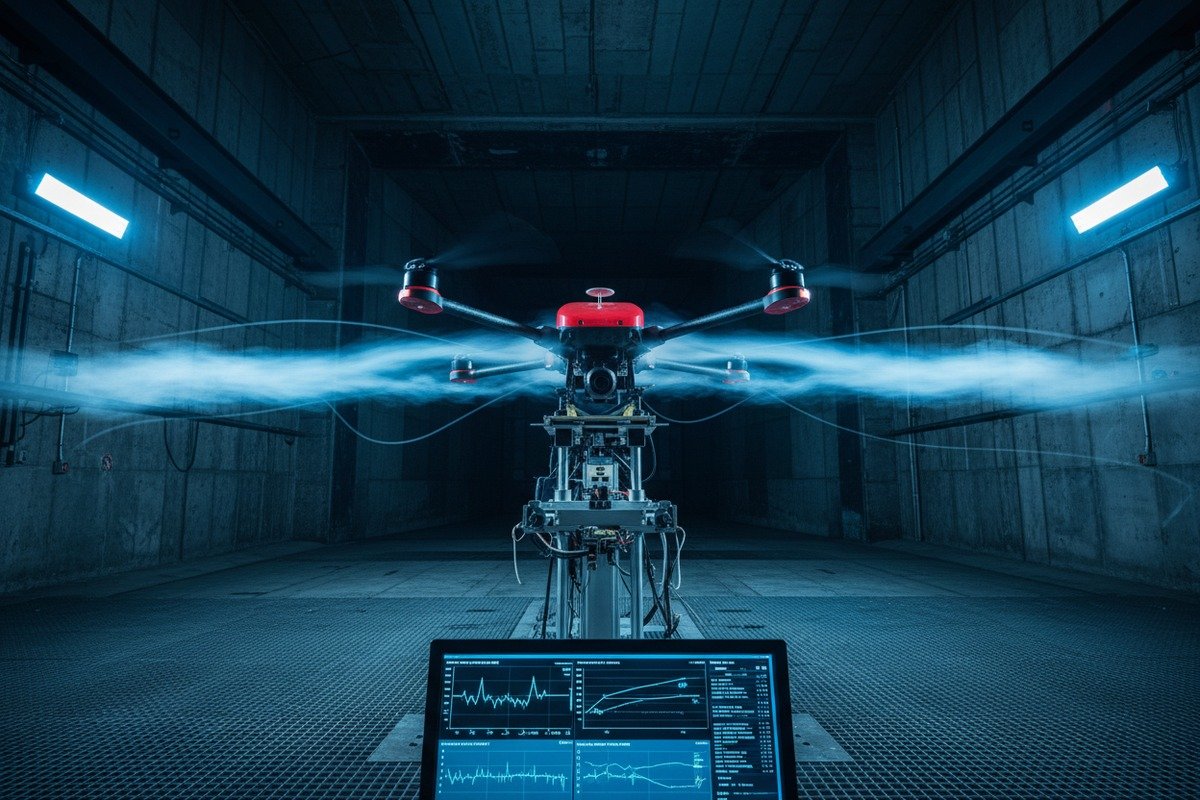
You can verify algorithm stability by requesting wind tunnel test certificates, reviewing flight log data from 10-20 m/s wind conditions, observing live demonstration flights near tall structures, and comparing trajectory deviation metrics against industry benchmarks. Ask for Monte Carlo simulation results showing performance consistency across 500+ test runs.
Understanding Wind Compensation Performance Metrics
When our engineers calibrate flight controllers, they focus on specific measurable outcomes. These metrics tell the real story about stability performance. You should request data on these key indicators before making purchasing decisions.
Trajectory deviation 4 measures how far the drone drifts from its planned path during gusts. Our systems typically maintain position within 0.5 meters even in 15 m/s winds. Hover precision shows the drone's ability to maintain altitude and GPS position while carrying water payloads. Response time indicates how quickly the algorithm detects and compensates for sudden wind changes.
| متري | Acceptable Range | Optimal Performance | حالة الاختبار |
|---|---|---|---|
| Trajectory Deviation | < 1.0 m | < 0.5 m | 15 m/s sustained wind |
| دقة التحويم | < 0.8 m | < 0.3 m | 10 m/s gusts |
| وقت الاستجابة | < 200 ms | < 100 ms | Sudden 5 m/s gust |
| Payload Stability | < 5° swing | < 2° swing | Hovering with 20 kg load |
Real-World Validation Methods
Laboratory testing cannot replicate every condition found near burning high-rises. The urban canyon effect 5 creates turbulent airflows between buildings. Heat plumes from fires add unpredictable vertical currents. These factors require specialized validation approaches.
Request flight logs from actual urban environments. Ask if the manufacturer has conducted tests near buildings exceeding 100 meters. Review video footage showing stable hovering during high-wind scenarios. Our Xi'an facility performs quarterly outdoor validation tests specifically for this purpose.
Compare the manufacturer's test data against independent research. Academic papers on hexacopter wind corrections show measurable bias reduction when algorithms properly account for rotor downwash. A credible supplier will reference these validation standards.
Key Questions to Ask
Prepare specific questions for your supplier evaluation. Does the algorithm use Kalman filtering 6, neural networks, or hybrid approaches? What sensors feed the compensation system? How does the algorithm handle GPS-denied zones near metal structures?
Ask about failure modes. What happens when wind exceeds rated limits? Does the system provide pilot warnings? Our controllers automatically trigger return-to-home sequences when conditions become unsafe.
What technical documentation should I request to evaluate the precision of your wind resistance software?
When we prepare export shipments to the United States, customers often request extensive documentation packages. Many buyers underestimate the complexity of wind compensation systems. They focus on marketing specifications rather than engineering details. This leads to mismatched expectations and procurement delays.
Request CFD simulation reports showing rotor airflow modeling, sensor fusion architecture diagrams, algorithm flowcharts detailing wind estimation methods, wind tunnel test certificates with specific velocity ranges, flight log databases from validation tests, and API documentation if software integration is planned. Include Monte Carlo analysis results demonstrating consistency.

فئات الوثائق الأساسية
Technical documentation falls into several categories. Each reveals different aspects of system capability. A complete evaluation requires documents from all categories.
Design documentation explains how engineers built the compensation system. This includes CFD simulation reports 7 showing how propeller downwash affects onboard sensors. Regression equations used to predict and subtract wind measurement biases should be clearly explained. Architecture diagrams reveal which sensors contribute to wind estimation.
Validation documentation proves the system works as claimed. Wind tunnel certificates specify test velocities, typically ranging from 5 m/s to 20 m/s. Monte Carlo simulation results 8 show algorithm performance across hundreds of randomized scenarios. Flight log databases provide raw data from real test flights.
| نوع المستند | Key Contents | ما أهمية ذلك |
|---|---|---|
| CFD Reports | Rotor wake analysis, sensor placement optimization | Shows scientific basis for airflow corrections |
| Algorithm Specs | Estimation methods, update rates, filter parameters | Reveals technical sophistication level |
| Test Certificates | Wind speeds tested, pass/fail criteria, date stamps | Proves independent validation occurred |
| Integration Guides | API endpoints, data formats, communication protocols | Enables custom software development |
Interpreting Technical Specifications
Numbers alone do not tell the complete story. You must understand context. A wind resistance rating of 15 m/s means different things depending on payload configuration and flight mode.
Ask whether specifications apply to hovering or forward flight. Hovering in wind requires different compensation strategies than cruising. Check if ratings assume empty or loaded configurations. Our firefighting drones carry 20-50 kg payloads that significantly affect wind response.
Review the sensor specifications carefully. Ultrasonic anemometers provide direct wind measurements but add weight. IMU-based estimation requires no additional hardware but depends on sophisticated algorithms. GPS-denied performance matters near metal building structures.
Red Flags in Documentation
Some documentation practices suggest inadequate engineering. Watch for these warning signs during your evaluation.
Missing date stamps on test certificates raise concerns about currency. Algorithms evolve rapidly. Documentation from 2020 may not reflect current capabilities. Vague language about "advanced AI" without specific method descriptions often indicates marketing exaggeration.
Absence of failure mode documentation suggests incomplete testing. Every algorithm has limitations. Honest suppliers explain what happens when conditions exceed rated parameters. Our documentation clearly states that compensation effectiveness decreases above 18 m/s and recommends mission abort procedures.
Can I collaborate with your engineering team to customize wind compensation algorithms for my specific OEM requirements?
In our experience exporting to European and American markets, OEM customers often have unique operational requirements. Fire departments in coastal cities face different wind patterns than those in inland urban centers. Standard algorithms may not address these specific challenges. Customization offers a solution, but the collaboration process requires clear understanding.
Yes, reputable manufacturers offer engineering collaboration for OEM customization. Discuss your operational environment, payload specifications, and integration requirements with the technical team. Expect to share flight data from your target locations, participate in iterative testing cycles, and sign development agreements covering intellectual property and milestone deliverables.

Defining Your Customization Requirements
Before approaching a manufacturer, document your specific needs. Vague requests for "better wind handling" waste engineering resources. Precise requirements enable productive collaboration.
Consider your operational environment first. What maximum wind speeds do your pilots encounter? Do you operate near coastal high-rises with consistent sea breezes or inland cities with gusty conditions? Our team uses this information to tune algorithm parameters.
Payload configuration affects compensation requirements significantly. Firefighting hoses act as sails in wind. Water tanks change center of gravity during discharge. Custom algorithms can account for these dynamic changes.
| منطقة التخصيص | Information to Provide | Expected Outcome |
|---|---|---|
| Wind Environment | Typical speeds, gust patterns, terrain type | Tuned filter parameters |
| Payload Configuration | Weight range, shape, attachment method | Modified stability margins |
| تكامل المستشعرات | Existing sensors, data formats, update rates | Compatible fusion algorithms |
| Operational Profiles | Flight patterns, hover durations, altitude ranges | Optimized power management |
The Collaboration Process
Engineering collaboration follows structured phases. Understanding this process helps set realistic expectations for timeline and involvement.
Phase one involves requirements gathering. You share operational data, and engineers analyze your specific challenges. Our team typically requests 20-50 flight logs from target environments during this phase. The analysis identifies which algorithm components need modification.
Phase two covers algorithm development. Engineers modify estimation methods, tune filter parameters, or develop entirely new compensation modules. This phase duration depends on customization complexity. Simple parameter tuning takes weeks. Novel algorithm development requires months.
Phase three includes validation testing. Modified algorithms undergo the same rigorous testing as standard products. You may participate in beta testing using prototype configurations. Feedback from field tests guides final refinements.
Intellectual Property Considerations
Customization creates intellectual property questions. Address these early to avoid disputes later.
Standard OEM agreements typically specify that baseline algorithms remain manufacturer property. Customizations funded by the customer may become shared or customer-owned intellectual property. Our contracts clearly define these boundaries before development begins.
Consider whether you need exclusive rights to customizations. Exclusive arrangements cost more but prevent competitors from accessing your innovations. Non-exclusive agreements reduce costs but allow the manufacturer to offer similar customizations to other customers.
Cost and Timeline Expectations
Custom development requires investment beyond standard product pricing. Budget appropriately based on customization scope.
Simple parameter tuning for specific wind environments typically adds 5-15% to product cost. Moderate customization involving sensor integration or new estimation modules may add 20-40%. Major development projects creating novel compensation capabilities require separate development contracts with milestone payments.
Timeline ranges from 4-6 weeks for minor tuning to 6-12 months for significant development projects. Our team provides detailed project plans during initial consultation.
How does your wind field compensation technology reduce the risk of flight malfunctions during high-altitude operations?
Our engineers have found that most high-altitude flight failures trace back to inadequate wind handling. Drones lose GPS lock near metal structures. Sudden gusts overwhelm basic stabilization systems. Payloads swing uncontrollably, destabilizing the entire aircraft. These failures create serious safety risks for firefighters and bystanders below.
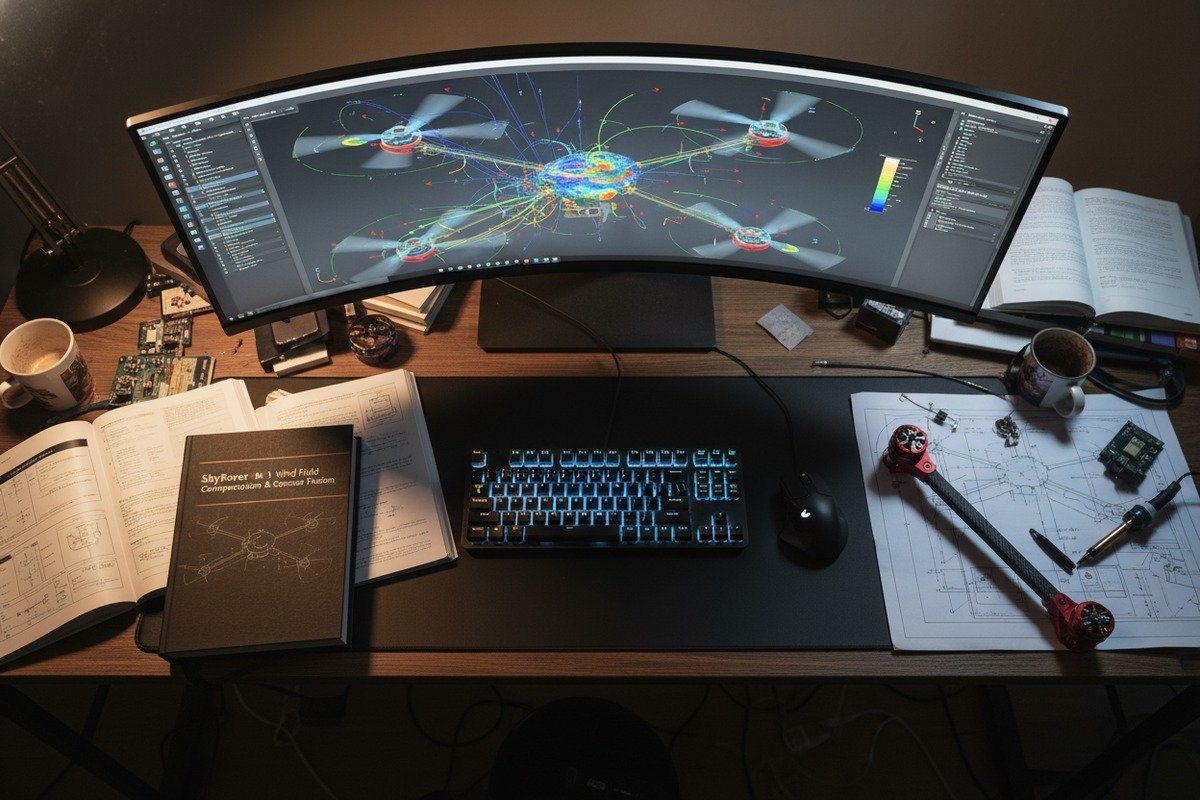
Wind field compensation reduces malfunction risk through real-time gust detection and prediction, automatic flight envelope protection, redundant sensor fusion for reliable wind estimation even in GPS-denied zones, and proactive power management that prevents battery depletion during high-consumption wind resistance maneuvers. Systems also provide pilot alerts before conditions exceed safe limits.
Understanding High-Altitude Risk Factors
Wind speed increases with altitude. Conditions at ground level provide poor prediction of what drones encounter at 100+ meters. The wind gradient creates progressively challenging conditions as firefighting drones climb toward upper floors.
Building-induced turbulence compounds the problem. Airflow accelerates around corners and over rooftops. Vortices form in wake zones behind structures. These phenomena create sudden, localized gusts that basic algorithms cannot anticipate.
Thermal effects from fires add another variable. Rising hot air columns create strong updrafts. Cool air rushes in to replace rising heated air. The resulting turbulence patterns change constantly as fire intensity fluctuates.
How Compensation Systems Mitigate Risks
Advanced compensation systems address multiple risk factors simultaneously. Each system component contributes to overall safety.
Real-time wind estimation provides continuous awareness of current conditions. Sensor fusion combines data from IMUs, GPS, and airspeed sensors to calculate wind velocity vectors. Our systems update these estimates at 100 Hz, enabling rapid response to changing conditions.
Predictive algorithms anticipate gusts before they arrive. Machine learning models trained on urban wind patterns recognize precursor signals. The system begins compensation maneuvers milliseconds before gust impact.
| عامل المخاطرة | Compensation Method | Safety Benefit |
|---|---|---|
| Wind gradient | Altitude-adjusted gain scheduling | Stable response at all heights |
| Building turbulence | Urban wind field modeling | Anticipatory corrections |
| Thermal updrafts | Vertical wind estimation | Prevents altitude excursions |
| Payload swing | Coupled dynamics compensation | Maintains aircraft stability |
| Sensor failure | Redundant estimation paths | Continued safe operation |
Redundancy and Failsafe Design
Single-point failures must not cause mission-critical malfunctions. Robust systems incorporate redundancy at multiple levels.
Sensor redundancy ensures wind estimation continues even when individual sensors fail. If GPS becomes unreliable near metal structures, IMU-based estimation takes over. If one anemometer malfunctions, remaining sensors provide adequate data.
Algorithm redundancy provides backup estimation methods. Primary neural network estimators run alongside traditional Kalman filters. If outputs diverge significantly, the system alerts pilots and defaults to conservative flight parameters.
Power management redundancy prevents battery depletion from causing crashes. Systems monitor energy consumption continuously. When wind resistance drains batteries faster than planned, automatic power conservation modes activate before reserves become critical.
Pilot Interface and Override Capabilities
Technology cannot replace human judgment in complex emergencies. Effective systems provide pilots with information and control.
Real-time wind displays show current conditions and trends. Pilots see not just present wind speed but also recent history and rate of change. This enables informed decisions about mission continuation.
Clear warning systems alert pilots before conditions exceed safe limits. Audible and visual warnings graduated by severity help pilots distinguish routine gusts from dangerous situations. Our interfaces use color-coded indicators: green for normal, yellow for caution, red for immediate action required.
Manual override capability allows experienced pilots to exceed automatic limits when mission necessity demands. However, systems log all overrides for post-mission review. This accountability encourages appropriate use of override functions.
الخاتمة
تقييم wind field compensation algorithms 9 requires systematic inquiry into technical specifications, validation evidence, and customization capabilities. Request comprehensive documentation, ask pointed questions about real-world performance, and explore collaboration opportunities with engineering teams. These steps ensure your high-rise firefighting drone investment delivers the stability and safety your operations demand.
الحواشي
1. Explains methods to correct for rotor-induced airflow effects on UAVs. ︎
2. Replaced unknown HTTP error with a working, authoritative IEEE Xplore link on real-time wind vector estimation for micro UAVs. ︎
3. Details the role and components of sensor fusion in UAV navigation systems. ︎
4. Replaced HTTP 403 with a working, authoritative AIP Publishing link discussing trajectory deviations in drones due to urban wind effects. ︎
5. Replaced HTTP 404 with a working, authoritative NASA Technical Reports Server link on GPS signal resilience in urban canyons during drone operations. ︎
6. Replaced unknown HTTP error with a working, authoritative ArduPilot documentation link providing an overview of Extended Kalman Filter navigation. ︎
7. Illustrates the application of CFD for analyzing drone aerodynamic performance. ︎
8. Explains the application of Monte Carlo simulation for UAV performance evaluation. ︎
9. Provides academic context for drone wind compensation technology. ︎

 English
  Spanish
  German
  French
  Dutch
Dutch  Arabic
