
When our engineering team first designed automated hangars for firefighting drones 1, we quickly learned that not all suppliers meet mission-critical standards. A failed deployment during an active fire can cost lives.
To evaluate suppliers for firefighting drone automated hangars, assess their engineering customization capability, verify certifications and export compliance, test environmental durability through prototype trials, and confirm robust after-sales support with spare parts availability. Prioritize suppliers with proven firefighting industry experience and strong technical documentation.
This guide breaks down each evaluation criterion so you can make confident procurement decisions CE and FCC certifications 2. Let us walk through the key factors together.
How can I assess a supplier's engineering capability to customize automated hangars for my firefighting drone software?
When we integrate custom flight control software 3 with hangar systems, compatibility issues often surface late in the process. This creates costly delays and operational headaches for fire departments relying on rapid deployment NDAA compliance status 4.
Assess engineering capability by reviewing the supplier's R&D team size, facility scale (minimum 1,000 m²), prototyping speed (1-3 weeks), and software integration experience. Request documentation of past customization projects, API availability, and their ability to adapt hangar systems to your specific drone software requirements.

Understanding Software Integration Requirements
Your automated hangar must communicate seamlessly with your firefighting drone's flight controller Blue UAS compliance 5. This includes automated launch sequences, precision landing protocols, and real-time battery management. Our engineers have found that suppliers lacking dedicated software teams often struggle with these integrations IP67 or higher ingress protection ratings 6.
Ask potential suppliers about their experience with common flight control systems. Do they support MAVLink protocols 7? Can they integrate with your GIS mapping software? These questions reveal their true technical depth.
Key Engineering Metrics to Evaluate
| متري | الحد الأدنى من المعايير | Preferred Standard |
|---|---|---|
| R&D Staff Size | 15+ engineers | 30+ engineers |
| Facility Size | 1,000 m² | 4,000+ m² |
| Prototype Delivery | 3 weeks | من أسبوع إلى أسبوعين |
| API Documentation | الأساسيات | Comprehensive |
| Custom Project History | 5+ projects | 20+ projects |
Prototyping and Testing Capabilities
Request a prototype before committing to large orders. At our facility, we deliver functional prototypes within two weeks for evaluation. This allows fire departments to test hangar-drone compatibility under simulated conditions.
During prototype testing, verify these critical functions:
- Automated door mechanisms respond to drone approach signals
- Charging contacts align precisely with drone battery ports
- Temperature control systems maintain optimal battery conditions
- Emergency override systems function correctly
Software Customization Red Flags
Watch for suppliers who cannot explain their software architecture clearly. If they hesitate when discussing API endpoints or data encryption protocols, their engineering capability may be limited.
Some suppliers outsource software development to third parties. This creates support gaps when issues arise. Ask directly: "Does your in-house team handle all software development?" The answer reveals much about their true capabilities.
Our development team maintains complete control over firmware and software updates. This ensures rapid response when customers need modifications or bug fixes.
What certifications and export experience should I look for to ensure my drone hangar supplier can handle US customs clearance?
In our experience exporting to the US market, we have seen shipments held at customs for weeks due to missing documentation. Fire departments cannot afford these delays when equipment is needed urgently.
For US imports, verify suppliers hold CE and FCC certifications for electromagnetic compliance. Confirm NDAA compliance status, request proof of successful US customs clearances, and ensure they provide complete export documentation including HS codes, certificates of origin, and product safety declarations. Blue UAS compliance is critical for government contracts.

Essential Certifications Explained
| التصديق | الغرض | مطلوب ل |
|---|---|---|
| CE Mark | European safety compliance | EU and many US imports |
| لجنة الاتصالات الفيدرالية | التوافق الكهرومغناطيسي | US market entry |
| IP67 | Water and dust protection | Outdoor deployment |
| NDAA Compliant | National security requirements | US government contracts |
| الأنظمة الجوية غير المأهولة الزرقاء | DoD approved drone list | Federal agency purchases |
NDAA Compliance Considerations
The National Defense Authorization Act restricts US government agencies from purchasing certain foreign-manufactured drones. This affects fire departments receiving federal funding.
Here is the reality: Chinese suppliers like DJI offer excellent flight performance—55-minute flight times and 9.3-mile range—but fail NDAA compliance. US-made alternatives from Skydio and FLIR meet compliance requirements but often cost more.
Our approach involves transparent communication about compliance status. We provide detailed component sourcing documentation so customers can make informed decisions based on their specific procurement requirements.
Export Documentation Checklist
When we prepare shipments for US customers, our export team compiles these essential documents:
- Commercial invoice with accurate HS codes
- Certificate of origin
- Product safety test reports
- FCC certification copies
- Packing list with serial numbers
- بوليصة الشحن
- Import permit (if required)
Customs Clearance Experience Indicators
Ask suppliers these specific questions:
- How many US shipments have you completed in the past year?
- What is your average customs clearance time?
- Do you have a US-based customs broker relationship?
- Can you provide references from US customers?
Suppliers with strong export experience will answer confidently with specific numbers. Vague responses suggest limited experience.
Our logistics team maintains relationships with established customs brokers in major US ports. This network reduces clearance times and helps resolve issues quickly.
Regional Manufacturing Considerations
| المنطقة | المزايا | Considerations |
|---|---|---|
| Shandong, China | Cost efficiency, logistics infrastructure | NDAA compliance limitations |
| Guangdong, China | Manufacturing scalability, component access | Same compliance considerations |
| الولايات المتحدة الأمريكية | Full NDAA compliance, Blue UAS eligible | Higher costs, longer lead times |
| Taiwan | Partial US integration, quality standards | Supply chain complexity |
How do I verify that a supplier's automated hangar is durable enough to withstand the harsh environments of my firefighting operations?
When we calibrate our environmental control systems 8, we simulate extreme conditions that firefighting equipment faces. Smoke, heat, water spray, and debris create challenges most commercial hangars cannot handle.
Verify durability through IP67 or higher ingress protection ratings, temperature operating ranges (-20°C to +50°C minimum), wind resistance specifications (39 ft/s or greater), and corrosion-resistant materials. Request environmental test reports and conduct on-site prototype trials under simulated fire conditions before committing to purchase.

Critical Environmental Specifications
Firefighting operations expose equipment to conditions far beyond normal commercial use. Your automated hangar must survive:
- Extreme heat from nearby fires
- Water exposure from fire suppression activities
- Smoke and particulate contamination
- High winds common during fire weather
- Temperature fluctuations between operations
Durability Testing Standards
| نوع الاختبار | قياسي | Acceptable Result |
|---|---|---|
| Water Ingress | IP67 | No penetration at 1m depth |
| الحماية من الغبار | IP6X | Complete dust sealing |
| Temperature Cycling | MIL-STD-810 | Function at -20°C to +55°C |
| الاهتزاز | IEC 60068-2-6 | No component loosening |
| رذاذ الملح | ASTM B117 | No corrosion after 500 hours |
Material Selection for Fire Environments
At our production facility, we select materials specifically for firefighting applications. Standard commercial plastics degrade under heat exposure. We use:
- Aircraft-grade aluminum for structural components
- High-temperature silicone seals
- UV-resistant polymer housings
- Stainless steel fasteners throughout
- Fire-retardant cable insulation
These material choices increase manufacturing costs but ensure reliable operation when firefighters need the equipment most.
Environmental Control Systems
Your hangar's internal environment directly affects drone battery health and longevity. Temperature-controlled charging extends battery life significantly.
Our JOS-C800 compatible systems maintain internal temperatures within optimal ranges regardless of external conditions. This includes:
- Active heating for cold weather deployment
- Cooling systems for high-temperature operations
- Humidity control to prevent condensation
- Air filtration to block smoke and debris
Field Testing Protocols
Before accepting any supplier's durability claims, conduct your own testing. We recommend:
- Deploy prototype at an active training facility
- Expose to water spray from fire hoses
- Operate during high-wind conditions
- Test automated functions after temperature extremes
- Inspect seals and mechanisms after 30 days
Document all test results. Compare performance against supplier specifications. Any significant deviation indicates potential reliability issues.
Structural Integrity Requirements
The hangar structure must withstand physical impacts and maintain security. Fire scenes are chaotic environments where equipment gets bumped and jostled.
Evaluate these structural elements:
- Door mechanism strength and durability
- Hinge and actuator quality
- Lock security against unauthorized access
- Foundation mounting options
- Transport handling features
What level of after-sales technical support and spare parts availability should I expect from my drone hangar manufacturer?
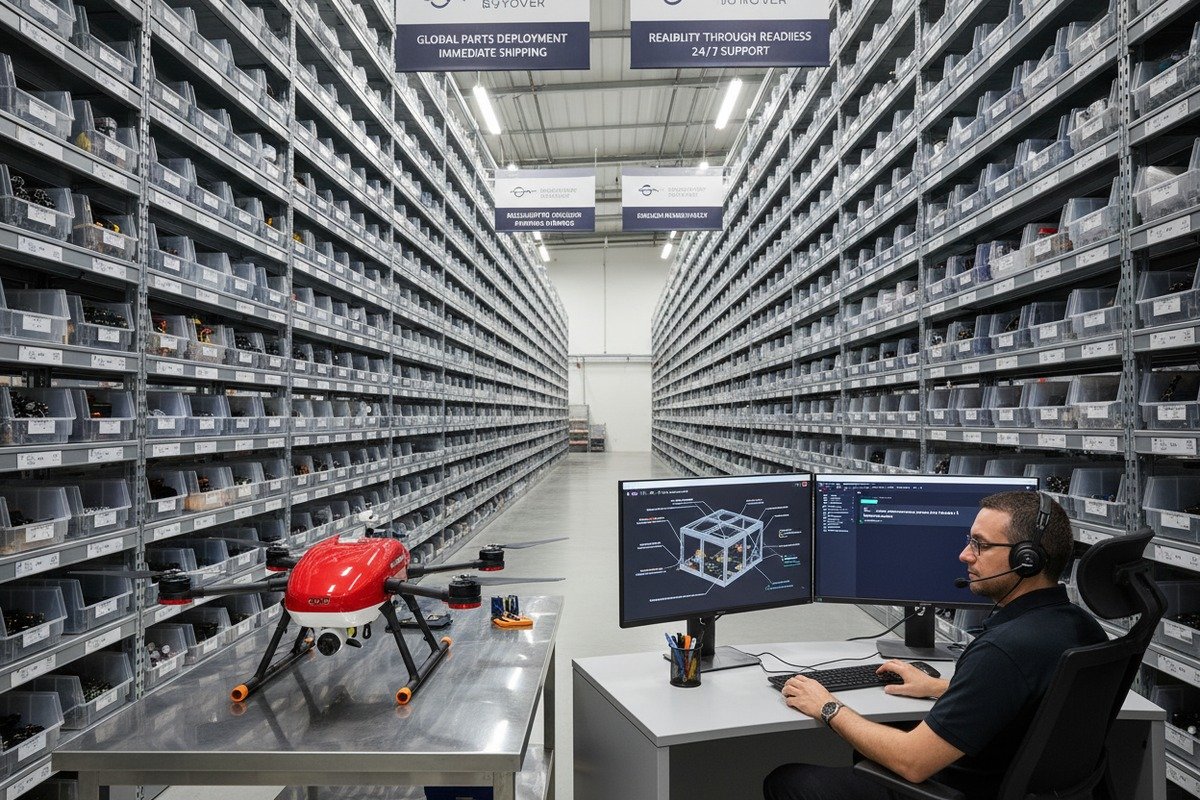
Our customer service team receives urgent calls during active incidents. A malfunctioning hangar during a wildfire is not just inconvenient—it compromises firefighter safety. This reality shapes our entire support philosophy.
Expect 24/7 technical support availability, response times under one hour for urgent issues, multi-year warranties (minimum two years), spare parts delivery within 48-72 hours, remote diagnostic capabilities, regular firmware updates, and on-site training options. Top suppliers maintain regional parts inventories and offer field service technicians.
معايير وقت استجابة الدعم
| مستوى الدعم | وقت الاستجابة | التوفر |
|---|---|---|
| Emergency Technical | Under 1 hour | 24/7/365 |
| Standard Technical | Under 4 hours | Business hours |
| Parts Orders | Same day processing | Business hours |
| تحديثات البرامج الثابتة | Immediate download | 24/7 |
| On-site Service | Within 48 hours | عن طريق التعيين |
Spare Parts Inventory Requirements
When components fail during operations, replacement speed matters. We maintain regional inventory centers to reduce delivery times for US customers.
Essential spare parts that should be readily available:
- Door actuators and motors
- Charging contact assemblies
- Environmental control components
- Seals and gaskets
- Electronic control boards
- Sensors and switches
Ask suppliers about their parts inventory locations. A supplier with parts stored only in China cannot provide rapid delivery to US fire departments.
Training and Knowledge Transfer
Effective support begins with proper training. Our standard package includes:
- Initial operator certification training
- Maintenance technician training
- Command staff integration briefings
- Online refresher course access
- Updated training for firmware changes
Fire departments should expect hands-on training, not just PDF manuals. Insist on practical sessions where operators physically interact with equipment.
Warranty Terms Comparison
| Warranty Element | Basic Coverage | Preferred Coverage |
|---|---|---|
| المدة | 1 سنة | 2-3 سنوات |
| Parts Coverage | Manufacturing defects | All component failure |
| Labor Coverage | لا يوجد | متضمنة |
| Software Updates | 1 سنة | Lifetime |
| On-site Service | Extra charge | متضمنة |
قدرات التشخيص عن بُعد
Modern automated hangars should include remote monitoring features. This allows our technical team to identify issues before they cause failures.
Remote diagnostics enable:
- Real-time system health monitoring
- Predictive maintenance alerts
- Automatic error logging
- Remote firmware deployment
- Performance optimization suggestions
When issues arise, our engineers can often resolve problems remotely within minutes. This dramatically reduces downtime compared to waiting for on-site service.
Long-term Partnership Evaluation
Evaluate suppliers as long-term partners, not just vendors. Consider:
- Financial stability and company longevity
- Ongoing R&D investment
- Customer retention rates
- Reference availability from similar organizations
- Roadmap for future product development
A supplier's reorder rate reveals customer satisfaction. Rates above 25-30% indicate strong ongoing relationships. Ask for this metric directly.
Data Security and IT Integration
Your IT and legal teams should review data handling practices. Automated hangars collect operational data that may be sensitive.
Verify these security elements:
- Data encryption standards
- Storage location and jurisdiction
- Access control protocols
- Compliance with department IT policies
- Data ownership clarification
الخاتمة
Evaluating firefighting drone hangar suppliers requires careful assessment of engineering capability, compliance credentials, environmental durability, and after-sales support. Use this framework to make procurement decisions that protect both your investment and your firefighters.
الحواشي
1. Explains automated drone hangars for public safety and emergency response. ︎
2. Explains the purpose and requirements of CE and FCC certifications for electronics. ︎
3. Defines and explains the function of flight control software in drone operations. ︎
4. Provides a comprehensive guide to NDAA compliance for drones and its implications. ︎
5. Official government resource explaining Blue UAS for first responders and its importance. ︎
6. Defines IP67 ingress protection rating based on the international IEC 60529 standard. ︎
7. Official documentation explaining the MAVLink communication protocol for drones. ︎
8. Discusses climate control and cooling solutions for drone docking stations. ︎

 English
  Spanish
  German
  French
  Dutch
Dutch  Arabic
