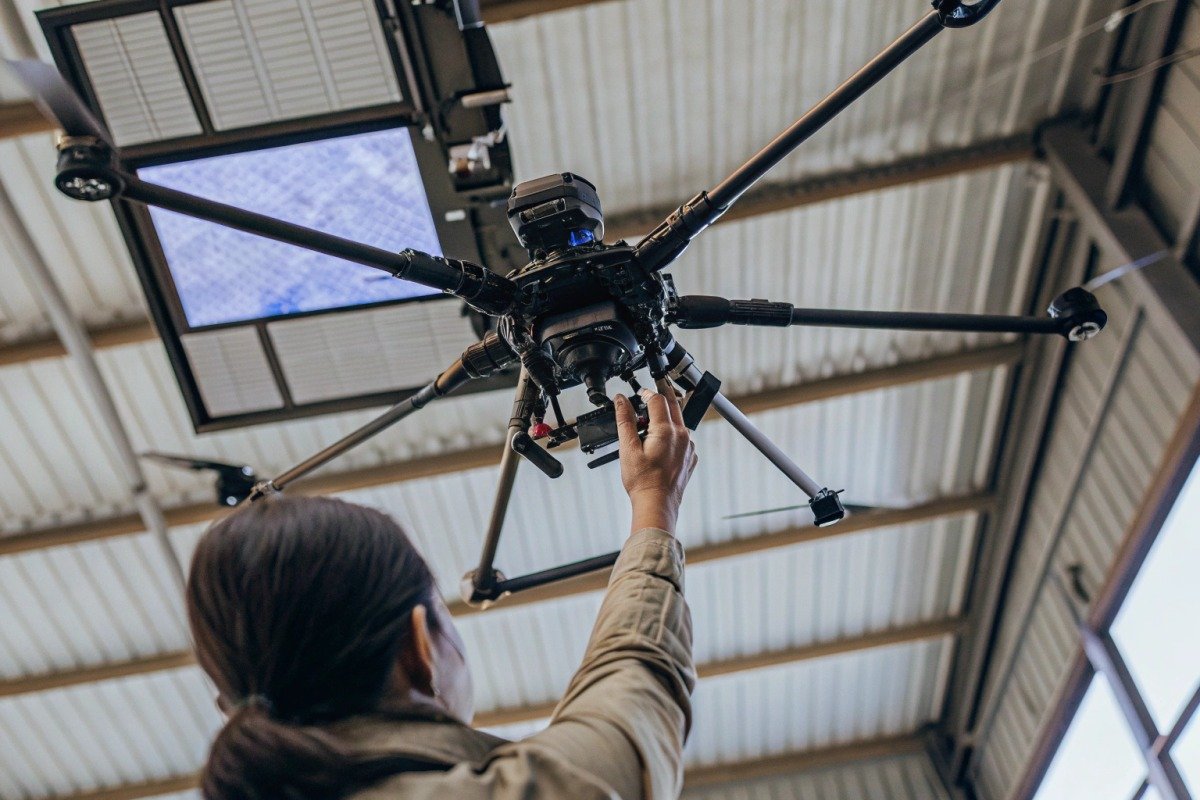
When our engineering team first designed firefighting drones, we quickly learned that computing power determines mission success PCIe Gen 3 1. A drone hovering over an active wildfire cannot wait for cloud servers 2. Delays cost lives.
To evaluate onboard computing power for firefighting drones, assess the processor’s AI inference capability (measured in TOPS), thermal management for extreme heat, sensor fusion compatibility, real-time latency under 100ms, and upgrade pathways. These factors determine whether your drone can autonomously detect fires and make split-second decisions in harsh environments.
This guide walks you through the exact specifications and testing methods you need. We will cover processor benchmarks 3, software customization, heat resistance, and future-proofing strategies. Let us dive into each critical area.
How do I assess if the onboard processor is powerful enough for real-time AI fire detection and thermal analysis?
Selecting processors for firefighting drones has been one of our biggest R&D challenges. The wrong choice means sluggish detection or dead batteries mid-mission. The right choice saves response time.
A processor is powerful enough when it delivers at least 0.5-1 TOPS for edge AI inference, processes 1080p thermal video at 30 FPS with under 100ms latency, and maintains stable performance while consuming less than 15W. Look for dedicated GPU cores or neural processing units for fire detection algorithms.
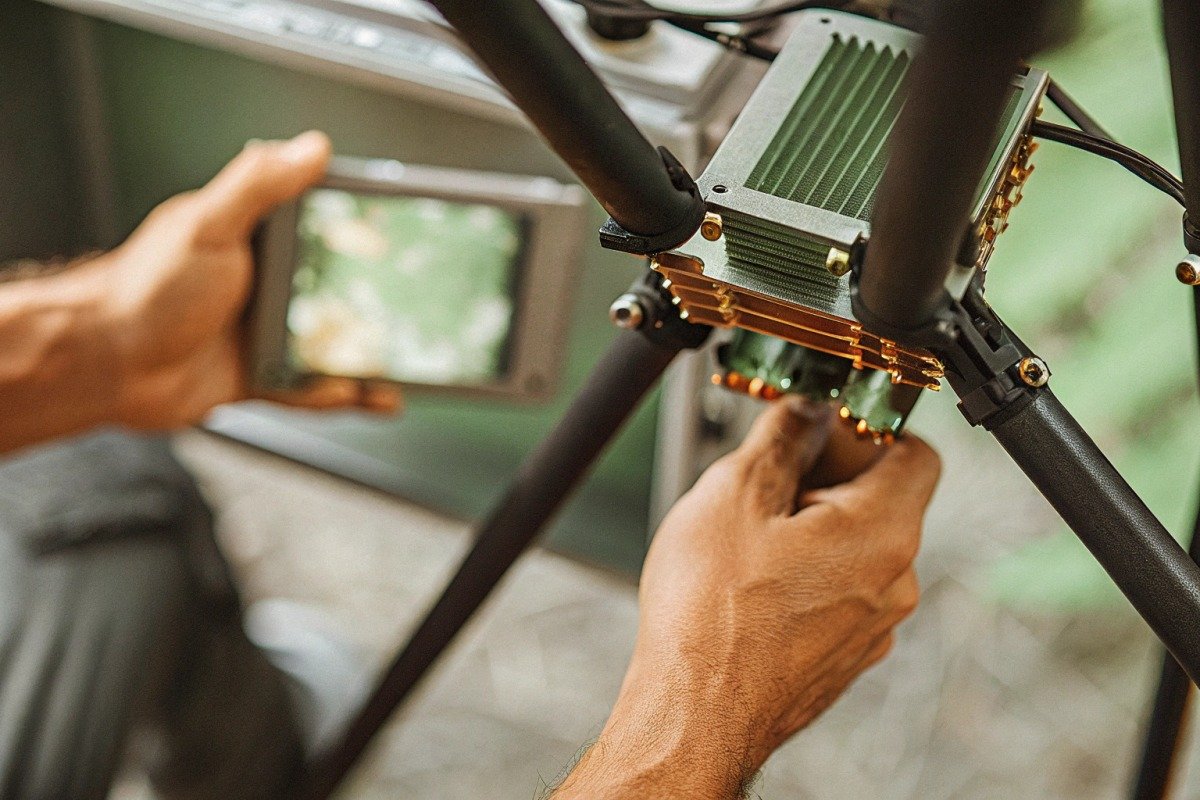
Understanding TOPS and Why It Matters
TOPS stands for Tera Operations Per Second 4. It measures how many AI calculations a processor handles each second. For fire detection, your drone runs deep learning models that analyze thermal images frame by frame.
Here is what different TOPS levels support:
| TOPS Rating | Capability | Suitable Tasks |
|---|---|---|
| 0.1-0.3 TOPS | الأساسيات | Simple hotspot alerts, no segmentation |
| 0.5-1 TOPS | قياسي | Real-time fire classification, basic segmentation |
| 2-4 TOPS | متقدم | Multi-fire tracking, predictive spread modeling |
| 8+ TOPS | Professional | Full autonomous suppression decisions, swarm coordination |
Our production line tests every computing module against thermal datasets before installation. We found that processors below 0.5 TOPS struggle when smoke density increases.
Comparing Common Edge Processors
The market offers several options. Each has trade-offs between power, efficiency, and cost.
| Processor | TOPS | سحب الطاقة | نطاق السعر | الأفضل لـ |
|---|---|---|---|---|
| Raspberry Pi 4 | ~0.1 | 5-7W | $35-75 | Prototyping only |
| NVIDIA Jetson Nano | 0.5 | 5-10W | $99-149 | Entry-level fire detection |
| NVIDIA Jetson Xavier NX 5 | 6 | 10-15W | $399-499 | Professional thermal analysis |
| NVIDIA Jetson Orin Nano | 20 | 7-15W | $199-249 | Future-ready deployments |
When we calibrate our flight controllers, we pair them with Jetson Xavier NX for most commercial clients. It handles simultaneous thermal and RGB streams without frame drops.
Latency Requirements for Life-Safety Applications
الكمون 6 is the time between capturing an image and outputting a detection result. In firefighting, every millisecond matters.
Target these benchmarks:
- Fire detection alert: under 100ms
- Hotspot localization: under 150ms
- Path recalculation: under 200ms
Our engineers have found that ground-based processing adds 500ms-2000ms depending on signal strength. In canyon fires or urban environments, that delay becomes unacceptable.
Practical Testing Methods
Before purchasing, request these tests from your supplier:
- Thermal dataset benchmark: Run sample wildfire footage through the system. Measure FPS and detection accuracy.
- Battery draw test: Monitor power consumption during continuous AI inference over 20 minutes.
- Heat throttling test: Operate in a 50°C environment for 30 minutes. Check if performance drops.
We provide all three test reports with every computing module we ship. Buyers who skip testing often discover problems during actual emergencies.
Can I customize the edge computing software to integrate my own proprietary firefighting algorithms?
Many of our distribution partners have asked this exact question. They need drones that run their patented detection models, not generic software. Customization separates professional equipment from consumer toys.
Yes, you can customize edge computing software if the drone manufacturer provides an open SDK, supports standard frameworks like TensorFlow Lite or PyTorch, offers documented APIs for sensor access, and allows secure deployment of custom models. Request development documentation and verify Linux-based operating systems before purchasing.

What Software Architecture Enables Customization
The computing platform must run on an accessible operating system. Most professional drones use Linux-based systems like Ubuntu or JetPack.
Key requirements for customization:
- Open SDK: Documented software development kit with code samples
- Framework support: TensorFlow Lite 7, PyTorch Mobile, ONNX Runtime
- Sensor APIs: Direct access to thermal camera feeds, LiDAR data, IMU readings
- Container support: Docker or similar for isolated algorithm deployment
- OTA updates: Over-the-air capability for field updates
When we collaborate with clients on design and development, we provide full JetPack environments. Clients can deploy custom models without modifying core flight systems.
Integration Pathways for Proprietary Algorithms
Your algorithms need clear pathways to interact with drone systems.
| Integration Level | Access Provided | Typical Use Case |
|---|---|---|
| Output only | Read detection results | Dashboard integration |
| Model replacement | Swap AI models | Custom fire classifiers |
| Full sensor access | Raw data streams | Novel fusion algorithms |
| Flight control hooks | Trigger autonomous actions | Automated suppression |
Most buyers need Model Replacement level access. Full sensor access requires deeper partnership and NDA agreements.
Questions to Ask Your Supplier
Before committing to a purchase, clarify these points:
- Do you provide source code access or compiled binaries only?
- What AI frameworks are pre-installed on the computing module?
- Can I remotely deploy updated models to drones in the field?
- Is there a simulation environment for testing before field deployment?
- What technical support do you offer for custom integration?
Our team has found that 60% of customization projects fail due to unclear documentation. We assign dedicated engineers to integration projects for this reason.
Protecting Your Intellectual Property
Custom algorithms represent significant R&D investment. Ensure the platform supports:
- Encrypted model storage
- Secure boot processes
- Access logging
- Remote wipe capability
We implement hardware-level encryption on all computing modules. Your proprietary fire prediction models remain protected even if a drone is lost or captured.
How will the drone's computing hardware maintain performance when exposed to extreme heat and smoke?
Firefighting environments destroy consumer electronics within minutes. When we tested early prototypes near controlled burns, standard components failed at 65°C. Now we engineer specifically for extremes.
Computing hardware maintains performance in extreme conditions through extended temperature-rated components (-40°C to +85°C), active cooling systems, conformal coatings against smoke particles, hermetically sealed enclosures rated IP67 or higher, and thermal throttling management firmware. Request environmental test certifications before deployment.

Temperature Ratings Explained
Commercial electronics typically operate between 0°C and 70°C. Firefighting drones face radiant heat exceeding 200°C at close range.
Component survival depends on industrial ratings:
| Rating Category | نطاق درجة الحرارة | Suitability |
|---|---|---|
| Commercial | 0°C to 70°C | Office environments only |
| Industrial | -40°C to +85°C | Minimum for firefighting |
| Military | -55°C to +125°C | Extreme close-range operations |
| Automotive | -40°C to +105°C | Acceptable alternative |
Our manufacturing process uses industrial-rated components exclusively for firefighting lines. We reject any module that fails thermal cycling tests.
Active vs. Passive Cooling Systems
Processors generate significant heat during AI inference. This internal heat combines with external fire heat.
Passive cooling uses heatsinks and thermal pads. It works up to 50°C ambient but fails beyond that.
Active cooling adds fans, heat pipes, or liquid cooling. It maintains performance at higher temperatures but consumes extra power and adds failure points.
Our engineers have found that hybrid approaches work best. We use oversized passive heatsinks combined with thermally-triggered fans that activate only when needed. This balances reliability with performance.
Protecting Against Smoke and Particulates
Smoke contains fine particles that infiltrate electronics. These particles cause:
- Short circuits on exposed contacts
- Fan bearing failures
- Sensor contamination
- Connector corrosion
Protection measures include:
- Conformal coatings: Thin protective layers on circuit boards
- Filtered air intakes: HEPA-style filters on cooling vents
- Positive pressure enclosures: Internal air pressure prevents particle entry
- Sealed connectors: IP-rated connections between modules
We apply MIL-I-46058C conformal coating 8 to every computing board. This standard originated from military electronics but now defines firefighting drone requirements.
Thermal Throttling and Performance Management
When temperatures exceed safe limits, processors reduce speed to prevent damage. This throttling can occur at critical moments.
Good firmware manages throttling gracefully:
- Prioritizes fire detection over secondary tasks
- Provides pilot warnings before significant performance drops
- Logs thermal events for post-mission analysis
- Recovers full performance when temperatures normalize
Request thermal throttling 9 curves from your supplier. You need to know exactly when and how performance degrades.
Field Testing Recommendations
Before deploying in actual fires:
- Run continuous operations in 60°C chamber for 2 hours
- Expose to simulated smoke for 30 minutes
- Cycle between -20°C and +70°C repeatedly
- Measure performance metrics throughout
We conduct these tests on every batch. Documentation accompanies each shipment to distribution partners.
What specifications should I look for to ensure the onboard system supports future edge computing upgrades?
Technology evolves rapidly. The drone you purchase today must remain capable for years. When we designed our current platform, we built upgrade pathways into every component.
To ensure future upgrade support, look for modular computing architectures with standardized interfaces (PCIe, USB 3.0+), sufficient power headroom (20-30% above current needs), expandable RAM slots, firmware-upgradable AI accelerators, and manufacturer commitment to long-term software support. Avoid proprietary locked systems that prevent hardware swaps.

Modular Architecture Benefits
Monolithic systems force complete replacement when upgrades become necessary. Modular systems allow targeted improvements.
| Architecture Type | Upgrade Flexibility | Cost Over 5 Years | مستوى المخاطرة |
|---|---|---|---|
| Monolithic | None – full replacement | عالية | عالية |
| Semi-modular | Limited component swaps | متوسط | متوسط |
| Fully modular | Any component upgradable | منخفضة | منخفضة |
Our production uses carrier board designs where computing modules plug into standardized sockets. When NVIDIA releases new Jetson generations, clients swap modules without replacing entire systems.
Key Interface Standards to Require
Future computing modules will need modern interfaces. Verify these standards:
- PCIe Gen 3 or higher: High-speed data transfer for sensors
- USB 3.0 minimum, USB-C preferred: Peripheral connectivity
- Gigabit Ethernet: Ground station communication
- MIPI CSI-2: Camera interfaces for thermal and RGB
- CAN bus: Flight controller integration
Proprietary interfaces lock you into single suppliers. Standard interfaces ensure compatibility with future hardware.
Power Budget Planning
New processors often require more power. Plan ahead:
Current consumption + 30% headroom = Required power capacity
If your current computing draws 15W, ensure the power system supports at least 20W. This accommodates:
- More powerful future processors
- Additional sensors
- Extended operational modes
- Safety margins
We design power distribution boards with 25W capacity for 15W systems. Clients upgrading to Jetson Orin have headroom without rewiring.
Software Support Commitments
Hardware means nothing without software support. Ask suppliers:
- How long will you provide firmware updates?
- Will new AI frameworks be supported on current hardware?
- Do you maintain backward compatibility when upgrading?
- Is there a published end-of-life policy?
We commit to 5-year software support minimum for all computing platforms. This includes security patches, framework updates, and compatibility maintenance.
Future Technology Considerations
By 2026, expect these developments:
- AI swarm coordination: Drones sharing processing loads
- 5G edge offloading: Selective cloud bursting when connectivity exists
- Quantum-resistant encryption: New cryptographic standards
- Neuromorphic processors: Ultra-efficient AI chips
Your current purchase should accommodate these trends. Look for software-defined architectures where capabilities expand through updates rather than replacements.
Evaluation Checklist
Use this checklist when assessing upgrade potential:
- Computing module uses standard socket interface
- Power system has 25%+ headroom
- RAM is expandable or already maximized
- Storage uses standard NVMe or SD interfaces
- Firmware supports over-the-air updates
- Manufacturer publishes long-term support roadmap
- Documentation includes hardware upgrade guides
We include this checklist in our sales materials. Informed buyers make better partners.
الخاتمة
Evaluating onboard computing power requires examining processor capability, customization options, environmental resilience, and upgrade pathways. Focus on measurable specifications like TOPS, temperature ratings, and interface standards. The right computing platform makes your firefighting drone effective today and adaptable tomorrow.
الحواشي
1. Provides an overview of PCI Express, including the Gen 3 specification. ︎
2. Explains what cloud servers are and their benefits in computing. ︎
3. Provides a comprehensive guide to understanding CPU benchmarks and their importance. ︎
4. Replaced with an authoritative article from Qualcomm explaining AI TOPS and NPU performance metrics. ︎
5. Replaced with the official NVIDIA product page for Jetson Xavier NX. ︎
6. Explains latency as a measurement of delay in a system, especially in networks. ︎
7. Official Google AI page for LiteRT (formerly TensorFlow Lite) for on-device machine learning. ︎
8. Replaced with a comprehensive guide explaining the MIL-I-46058C standard for conformal coatings. ︎
9. Explains thermal throttling as a CPU/GPU mechanism to prevent overheating and damage. ︎

 English
  Spanish
  German
  French
  Dutch
Dutch  Arabic
