
Every season, our customer service team receives calls from frustrated farmers who discover their newly purchased drones spray 15-20% more or less chemical than displayed. The root cause? Nobody tested the flow meter accuracy 1 across different speeds before buying. This oversight costs thousands in wasted pesticides and damaged crops.
To evaluate flow meter accuracy when buying agricultural drones, request multi-rate demonstration tests at low, medium, and high flow rates. Perform manual catch tests using graduated cylinders, compare results against drone readings, and demand calibration certificates showing ±2% accuracy across the full operational range.
The following sections break down exactly how to test, what documents to request, and which warning signs to watch for during your procurement process.
How can I test the flow meter's precision across the drone's full range of operating speeds?
When our engineering team calibrates new طائرات زراعية بدون طيار 2 before shipment, we run each unit through a standardized multi-rate protocol. Many buyers skip this step and trust factory specs alone. That trust often leads to expensive surprises in the field.
Test flow meter precision by running manual catch tests at three distinct rates: low (5 L/min), medium (7.5 L/min), and high (10+ L/min). Collect spray output from each nozzle for 30-60 seconds using graduated cylinders, weigh the results, and compare against the drone's displayed readings. Repeat twice for consistency.

Understanding Why Multi-Rate Testing Matters
Flow meters behave differently at various speeds. A meter showing 2% accuracy at medium rates might drift to 8-10% error at low rates. This happens because turbine meters 3 need minimum flow to spin consistently. Electromagnetic meters lose signal strength at flow extremes. Only ultrasonic meters 4 maintain steady accuracy across ranges.
During procurement, never accept a single-rate demonstration. Sellers often show medium-rate performance because that is where most meters perform best. You need data from all three zones.
Step-by-Step Catch Test Protocol
Here is the exact process we use in our quality control department:
- Fill the tank with plain water first
- Flush lines for 30 seconds to remove air bubbles
- Position graduated cylinders 5 under each nozzle
- Start a digital stopwatch simultaneously with pump activation
- Collect for exactly 60 seconds
- Weigh collected water on a precision scale
- Calculate actual flow rate: Volume (ml) ÷ Time (seconds) × 60 = L/min
- Compare to drone display reading
- Record percentage difference
- Repeat at low, medium, and high pump settings
Flow Rate Calculation Reference
Use this formula to determine required rates for your application:
Required Flow Rate (L/min) = (Application Rate L/ha × Speed m/s × Swath Width m) ÷ 60
| Application Scenario | السرعة | Swath Width | Application Rate | Required Flow Rate |
|---|---|---|---|---|
| Slow scouting pass | 4 m/s | 7.5 m | 10 L/ha | 5 L/min |
| Standard spraying | 6 m/s | 7.5 m | 10 L/ha | 7.5 L/min |
| Fast dense coverage | 8 m/s | 7.5 m | 10 L/ha | 10 L/min |
Acceptable Error Thresholds
| Flow Rate Zone | Acceptable Error | Warning Level | Reject Level |
|---|---|---|---|
| Low (5 L/min) | ±3% | ±5% | >±8% |
| Medium (7.5 L/min) | ±2% | ±4% | >±6% |
| High (10+ L/min) | ±3% | ±5% | >±8% |
If any zone exceeds warning levels, request recalibration before purchase. If reject levels appear, walk away from that unit entirely.
What documentation should I request from my supplier to prove accuracy at varying flow rates?
Our export team prepares comprehensive documentation packages for every shipment to the US and Europe. However, we have learned that many competitors provide only basic spec sheets. Smart buyers know exactly which papers to demand and how to verify them.
Request calibration certificates showing test results at three flow rates, flow meter specification sheets with accuracy ratings, third-party testing reports if available, historical maintenance logs from demo units, and warranty terms specifically covering flow meter replacement. ISO compliance documentation adds extra verification credibility.
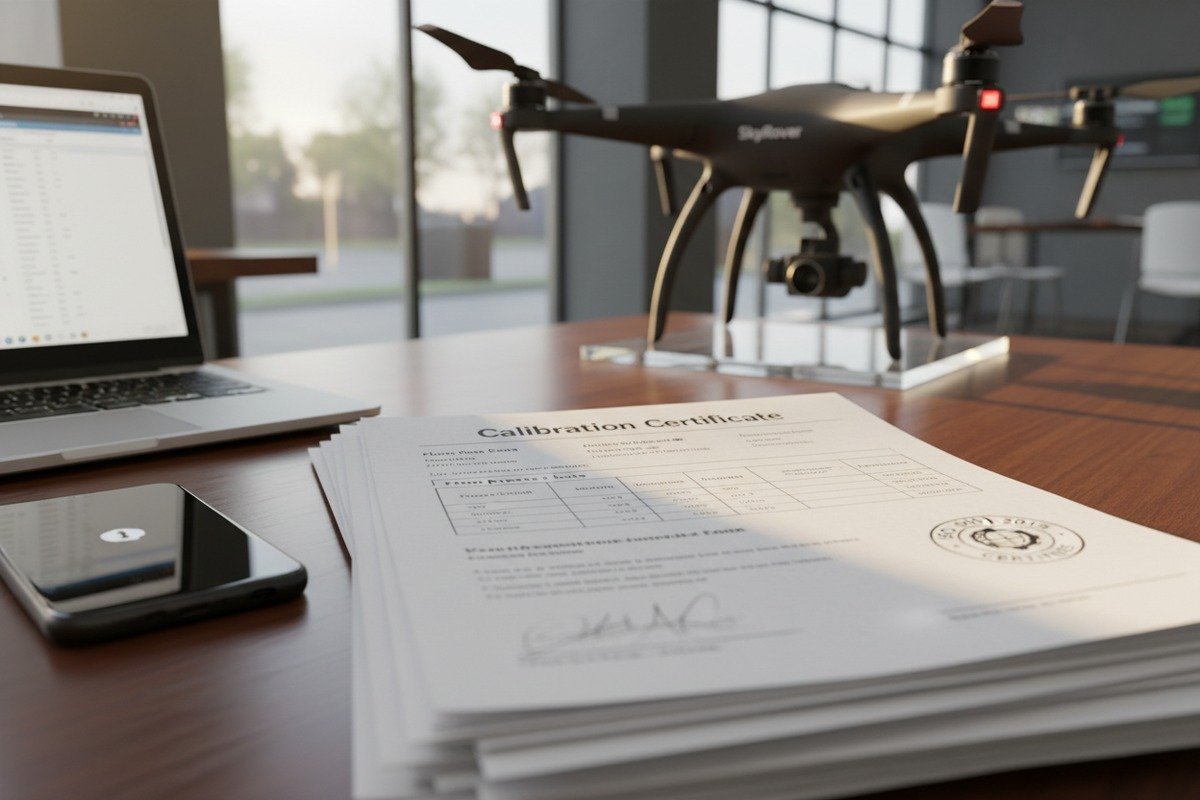
قائمة التحقق من المستندات الأساسية
When we prepare documentation for procurement managers like those in agricultural distribution companies, we include specific papers that prove performance. Here is what you should require:
Calibration Certificate Requirements
A proper calibration certificate 6 must include:
- Date of calibration (within 90 days of purchase)
- Serial number of the specific unit
- Test equipment used with its own calibration status
- Actual measured values at low, medium, and high rates
- Comparison to displayed values
- Percentage error calculations
- Technician signature and credentials
- Retest interval recommendation
Documentation Comparison Table
| نوع المستند | ما الذي يثبته | العلم الأحمر إذا كان مفقوداً |
|---|---|---|
| Multi-rate calibration certificate | Accuracy across operating range | Seller hiding poor low-rate performance |
| Flow meter specification sheet | Manufacturer's claimed accuracy | Unknown meter origin or quality |
| Third-party test report | Independent verification | Relying solely on seller claims |
| Maintenance history log | Long-term reliability data | No track record of durability |
| Warranty terms for flow meter | Supplier confidence in product | High failure expectation |
| ISO 4064 compliance certificate 7 | International standard adherence | Unverified accuracy claims |
How to Verify Document Authenticity
Some suppliers provide fabricated or outdated documentation. Protect yourself by:
- Calling the third-party testing lab to confirm the report exists
- Checking calibration dates against equipment serial numbers
- Requesting original documents rather than photocopies
- Verifying technician credentials through professional registries
- Comparing specs to manufacturer websites directly
Questions to Ask Your Supplier
Prepare these questions before any procurement meeting:
- What flow meter brand and model does this drone use?
- Can you demonstrate accuracy at 5 L/min, 7.5 L/min, and 10 L/min?
- When was this specific unit last calibrated?
- What is the recommended recalibration interval?
- Does warranty cover flow meter replacement if accuracy degrades?
- Can you provide contact information for the calibration lab?
- What is your return policy if accuracy does not match documentation?
In our experience shipping to agricultural distributors across North America, buyers who ask these questions upfront avoid 90% of post-purchase disputes.
How do I ensure the flow meter remains accurate when I switch between different chemical viscosities?
Our R&D engineers discovered early in product development that the same flow meter reading 7.5 L/min with water might show 6.8 L/min with viscous fungicides. chemical viscosities 8 Chemical properties change everything about flow measurement. Buyers who ignore this factor face constant recalibration headaches.
Ensure flow meter accuracy across chemical viscosities by selecting ultrasonic or electromagnetic meters over turbine types, requesting viscosity compensation features, testing with actual chemicals during demonstrations, and establishing baseline calibration curves for each product you plan to spray.

Why Viscosity Affects Flow Measurement
Different chemicals have different thicknesses. Water flows easily. Concentrated fertilizers move like syrup. This difference impacts each meter type differently:
Turbine meters use spinning blades. Thick fluids slow blade rotation, causing under-reading. The error can reach 15-20% with high-viscosity chemicals.
Electromagnetic meters measure electrical conductivity changes. They handle viscosity better but struggle with non-conductive fluids like certain oils.
Ultrasonic meters measure sound wave travel time. They maintain consistent accuracy regardless of viscosity because sound waves penetrate all fluid types equally.
Flow Meter Performance by Viscosity
| Meter Type | Water Accuracy | Low Viscosity Chemical | High Viscosity Chemical | Non-Newtonian Fluid |
|---|---|---|---|---|
| Turbine | ±2% | ±4% | ±10-15% | ±20%+ |
| Electromagnetic | ±2% | ±2% | ±3% | ±5% |
| Ultrasonic | ±2% | ±2% | ±2% | ±3% |
Practical Testing With Your Chemicals
Before finalizing any purchase, bring samples of the three most common chemicals you will spray. Ask the seller to:
- Fill the tank with your chemical
- Run the catch test protocol at medium rate
- Compare results to water baseline
- Document the correction factor needed
For example, if water tests show 7.5 L/min and your fungicide shows 6.9 L/min on the same setting, you need an 8.7% correction factor for that chemical.
Building Your Calibration Library
Create a reference chart for each chemical:
| Chemical Type | Viscosity Rating | Correction Factor | الملاحظات |
|---|---|---|---|
| Water baseline | 1.0 cP | 0% | Reference standard |
| Standard herbicide | 1.2 cP | +2% | Minimal adjustment |
| Concentrated fertilizer | 2.5 cP | +8% | Significant correction |
| Thick fungicide | 4.0 cP | +12% | Major viscosity impact |
Store this chart in your drone's flight app or controller memory. Switch correction factors whenever you change chemicals.
Advanced Compensation Features
When evaluating drones during procurement, ask about automatic viscosity compensation. Premium systems include:
- Temperature sensors that adjust for viscosity changes as chemicals warm during operation
- Pre-programmed profiles for common chemical types
- Learning algorithms that refine corrections based on actual spray data
- Manual override options for unusual formulations
Our production line integrates these features into export models specifically because American and European farmers use diverse chemical portfolios. The investment in proper compensation saves hours of manual recalibration.
Why should I prioritize flow meter stability at low discharge rates during my procurement evaluation?
When our technical support team analyzes field complaints, low-rate accuracy problems appear three times more often than high-rate issues. Farmers doing precision spot treatments or flying slowly over sensitive crops need reliable low-flow performance. Yet most sellers only demonstrate medium and high rates where meters perform best.
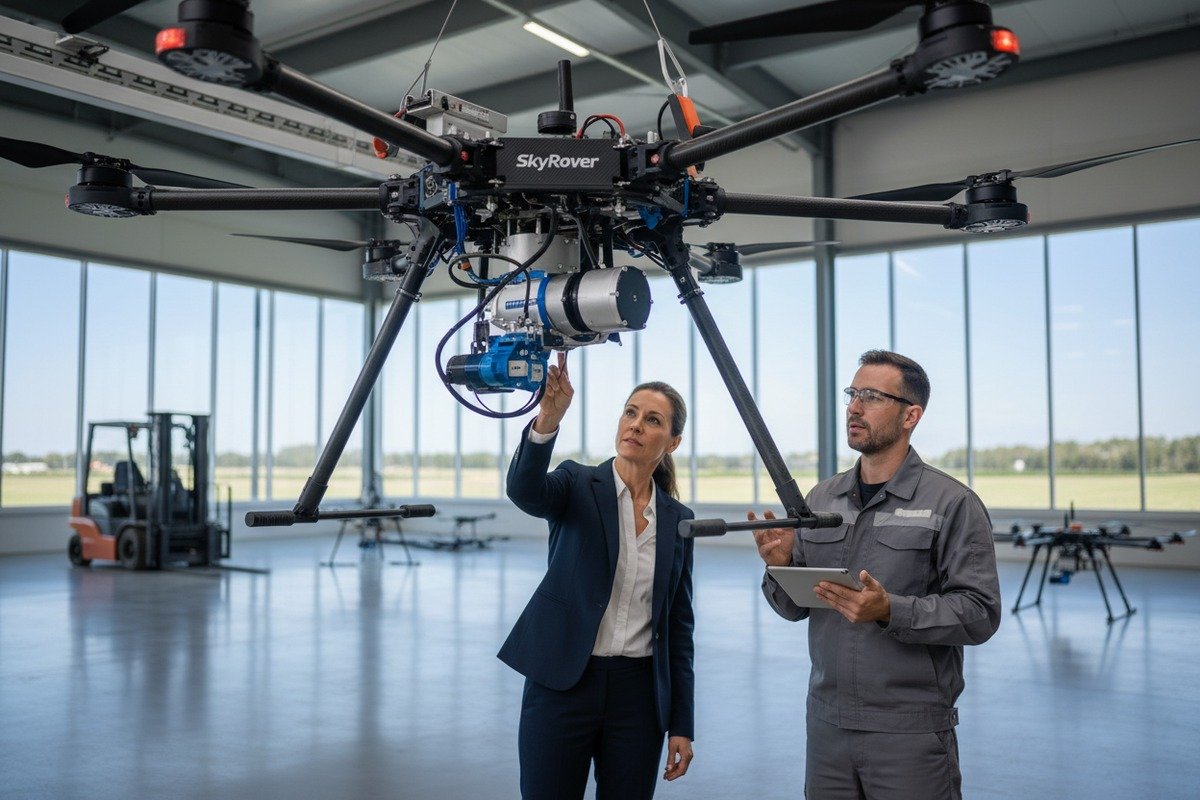
Prioritize low discharge rate stability because precision applications like spot treatments, slow scouting passes, and sensitive crop spraying require accurate metering at 3-5 L/min. Turbine meters commonly fail at these rates due to insufficient flow to maintain consistent blade rotation, causing 10-20% measurement errors.
The Physics Behind Low-Rate Problems
Every flow meter has a minimum reliable flow threshold. Below this threshold, measurement becomes unstable or impossible.
Turbine meters need enough fluid velocity to spin their internal blades at consistent speed. At low flow rates, blades may stutter, pause, or spin irregularly. The displayed reading fluctuates wildly.
Electromagnetic meters 9 require sufficient ion movement to generate measurable electrical signals. Diluted chemicals or low flow volumes produce weak signals that amplify measurement noise.
Ultrasonic meters face fewer low-rate challenges because sound waves travel through any fluid volume. However, air bubbles become more problematic at low rates when flow cannot push them through the system.
Real-World Low-Rate Applications
Understanding when you need low-rate accuracy helps justify its importance during procurement:
| Application Type | Typical Flow Rate | Accuracy Impact |
|---|---|---|
| Spot treatment of weeds | 3-4 L/min | High – overdose damages crops |
| Slow passes over young seedlings | 4-5 L/min | Critical – fragile plants |
| High-value orchards | 5-6 L/min | High – expensive chemicals |
| Steep terrain (reduced speed) | 4-5 L/min | Significant – safety requires slow flight |
| End-of-row turns | Variable/low | Moderate – brief exposure |
How to Test Low-Rate Stability
During procurement demonstrations, insist on this specific test:
- Set the pump to its lowest operational setting
- Run for 5 minutes continuous while monitoring the display
- Watch for reading fluctuations (jumping numbers indicate instability)
- Perform three catch tests at 60-second intervals
- Calculate variance between the three tests
- Acceptable variance: less than 3%
- Warning variance: 3-5%
- Reject variance: greater than 5%
Startup Surge Evaluation
Flow meters often show false readings during pump startup. The initial surge can display 150-200% of actual flow for 2-5 seconds. This affects total application calculations, especially on short field passes.
Ask the seller to demonstrate:
- Time from pump start to stable reading
- Magnitude of startup surge
- Whether the flight controller compensates for startup variance
Our flight control systems include surge compensation algorithms that ignore the first 3 seconds of flow data. Not all competitors offer this feature.
Long-Term Low-Rate Degradation
Mechanical meters wear fastest at low rates because blades experience more friction relative to flow velocity. Request documentation showing:
- Expected accuracy at low rates after 500 flight hours
- Maintenance intervals specific to low-rate applications
- Replacement part availability for worn components
The industry standard suggests turbine meter replacement at 700 hours, but heavy low-rate users may need replacement at 400-500 hours. Ultrasonic meters show minimal low-rate degradation even after 1,500 hours.
الخاتمة
Evaluating flow meter accuracy across different rates protects your investment and ensures effective crop treatment. Test at low, medium, and high rates. Demand proper documentation. Verify performance with your actual chemicals. Prioritize low-rate stability for precision work.
الحواشي
1. Explains fundamental principles of flow meter accuracy and related terminology. ︎
2. Provides an overview of drone applications in agriculture from a government source. ︎
3. Explains the operating principle and construction of turbine flow meters. ︎
4. Describes the method by which ultrasonic flow meters measure fluid flow. ︎
5. Defines and describes the common uses of graduated cylinders in laboratory settings. ︎
6. Provides information on calibration services and associated documentation from a national standards body. ︎
7. Official page for the ISO 4064 standard related to water meters, outlining requirements. ︎
8. Explains the scientific concept of viscosity and its impact on fluid flow. ︎
9. Details the working principle of electromagnetic flow meters based on Faraday’s Law. ︎

 English
  Spanish
  German
  French
  Dutch
Dutch  Arabic
