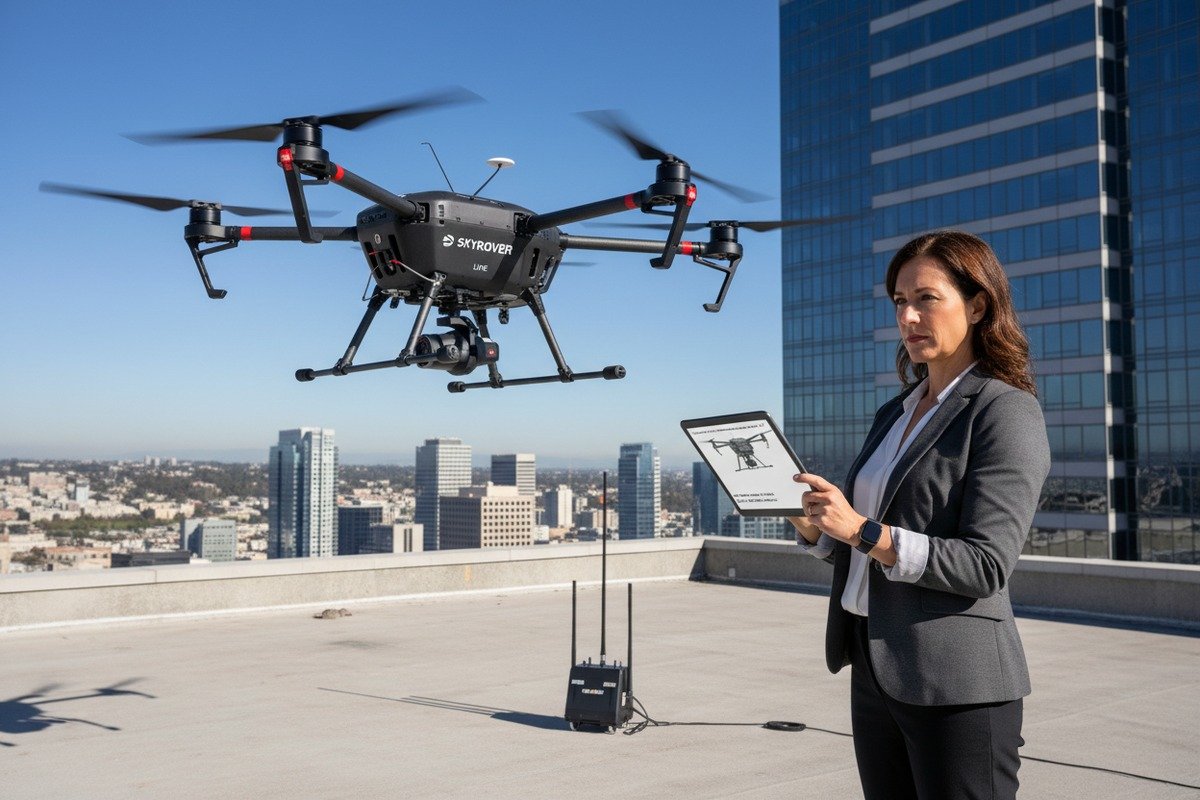
Every week, our engineering team receives calls from frustrated US fire departments. Their drones lose video feeds mid-operation. Dense urban signals jam their transmissions. Lives and property hang in the balance.
To evaluate firefighting drone video interference resistance, procurement managers must test transmission systems in real urban RF environments, verify FCC-compliant power output up to 33 dBm, demand documentation on frequency hopping protocols, and conduct field trials measuring latency near communication towers and skyscrapers.
This guide walks you through each critical step. We will cover verification methods, documentation requirements, customization options, and latency testing protocols. Let us dive into the specifics.
How do I verify if a firefighting drone's transmission system can handle high-density signal interference in my city?
Our test facilities in Xi'an simulate the exact RF conditions found in cities like New York and Los Angeles. When we calibrate transmission modules 1, we push them through worst-case scenarios. The results often surprise procurement teams who visit our factory.
Verify interference handling by requesting spectrum analysis reports, conducting on-site tests in your target deployment area with Wi-Fi flooding, measuring signal-to-noise ratios at various distances, and comparing dynamic channel switching response times between competing models.
Understanding Urban RF Challenges
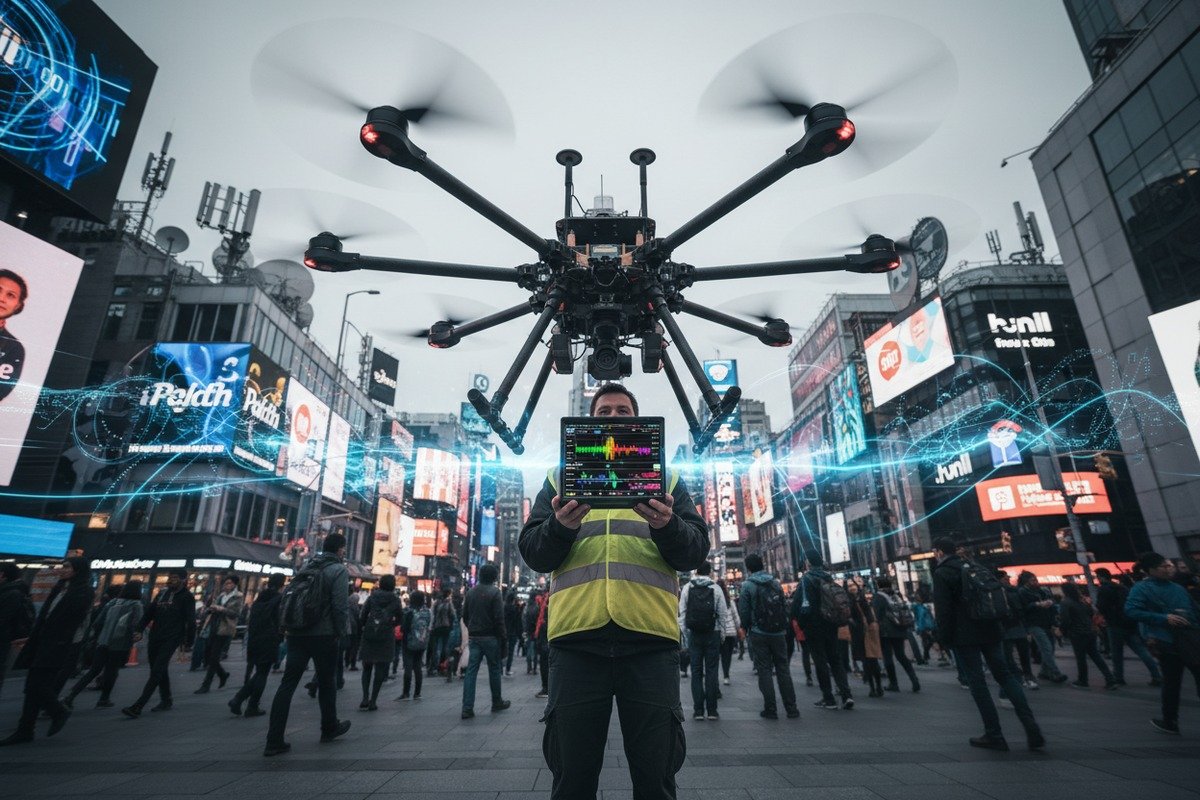
Cities create a hostile environment for drone video transmission. Wi-Fi networks blanket every block. Smart devices emit constant signals. Building materials reflect and absorb radio waves unpredictably. This multipath interference 2 causes video dropouts at critical moments.
The US regulatory environment offers one advantage. The FCC allows transmission power 3 up to 33 dBm. This exceeds European limits of 14-20 dBm and Chinese limits of 20-30 dBm. However, hardware often falls short of these maximums due to thermal and battery constraints.
عملية التحقق خطوة بخطوة
Start with spectrum mapping. Before any purchase, document the RF environment in your deployment zones. Use a spectrum analyzer during peak hours. Note congestion levels at 2.4 GHz and 5.8 GHz bands.
Next, request manufacturer test data. Our quality control process includes interference simulation. We expose each unit to Wi-Fi floods while measuring video bitrate stability. Ask potential suppliers for these records.
Practical Field Testing Protocol
| مرحلة الاختبار | Method | Pass Criteria |
|---|---|---|
| Baseline | Power off nearby devices | Stable 1080p at max range |
| Wi-Fi Flood | 20+ active hotspots | No dropout >2 seconds |
| Multi-Drone | 3 drones within 100m | Independent stable feeds |
| Urban Canyon | Between tall buildings | Latency <200ms |
| Tower Proximity | Within 500m of cell tower | Signal-to-noise >15dB |
Conduct short-distance tests first. Position the drone 200 meters from the command station in your busiest downtown area. Stream video for 30 minutes minimum. Document any freezes, artifacts, or dropouts.
Then extend range incrementally. Move to 500 meters, then 1 kilometer. Note the point where video quality degrades. Compare this against manufacturer claims.
Isolating Interference Sources
A hidden problem exists with pilot-carried devices. Phones and tablets emit signals that can interfere with drone control links. During testing, have operators power off personal devices. Then repeat tests with devices active. The difference reveals system resilience.
Consider environmental factors too. Metal rooftops amplify signal reflection. Glass facades create unpredictable propagation. Concrete parking structures block transmission entirely. Test in each scenario relevant to your city's architecture.
What specific technical documentation should I ask my supplier for to confirm video link stability in urban environments?
When our export team prepares shipments for US clients, we compile comprehensive documentation packages. These papers take weeks to assemble properly. Many competitors skip this step entirely, leaving buyers without proof of performance claims.
Request FCC certification showing actual tested power output, spectrum analysis reports from urban test environments, frequency hopping protocol specifications, video codec and bitrate documentation, and third-party interference testing results with methodology details.

Essential Certification Documents
FCC certification 4 proves legal compliance but reveals more. The test reports show actual measured transmission power. Compare this figure against the 33 dBm 5 maximum. Many drones test below 25 dBm despite regulatory headroom.
Request the full test report, not just the certificate. It contains frequency ranges, spurious emissions data, and power measurements across channels. This data predicts real-world performance.
Transmission System Specifications
| نوع المستند | Key Information | Red Flags |
|---|---|---|
| FCC Test Report | Actual power output | Power <25 dBm |
| Frequency Band Cert | Supported bands | Single band only |
| Protocol Spec | Hopping algorithm | Fixed frequency |
| Video Codec Sheet | Resolution/bitrate | No adaptive rate |
| Encryption Cert | Security standard | No encryption |
Dual-band capability matters enormously. Systems operating on both 2.4 GHz and 5.8 GHz can switch when one band becomes congested. Single-band systems have no escape route from interference.
Quality Control Records
Our production line generates test records for every unit. These show video transmission performance before shipping. Ask suppliers if they conduct 100% testing or sample testing. Sample testing leaves room for defective units.
Environmental stress testing documentation proves durability. IP54 or IP55 ratings indicate resistance to dust and water spray. Temperature range certifications should cover -10°F to 104°F for US fire department applications.
Third-Party Validation
Independent test reports carry more weight than manufacturer claims. Ask if any government agency or university has tested the drone model. The US Department of Interior maintains a drone approval list with interference testing data.
NFPA standards now address drone programs for fire departments. Documentation showing compliance with these emerging standards demonstrates manufacturer commitment to the firefighting market.
Data Security Documentation
Video encryption specifications protect sensitive footage. Request documentation on encryption protocols. AES-256 encryption 6 represents the current standard. Weaker encryption exposes departments to cybersecurity risks.
Remote ID compliance 7 documentation became mandatory in 2023. This system broadcasts drone identity and location. Ensure suppliers provide integration documentation for FAA Remote ID requirements.
Can I collaborate with the manufacturer to customize the drone's frequency hopping capabilities for my local regulations?
Our engineering team has completed seventeen custom frequency configurations for US clients in the past two years. Each project taught us something new about regional requirements. The process requires close collaboration but delivers drones perfectly matched to local conditions.
Yes, reputable manufacturers can customize frequency hopping parameters within FCC-approved bands, adjust channel dwell times for specific interference patterns, configure priority frequencies for your region, and develop custom firmware meeting local emergency communication protocols.

Understanding Frequency Hopping Technology
Dynamic Frequency Hopping 8 spreads transmission across multiple channels rapidly. When interference hits one channel, the system jumps to another. This happens hundreds of times per second in advanced systems.
Direct Sequence Spread Spectrum offers an alternative approach. It spreads signals across a wide bandwidth simultaneously. Both technologies resist interference, but hopping adapts better to urban environments where congestion varies by location.
Customization Options Available
| Parameter | Standard Setting | Custom Options |
|---|---|---|
| Hop Rate | 200 hops/sec | 100-500 hops/sec |
| Channel Set | Full band | Regional subset |
| Dwell Time | 5ms | 2-20ms |
| Priority Channels | لا يوجد | Up to 10 defined |
| Blacklist | لا يوجد | Excluded frequencies |
Higher hop rates improve interference resistance but consume more processing power. For urban firefighting, we typically recommend 300-400 hops per second. This balances resilience against battery life.
Regional Frequency Considerations
Different US regions face different interference profiles. New York City has extreme 2.4 GHz congestion from millions of Wi-Fi devices. Rural areas may have interference from agricultural equipment on specific frequencies.
Custom blacklists prevent the drone from using known problem frequencies in your area. If a local TV station or radio tower causes interference, we can exclude those frequencies from the hopping pattern.
Regulatory Compliance in Customization
All customization must stay within FCC Part 15 limits. Our engineers verify that modified firmware maintains compliance. We provide updated test documentation showing the custom configuration meets regulatory requirements.
Some fire departments operate under special FCC authorizations. Public safety agencies may access additional spectrum. If your department holds such authorization, we can configure systems to utilize these protected frequencies.
Implementation Timeline
Custom frequency projects typically require eight to twelve weeks. The first phase involves RF analysis of your deployment area. Our team may request spectrum survey data or send engineers to conduct measurements.
Programming and testing follow. We validate performance in simulated interference matching your environment. Final units ship with documentation proving custom configuration meets specifications.
How do I evaluate the real-time video latency of a drone when operating near large skyscrapers and communication towers?
Last month, our test pilot flew a unit between forty-story buildings in Shanghai's financial district. The video feed remained stable at 120ms latency. This kind of testing happens before any drone leaves our facility, but your local conditions may differ significantly.
Evaluate latency by measuring end-to-end delay with calibrated timestamps, testing at multiple distances from skyscrapers and towers, monitoring for latency spikes during flight path changes, and comparing performance across different times of day when RF congestion varies.

Measuring True Latency
Latency has multiple components. Capture delay occurs at the camera. Encoding takes time. Transmission adds delay. Decoding at the ground station consumes milliseconds. Display rendering adds final latency.
Total system latency for firefighting applications should stay below 200 milliseconds. Faster is always better. Thermal imaging interpretation suffers when latency exceeds this threshold. Operators make decisions on stale information.
Test Protocol for Urban Environments
| Distance from Structure | Acceptable Latency | Warning Level |
|---|---|---|
| 500m from skyscraper | <150ms | >200ms |
| 200m from skyscraper | <180ms | >250ms |
| 100m from cell tower | <150ms | >200ms |
| Urban canyon flight | <200ms | >300ms |
| Rooftop operations | <120ms | >180ms |
Use synchronized clocks for accurate measurement. Display a timestamp on a monitor visible to the drone camera. Record the ground station display. The difference between displayed times equals total latency.
Skyscraper Interference Patterns
Glass and steel facades create complex reflection patterns. Signals bounce between buildings unpredictably. This multipath effect causes latency spikes as the system struggles to reconstruct clean signals.
Test by flying parallel to building faces at various distances. Note latency changes. Many systems show stable latency until a threshold distance, then degrade rapidly. Knowing this threshold guides operational planning.
Communication Tower Considerations
Cell towers emit powerful signals across multiple frequencies. Proximity causes receiver overload in some drone systems. Automatic gain control can compensate, but aggressive gain changes introduce latency.
Test at decreasing distances from towers. Monitor for both latency increases and video artifacts. Some systems handle tower proximity well. Others require 500-meter minimum separation for reliable operation.
Time-of-Day Variations
Urban RF environments change throughout the day. Morning rush hour brings peak cellular traffic. Evening hours see maximum residential Wi-Fi usage. Test during your department's most likely response times.
Emergency responses happen unpredictably. Test during multiple time periods. Document worst-case latency for each. Procurement decisions should account for peak congestion scenarios.
Edge AI as Latency Mitigation
Advanced drones process video onboard using Edge AI. This enables autonomous functions even during transmission delays. Object detection, fire boundary mapping, and hazard identification continue regardless of link quality.
Ask suppliers about onboard processing capabilities. Drones with local AI provide operational continuity when latency spikes occur. This redundancy proves valuable in critical firefighting scenarios.
Mesh Networking Options
Multi-drone operations enable mesh networking. If one drone loses direct connection to command, others can relay its video feed. This architecture improves resilience in complex urban environments.
Evaluate mesh capabilities during procurement. Test with three or more drones operating simultaneously. Verify that video feeds maintain acceptable latency when routed through relay drones.
الخاتمة
Evaluating firefighting drone interference resistance requires systematic testing, thorough documentation review, and realistic field trials. Your procurement decisions protect both firefighters and communities. Take time to verify every claim before committing department budgets to equipment that must perform when lives depend on it.
الحواشي
1. Explains data link components in Unmanned Aircraft Systems (UAS). ︎
2. Replaced broken link with a Wikipedia article providing a comprehensive explanation of multipath propagation and interference, which is an authoritative and accessible source. ︎
3. Provides official FCC regulations for unlicensed radio devices, including power limits. ︎
4. Outlines the process and requirements for FCC equipment authorization. ︎
5. Provides a technical explanation of dBm as a unit for measuring RF power. ︎
6. Provides official information on the Advanced Encryption Standard (AES). ︎
7. Details the FAA’s requirements for drone Remote Identification. ︎
8. Explains the principles of frequency hopping spread spectrum technology. ︎

 English
  Spanish
  German
  French
  Dutch
Dutch  Arabic
