
Every season, our production floor receives calls from frustrated farmers who bought drones with flashy AI promises but poor real-world weed detection farm management systems 1. The problem grows when crops fail because the technology missed critical infestations.
To evaluate AI weed identification technology in agricultural drones, buyers should test real-world accuracy across their specific crops, verify hardware specifications match software requirements, confirm customization options for local weeds, and assess vendor support and long-term reliability before purchasing.
This guide walks you through each critical evaluation step. We will cover practical tests, hardware considerations, customization needs, and support assessment methods that protect your investment.
How can I verify the real-world accuracy of AI weed detection across different crop types?
When we test our طائرات زراعية بدون طيار 2 before shipping, accuracy numbers on paper rarely match field conditions. Buyers often trust marketing claims without running actual tests on their land. This leads to expensive disappointments when the AI misses half the weeds in their specific crop environment.
Verify real-world AI weed detection accuracy by requesting sample flights on your actual fields, comparing AI outputs against manual ground-truth counts, testing across multiple crop types and growth stages, and demanding species-specific recognition rates rather than general accuracy percentages.

Why Lab Accuracy Differs From Field Performance
Our engineering team has documented significant gaps between controlled test results and actual farm conditions. In the lab, lighting stays constant. Images are clean. Weeds stand clearly against bare soil. Fields introduce chaos. Shadows shift. Dust coats leaves. Crop canopies hide smaller weeds.
We recommend buyers run three test scenarios before committing to any purchase. First, fly at your typical operational height. Second, test during different times of day to capture varying light conditions. Third, include fields with both young and mature crops.
Setting Up Ground-Truth Comparisons
Ground-truth testing 3 means counting weeds by hand and comparing that count to what the AI reports. This sounds tedious, but it reveals the true detection rate.
Here is a simple protocol we share with distributors:
| Test Parameter | Recommended Approach | ما أهمية ذلك |
|---|---|---|
| Sample Area | Mark 10 random 1m² plots | Provides statistical validity |
| Weed Count | Photograph and manually count each plot | Creates comparison baseline |
| AI Detection | Upload drone imagery to AI system | Generates automated count |
| Accuracy Calculation | (AI correct detections ÷ manual count) × 100 | Shows true detection rate |
| False Positive Rate | Count AI detections that aren't weeds | Reveals over-detection problems |
Understanding Species-Specific Recognition
General accuracy claims hide important details. An AI might detect 90% of thistles but only 40% of ragweed. When our clients export drones to the United States, we always ask which specific weeds matter most in their target markets.
Products like Skymaps Zoneye now detect 37 specific weed species 4 across 8 crop types. This level of detail matters more than broad accuracy claims. Ask vendors for species-by-species breakdown data.
Testing Across Growth Stages
Weed seedlings look very different from mature plants. Young weeds hiding under crop canopy challenge even advanced AI systems. Our testing protocols now include three growth stage checkpoints: early season with visible soil, mid-season with partial canopy, and late season with full crop cover.
Detection rates typically drop 20-30% as canopy density increases. Knowing this helps you plan supplementary ground scouting.
What hardware specifications should I prioritize to ensure my drone's AI software runs smoothly?
In our factory testing bays, we see hardware-software mismatches daily. Customers buy powerful AI subscriptions for drones lacking the sensors to feed quality data. The AI cannot identify what the camera cannot capture clearly.
Prioritize camera resolution capable of detecting your smallest target weeds, sensor types matching AI requirements (RGB, multispectral, or hyperspectral), sufficient onboard processing power for edge computing options, and adequate storage and transmission bandwidth for large image datasets.

Camera Resolution and Flight Height Relationship
Detection limits depend on both camera quality and operational altitude. Our engineers use a simple rule: to detect a weed reliably, you need at least 10 pixels across the target. This creates a direct relationship between flight height and minimum detectable weed size.
Here is how resolution translates to detection capability at common flight heights:
| Flight Height | Required Sensor Resolution | Smallest Detectable Weed | Coverage Speed |
|---|---|---|---|
| 10 meters | 20 MP RGB | Coin-sized (2cm) | Slowest |
| 20 meters | 45 MP RGB | Golf ball-sized (4cm) | معتدل |
| 30 meters | 61 MP or multispectral | Tennis ball-sized (7cm) | Faster |
| 50 meters | Enterprise-grade multispectral | Larger weeds only (12cm+) | Fastest |
Sensor Types Explained
RGB cameras capture standard color images. They work well for "green-on-brown" detection where weeds stand out against bare soil. Most budget systems use RGB only.
Multispectral sensors 5 capture wavelengths beyond human vision. These detect plant stress before visible symptoms appear. For in-crop weed detection, multispectral data separates weeds from crop plants more reliably than RGB alone.
Hyperspectral sensors 6 provide even more wavelength data. They enable species-level identification but cost significantly more and generate massive data files.
Edge Computing vs. Cloud Processing
When we design drone systems for remote agricultural areas, connectivity becomes critical. Edge computing 7 means the drone processes images onboard and makes decisions in real-time. Cloud processing 8 uploads images for remote analysis.
Edge computing enables immediate spray decisions but requires powerful onboard processors. Cloud processing accesses more sophisticated AI models but needs reliable internet and introduces delays.
Most buyers benefit from hybrid systems. The drone makes immediate assessments using onboard processing, then uploads data for detailed cloud analysis and map generation.
Data Storage and Transfer Requirements
A single survey flight generates gigabytes of imagery. Our drones carry high-capacity storage, but transferring that data becomes the bottleneck. We recommend buyers calculate their data workflow:
- Average flight: 500-2000 high-resolution images
- Storage per flight: 8-25 GB depending on resolution
- Upload time: 30 minutes to several hours depending on connection speed
- Cloud processing: typically 5-30 minutes after upload completes
Plan your hardware around these realities. Fast SD cards, multiple batteries for extended operations, and reliable connectivity solutions matter as much as the drone itself.
Can I customize the AI identification software to meet the specific agricultural needs of my local market?
Our team works closely with distributors across Europe and America who face unique regional challenges. A thistle detection model trained in Germany may fail completely in Texas. Local weed varieties, crop rotations, and soil conditions demand customization options.
Most advanced AI weed platforms now offer customization through color-picking tools for custom weed species, pre-trained model fine-tuning with local imagery, regional weed database additions, and integration APIs for proprietary farm management systems—though customization depth varies significantly between vendors.

Color-Picking and Manual Tagging Tools
The simplest customization method uses color-picking interfaces. Operators select weed samples directly on uploaded images. The AI learns to identify similar color signatures. Products like WeedRemeed use this approach for invasive species like hawkweed, broom, and gorse that may not exist in standard databases.
This method works well for distinctive weeds but struggles when weed colors overlap with crop colors. Expect training time of 2-4 hours per new species with 50-100 sample selections needed.
Pre-Trained Model Fine-Tuning
More sophisticated platforms allow users to contribute labeled imagery that fine-tunes the base AI model. This approach requires:
- Collecting 200-500 high-quality images of target weeds
- Manually labeling weed locations in each image
- Uploading to vendor's training pipeline
- Waiting for model retraining (typically 1-2 weeks)
- Validating improved detection on new flights
When our clients request this capability, we connect them with AI partners who support continuous learning. Not all vendors offer this service, and some charge premium fees.
Regional Database Expansion
Major platforms like Skymaps Zoneye maintain region-specific databases. Their current 37-species, 8-crop coverage focuses on European markets. American buyers should verify which specific weeds and crops receive detection support.
Ask vendors directly:
| Question | ما أهمية ذلك | Red Flag Answers |
|---|---|---|
| Which specific weeds does your system detect? | Confirms relevance to your fields | "All common weeds" without a species list |
| What crops are supported? | Ensures compatibility with your rotation | Vague responses about "most crops" |
| How often do you add new species? | Shows commitment to improvement | No roadmap or update schedule |
| Can I request specific weed additions? | Indicates responsiveness to customer needs | "Not currently possible" |
| What is the turnaround time for additions? | Sets realistic expectations | Undefined timeline |
Integration with Existing Farm Systems
Customization extends beyond weed detection to workflow integration. The AI outputs must connect with your existing equipment. When we configure drone systems for large operations, compatibility with John Deere systems, RTK sprayers, and variable-rate controllers determines practical value.
Key integration points include:
- Prescription map formats: Standard formats like shapefiles ensure sprayer compatibility
- Coordinate systems: RTK precision requires consistent geographic referencing
- API access: Enables data flow to farm management platforms
- Export options: Determines how easily you can share data with agronomists or contractors
Data Privacy and Biosecurity Considerations
Customization often requires uploading field imagery to vendor servers. Our European clients frequently ask about data protection. Verify where your data is stored, who can access it, and whether you retain ownership.
Biosecurity applications add another layer. If AI detects regulated invasive species, some systems alert authorities automatically. Understand these implications before uploading sensitive field data.
How do I assess the long-term reliability and technical support available for my drone's AI systems?
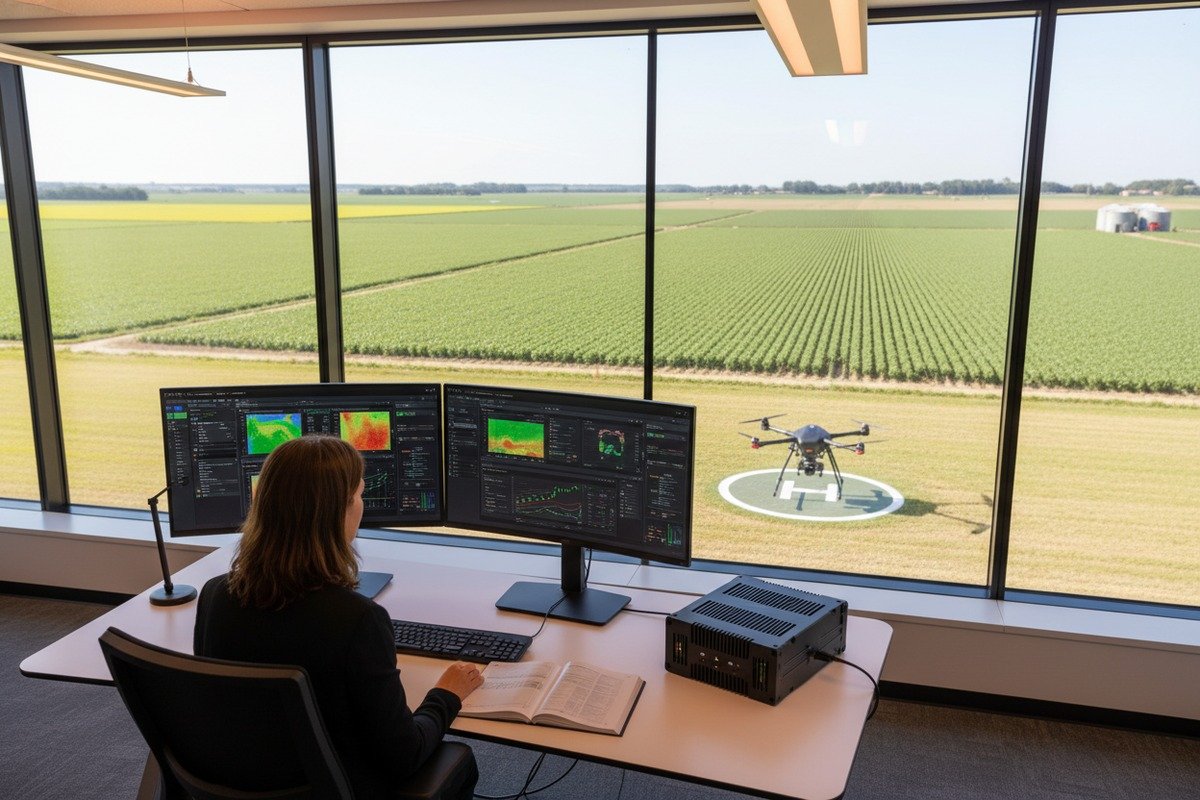
Our after-sales team handles support requests daily. The most frustrated customers bought systems from vendors who disappeared after the sale. AI technology evolves rapidly, and outdated software becomes useless within seasons.
Assess long-term reliability by verifying the vendor's update frequency and software roadmap, examining warranty terms covering both hardware and AI subscriptions, confirming availability of local technical support or trained service partners, and reviewing user community feedback on response times and issue resolution.
Software Update Schedules and Roadmaps
AI weed detection improves through continuous model updates. Vendors training on millions of new images produce progressively better detection. Stagnant software falls behind competitors within one or two growing seasons.
Ask vendors for their update history. How many updates shipped in the past 12 months? What specific improvements did each update provide? A clear roadmap indicates committed development resources.
Our partnerships with AI providers include quarterly update commitments. We verify these updates actually improve performance through standardized testing before recommending them to clients.
Warranty Coverage Details
Hardware warranties and AI subscription terms often differ significantly. A three-year drone warranty means nothing if AI software access expires after one year.
Examine these specific terms:
| Coverage Element | ما الذي يجب التحقق منه | Common Pitfalls |
|---|---|---|
| Hardware warranty | Duration, parts covered, exclusions | Water damage or crash exclusions |
| AI subscription | Length, renewal cost, feature limitations | Features locked behind premium tiers |
| Sensor calibration | Included service intervals | Calibration fees not disclosed upfront |
| تحديثات البرامج الثابتة | Duration of support | Updates discontinued after newer models launch |
| Data storage | Retention period, access after subscription ends | Data deleted when subscription lapses |
Local Support Availability
When our export clients in the United States experience issues, they cannot wait weeks for parts from China. We established regional service partnerships specifically to address this. Remote diagnostics help, but some problems require hands-on repair.
Evaluate support infrastructure before buying:
- Response time guarantees: Written SLAs matter more than verbal promises
- Spare parts inventory: Local stock means faster repairs
- Trained technicians: Certified repair partners vs. general electronics shops
- Remote support tools: Screen sharing, diagnostic uploads, video call guidance
- On-site service: Available for critical situations at what cost?
Community and User Feedback
Online forums reveal support realities that marketing materials hide. Search for your target vendor on agricultural drone communities, precision agriculture groups, and professional platforms.
Look for patterns in complaints. Isolated issues happen everywhere. Repeated themes about delayed responses, unresolved bugs, or disappeared vendors signal systemic problems.
We encourage our distributors to build local user communities. Shared experience accelerates problem-solving and creates pressure for vendors to maintain quality support.
Calculating Total Cost of Ownership
Initial purchase price misleads buyers about true costs. AI subscriptions, sensor calibrations, software updates, and support contracts accumulate over time.
Build a three-year cost projection:
- Year 1: Purchase price + setup + training
- Year 2: Subscription renewals + maintenance + spare parts
- Year 3: Subscription renewals + potential upgrade costs + extended warranty
Products with lower upfront costs sometimes become more expensive over time. We design our pricing to be transparent about ongoing costs, helping buyers make informed comparisons.
Exit Strategy Planning
Technology changes. Vendor relationships sour. Business needs shift. Consider how you would transition away from any system you buy.
- Can you export your historical flight data?
- Do prescription maps work with other equipment brands?
- Are trained operators skills transferable to competing platforms?
Proprietary lock-in benefits vendors but traps buyers. Open standards and exportable data protect your investment regardless of future vendor relationships.
الخاتمة
تقييم AI weed identification tech 9nology requires practical field testing, careful hardware matching, customization verification, and thorough support assessment. These four pillars protect your investment and ensure the technology delivers promised results on your specific fields.
الحواشي
1. Provides an overview of farm management systems and their functions in optimizing farm operations. ︎
2. Replaced with an authoritative Wikipedia link for a general term. ︎
3. Defines ground truth data and its critical role in training and validating AI models. ︎
4. Offers a comprehensive list and identification guide for common agricultural weed species. ︎
5. Explains multispectral imagery, how it works, and its applications in agriculture. ︎
6. Details hyperspectral imaging technology, its applications, and impact on precision agriculture. ︎
7. Explains edge computing’s role in agriculture for real-time data processing and decision-making. ︎
8. Replaced with a relevant article on ‘Cloud Computing for Agriculture’ which aligns with ‘Cloud processing’. ︎
9. Explains how AI and machine learning are used for precise weed detection and control. ︎

 English
  Spanish
  German
  French
  Dutch
Dutch  Arabic
