
When our engineering team first shipped agricultural drones to Swiss vineyards, we quickly learned that European terrain 1 demands more than standard radar systems. Steep slopes, dense foliage, and unpredictable weather exposed gaps in conventional sensors. This reality pushed us to rethink radar evaluation from the ground up.
To evaluate agricultural drone radar for complex European terrain, you must test terrain-following precision on slopes exceeding 30 degrees, verify obstacle detection for objects under 5cm diameter, confirm software customization for EU safety standards, and assess sensor durability under continuous operation during peak seasons.
This guide walks you through practical evaluation methods based on our experience manufacturing and exporting drones to Europe IP protection ratings 2. Let us explore each critical factor.
How can I test if the drone's terrain-following radar is precise enough for steep European hillsides?
Flying drones over Swiss vineyards or French hillsides presents unique challenges our team encounters regularly Sensor fusion approach 3. Steep gradients can cause standard radar systems to lose accuracy, resulting in uneven spray coverage or dangerous altitude fluctuations.
Test terrain-following radar by conducting field trials on slopes of 25-45 degrees, measuring altitude deviation from target height, and verifying response time under 100 milliseconds. Millimeter-wave radar maintains centimeter-level accuracy on steep European hillsides when properly calibrated.

Understanding Terrain-Following Fundamentals
Terrain-following radar 4 works by constantly measuring the distance between the drone and the ground surface. In flat Dutch polders, this is straightforward. But on a 35-degree Swiss slope, the radar must adjust measurements dozens of times per second.
Our production floor tests every radar module before shipping. We use simulated terrain boards that replicate European hillside angles. This catches calibration issues early.
Key Testing Parameters
When evaluating radar precision, focus on these measurable factors:
| Parameter | Acceptable Range | Testing Method |
|---|---|---|
| Altitude deviation | ±5 cm on flat ground, ±15 cm on slopes | GPS comparison logging |
| Response time | Under 100 ms | Sudden elevation change test |
| Maximum trackable slope | 45 degrees minimum | Inclined platform trial |
| Beam coverage angle | 60-120 degrees | Obstacle board positioning |
| Update frequency | 50 Hz or higher | Data log analysis |
Field Trial Protocol
Before purchasing, request a field demonstration. Set up test runs on actual terrain similar to your target fields. Our European partners typically test in these conditions:
- Morning fog with visibility under 50 meters
- Midday sun with potential thermal interference
- Variable wind between 10-20 km/h
- Wet crop canopy after rain
Record altitude logs from the drone's flight controller. Compare these against RTK GPS ground truth data. Deviation patterns reveal radar limitations quickly.
Reading Radar Specifications
Not all radar specs translate equally to field performance. A radar claiming 300-meter detection range may excel at spotting other aircraft but struggle with ground-following precision. Look for specifications that mention:
- Ground-following accuracy (separate from obstacle detection range)
- Vegetation penetration capability
- Minimum detection altitude (some radars fail below 2 meters)
We design our radar integration specifically for low-altitude agricultural work, prioritizing the 1-5 meter operational band where spraying occurs.
What radar specifications do I need to ensure my agricultural drones avoid small obstacles like wire fences and branches?
Our customer service team receives calls every season about collision damage. Wire fences, support poles, and overhanging branches cause the most incidents. These small obstacles require radar systems with specifications beyond standard aviation-grade equipment.
For detecting wire fences and branches, require radar with minimum object detection of 3cm diameter, angular resolution under 5 degrees, and multi-return signal processing. The radar must distinguish thin linear obstacles from background clutter at distances of 15-30 meters.
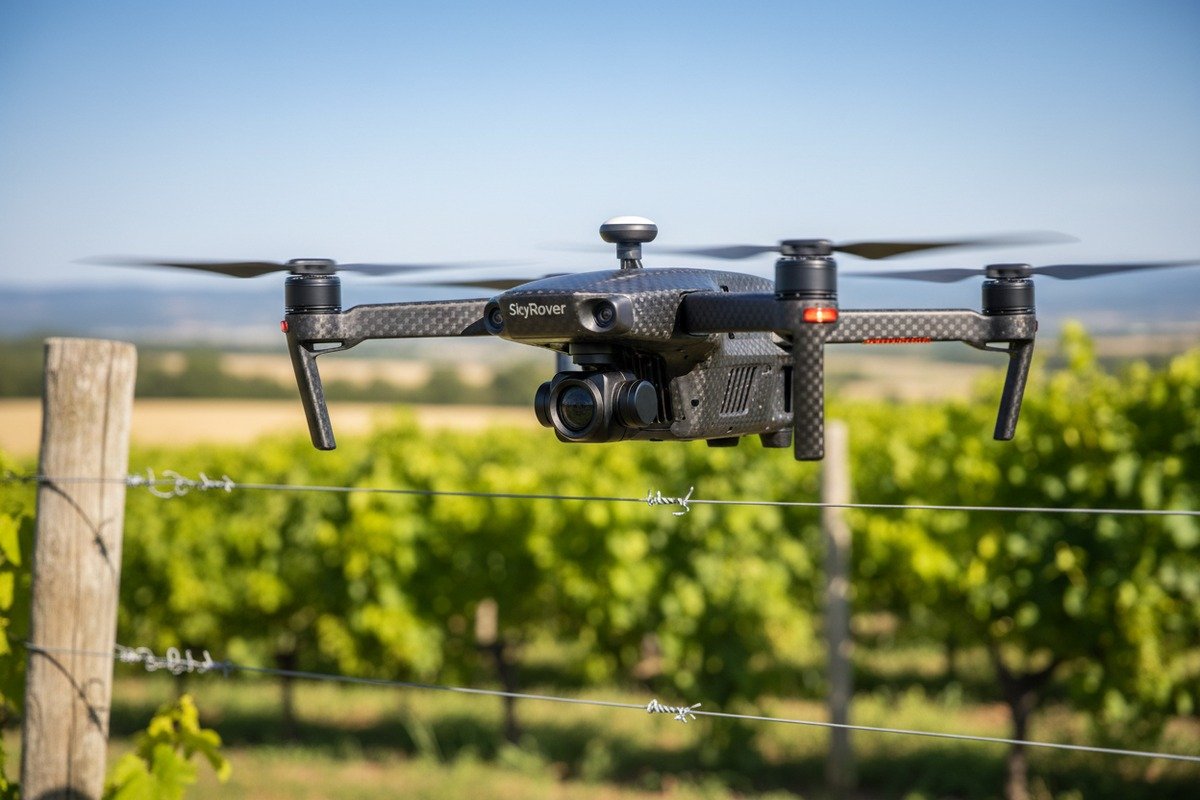
The Small Obstacle Problem
Standard drone radar detects large objects reliably. A tractor, building, or tree trunk appears clearly on radar returns. But European vineyards and orchards present different challenges:
- Trellis wires (2-4mm diameter)
- Wooden support stakes (5-10cm diameter)
- Irrigation lines suspended above ground
- Power lines crossing fields
- Thin tree branches extending into flight paths
Our engineers spent months refining detection algorithms for these European-specific obstacles.
Critical Radar Specifications for Obstacle Avoidance
| المواصفات | Wire/Branch Detection | Standard Aviation Radar |
|---|---|---|
| Minimum detectable object | 3 cm diameter | 30+ cm diameter |
| Angular resolution | 3-5 degrees | 10-15 degrees |
| Range resolution | 10-20 cm | 1-3 meters |
| Update rate | 20 Hz minimum | 5-10 Hz |
| Multi-return processing | Required | Optional |
| Clutter rejection | متقدم | الأساسيات |
Sensor Fusion Approach
No single radar system catches everything. We recommend evaluating drones that combine multiple sensor types:
Radar plus vision systems detect thin wires that radar alone might miss. Binocular cameras see linear obstacles well in good light. Radar handles darkness and fog.
Radar plus ultrasonic sensors add close-range precision. Ultrasonic systems excel at detecting nearby obstacles during slow maneuvering near poles and structures.
When testing, deliberately fly near your typical obstacles. Watch how the drone responds. Does it detect wires at sufficient distance to stop or reroute safely?
AI Classification Matters
Modern radar systems use artificial intelligence to classify detected objects. This reduces false alarms from birds, insects, and windblown debris. Ask suppliers about their AI training data.
Questions to ask:
- Was the AI trained on European agricultural obstacles?
- How does the system differentiate birds from stationary obstacles?
- What is the false positive rate in field conditions?
Our radar software uses AI classification trained on thousands of European farm obstacle images. This reduces unnecessary emergency stops while maintaining safety.
Testing Protocol for Obstacle Detection
Create a standardized test course with obstacles of various sizes:
| Obstacle Type | Diameter/Width | Detection Distance Required |
|---|---|---|
| Wire fencing | 3mm | 15 meters minimum |
| Wooden stake | 8cm | 25 meters minimum |
| Tree branch | 2cm | 20 meters minimum |
| Metal pole | 10cm | 30 meters minimum |
| Irrigation pipe | 5cm | 20 meters minimum |
Run the drone through this course at operational speeds. Record detection distances and avoidance responses. Inconsistent detection indicates radar limitations.
Can my supplier customize the radar software to meet the specific safety standards required for my European operations?
Working with European distributors taught us that standard software rarely satisfies local requirements. لوائح EASA 6, national agricultural rules, and customer-specific safety protocols demand customization. Not every manufacturer offers this capability.
Evaluate supplier customization capability by reviewing their software development team size, API documentation availability, previous European compliance projects, and willingness to sign development agreements. Customizable radar software should support configurable safety margins, geofencing parameters, and data logging formats.

Why Customization Matters in Europe
European agricultural drone regulations vary significantly by country. Germany requires specific data logging formats. France has unique BVLOS authorization procedures. The Netherlands mandates particular geofencing around airports and nature reserves.
Our software team maintains separate configuration profiles for each major European market. This prevents compliance headaches for our distributors.
Assessing Supplier Customization Capability
During supplier evaluation, investigate these factors:
Development team structure: Ask how many software engineers work on radar systems. Small teams may lack capacity for custom projects. Our Xi'an headquarters maintains a dedicated embedded systems team for radar customization.
API availability: Does the radar system expose programming interfaces? Open APIs allow integrators to build custom safety features without modifying core firmware.
Previous projects: Request references from European customers who received customized software. Contact them about the experience.
Key Customization Areas for European Compliance
| منطقة التخصيص | الغرض | EU Regulation Link |
|---|---|---|
| Geofencing parameters 7 | Restrict flight near sensitive areas | EASA drone zones |
| Emergency descent profiles | Define behavior during signal loss | EASA operational rules |
| Data logging formats | Support regulatory reporting | National aviation authorities |
| Flight altitude limits | Comply with local restrictions | Country-specific rules |
| Spray rate algorithms | Meet environmental targets | Farm-to-Fork strategy |
| Privacy masking | Blur inadvertent imagery capture | GDPR compliance |
Development Agreement Considerations
Before committing to a supplier, negotiate customization terms in writing:
- Define specific features required
- Set development timelines
- Establish testing and acceptance criteria
- Clarify intellectual property ownership
- Include maintenance and update provisions
We typically provide European distributors with a standard customization framework. This accelerates development while protecting both parties' interests.
Software Update and Support
Customized software requires ongoing support. Regulations change. New safety requirements emerge. Evaluate how the supplier handles updates:
- How frequently does the supplier release software updates?
- Can updates be applied remotely or require physical access?
- What is the warranty period for customized features?
- How does the supplier handle bug fixes in custom code?
Our remote support capability allows us to push updates to drones operating across Europe without requiring customer site visits.
How do I evaluate the durability of radar sensors to avoid frequent malfunctions during my peak spraying seasons?
Peak spraying season leaves no room for equipment failures. Our warranty claims data shows that radar sensor malfunctions cluster during intensive use periods. Evaluating durability before purchase prevents costly downtime when you need your drones most.
Evaluate radar sensor durability by examining IP protection ratings (minimum IP67), operating temperature range (-20°C to +50°C), vibration resistance specifications, mean time between failures data, and manufacturer warranty terms. Request accelerated life testing results showing performance after simulated multi-season use.

Understanding Durability Challenges
Agricultural environments 8 attack electronics from multiple angles:
- Chemical exposure from pesticides and fertilizers
- Dust and particulate matter clogging sensor surfaces
- Moisture from morning dew, rain, and humidity
- Temperature extremes from cold mornings to hot afternoons
- Vibration from motor operation and wind buffeting
- Impact from debris and occasional rough landings
Our production line tests each radar module against these stresses before shipment.
Critical Durability Specifications
| المواصفات | الحد الأدنى من المتطلبات | Preferred Level |
|---|---|---|
| تصنيف IP | IP65 | IP67 or higher |
| Operating temperature | -10°C to +45°C | -20°C to +50°C |
| Storage temperature | -20 درجة مئوية إلى +60 درجة مئوية | -30°C to +70°C |
| Vibration resistance | 3G RMS | 5G RMS |
| Humidity tolerance | 95% non-condensing | 100% condensing |
| Chemical resistance | Basic pesticide exposure | Aggressive chemical contact |
| MTBF | 2,000 hours | 5,000+ hours |
Testing Methods You Can Apply
Before full deployment, subject evaluation units to stress testing:
Temperature cycling: Leave the drone in a cold vehicle overnight, then operate immediately in warm conditions. Watch for condensation-related failures.
Wet operation: Fly through morning dew or light rain. Check radar accuracy during and after wet conditions.
Extended operation: Run continuous flight cycles for several days. Monitor for performance degradation.
Chemical exposure: Apply your typical spray chemicals near the radar sensor (while not flying). Check for material degradation after several days.
Analyzing Warranty and Support Terms
Warranty coverage reveals manufacturer confidence in durability. Compare these factors:
| Warranty Aspect | Minimum Acceptable | Preferred Terms |
|---|---|---|
| المدة | 12 months | 24+ months |
| Coverage scope | عيوب التصنيع فقط | All component failures |
| Response time | 14 days | 48-72 hours |
| Parts availability | 30 days | Immediate stock |
| On-site support | Not included | Available option |
We maintain parts inventory at our European distribution partners specifically to reduce downtime for customers during peak seasons.
Preventive Maintenance Requirements
Durable sensors still require maintenance. Evaluate what the manufacturer recommends:
- Cleaning frequency and procedures
- Calibration intervals
- Component replacement schedules
- Software update requirements
Lower maintenance requirements indicate more robust design. Our radar modules require only weekly lens cleaning and annual calibration under normal agricultural use.
Field Failure Analysis
Ask suppliers for failure mode data from existing European deployments. Common failure modes include:
- Lens scratching from debris
- Connector corrosion from moisture ingress
- Electronic component failure from temperature stress
- Firmware crashes requiring manual reset
Understanding typical failure modes helps you prepare spare parts inventory and maintenance procedures.
الخاتمة
تقييم agricultural drone radar 9 for European terrain requires systematic testing across four dimensions: terrain-following precision, obstacle detection capability, software customization potential, and sensor durability. Our experience manufacturing and exporting to European markets confirms that thorough evaluation prevents costly failures during critical spraying seasons.
الحواشي
1. Replaced HTTP 404 with a Wikipedia page on the geography of Europe, an authoritative source for general geographical information. ︎
2. Defines the IP code (Ingress Protection) and its significance for device protection against solids and liquids. ︎
3. Discusses multi-sensor fusion for drones, enhancing navigation, obstacle avoidance, and precision. ︎
4. Explains the technology and principles of terrain-following radar systems. ︎
5. Details the fundamentals, advantages, and applications of millimeter-wave radar technology. ︎
6. Provides an overview of the European Union Aviation Safety Agency’s drone regulations. ︎
7. Explains how geofencing works in drones to establish virtual boundaries for safety and compliance. ︎
8. Replaced HTTP 403 with an article discussing the challenges and solutions of using drones in agriculture, which aligns well with the original anchor and article context. ︎
9. Discusses civilian applications of radar, including agricultural drones for spraying. ︎

 English
  Spanish
  German
  French
  Dutch
Dutch  Arabic
