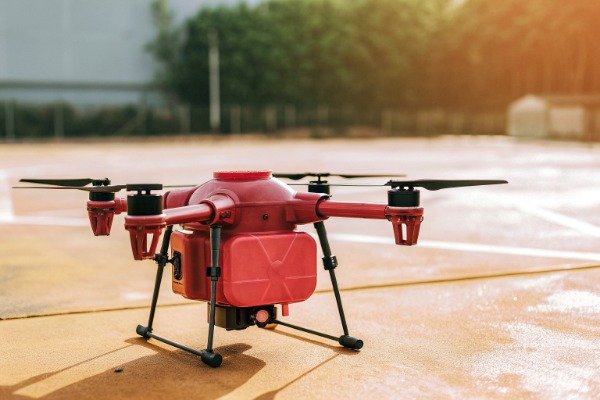
At our factory, we see clients struggle with shifting US regulations daily. You need powerful firefighting drones, but fear federal bans could ground your entire fleet overnight.
To ensure NDAA compliance, you must verify that the drone contains no critical components from prohibited entities like DJI or Autel. This requires auditing the Bill of Materials (BOM), demanding a formal Certificate of Compliance referencing Section 848, and conducting independent firmware testing to confirm no data is transmitted to restricted servers.
Let’s break down exactly how to navigate these complex regulations without losing money.
What specific components or chipsets must be avoided to meet NDAA requirements?
When our engineers design circuits, we meticulously filter out restricted hardware. Using the wrong chipset can turn a high-performance drone into a legal liability for your business.
To meet NDAA requirements, you must strictly avoid flight controllers, radio transmission modules, and cameras manufactured by covered entities like DJI, Autel, or Hikvision. Additionally, ensure the System on Chip (SoC) and communication data links are not sourced from Huawei or other companies on the Department of Commerce Entity List.
Understanding the "Covered List" and Critical Hardware
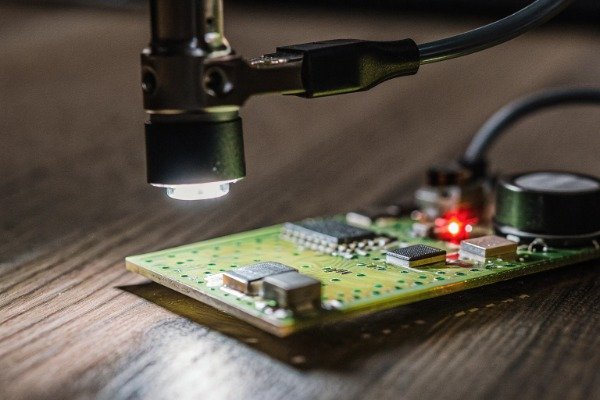
Navigating the National Defense Authorization Act (NDAA) requires a deep understanding of what constitutes a "critical component." It is not enough for the final assembly to happen outside of a specific region; the internal architecture must be clean. In our production facility, we have observed that many generic industrial drones still rely on supply chains deeply integrated with companies on the U.S. Federal Communications Commission (FCC) Covered List.
FCC Covered List 1
The primary components you must scrutinize are the "brain" and the "eyes" of the drone. The flight controller is the most critical. Many suppliers use white-labeled versions of popular consumer drone flight controllers that are technically banned. If the flight controller utilizes a chipset from a prohibited entity, the entire system is non-compliant. Similarly, the video transmission systems (data links) are high-risk areas. We often see integrators using re-branded radio modules that originate from restricted manufacturers.
The Hidden Risks in SoCs and Vision Systems
Beyond the obvious flight controller, you must look at the System on Chip (SoC). This is the processor that handles image processing and AI tasks. For firefighting drones, which rely heavily on thermal imaging and object recognition, the SoC is powerful. However, if this chip is manufactured by HiSilicon (a Huawei subsidiary) or other entities on the Department of Commerce Entity List, the drone cannot be sold to US federal agencies.
HiSilicon (a Huawei subsidiary) 2
Furthermore, the camera gimbals themselves are subject to scrutiny. Many high-quality optical sensors are manufactured by companies like Hikvision or Dahua, both of which are heavily restricted under US law due to security concerns. When we source components for our US-bound units, we specifically select sensors from manufacturers that do not appear on these exclusion lists to ensure our distributors don’t face inventory seizures.
Component Vetting Checklist
To help you visualize what to look for, here is a breakdown of high-risk components and the safe alternatives we typically recommend looking for in a specification sheet.
| فئة المكوّنات | High-Risk / Prohibited Brands (Examples) | Compliant / Safe Alternatives (Examples) | ما أهمية ذلك |
|---|---|---|---|
| وحدة التحكم في الطيران | DJI, Autel, JIYI (if linked to restricted entities) | Pixhawk (CubePilot), Auterion | Controls flight logic; high risk of hidden firmware backdoors. |
| نقل الفيديو | DJI OcuSync, Herelink (check specific version origin) | Microhard, Doodle Labs | Handles data stream; critical for preventing data exfiltration. |
| Camera / Gimbal | Hikvision, Dahua | Sony, Flir (Teledyne), NextVision | Captures sensitive visual data; restricted under surveillance bans. |
| SoC / Processor | HiSilicon (Huawei) | Qualcomm, NVIDIA, Ambarella | The main processing unit; subject to strict export/import controls. |
Can the supplier provide a detailed bill of materials proving no banned components are used?
We often walk clients through our supply chain transparency process. Trusting a supplier’s verbal promise without documentation is a recipe for disaster when customs officers inspect your cargo.
Yes, a reputable supplier should provide a redacted or full Bill of Materials (BOM) identifying the manufacturer of every critical electronic sub-assembly. You must request this document to cross-reference flight controllers, GPS modules, and sensors against the FCC Covered List and DoD 1260H list before finalizing any purchase.

The Importance of BOM Transparency
In the industrial drone sector, the Bill of Materials (BOM) is your roadmap to compliance. Many suppliers are hesitant to share this because they fear you might bypass them and go directly to the component manufacturers. However, when we work with professional procurement managers, we understand that a BOM audit is non-negotiable for the US market. A "black box" product is simply too risky for government or enterprise use.
When you request a BOM, you are not necessarily asking for the price of every screw. You are asking for the specific make, model, and country of origin for the active electronic components. If a supplier refuses to provide this, claiming "trade secrets," it is often a red flag that they are using off-the-shelf components from banned entities to keep costs low. In our experience, legitimate manufacturers who understand the US market will have a "compliance BOM" ready to share.
How to Audit the BOM Effectively
Once you receive the BOM, the real work begins. You cannot simply glance at it and file it away. You need to perform a line-by-line audit of the critical subsystems. We recommend taking the list of components and running them against the Consolidated Screening List (CSL) maintained by the US government, which includes the Entity List and the unverified list.
Consolidated Screening List (CSL) 3
Pay special attention to the GPS modules and the communication modems. These are the parts that "talk" to the outside world. Even if the flight controller is compliant, a GPS module that has hardcoded firmware communicating with a restricted server renders the drone non-compliant. We advise our clients to look for "dual-use" components that are widely accepted in NATO countries.
Red Flags in Supplier Documentation
During your audit, be on the lookout for vague descriptions. If a line item simply says "4K Camera Module" without a brand name or model number, you must demand clarification. "White-labeling" is common in our industry, where a manufacturer scrubs the logo off a banned component. A detailed BOM should list the specific chipset inside that camera module.
Below is a guide on how to categorize the transparency level of your supplier based on the BOM they provide.
| Transparency Level | What the Supplier Provides | مستوى المخاطرة | الإجراء المطلوب |
|---|---|---|---|
| Full Transparency | Manufacturer names, model numbers, and country of origin for all PCBs and sensors. | منخفضة | Verify against Entity List and proceed. |
| Partial Transparency | Brand names for major parts (Motor, Battery) but generic terms for electronics (e.g., "Flight Controller"). | عالية | Demand specific model numbers for electronics immediately. |
| Opaque | Refusal to share BOM or claims of "Proprietary System" without certification. | الحرجة | Do not purchase. High risk of seizure or ban. |
How do I request a formal letter of compliance for NDAA standards from the manufacturer?
Our export team frequently drafts compliance attestations for US partners. Without a legally binding declaration, you have zero recourse if authorities later flag your equipment as non-compliant.
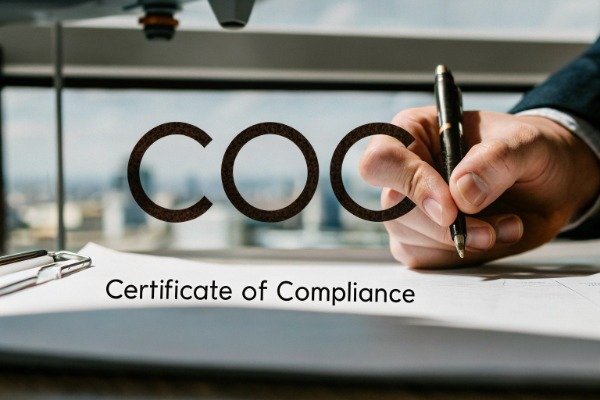
You should demand a signed Certificate of Compliance (CoC) from the supplier’s executive leadership that explicitly cites the relevant NDAA fiscal year and section. This letter must confirm that no hardware or software from prohibited entities is utilized and should include an indemnity clause protecting you against future regulatory bans.
Drafting the Request for Compliance
A verbal "yes, we are compliant" on WhatsApp or WeChat is legally worthless. When we deal with serious distributors, they send us a formal requirement for a Certificate of Compliance (CoC). This document serves as a warranty. It shifts the liability from you, the importer, back to us, the manufacturer. If we lie on this document, it constitutes fraud, giving you legal leverage.
When you draft your request, be specific. Do not just ask for "NDAA Compliance." You need to reference the specific laws. For example, you should ask for compliance with Section 848 of the Fiscal Year 2020 National Defense Authorization Act و Section 889(a)(1)(B) regarding telecommunications equipment. This shows the supplier that you know exactly what the regulations entail and that generic assurances will not suffice.
Essential Elements of a Valid CoC
A valid CoC must be signed by an officer of the company—usually the CEO, CTO, or Head of Quality Assurance. It needs to be on official company letterhead. In our internal protocols, we ensure that every CoC includes a specific batch number or serial number range. This links the legal document to the specific physical goods you are receiving. A blanket letter dated three years ago is insufficient for a shipment arriving today.
Furthermore, the letter should address software. Hardware is only half the battle. The CoC must attest that the firmware does not contain code libraries maintained by restricted entities and that the data transmission protocols are secure. We often include a clause stating that we are willing to submit the source code for third-party escrow review if required by a federal agency.
The Indemnification Clause
This is the most critical part that many buyers overlook. You must ask for an indemnification clause. This clause states that if the products are found to be non-compliant due to the manufacturer’s misrepresentation, the manufacturer will cover the costs of the recall, refund the purchase price, and potentially cover legal fees.
While enforcing this across international borders can be difficult, the willingness of a supplier to sign it is a strong indicator of their confidence. If a supplier refuses to sign an indemnity clause, it usually means they know there are non-compliant components hidden in the system.
| نوع البند | الغرض | Recommended Language Snippet |
|---|---|---|
| Specific Citation | Defines the standard. | "Compliant with Section 848 of the FY2020 NDAA and Section 889…" |
| Scope of Coverage | Defines what is covered. | "Covers all hardware, firmware, and software libraries…" |
| Indemnification | Protects the buyer. | "Supplier agrees to indemnify Buyer against all losses resulting from non-compliance…" |
| Executive Signature | Validates the document. | "Signed by [Name], [Title], authorized representative of [Company Name]." |
Will non-compliance with NDAA affect my ability to sell these drones to US government agencies?
We have seen distributors lose massive government contracts due to oversight. Ignoring these federal mandates effectively locks you out of the most lucrative public safety markets in America.
Non-compliance will absolutely disqualify your products from being purchased by federal agencies, and increasingly, state and local departments receiving federal grants. Agencies using FEMA or DHS funding are legally prohibited from procuring drones that contain components from covered foreign entities, severely limiting your potential market share.
The Federal Market Lockout
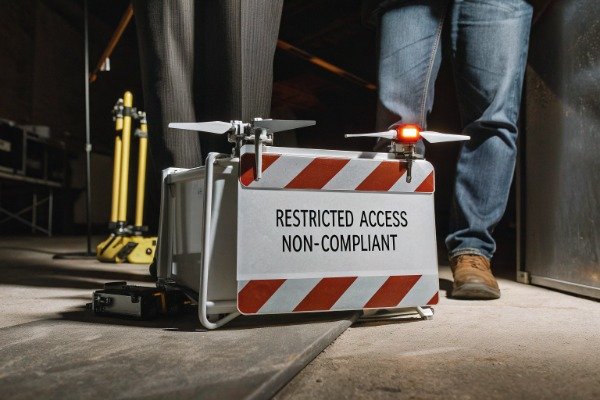
The US federal government is the largest potential customer for high-end industrial drones, but it is also the most restricted. If your firefighting drone is not NDAA compliant, you are immediately disqualified from bidding on contracts for the Department of Interior (DOI), Department of Defense (DoD), and the Department of Homeland Security (DHS). These agencies have strict "Blue UAS" or equivalent vetting processes.
Department of Interior (DOI) 4
From our perspective as an exporter, we have seen the market shift dramatically. Years ago, performance was the only metric. Now, compliance is the gatekeeper. Even if our drone flies longer and carries more weight than a competitor’s, if it contains a banned chip, it cannot be sold to a federal entity. This isn’t just a policy preference; it is codified law. The risk of "rip and replace"—where an agency has to scrap a fleet because of a new ban—is a nightmare they will avoid at all costs.
DHS Homeland Security Grant Program 5
The Ripple Effect on State and Local Grants
You might think, "I’m selling to a local fire department, not the US Army, so this doesn’t apply." This is a dangerous misconception. Most local fire departments and law enforcement agencies purchase their equipment using federal grants, such as those from FEMA or the DHS Homeland Security Grant Program.
الأنظمة الجوية غير المأهولة الزرقاء 6
These grants come with strings attached. The "Grant Guidance" specifically prohibits the use of federal funds to purchase telecommunications and video surveillance equipment from covered foreign entities. If a local fire chief buys your drones using a FEMA grant and an audit reveals they are non-compliant, that department may have to pay back the grant money. This liability makes local agencies extremely risk-averse. They will often adopt federal standards just to be safe.
Section 889(a)(1)(B) 7
Future-Proofing Your Inventory
The regulatory environment is getting stricter, not looser. We are seeing a trend where even private critical infrastructure companies—like energy grids and oil pipelines—are adopting NDAA standards voluntarily to secure their data. By sourcing non-compliant drones, you are restricting your addressable market to hobbyists and small private firms, missing out on the high-margin B2G (Business to Government) and B2B critical infrastructure sectors.
DoD 1260H list 8
To protect your business, you must view compliance as a feature, not a bug. Marketing your drones as "NDAA Compliant" and having the documentation to back it up allows you to charge a premium and enter markets that are closed to cheaper, non-compliant competitors.
Department of Commerce Entity List 9
Market Impact Summary
| Customer Segment | Funding Source | NDAA Compliance Requirement | Consequence of Non-Compliance |
|---|---|---|---|
| Federal Agencies (DOI, USDA) | Federal Budget | إلزامي | Immediate disqualification from bidding. |
| State/Local Fire Depts | FEMA/DHS Grants | إلزامي | Grant revocation; forced equipment return. |
| Critical Infrastructure | Private/Public Mix | Highly Preferred | Loss of contract due to security audit failure. |
| Private Agriculture | Private Capital | Optional (for now) | Lower resale value; data security risks. |
الخاتمة
To succeed, verify every component via BOM audits, demand signed indemnification, and target compliant hardware to safeguard your US government sales channels.
Section 848 10
الحواشي
- Direct link to the official FCC list of prohibited equipment. ︎
- Provides background on the entity and its relationship to Huawei. ︎
- Official search tool for the screening list mentioned in the audit process. ︎
- Official agency page detailing their unmanned aircraft systems policies. ︎
- Official FEMA page for the grant program mentioned regarding funding restrictions. ︎
- Official Defense Innovation Unit page defining the vetted drone program. ︎
- Official government acquisition portal explaining the specific prohibition cited. ︎
- Official DoD release of the specific list of Chinese military companies. ︎
- Official government source for the specific restricted list mentioned. ︎
- Official legislative text defining the specific prohibition cited. ︎

 English
  Spanish
  German
  French
  Dutch
Dutch  Arabic
