
When we ship hundreds of units from our Xi’an facility, we often see clients struggle to maintain consistent quality over time without a structured feedback loop.
To establish a regular quarterly review, insert a Quarterly Business Review (QBR) clause into your procurement contract defining meeting frequency, attendees, and core metrics. Schedule these sessions to alternate between virtual updates and annual site visits, ensuring continuous alignment on hardware reliability and firmware roadmap developments.
Let’s explore how to turn these meetings into strategic assets for your farm technology operations.
What specific KPIs should I track to evaluate my agricultural drone manufacturer's performance?
We notice that vague feedback often frustrates our engineering team, while data-driven reports help us pinpoint assembly line issues immediately and improve product quality.
You should track quantifiable metrics including hardware mean time between failures (MTBF), spare parts delivery lead time, firmware update success rates, and battery cycle longevity. Additionally, monitor technical support response times and the percentage of units requiring return merchandise authorization (RMA) to ensure operational continuity.
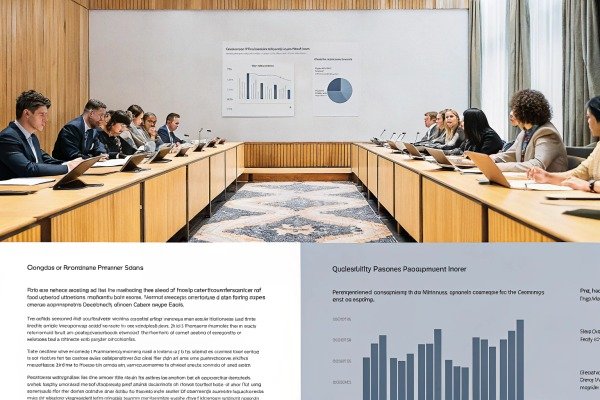
To effectively evaluate a manufacturer, you must move beyond general satisfaction and look at the hard data coming from the field. Agricultural drones operate in harsh environments—dust, humidity, and chemical exposure—so the metrics must reflect durability and operational efficiency. When we analyze data from our US clients, the most successful relationships are built on shared, transparent KPIs.
Hardware Reliability and Field Performance
The most critical category is reliability. If a drone fails during the planting or spraying window, the economic loss to the farm is significant. You need to track متوسط الوقت بين الأعطال (MTBF). This measures the average operating time between non-repairable breakdowns average operating time 1. For agricultural drones, this might look like flight hours without a motor failure or pump blockage.
Another vital metric is Battery Health Lifecycle. Batteries are the most expensive consumable. Tracking the average number of cycles before capacity drops below 80% helps you verify capacity drops below 80% 2 if the cells we supplied match the promised specifications. If your fleet is seeing degradation faster than the datasheet implies, this is a red flag to discuss in the review.
Supply Chain and Support Responsiveness
The second category focuses on service. How quickly can we get you back in the air? This involves tracking Spare Parts Lead Time. If a propeller arm breaks, how many days pass between your order and delivery? For international shipments from China to the US, consistent lead times are crucial for your inventory planning inventory planning 3.
We also recommend tracking Technical Support Resolution Time. It is not enough to just count the number of tickets; you must measure how long it takes to close them. A high volume of tickets closed in under 24 hours indicates a responsive partner, whereas tickets languishing for weeks suggest a lack of engineering resources.
Quality Assurance Metrics
Finally, look at quality control upon arrival. The Defect Rate on Arrival (DOA) should be near zero. If you are unboxing drones and finding loose screws or software that won't calibrate, this points to a failure in the manufacturer’s pre-shipment testing pre-shipment testing 4.
| KPI Category | Specific Metric | Target Goal | Measurement Method |
|---|---|---|---|
| الموثوقية | متوسط الوقت بين الأعطال (MTBF) | > 200 Flight Hours | Telemetry logs from flight controllers |
| Logistics | Spare Parts Lead Time | < 7 Days (Air Freight) | Date ordered vs. Date received |
| Support | First Response Time | < 4 Hours | Helpdesk ticket timestamps |
| Quality | Defect Rate on Arrival (DOA) | < 1% | Inspection reports upon delivery |
| Performance | Spray Uniformity Compliance | > 95% Accuracy | Field test papers or flow meter data |
How do I structure a productive quarterly business review agenda with my drone supplier?
Unstructured calls often drift into casual chats, which prevents our project managers from locking in critical production schedules for your next season’s requirements.
Structure your agenda to cover four key pillars: a review of previous action items, performance analysis against agreed SLAs, a strategic discussion on product roadmaps, and a forward-looking planning session. Allocate specific time slots for engineering feedback and commercial updates to keep the meeting focused and actionable.

A productive Quarterly Business Review (QBR) requires rigid time management Quarterly Business Review (QBR) 5. We often see buyers treat these meetings as gripe sessions, which puts the manufacturer on the defensive. Instead, the agenda should be a balanced exchange of value. The goal is to move from tactical firefighting to strategic partnership.
The "Look Back": Performance and Cleanup
The first 30 minutes should be dedicated to historical data. Start with a review of the Action Log from the previous quarter. Did we fix the firmware bug discussed last time? Did the new batch of motors arrive on schedule? This builds accountability.
Next, review the Scorecard. This is where you present the KPIs discussed in the previous section. Visualizing this data is powerful. If we see a graph showing a rising trend in battery failures, our engineers cannot ignore it. It forces a conversation about root causes—is it a cell chemistry issue root causes 6 or a charging protocol error?
The "Look Forward": Strategy and Roadmaps
The second half of the meeting is where the real value lies. This is your chance to see what is coming down the pipeline. We constantly develop new features—like better obstacle avoidance radar obstacle avoidance radar 7 or higher-capacity tanks—but we might not announce them publicly right away.
Ask for a Product Roadmap Update. If you know we are releasing a new heavy-lift model in six months, you can adjust your fleet expansion plans. This is also the time to discuss Commercial Forecasting. By sharing your projected volume for the next two quarters, you allow us to reserve production slots and secure raw materials, which often leads to better pricing for you.
Operational Hygiene
dedicate the final 10 minutes to "Operational Hygiene." This covers administrative topics that often cause friction if ignored, such as updating insurance certificates, reviewing payment terms, or discussing changes in customs regulations.
| Time Allocation | Agenda Item | Key Discussion Points |
|---|---|---|
| 0:00 – 0:10 | Executive Summary & Action Log | Review status of previous tasks; high-level health check. |
| 0:10 – 0:30 | Performance Review (KPIs) | Review Scorecard; Deep dive into incidents; RCA (Root Cause Analysis). |
| 0:30 – 0:45 | Strategic Roadmap & Tech | Upcoming firmware features; New hardware releases; R&D updates. |
| 0:45 – 0:55 | Forecasting & Planning | Your demand forecast; Inventory reservation; Production slot booking. |
| 0:55 – 1:00 | Wrap-up & Next Steps | Assign owners to new action items; Set date for next QBR. |
Can I use quarterly reviews to request custom engineering changes or software updates?
Standard off-the-shelf firmware rarely fits every unique crop environment, and we actually prefer when partners bring us specific modification requests early in the design cycle.
Yes, quarterly reviews are the ideal forum to request custom engineering changes or software modifications. By presenting field data and operational pain points during these sessions, you allow the manufacturer to evaluate feasibility, allocate R&D resources, and integrate your specific requirements into their upcoming production or firmware release cycles.

One of the biggest advantages of working with a manufacturer directly, rather than a mere reseller, is the ability to influence the product. At our factory, we have dedicated R&D teams for flight control systems and structural design. The QBR is the perfect mechanism to bridge the gap between your field needs and our engineering capabilities.
Presenting the Business Case for Customization
Engineers operate on logic and efficiency. If you simply say, "I want the drone to fly differently," it may be dismissed. However, if you use the QBR to present data showing that "Current turning algorithms waste 15% of battery life on irregular field shapes," you capture our attention.
Use the review to request Software Development Kits (SDKs) or specific API integrations. For example, if you use John Deere's John Deere's operations center 8 operations center John Deere's operations center 9 or a specific farm management software, ask us to support that data format. We can often dedicate a software engineer to build a bridge if the volume justifies it.
Hardware Modifications and OEM Services
Hardware changes take longer but are equally possible. You might need a more robust landing gear for rocky terrain or a specific nozzle type for a unique fungicide. The QBR allows us to assess the Feasibility and Cost of these changes.
We can discuss Minimum Order Quantities (MOQs) for these custom features. If you need a customized spray tank design, we might require a commitment of 50 units to cover the mold costs. The quarterly rhythm allows us to track the progress of these prototypes—from the initial CAD drawing review in Q1 to the first sample testing in Q2.
Managing Expectations and Timelines
It is crucial to understand the difference between a "config change" and "new development."
- Config Change: Adjusting maximum flight speed or spray flow rate limits. (Done in days/weeks).
- New Development: Designing a new waterproof housing or integrating a new spectral camera. (Takes months).
By discussing this quarterly, we can align your deployment schedule with our development sprints, ensuring the custom units arrive exactly when your season begins.
What is the best way to address delivery delays and technical support issues during our review meetings?
Nothing disrupts a planting season like a delayed shipment, and our logistics team works harder when clients hold us accountable with clear, consolidated data.
Address delays and support issues by presenting a consolidated log of incidents rather than anecdotal complaints. Use the review to perform root cause analysis on late shipments or slow responses, and demand a corrective action plan (CAP) with specific milestones to prevent recurrence in future shipping cycles.

Confrontation is uncomfortable, but in supply supply chain management 10 chain management, it is necessary. The key is to separate the process from the people. When we receive a "Quality Complaint Report" that is factual and unemotional, it triggers our internal corrective procedures much faster than an angry email.
Root Cause Analysis (RCA) for Delays
If a shipment was stuck in customs or delayed at the factory, the QBR is the time to ask "Why?" five times. Was it a lack of raw materials? Was it a booking error with the freight forwarder? Was the paperwork for US Customs incomplete?
For example, we occasionally face delays due to battery shipping regulations (DG Class 9). If this caused a delay last quarter, we should discuss switching to a logistics provider with better hazardous materials handling capabilities. You should demand a Corrective Action Plan (CAP) that outlines exactly how we will prevent this specific delay from happening again.
Escalating Technical Support Issues
If your team feels our support is too slow, bring a Ticket Analysis to the meeting. Show us: "20% of tickets regarding GPS calibration took over 5 days to resolve." This allows us to see if we need to train our support staff better or if there is a deeper bug in the system.
We can also establish Escalation Pathways during the QBR. We can agree that if a "Level 1" issue (drone unflyable) is not resolved in 24 hours, it automatically escalates to the Engineering Manager. Having this pre-agreed hierarchy prevents panic during the busy season.
Incentives and Penalties
Finally, the review can be used to revisit contract terms regarding performance. If delays are chronic, you might negotiate for a stock buffer agreement, where we hold 5% spare inventory in a local US warehouse to mitigate shipping risks. Conversely, if we hit 100% on-time delivery, you might offer a faster payment term or a larger share of wallet for the next season.
| Issue Type | Severity Level | Example Scenario | Required QBR Action |
|---|---|---|---|
| Logistics | الحرجة | Shipment delayed > 2 weeks during season | Full RCA report + Expedited air freight for next batch at supplier cost |
| Technical | عالية | Fleet-wide firmware bug grounding drones | Direct access to R&D Lead + Daily status calls until resolved |
| Quality | متوسط | 5% failure rate on a specific part (e.g., pump) | Replacement of batch + Manufacturing process audit review |
| Support | منخفضة | Slow email response (>48 hours) | Review of support staffing levels and time zone coverage |
الخاتمة
Establishing a quarterly review mechanism transforms your relationship from a simple transactional purchase into a strategic partnership. By rigorously tracking KPIs, structuring agendas around data, and using these meetings to drive engineering innovation, you ensure your fleet remains reliable and ready for every harvest.
الحواشي
1. Defines the technical reliability metric MTBF referenced in the sentence. ︎
2. References the industry standard threshold for lithium battery end-of-life. ︎
3. Links to a definition of inventory planning by a major supply chain software leader. ︎
4. Links to the industry leader in inspection services for this quality control process. ︎
5. Provides a comprehensive definition of the QBR meeting structure from a customer success authority. ︎
6. Links to the American Society for Quality’s definition of Root Cause Analysis. ︎
7. Technical information regarding advanced sensor technology for autonomous obstacle detection. ︎
8. Direct link to the specific agricultural software platform mentioned. ︎
9. Official documentation for integrating data with the mentioned farm management platform. ︎
10. Comprehensive overview of the principles and importance of supply chain management. ︎

 English
  Spanish
  German
  French
  Dutch
Dutch  Arabic
