
At SkyRover, we know that high winds can ground your mission when you need it most. Losing a drone to turbulence isn’t just costly; it endangers lives and compromises critical fire suppression efforts.
To determine suitability, compare the drone’s maximum sustained wind rating (typically Level 6 or 12 m/s) against local historical wind data and gust peaks. You must also account for fire-induced turbulence, payload weight penalties, and ensure a 20–30% safety buffer below the manufacturer’s stated limit for reliable operation.
Let’s break down the technical details to help you choose the right equipment for your specific needs.
What is the difference between theoretical wind ratings and real-world performance?
Our engineers often see clients relying solely on spec sheets, only to face stability issues in the field. Theoretical numbers rarely account for the chaos of a wildfire or complex terrain.
Theoretical ratings usually reflect laminar flow in controlled wind tunnels without payloads. Real-world performance is significantly lower due to turbulent gusts, heavy thermal cameras, and heat-induced updrafts. Consequently, a drone rated for 12 m/s may only handle 8 m/s safely during an active fire operation.
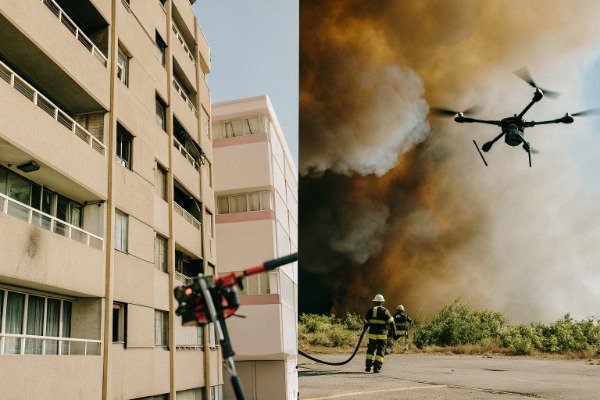
When we design industrial drones, we start with theoretical calculations, but we know the field is different. Understanding the gap between a lab rating and a field reality is crucial for your procurement process.
The Lab Environment vs. The Fireground
Theoretical wind ratings are typically derived from wind tunnel tests. In these tests, the air moves in a uniform direction (laminar flow), and the drone is often flown without extra accessories to maximize the numbers. For example, a standard industrial drone might claim a wind resistance of 12 m/s (approximately 27 mph). This number represents the maximum wind speed at which the drone can maintain a hover or fly in a straight line under perfect conditions.
wind tunnel tests 1
However, a fireground is the opposite of a wind tunnel. You are dealing with "dirty air." Wildfires create their own weather systems. The intense heat generates strong vertical updrafts and erratic micro-bursts, known as fire-induced convection. According to recent data, wildfires can amplify ambient wind speeds by 20% to 50% through convection. A drone that is stable in a steady 12 m/s breeze may flip over instantly if hit by a 15 m/s gust coming from below—a vector that most wind resistance ratings do not account for.
fire-induced convection 2
The Payload Penalty
Another critical factor is what we call the "Payload Penalty." When you attach a heavy thermal gimbal, a spotlight, or a fire extinguishing canister to our SkyRover units, the center of gravity changes, and the total weight increases. This forces the motors to work harder just to keep the aircraft aloft, leaving less reserve power to fight against the wind.
heavy thermal gimbal 3
If a drone is flying at its maximum takeoff weight (MTOW), its wind resistance capability drops significantly. A platform rated for Level 6 wind resistance might drop to Level 5 or even Level 4 when fully loaded. This is why we advise procurement managers to look at the "loaded" wind rating, not just the bare airframe rating.
maximum takeoff weight (MTOW) 4
Heat and Density Altitude
Firefighting environments are hot. High temperatures reduce air density. In less dense air, drone propellers must spin faster to generate the same amount of lift. This reduces the "overhead" or extra power available to stabilize the drone against wind. If you are operating near a fire where the air temperature is 50°C (122°F), the air is significantly thinner than in a standard 20°C test lab. This density altitude effect, combined with turbulence, can reduce flight performance by up to 50%.
density altitude effect 5
Comparison of Conditions
To help you visualize this, we have compiled a table comparing theoretical conditions against what your pilots will face.
| الميزة | Theoretical Lab Rating | Real-World Firefighting Scenario | Impact on Operations |
|---|---|---|---|
| Wind Type | Laminar, horizontal, steady flow. | Turbulent, multi-directional, gusty. | Reduces stability margin by ~30%. |
| الحمولة | Often tested with zero or light payload. | Heavy thermal cameras, drop mechanisms. | Reduces power available for stabilization. |
| درجة الحرارة | Standard 20°C – 25°C. | High heat (40°C+), often near flames. | Low air density reduces lift and battery efficiency. |
| Obstacles | None (open space). | Trees, ridges, buildings, smoke columns. | Creates venturi effects and signal interference. |
| Safety Margin | Tested to failure point. | Needs 20-30% buffer. | Operational limit is lower than spec sheet. |
How do I interpret wind tunnel test data provided by manufacturers?
When we test our SkyRover units, we generate complex data that can be confusing for non-engineers. Misinterpreting these charts can lead to purchasing underpowered equipment for your specific region.
Interpret wind tunnel data by looking for the maximum tilt angle and motor saturation levels at specific wind speeds. If a drone uses over 70% of its thrust to hover in 10 m/s winds, it lacks the necessary torque to recover from sudden gusts found in firefighting scenarios.
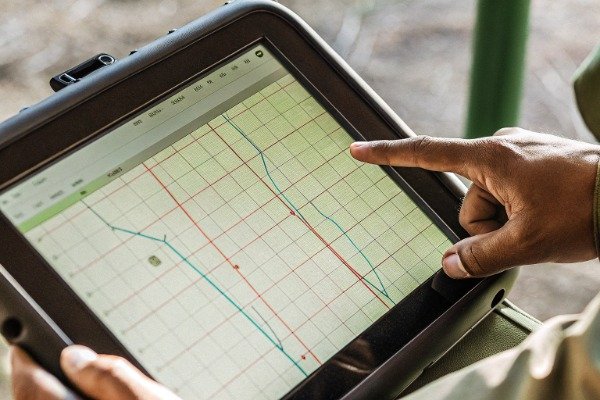
Reading a manufacturer’s technical report requires looking beyond the headline number. You need to understand the stress the aircraft is under to achieve that number.
Reading the Power Curve and Motor Saturation
The most telling metric in wind tunnel data is not the speed the drone survived, but the power consumption required to survive it. We look at the ESC (Electronic Speed Controller) data logs. If the data shows that the motors were running at 90% or 100% capacity to maintain position in a 12 m/s wind, that drone is dangerous. It has "saturated" its motors. This means if a sudden gust hits it, the flight controller has no extra power to send to the motors to correct the attitude. The drone will drift or crash.
Electronic Speed Controller 6
A suitable drone for firefighting should be hovering at no more than 50-60% throttle in calm conditions, and no more than 75-80% throttle in its rated maximum wind. This leaves a 20% buffer for the flight controller to make rapid adjustments.
The Maximum Tilt Angle
Flight controllers fight wind by tilting the drone into the wind. The stronger the wind, the steeper the angle required to hold position. However, every drone has a physical maximum tilt angle limit (often set in software to prevent stalling or losing altitude).
If the test data shows the drone reached its maximum tilt angle (e.g., 35 degrees) to handle the rated wind speed, it is at its absolute limit. In a real operation, if the wind increases by even 1 mph, the drone will be blown downwind. You want a drone that achieves the rated wind resistance while still having 5 to 10 degrees of tilt available in reserve.
Liquid Payloads and Dynamic Center of Gravity
For drones carrying fire retardant or water, the data interpretation is even more critical. Liquid sloshes. This creates a "Dynamic Center of Gravity." Standard wind tunnel tests use static weights (metal blocks) to simulate payload.
Dynamic Center of Gravity 7
When we analyze data for our agricultural and firefighting clients, we look for stability metrics specifically under "dynamic load" conditions. If the manufacturer only provides data for static loads, you must assume the wind resistance is lower for liquid payloads. The movement of fluid inside a tank can amplify the destabilizing effect of wind gusts.
Key Metrics to Request
When evaluating suppliers, ask for a detailed test report that includes the following specific data points. If a supplier cannot provide this, they may not have rigorously tested their product.
| متري | ما الذي يعنيه ذلك | علامة التحذير (العلم الأحمر) |
|---|---|---|
| Hover Throttle % | How hard motors work to stay still. | > 65% in calm wind; > 85% in rated wind. |
| Current Draw (Amps) | Electrical load on the battery. | Spikes near the battery’s max discharge rate (C-rating). |
| Pitch/Roll Variance | How much the drone wobbles. | High variance indicates the flight controller is struggling. |
| Motor Temperature | Heat generated by the motors. | Overheating after short exposure to high wind. |
Does the flight controller automatically adjust for sudden gusts?
We program our flight controllers to react instantly, but technology has physical limits. Believing automation solves every stability problem often results in crashes during unpredictable weather shifts.
Modern flight controllers use PID algorithms to counter gusts by adjusting motor speeds thousands of times per second. However, they cannot overcome physical thrust limitations. If the gust exceeds the motor’s maximum torque or the battery’s discharge rate, the automation will fail, causing the drone to drift or flip.
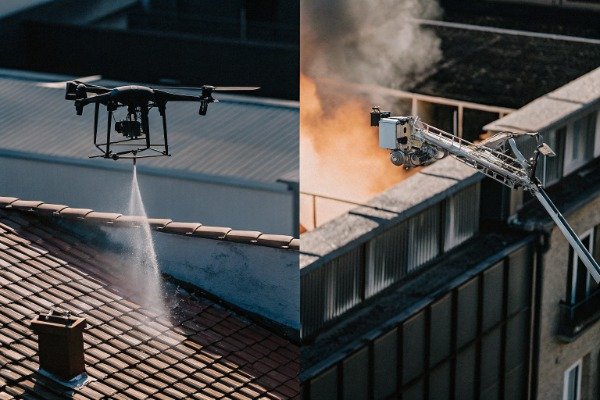
The brain of the drone—the flight controller—is essential, but it is not magic. Understanding how it works helps you predict when it might fail.
The Role of PID Loops
The core technology inside our SkyRover drones, and most industrial UAVs, is the PID loop (Proportional-Integral-Derivative). This algorithm constantly measures the drone’s actual angle against its desired angle.
- Proportional: Corrects the immediate error (e.g., "I am tilted left, power up left motors").
- Integral: Corrects accumulated error over time (e.g., "I have been drifting left for 2 seconds, lean right harder").
- Derivative: Predicts future error based on the rate of change (e.g., "I am tilting left very fast, counter-act immediately").
In a firefighting scenario, gusts are sharp and sudden. A high-quality industrial flight controller runs these loops at 400Hz to 800Hz (400 to 800 times per second). This allows the drone to "feel" a gust and react before a human pilot even notices. However, for this to work, the Electronic Speed Controllers (ESCs) and motors must be responsive enough to execute these rapid commands.
Particulate Turbulence and Sensor Confusion
Firefighting environments present a unique challenge: smoke and ash. We call this "Particulate Turbulence." Heavy smoke increases the density of the air locally and can clog sensors.
More importantly, modern drones use visual sensors (Optical Flow) and GPS to hold position. Thick smoke can blind visual sensors. If the drone relies on visual positioning to help fight the wind, and the smoke blocks the camera, the drone switches to GPS only. This transition can cause a momentary loss of stability. Advanced flight controllers, like those we are developing now, use sensor fusion to weigh GPS data more heavily when visual sensors are obscured, ensuring the drone doesn’t "twitch" when it flies into a smoke plume.
visual sensors (Optical Flow) 8
AI and Predictive Stabilization
The latest trend in 2025 is AI-assisted stabilization. Unlike standard PID loops which are reactive (reacting after the wind hits), AI models can be predictive. Some high-end systems measure wind speed and direction in real-time and "lean" into the wind proactively.
For example, if the drone detects a consistent 15 m/s wind from the North, the AI will bias the motors to resist North winds, reducing the reaction time for gusts from that direction. When selecting a drone, ask if the flight controller uses standard PID or AI-enhanced adaptive control.
Flight Controller Capabilities
Here is how different generations of technology handle wind gusts.
| Technology Level | Mechanism | Performance in Gusts | الملاءمة لمكافحة الحرائق |
|---|---|---|---|
| Basic (Consumer) | Standard PID, GPS hold. | Reactive. Drifts significantly in gusts > 8 m/s. | Low. Only for observation in calm weather. |
| Industrial (Standard) | Tuned PID, High-torque ESCs. | Reactive but powerful. Holds well up to 12 m/s. | Medium. Good for most scenarios. |
| AI-Enhanced (Advanced) | Predictive algorithms, Sensor Fusion. | Proactive. Can anticipate gusts and adjust tilt instantly. | High. Best for complex terrain and high winds. |
Can I request a field test video demonstrating stability in high winds?
Before shipping orders to the US or Europe, we encourage clients to ask for proof. Buying based on trust alone is risky when safety is on the line and capital investment is high.
You should absolutely request unedited field test videos showing the drone hovering and maneuvering in high winds. Ask the manufacturer to include a handheld anemometer in the frame to verify wind speed and ensure the test includes the specific payload you intend to deploy.
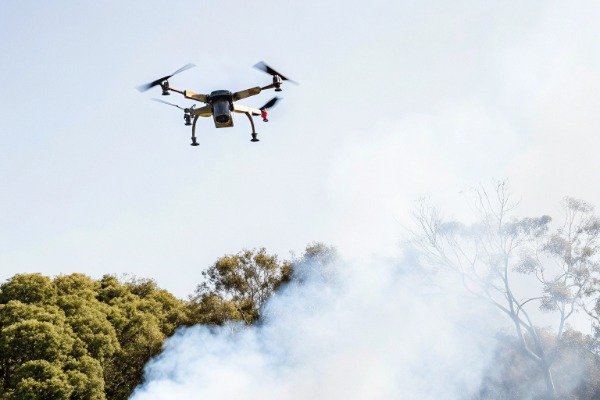
As a buyer, you have the right to verify claims. A reputable manufacturer will never refuse a reasonable request for evidence. Here is how to structure that request to ensure you get the truth.
Validating the Evidence
Marketing videos are often heavily edited. They use slow-motion, dramatic music, and quick cuts to hide instability. When you request a test video, specify that you need a "continuous, unedited shot."
You want to see the drone takeoff, hover, maneuver, and land without any cuts. This prevents the manufacturer from hiding the moments where the drone nearly crashed or drifted significantly. Watch the horizon line in the video. If the onboard camera gimbal is working hard, the video might look smooth, but the drone itself might be fighting violently. Look at the landing gear or the drone body relative to the background to see how much it is actually moving.
The Anemometer Requirement
A video of a drone flying with trees blowing in the background is subjective. Trees sway differently depending on the species and season. You need hard data.
Ask the manufacturer to place a handheld anemometer (wind speed meter) in the foreground of the video, or have a person hold it near the takeoff point. The reading should be clearly visible. This confirms that the "high wind" is actually 12 m/s and not just a breezy 6 m/s. At SkyRover, we often film the anemometer and the drone in the same frame so there is no ambiguity about the conditions.
handheld anemometer 9
The "Hover Test" vs. The "Mission Test"
Hovering in wind is difficult, but flying a mission is harder. A drone might be able to hold its position in 12 m/s wind if it is just hovering. But what happens when it needs to fly في the wind to return home?
If the drone’s max speed is 15 m/s and the wind is 12 m/s, the drone will only move forward at 3 m/s relative to the ground. This could mean the drone runs out of battery before it returns to the operator. Request a video that shows the drone flying upwind, downwind, and crosswind. Crosswind flight is often the most unstable because the aerodynamics are less efficient from the side.
Checklist for Video Verification
Use this checklist when reviewing the footage provided by your supplier.
- Continuous Shot: No cuts from takeoff to landing.
- Wind Verification: Anemometer visible in the shot showing sustained wind and gusts.
- Payload: Drone is carrying the actual equipment (thermal camera, etc.) you plan to use.
- Sound: Listen to the motors. A high-pitched, oscillating "screaming" sound indicates the motors are at their limit (saturation).
- Drift: Does the drone stay within a 1-meter radius during hover, or is it wandering?
- Return Flight: Does the drone struggle to fly against the wind direction?
الخاتمة
Choosing the right drone requires looking beyond the spec sheet. Always validate wind ratings against your local terrain, understand the payload penalties, and demand real-world proof to ensure mission success.
PID loop (Proportional-Integral-Derivative) 10
الحواشي
- Provides context on the standard testing environment mentioned. ︎
- Explains the specific weather phenomenon caused by wildfires. ︎
- Illustrates the type of payload that adds weight. ︎
- Defines the aviation term regarding weight limits. ︎
- Explains how heat and altitude affect flight performance. ︎
- Defines the component responsible for motor management. ︎
- Explains the physics concept affecting stability during flight. ︎
- Describes the technology used for positioning without GPS. ︎
- Defines the instrument used to verify wind speed. ︎
- Explains the control algorithm used for drone stabilization. ︎

 English
  Spanish
  German
  French
  Dutch
Dutch  Arabic
