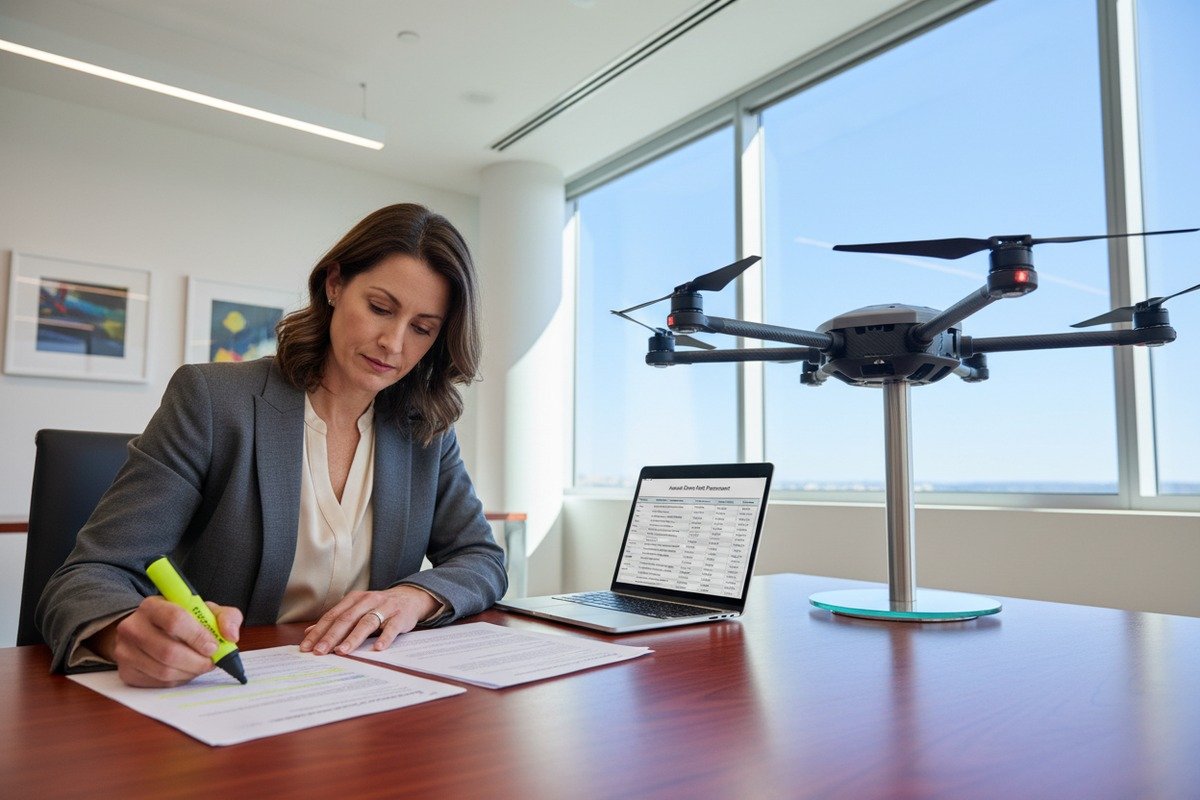
When we first started shipping our طائرات زراعية بدون طيار 1 to farms across the United States, one question kept coming back to us repeatedly. Buyers felt blindsided by software costs they never anticipated data export rights 2. This frustration drove our team to create clearer pricing guides.
To ask suppliers about software subscription and annual fees, request a complete breakdown of all recurring costs, including base subscription rates, processing fees, image upload limits, support tiers, and renewal terms. Always ask about cancellation policies, data export rights, and any hidden charges for integrations or overages before signing contracts.
Understanding these costs upfront can save thousands of dollars over your drone’s operational lifetime. Let me walk you through the essential questions every buyer should ask.
What specific features and updates are included in my agricultural drone software subscription?
Our engineering team often fields calls from confused customers who purchased drones elsewhere. They discover too late that basic flight planning 3 costs extra. This problem wastes both time and money.
Agricultural drone software subscriptions typically include flight planning, basic data processing, RGB mapping, cloud storage, and periodic updates. Premium tiers add multispectral analysis, NDVI mapping, AI-powered crop detection, stand count analysis, and priority technical support. Always verify exactly which features your subscription tier covers.

Understanding Subscription Tiers
Software providers structure their offerings differently. Some bundle everything together. Others charge separately for each feature. When we configure software packages for our SkyRover drones, we help customers understand exactly what they need.
Most agricultural drone software falls into three tiers. Basic plans handle flight planning and simple mapping. Mid-tier plans add vegetation indices like NDVI and VARI. Premium plans include AI analytics, weed detection, and agronomic reporting.
Common Features by Tier Level
| Tier Level | Typical Features | Annual Cost Range |
|---|---|---|
| الأساسيات | Flight planning, RGB orthomosaics, basic measurements | $500 – $1,000 |
| Mid-Tier | NDVI/VARI indices, stand count, 3D models, cloud storage | $1,000 - $2,500 |
| بريميوم | AI crop analysis, weed detection, integration APIs, priority support | $2,500 – $5,000+ |
Questions to Ask About Features
Start by requesting a feature matrix. Ask the supplier to list every function included at your price point. Then ask about limitations. How many images can you upload per map? How much cloud storage do you get? Are there processing queue times?
Our customers often overlook update schedules. Ask how often the software receives updates. Are major feature additions included, or do they cost extra? Some providers release quarterly updates for free. Others charge for significant new capabilities.
Real-World Example: DroneDeploy Pricing
DroneDeploy's Ag Lite plan costs approximately $1,908 per year. It includes 1,000 images per map, VARI vegetation index, and stand count analysis for corn and soybeans. The Flight & Analysis tier jumps to $4,188 annually but offers 3,000 images per map and more advanced features.
Compare this with alternatives like PIX4D or DJI Terra. Each has different strengths. PIX4D excels at photogrammetry accuracy. DJI Terra integrates seamlessly with DJI hardware. When we help clients choose software, we match capabilities to their specific crop types and acreage.
We have seen too many buyers calculate their budget based only on hardware costs. Then unexpected software fees arrive. One customer told us his actual operating costs were 40% higher than projected because of overlooked fees.
Hidden annual fees in agricultural drone operations include maintenance costs (10-15% of hardware value), software overages for exceeding image limits, premium support charges, integration fees for farm management systems, training certifications ($1,000-$3,000), insurance, and permit renewals. Request itemized cost projections for years one through five.

The Full Picture of Operating Costs
Hardware is just the beginning. When our production team quotes a drone package, we try to outline the complete cost picture. Software subscriptions represent only one piece of a larger puzzle.
Maintenance costs catch many buyers off guard. Plan for 10-15% of your hardware value annually. A $25,000 spraying drone may require $2,500-$3,750 in yearly maintenance. This covers propeller replacements, motor servicing, and battery degradation.
Common Hidden Fee Categories
| Fee Category | Typical Annual Cost | How to Identify |
|---|---|---|
| Software overages | $200 – $1,000+ | Ask about per-image charges beyond tier limits |
| Premium support | $500 – $2,000 | Check if phone support requires upgrade |
| Data storage | $100 – $500 | Verify cloud storage caps and overage rates |
| Integration fees | $300 – $1,500 | Ask about API access and third-party connections |
| Training/certification | $1,000 – $3,000 | Confirm if training is included or separate |
| التأمين | $1,000 – $3,000 | Required for commercial operations |
Questions That Reveal Hidden Costs
Ask suppliers directly: "What fees might I encounter beyond the quoted subscription price?" Request written confirmation of all potential charges. Ask about fair use limits. Some providers throttle processing speed or disable features if you exceed undefined limits.
Inquire about price escalation. Will your subscription cost increase at renewal? By how much? Some contracts include annual escalation clauses of 5-10%. Over five years, this adds up significantly.
Leveraging Government Subsidies
Here is good news. Government programs can offset many of these costs. The USDA EQIP program 5 covers up to 75% of precision agriculture technology costs for qualifying farms. State tax credits range from 10-20% depending on your location.
In 2024-2025, approximately 45% of drone adopters used some form of subsidy. This shortened their return on investment timeline considerably. Ask your supplier if they can help navigate subsidy applications. Our team maintains documentation specifically formatted for USDA submissions.
Calculating True Five-Year Costs
Build a complete projection. Start with hardware cost. Add annual software subscription multiplied by five. Include maintenance at 12% of hardware annually. Factor in training, insurance, and permit renewals. Then subtract available subsidies.
A $30,000 agricultural drone package might have true five-year costs of $55,000-$65,000 including all fees. With 75% EQIP coverage on eligible components, this drops dramatically. Ask every supplier for a similar projection in writing.
Can I customize the software interface or branding as part of my OEM partnership?
Many of our distribution partners need white-label solutions 7. They want their brand on the interface, not ours. This request comes up in nearly every OEM discussion we have.
Yes, many agricultural drone manufacturers offer software customization and white-labeling through OEM partnerships. Options typically include custom logos, color schemes, branded reports, custom data fields, and modified user interfaces. Pricing varies from $5,000-$50,000+ depending on customization depth, with ongoing licensing fees for branded deployments.

Types of Software Customization Available
When partners approach our development team, we discuss customization levels. Surface-level changes like logos and colors cost less. Deep modifications to data fields and workflows require more investment.
Most OEM arrangements fall into three categories. Basic branding replaces logos and adjusts color schemes. Mid-level customization adds branded reports and removes manufacturer references. Full customization allows workflow modifications, custom analytics, and unique features.
OEM Customization Pricing Guide
| مستوى التخصيص | Typical One-Time Cost | Ongoing Fees | وقت الاستجابة |
|---|---|---|---|
| Basic branding | $5,000 – $10,000 | $500 – $1,500/year | 2-4 أسابيع |
| Mid-level | $15,000 – $30,000 | $2,000 – $5,000/year | من 6 إلى 10 أسابيع |
| Full customization | $30,000 – $75,000+ | $5,000 – $15,000/year | 3-6 months |
Key Questions for OEM Discussions
Ask about minimum order quantities. Most suppliers require volume commitments for customization. We typically set minimums at 10-25 units for basic branding. Deep customization may require 50+ unit commitments.
Inquire about source code access. Will you receive the ability to modify software independently? Most providers keep source code proprietary. They make changes on your behalf instead. Understand who controls updates and fixes.
Ask about data ownership in branded deployments. When your customers use the white-labeled software, who owns their data? Can you access analytics across all your deployed units? These details matter for building your service business.
Building Long-Term OEM Relationships
Successful OEM partnerships 8 involve more than just branding. Our most satisfied partners participate in feature planning. They suggest improvements based on their market feedback. We incorporate these into future releases.
Discuss roadmap alignment. Will the supplier continue developing features your market needs? Request the software development roadmap for the next 12-24 months. This helps you plan your own product positioning.
Consider exclusivity arrangements. Can you secure exclusive branding rights in your territory? This prevents competitors from offering identical software under different names. Exclusivity typically costs extra but provides market differentiation.
What happens to my flight operations if I choose not to renew my annual software license?
This question reveals a supplier's true partnership approach. When we discuss licensing with customers, we prioritize transparency about what happens after subscription end.
If you do not renew your agricultural drone software license, most providers disable cloud features, analytics, and data processing immediately. Flight planning may continue in offline mode with limited features. Historical data access varies by provider, with some offering 30-day grace periods for data export while others restrict access immediately upon expiration.

Understanding License Expiration Consequences
Different providers handle expiration differently. Some take aggressive approaches. Features disappear immediately at midnight on your expiration date. Others offer grace periods. Understanding these policies before purchase protects your operations.
DroneDeploy provides a 30-day grace period for downloading maps and data. After that, access becomes restricted. Other providers may offer no grace period at all. Your data could become inaccessible overnight.
What Typically Continues vs. Stops
| فئة الميزة | Usually Continues | Usually Stops |
|---|---|---|
| Basic flight control | ✓ Manual flight | ✗ Automated missions |
| Data collection | ✓ Raw image capture | ✗ Real-time processing |
| Cloud access | ✗ | ✗ |
| Historical data | Limited (grace period) | ✗ After grace period |
| Software updates | ✗ | ✗ |
| Technical support | ✗ | ✗ |
Critical Questions About License Expiration
Ask for the exact sequence of events upon non-renewal. What stops working on day one? Day 30? Day 90? Get this in writing. Some suppliers disable features progressively. Others cut everything at once.
Inquire about data export before expiration. Can you download all your maps, reports, and raw data? In what formats? Some providers only export in proprietary formats. Others offer industry-standard options like GeoTIFF.
Ask about reactivation. If you renew after a gap, do you regain access to historical data? Some providers delete data after 90 days of non-payment. Others maintain it indefinitely but charge retrieval fees.
Avoiding Vendor Lock-In
The best protection against problematic expirations is regular data backup. Download your maps and reports periodically. Store them on your own systems. Do not rely solely on cloud storage you might lose access to.
Consider perpetual license options when available. DSLRPros and similar providers offer one-time purchase options for some software. You lose cloud features and updates, but basic functionality continues forever.
When we design software packages for SkyRover drones, we ensure basic flight operations never depend entirely on subscription status. Your drone should fly even if payment lapses. Advanced features require subscription, but you should never be completely grounded.
Planning for Transitions
Build transition planning into your supplier relationship. Ask if the provider offers migration assistance if you switch to competitors. Request documentation about data formats and export procedures.
Some providers make switching intentionally difficult. They use proprietary formats with no export options. This represents a major red flag. Avoid suppliers who trap your operational data.
الخاتمة
Asking the right questions about software fees protects your investment and prevents costly surprises. Request complete cost breakdowns, verify feature inclusions, understand expiration consequences, and explore customization options before committing. Your agricultural drone operation deserves transparent pricing from day one.
الحواشي
1. Provides a comprehensive overview of agricultural drones and their uses. ︎
2. Discusses data portability, retention, and deletion policies in SaaS platforms, crucial for data export rights. ︎
3. Explains how flight planning software defines coverage, altitude, and patterns for drones. ︎
4. Explains what NDVI is, its calculation, and its wide applications in agriculture for monitoring crop health. ︎
5. Official USDA source detailing the Environmental Quality Incentives Program and its benefits for agriculture. ︎
6. Explains precision agriculture as a farming management concept using technology to respond to crop variability. ︎
7. Defines white-label software as pre-built software rebranded and resold by another business. ︎
8. Defines OEM partnerships as strategic alliances where one company provides components or software for another to rebrand. ︎

 English
  Spanish
  German
  French
  Dutch
Dutch  Arabic
