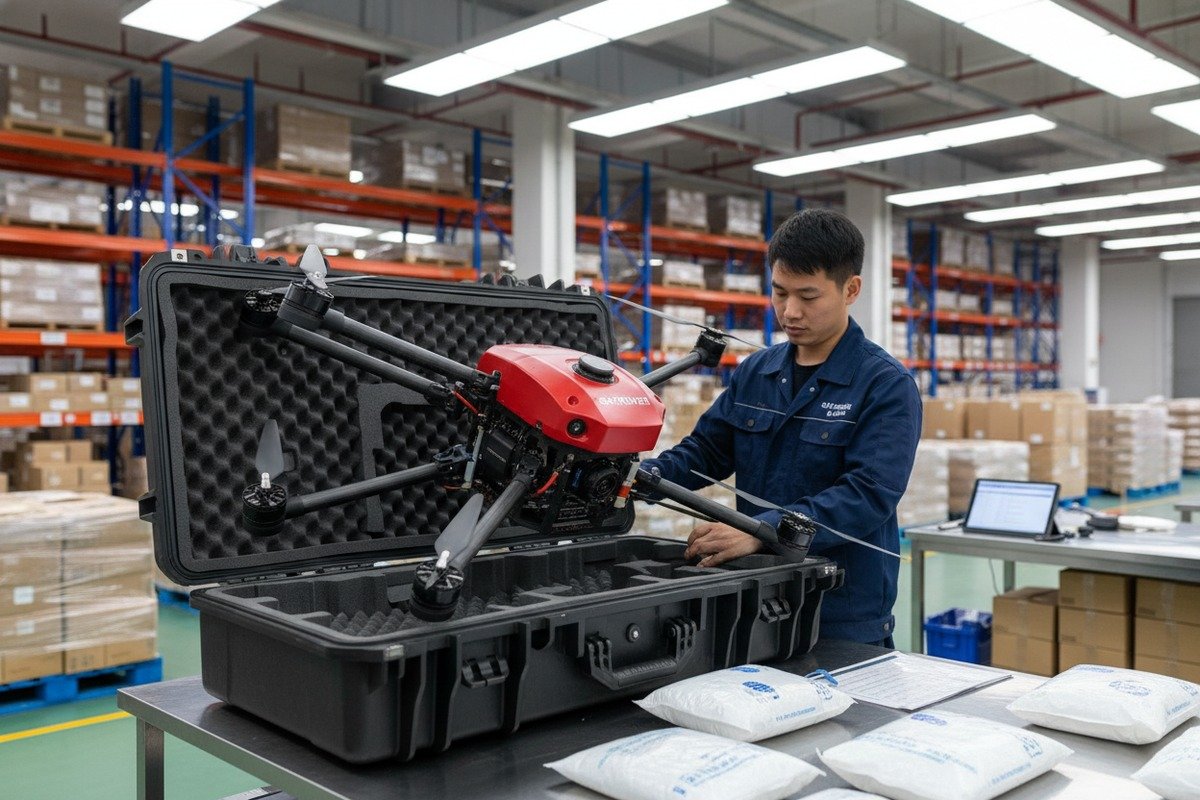
كل عام، يشحن فريق الإنتاج لدينا في شيان مئات الطائرات بدون طيار لمكافحة الحرائق إلى إدارات الإطفاء والموزعين في جميع أنحاء الولايات المتحدة وأوروبا. تستغرق الرحلة بحراً من 20 إلى 40 يوماً. خلال هذا الوقت، تواجه الحاويات مستويات رطوبة تصل إلى 95٪، ورذاذ الملح، وتقلبات درجات الحرارة، واهتزازات تصل إلى 15 جراماً. بدون حماية مناسبة،, الإلكترونيات الحساسة 1 تفشل. الكاميرات الحرارية تنحرف. بطاريات الليثيوم تنتفخ. إطارات ألياف الكربون تتشقق.
لحماية طائرات مكافحة الحرائق المسيرة من الرطوبة والصدمات أثناء الشحن البحري من الصين، استخدم طائرات مسيرة مصنفة IP55+ في حقائب طيران صلبة مخصصة مع بطانات إسفنجية من مادة EVA. أضف مواد مجففة صناعية للحفاظ على الرطوبة أقل من 40%. قم بتثبيت الحقائب على منصات نقالة بأحزمة سحب. قم بتضمين مؤشرات الصدمات لمراقبة ظروف النقل.
يقدم هذا الدليل الخطوات الدقيقة التي صقلها فريق الهندسة لدينا على مدى سنوات من تصدير الطائرات بدون طيار الصناعية. ستتعلم كيفية الدفاع ضد رذاذ الملح، ومنع تلف المستشعرات، والتحقق من الغلاف المقاوم للماء، وتأكيد تأمين الشحن بشكل صحيح قبل مغادرة المصنع.
كيف يمكنني حماية طائرات مكافحة الحرائق المسيرة الخاصة بي من رذاذ الملح والرطوبة أثناء الرحلة البحرية الطويلة؟
لقد علمتنا تجربتنا في الشحن من موانئ شنغهاي ونينغبو درساً قاسياً واحداً. المحيط لا يهتم بتصنيف IP للطائرة بدون طيار الخاصة بك. تواجه الحاويات الموضوعة على السطح هواءً محملاً بالملح يؤدي إلى تآكل المعادن المكشوفة في غضون أيام. يتكثف التكثيف داخل العبوات المغلقة عندما تنخفض درجات الحرارة ليلاً. هذه الأعداء غير المرئية تدمر الإلكترونيات أسرع من أي حريق هائل.
احمِ الطائرات بدون طيار من رذاذ الملح والرطوبة عن طريق إغلاقها في أكياس حاجز للرطوبة مع 500 جرام+ من هلام السيليكا لكل متر مكعب. قم بتطبيق بخاخات VCI (مثبط التآكل بالبخار) على الأجزاء المعدنية. ضع الحاويات في منتصف السطح، بعيدًا عن أمواج المقدمة. استخدم تغليفًا معزولًا لمنع التكثف أثناء تقلبات درجات الحرارة.

فهم تهديد الرطوبة
تتعرض حاويات الشحن البحري لمستويات رطوبة تتراوح بين 80٪ و 95٪ لأسابيع. هذا يخلق بيئة معادية لإلكترونيات الطائرات بدون طيار. عندما نقوم بمعايرة أنظمة التصوير الحراري لدينا قبل الشحن، فإنها تعمل بشكل مثالي. ولكن بدون حماية من الرطوبة، يمكن أن تفشل نفس المستشعرات عند الوصول.
المشكلة لها ثلاثة مصادر رئيسية. أولاً، تدخل الرطوبة المحيطة عبر تهوية الحاوية. ثانياً، تسبب تغيرات درجة الحرارة تكثفاً داخل العبوات. ثالثاً،, جزيئات الملح من رذاذ البحر 2 تخترق الفجوات الدقيقة في الأختام.
نظام دفاع متعدد الطبقات
طور مهندسو التعبئة والتغليف لدينا نهجاً متعدد الطبقات يقلل من أضرار الرطوبة بنسبة 90٪.
| طبقة | المواد | الوظيفة | المواصفات |
|---|---|---|---|
| كيس داخلي | كيس حاجز الرطوبة (MBB) | يمنع الهواء الرطب | مختومة بالحرارة، سمك 6 مل |
| مجفف | جل السيليكا الصناعي | يمتص الرطوبة | 500 جرام لكل متر مكعب |
| حماية VCI | مثبط تآكل الأبخرة | يمنع تآكل المعادن | شكل بخاخ أو حقيبة |
| الغلاف الخارجي | صندوق طيران محكم الإغلاق | حاجز مادي | تصنيف ختم IP65+ |
خطوات عملية للدفاع ضد رذاذ الملح
ابدأ بتفكيك المكونات غير الضرورية. قم بإزالة المراوح والبطاريات. هذه تذهب إلى أكياس منفصلة مضادة للكهرباء الساكنة مع عبوات مجففة خاصة بها.
تطبيق طلاء نانو كاره للماء 3 إلى لوحات الدوائر المكشوفة. هذا يخلق طبقة طاردة للماء تدوم مع التكثف العرضي.
ضع حمولتك في منتصف السفينة. الحاويات القريبة من المقدمة تواجه تأثير الأمواج المباشر. تلك القريبة من المؤخرة تتعرض لاهتزاز المحرك. الوسط يوفر البيئة الأكثر هدوءًا.
استقرار درجة الحرارة
يتكون التكثف عندما يلتقي الهواء الدافئ بالأسطح الباردة. خلال شحناتنا الشتوية إلى أوروبا، لاحظنا معدلات تلف أعلى. كان الحل هو مواد تغيير الطور 4 داخل عبوات معزولة. تمتص هذه الحرارة خلال الفترات الدافئة وتطلقها خلال الفترات الباردة. هذا يحافظ على درجات الحرارة الداخلية بين 15 درجة مئوية و 25 درجة مئوية.
اطلب حاويات يتم التحكم في مناخها للشحنات عالية القيمة. تكلف أكثر ولكنها تقضي تمامًا على التكثف المرتبط بدرجة الحرارة.
ما هي معايير التعبئة والتغليف الماصة للصدمات التي يجب أن أطلبها لمنع التلف الداخلي لمستشعرات الطائرة بدون طيار الخاصة بي؟
عندما يقوم فريق مراقبة الجودة لدينا بتفريغ الطائرات بدون طيار التي تم إرجاعها، نرى نفس النمط. تبدو العلب الخارجية جيدة. ولكن في الداخل، تكون محركات المثبت غير محاذية. عدسات الكاميرا الحرارية بها شقوق دقيقة. تظهر لوحات التحكم في الطيران كسورًا في وصلات اللحام. يحدث الضرر بشكل غير مرئي أثناء النقل.
اطلب تغليفًا يقلل الصدمات إلى أقل من 2 جرام للمكونات الحساسة. اطلب حشوات إسفنجية مخصصة من مادة EVA بصلابة تتراوح بين 50-80 شور OO. حدد علبًا صلبة تلبي معايير MIL-STD-810G للسقوط. قم بتضمين مؤشرات ShockWatch التي تشير إلى الصدمات التي تتجاوز 5 جرام للمطالبات التأمينية.

فيزياء تلف النقل
يعرض الشحن البحري البضائع لأنماط اهتزاز معقدة. تخلق الأمواج تذبذبات منخفضة التردد بين 1-10 هرتز. يضيف اهتزاز المحرك ترددات أعلى. يقدم مناولة الموانئ أحداث صدمة مفاجئة تصل إلى 15 جرامًا. تظهر اختباراتنا أن الطائرات بدون طيار غير المحمية تتعرض لتلف تراكمي من الثلاثة.
تشمل المكونات الأكثر عرضة للخطر محركات تثبيت المثبت 5, ، مستشعرات التصوير الحراري، هوائيات GPS، وخلايا بطاريات الليثيوم. كل منها يتطلب استراتيجيات حماية محددة.
علم اختيار الرغوة
ليست كل الرغوة تعمل بنفس الكفاءة. قام مهندسو التعبئة والتغليف لدينا باختبار عشرات المواد قبل الاستقرار على رغوة EVA (إيثيلين فينيل أسيتات) 6 بخصائص كثافة محددة.
| نوع الرغوة | صلابة شور | امتصاص الصدمات | أفضل استخدام |
|---|---|---|---|
| بولي إيثيلين منخفض الكثافة | 20-30 OO | فقير | حشو خفيف فقط |
| EVA | 50-80 OO | ممتاز | توسيد أساسي |
| رغوة الذاكرة PU | 40-60 OO | جيد | طبقات ثانوية |
| سوربوثان | 30-50 OO | متفوق | حمولات عالية القيمة |
المفتاح هو مطابقة كثافة الرغوة لوزن المكون. العناصر الأثقل تحتاج إلى رغوة أكثر صلابة. المستشعرات الأخف تحتاج إلى مادة أكثر نعومة. نقوم بقص قوالب مخصصة لكل طراز طائرة بدون طيار لضمان ملاءمة مثالية.
معايير بناء العلبة
تشكل العلب الصلبة الدفاع الخارجي. ابحث عن هذه المواصفات عند تقييم المصنعين:
- المواد: الألومنيوم أو البولي كربونات بسماكة جدار لا تقل عن 3 مم
- الأقفال: الفولاذ المقاوم للصدأ مع آليات قفل إيجابية
- المفصلات: مفصلات مستمرة على طراز البيانو أو مفصلات صندوقية شديدة التحمل
- الحشوات: مطاط النيوبرين أو EPDM لمنع تسرب الغبار والرطوبة
- تخفيف الضغط: صمام معادلة تلقائي للتوافق مع النقل الجوي
علامات تجارية مثل Pelican و Nanuk تلبي هذه المعايير. نعمل أيضًا مع مصنعي العلب الصينيين الذين يطابقون الجودة بتكلفة أقل.
بنية التبطين الطبقية
ابنِ الحماية من الأسفل إلى الأعلى. ابدأ بقاعدة إسفنجية بسمك 4 بوصات. أضف مصدات جانبية تمنع الحركة الجانبية. أنشئ حوامل معلقة لجسم الطائرة بدون طيار. استخدم فواصل لفصل البطاريات والملحقات.
الهدف هو عدم وجود حركة داخل الحقيبة. عندما تهز حقيبة معبأة بشكل صحيح، لا شيء يتحرك. كل مكون يبقى ثابتًا في مكانه.
المراقبة والتوثيق
مؤشرات ShockWatch توفر دليلاً على سوء التعامل. هذه الأجهزة الصغيرة يتغير لونها بشكل دائم عند تعرضها لصدمات تتجاوز حدها. ضعها في نقاط متعددة داخل كل حقيبة.
للشحنات ذات القيمة العالية، استخدم مسجلات البيانات. هذه تسجل قوة الجاذبية والرطوبة ودرجة الحرارة طوال فترة النقل. تدعم البيانات مطالبات التأمين وتساعد في تحديد طرق الشحن الإشكالية.
كيف يمكنني التحقق من أن الشركة المصنعة الصينية الخاصة بي تستخدم غلافًا مقاومًا للماء بدرجة تصدير لشحنة طائرتي المسيرة الصناعية؟
الثقة ولكن تحقق. هذا المبدأ يوجه كل علاقة تصدير نبنيها مع شركائنا في الخارج. عندما يزور مديرو المشتريات منشأتنا في شيان، نشجعهم على فحص كل شيء. شاهد عملية الختم. اختبر الحشوات. راجع وثائق الشهادات. الشركة المصنعة الموثوقة ترحب بهذا التدقيق.
تحقق من الغلاف المقاوم للماء بدرجة التصدير عن طريق طلب وثائق شهادة IP من مختبرات الاختبار المعتمدة. قم بإجراء فحوصات بصرية لأختام الحشيات وآليات الإغلاق. اطلب صورًا أو مقاطع فيديو لعمليات الختم. قم بترتيب عمليات تفتيش ما قبل الشحن من طرف ثالث من خلال وكالات مثل SGS أو Bureau Veritas.

فهم تصنيفات IP
تصنيفات IP (الحماية من الدخول) 7 تحدد بالضبط ما تعنيه "مقاومة للماء". يتكون التصنيف من رقمين. الأول يشير إلى الحماية من الغبار (0-6). الثاني يشير إلى الحماية من الماء (0-9K).
| تصنيف IP | مستوى الحماية من الماء | مناسب لـ |
|---|---|---|
| IP43 | رذاذ خفيف، أي اتجاه | للاستخدام الداخلي فقط |
| IP55 | نفاثات مياه منخفضة الضغط | عمليات المطر |
| IP65 | نفاثات مياه عالية الضغط | ظروف العاصفة |
| IP67 | الغمر حتى 1 متر لمدة 30 دقيقة | إنقاذ مائي |
بالنسبة لطائرات مكافحة الحرائق بدون طيار، نوصي بحد أدنى IP55 لجسم الطائرة. قد يكون لمكونات الحمولة مثل الكاميرات الحرارية تصنيفات منفصلة.
متطلبات التوثيق
اطلب هذه المستندات المحددة من الشركة المصنعة الخاصة بك:
- تقرير اختبار IP: يجب أن يأتي من مختبر معتمد، وليس شهادة ذاتية
- مرجع معيار الاختبار: يجب أن يستشهد بـ IEC 60529 أو ما يعادله
- تصنيفات مستوى المكون: تصنيفات منفصلة للجسم والكاميرا وحجرة البطارية
- تاريخ الاختبار: قد لا تعكس الشهادات التي يزيد عمرها عن عامين الإنتاج الحالي
يحتفظ فريق ضمان الجودة لدينا بشهادات حالية لجميع خطوط الإنتاج. نقدم هذه المستندات بشكل استباقي أثناء عملية التسعير.
قائمة التحقق من الفحص البصري
عندما لا تتمكن من زيارة المصنع، اطلب صورًا مفصلة لـ:
- أسطح إحكام الحشية (ابحث عن مادة مستمرة وموحدة)
- آليات الإغلاق (يجب أن تُغلق الأقفال بإحكام)
- أخاديد الحلقات المطاطية (لا توجد بها شوائب أو تلف)
- منافذ التصريف (محكمة الإغلاق بشكل صحيح أو مزودة بصمامات)
- نقاط دخول الكابلات (حلقات مطاطية أو موصلات محكمة الإغلاق)
أي فجوات أو قطع أو تناقضات في أسطح الختم تضر بالأداء المقاوم للماء.
خدمات التفتيش من طرف ثالث
وكالات التفتيش المستقلة 8 توفر تحققًا موضوعيًا. قبل مغادرة الشحنة للصين، يزور مفتش المصنع. يتحقق من التعبئة والتوثيق وحالة المنتج.
تشمل الخدمات الشائعة:
- فحص ما قبل الإنتاج: التحقق من المواد والمكونات
- فحص أثناء الإنتاج: التحقق من جودة التجميع
- فحص ما قبل الشحن: مراجعة الجودة النهائية والتعبئة
- الإشراف على تحميل الحاوية: التأكد من تأمين الشحنة بشكل صحيح
تكلف هذه الخدمات 300-500 دولار أمريكي لكل فحص ولكنها تمنع خسائر أكبر بكثير من الشحنات المعيبة.
علامات حمراء يجب الانتباه إليها
كن حذرًا إذا كان المصنع:
- لا يمكنه تقديم تقارير اختبار من طرف ثالث
- يدعي تصنيفات IP بدون وثائق
- يستخدم مصطلحات غامضة مثل "مقاوم للماء" بدلاً من التصنيفات المحددة
- يرفض زيارات المصنع أو مكالمات الفيديو التي تعرض الإنتاج
- يقدم أسعارًا أقل بكثير من متوسط السوق
تتطلب مقاومة الماء عالية الجودة استثمارًا في المواد والأدوات والاختبار. المصنعون الذين يقللون من التكاليف هم على الأرجح يقللون من الحماية أيضًا.
ما هي الخطوات التي يمكنني اتخاذها للتأكد من أن شحنتي مؤمنة بشكل صحيح ضد التعامل الخشن قبل مغادرتها المصنع؟
آخر 100 متر هي الأكثر أهمية. أرضية الإنتاج لدينا لديها رقابة جودة ممتازة. لكن الرحلة من المصنع إلى الحاوية تتضمن الرافعات الشوكية والشاحنات وعمال الموانئ. كل تسليم يخلق خطرًا. تعلمنا هذا بعد وصول شحنة إلى لوس أنجلوس بصناديق محطمة. المشكلة لم تكن في تغليفنا. كانت في التحميل غير الآمن.
تأكيد التثبيت السليم للشحنة عن طريق طلب صور لتحميل الحاوية توضح وضع المنصات، والأشرطة، والدعامات. طلب الامتثال لإرشادات تعبئة وحدات نقل البضائع (CTU). تحديد واقيات الحواف وحصائر منع الانزلاق. تضمين تتبع GPS مع مستشعرات الصدمات للمراقبة في الوقت الفعلي طوال فترة النقل.

أفضل ممارسات تحميل الحاويات
يتبع التحميل الصحيح للحاويات مبادئ محددة. توزيع الوزن يأتي أولاً. توضع العناصر الثقيلة في الأسفل. تتراص العبوات الأخف وزنًا في الأعلى. لا ينبغي أن يتحرك أي شيء عندما تميل الحاوية أثناء حركة السفينة.
يتبع فريق الشحن لدينا عملية قياسية:
- فحص الحاوية للتأكد من نظافتها وعدم وجود تلف هيكلي
- ضع غشاء حاجز للرطوبة على الأرض
- ضع حصائر مطاطية مضادة للاهتزاز
- ضع البضائع المعبأة في منصات مع أثقل العناصر مقابل جدران الحاوة
- ضع أحزمة سحب كل 2 متر
- أدخل حشوات الوسائد الهوائية لملء الفجوات
- صور كل مرحلة قبل إغلاق الأبواب
معايير تكوين المنصات
تشكل المنصات الخشبية الأساس. يجب أن تستوفي معايير ISPM-15 9 للمعالجة الحرارية لمنع تلوث الآفات. استخدم منصات ذات دخول رباعي للمناولة المرنة.
| مواصفات المنصة | المتطلبات | الغرض |
|---|---|---|
| المواد | خشب معالج بالحرارة أو بلاستيك | الامتثال للآفات |
| نقاط الدخول | رباعي الاتجاهات | سهولة الوصول بالرافعة الشوكية |
| سعة التحميل | حد أدنى 1000 كجم | هامش الأمان |
| الأبعاد | مقاسات يورو أو أمريكية قياسية | توافق التكديس |
| وضع العلامات | ختم ISPM-15 مرئي | التخليص الجمركي |
قم بتكديس الصناديق بما لا يزيد عن ثلاثة ارتفاعات على كل منصة نقالة. استخدم واقيات زاوية حيث تلامس الأشرطة حواف الصندوق.
تقنيات الربط والتثبيت
أشرطة فولاذية أو بوليستر تؤمن الحمولة بالمنصات النقالة. يوفر البوليستر امتصاصًا أفضل للصدمات للإلكترونيات. ضع الأشرطة عموديًا وأفقيًا، مما يخلق نمط شبكي.
يمنع التثبيت الحركة الأمامية والخلفية. استخدم كتلًا خشبية أو أكياسًا قابلة للنفخ بين صفوف الحمولة. املأ كل فجوة أكبر من 15 سم.
وثائق التحقق من التحميل
اطلب الوثائق التالية قبل الشحن:
- صور تحميل الحاوية: حد أدنى 10 صور توضح التقدم
- قائمة التعبئة: جرد مفصل بأرقام الصناديق ومواقعها
- مخطط توزيع الوزن: يوضح وضع الحمولة
- شهادة الربط: تأكيد شد ووضع الأشرطة
- أرقام الأختام: التحقق من ختم أمان الحاوية
نقدم جميع الوثائق في غضون 24 ساعة من تحميل الحاوية. هذا يتيح وقتًا للتصحيحات إذا ظهرت مشاكل في الصور.
خيارات التتبع في الوقت الفعلي
تراقب أجهزة التتبع الحديثة أكثر من مجرد الموقع. ابحث عن وحدات تسجل:
- إحداثيات نظام تحديد المواقع العالمي (GPS) على فترات مدتها ساعة واحدة
- درجة الحرارة والرطوبة الداخلية
- أحداث الصدمة فوق العتبات القابلة للتكوين
- تنبيهات فتح الباب
- التعرض للضوء (يشير إلى العبث)
ترسل بعض الأجهزة البيانات عبر الأقمار الصناعية، مما يوفر تغطية حتى في منتصف المحيط. تتراوح التكلفة من 50 إلى 150 دولارًا لكل جهاز تتبع بالإضافة إلى الرسوم الشهرية. بالنسبة للشحنات عالية القيمة، يمنع هذا الاستثمار خسائر أكبر بكثير.
Pre-Shipment Inspection Protocol
قبل مغادرة الحاوية لمنشأتنا، يكمل فريق الجودة لدينا قائمة تحقق نهائية:
- جميع الصناديق مختومة ومغلقة
- مؤشرات الصدمة مسلحة ومرئية
- مجففات طازجة وفي موضعها
- أحزمة مشدودة حسب المواصفات
- صور تم تحميلها إلى بوابة العملاء
- جهاز تتبع نشط ويرسل بيانات
- وثائق التأمين مؤكدة
يضمن هذا النهج المنهجي عدم إغفال أي شيء. عند ظهور مشاكل أثناء النقل، لدينا سجلات كاملة للتحقيق.
الخاتمة
تتطلب حماية طائرات مكافحة الحرائق أثناء الشحن البحري من الصين اهتمامًا منهجيًا بالتحكم في الرطوبة وامتصاص الصدمات والتحقق من الجودة وتأمين البضائع. من خلال تطبيق هذه الاستراتيجيات، تضمن وصول استثمارك جاهزًا للنشر. يظل فريقنا في SkyRover متاحًا للإجابة على الأسئلة وتخصيص بروتوكولات الحماية لمتطلباتك المحددة.
الحواشي
1. يوفر معلومات حول معايير القبول للتجميعات الإلكترونية، وهو أمر بالغ الأهمية لحماية المكونات الحساسة. ︎
2. يشرح آليات وتأثير التآكل في الأجهزة الإلكترونية، بما في ذلك الأضرار الناجمة عن الملح. ︎
3. تم استبداله بصفحة ويكيبيديا الموثوقة لـ ‘الطلاء فائق الكراهية للماء’، وهو نوع من الطلاء النانوي الكاره للماء، ويوفر معلومات شاملة حول الموضوع. ︎
4. يشرح مواد تغيير الطور واستخدامها في تخزين الطاقة الحرارية وتنظيم درجة الحرارة. ︎
5. يوفر نظرة عامة شاملة على الجيمبال، ووظيفتها، وتطبيقاتها في الأجهزة المختلفة. ︎
6. يصف كوبوليمر إيثيلين-فاينيل أسيتات (EVA)، وخصائصه، وتطبيقاته المختلفة. ︎
7. الموقع الرسمي للجنة الكهروتقنية الدولية، التي تحدد معيار IEC 60529 لتصنيفات IP. ︎
8. تفاصيل خدمات الفحص من طرف ثالث للتحقق من جودة المنتج والامتثال للمعايير. ︎
9. المصدر الرسمي للمعايير الدولية لتدابير الصحة النباتية رقم 15، التي تنظم مواد التعبئة والتغليف الخشبية. ︎

 English
  Español de México
  Deutsch
  Français
  Русский
  العربية
