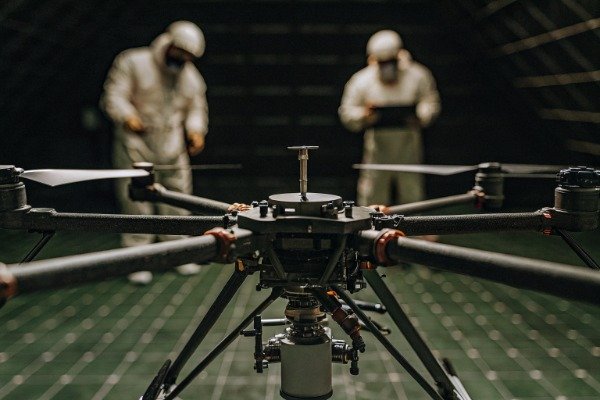
At our factory, we often see clients hesitate over high upfront sample costs. This financial risk frequently stalls critical testing phases, preventing you from deploying life-saving technology in your jurisdiction. Let's fix this.
To negotiate a favorable firefighting drone sample price, leverage your long-term purchasing potential and request a sample rebate deducted from future bulk orders. We recommend proposing a "Regional Beta-Tester" agreement or accepting a standard configuration to lower initial costs while proving your legitimacy as a serious enterprise buyer.
Here is the insider strategy to securing the best deal for your pilot unit.
Can I negotiate for the sample cost to be deducted from my first bulk order?
When we finalize contracts, we value partners who plan ahead. Paying full price for a sample often feels like a sunk cost, hurting your procurement budget immediately and reducing your operational flexibility.
Yes, you can negotiate a sample rebate clause where the sample cost is deducted from your first bulk invoice. Most manufacturers, including us, are willing to credit this expense to secure a long-term partnership, provided you sign a volume commitment or a letter of intent.
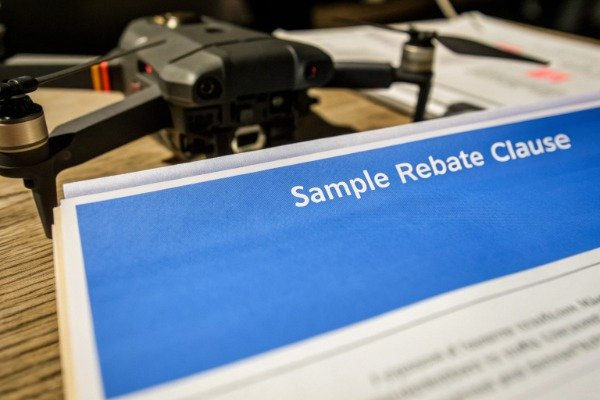
Negotiating a sample rebate is one of the most effective ways to mitigate the initial financial risk of procuring industrial firefighting drones. From our perspective on the production floor, the cost of a single unit includes not just materials, but also setup time, calibration, and individual testing. However, we view these costs differently when they are part of a larger acquisition roadmap.
Understanding the Sample Rebate Mechanism
A sample rebate essentially converts your initial purchase from an expense into a deposit. When you approach a supplier, you should propose a clause stating that if a specific volume of units (e.g., 5 or 10 units) is ordered within a set timeframe (usually 6 to 12 months), the cost of the sample will be credited back to you. This aligns your incentives with the manufacturer's goals. We are far more likely to agree to this because it guarantees future revenue and filters out non-serious buyers.
There are different ways to structure this rebate, and understanding them helps you propose a deal that a supplier is likely to accept immediately.
Table 1: Common Sample Rebate Structures
| Rebate Type | الوصف | Supplier Acceptance Level | الأفضل لـ |
|---|---|---|---|
| Full Deduction | 100% of the sample cost is deducted from the first bulk order invoice. | Medium (Requires high volume commitment) | Large agencies with guaranteed budgets. |
| Partial Credit | 50% of the sample cost is credited back upon bulk order. | عالية | Mid-sized distributors or smaller fire departments. |
| Unit Replacement | The supplier provides an extra free unit in the bulk shipment instead of a cash discount. | عالية جداً | Distributors who need demo units for sub-dealers. |
| Amortized Rebate | The sample cost is deducted in small increments across multiple future shipments. | متوسط | Long-term supply contracts with recurring deliveries. |
The Zone of Possible Agreement (ZOPA)
Effective negotiation requires understanding the Zone of Possible Agreement (ZOPA). In the firefighting drone market, prices vary significantly. Basic models with thermal imaging might range from $5,000 to $10,000, while professional-grade systems exceed $50,000. If you are purchasing a high-end model, the manufacturer has a higher margin and more room to maneuver.
Zone of Possible Agreement 1
When we analyze a deal, we look at the Customer Acquisition Cost (CAC). If giving you a rebate on a $15,000 sample secures a $200,000 contract later, the math works in our favor. You should explicitly frame your request using this logic: "We intend to standardize our fleet on this platform. A rebate on the sample allows us to allocate that budget toward the training and batteries needed for the full deployment."
تكلفة اكتساب العميل 2
Critical Thinking: The Risk of Non-Performance
You must be prepared for the counter-argument: "What if you don't buy the bulk order?" To address this valid concern, offer a tiered approach. For example, agree that the rebate only activates once the Purchase Order (PO) for the bulk batch is signed and the deposit is paid. This removes the risk for the manufacturer. By demonstrating that you understand our risk exposure, you build trust and increase the likelihood of your terms being accepted.
Purchase Order (PO) 3
Shipping heavy industrial drones from our Chengdu facility is expensive due to battery regulations. You shouldn't have to bear the entire logistics burden alone just to test a product's viability for your operations.
It is reasonable to ask suppliers to share shipping costs, especially if you propose using your own courier account or accept slower sea freight. While manufacturers rarely cover full air freight for samples, negotiating Incoterms like DDP or splitting duties can significantly reduce your total landed cost.
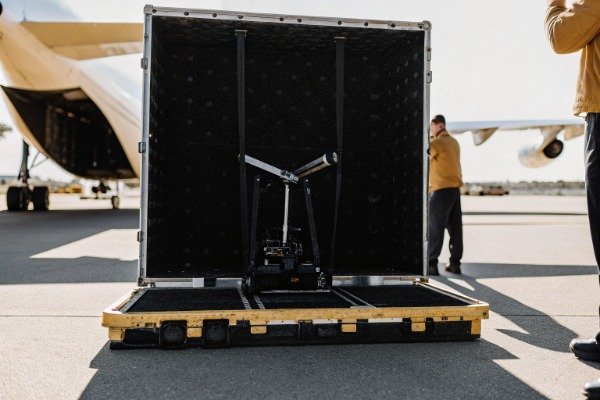
Logistics for industrial drones are far more complex than standard consumer electronics. Firefighting drones are large, heavy, and often packed in ruggedized transport cases. More importantly, they rely on high-capacity lithium polymer (LiPo) batteries, which are classified as Class 9 Dangerous Goods (DG) under international shipping regulations. This classification significantly spikes air freight costs.
بطاريات ليثيوم بوليمر (LiPo) 4
The Reality of Shipping Costs
When we export to the United States or Europe, shipping a single sample unit via air freight (DHL, FedEx, or UPS) can cost between $500 and $1,500, depending on the volumetric weight and battery capacity. If you ask for "free shipping" on a sample, many suppliers will simply inflate the product price to cover this hidden cost. A more transparent and successful negotiation strategy is to address the logistics costs directly.
Leveraging Incoterms for Better Pricing
Instead of asking for a vague discount, negotiate the المصطلحات التجارية الدولية (International Commercial Terms). Most initial quotes are Ex Works (EXW), meaning you pay for everything from the factory door. You should aim to negotiate for تسليم DDP (تسليم مدفوع الرسوم المدفوعة) or at least CIF (التكلفة والتأمين والشحن) to a major port.
Table 2: Shipping Cost Negotiation Targets
| مكون التكلفة | Standard Practice (Buyer Pays) | Negotiated Goal (Shared/Supplier Pays) | Strategy to Achieve |
|---|---|---|---|
| الشحن الجوي | 100% Buyer | 50/50 Split | Offer to write a detailed logistics review for the supplier. |
| التأمين | 100% Buyer | 100% Supplier | Argue that the supplier has better bulk insurance rates. |
| رسوم الاستيراد | 100% Buyer | DDP (Supplier covers duties) | Leverage tariff uncertainty; ask supplier to handle clearance. |
| DG Handling Fees | 100% Buyer | 100% Supplier | Request this as a "value-in-kind" concession. |
Strategic Logistics Proposals
If the air freight cost is a deal-breaker, propose a "Slow Boat" Sample Strategy. If your testing timeline allows, ask the supplier to ship the sample via sea freight (LCL – Less than Container Load). This can reduce shipping costs by 70-80%. While it takes longer (30-40 days), it demonstrates that you are cost-conscious and willing to work with the supplier's logistics constraints.
Another angle is the Courier Account Method. If your organization has a corporate account with FedEx or DHL, propose using your account for the freight. Large organizations often have negotiated rates that are lower than what we can offer. In exchange for using your account (which saves us administrative work), you can ask for a discount on the unit price itself.
The "Value-in-Kind" Alternative
Sometimes, our margins are tight, and we simply cannot absorb the shipping cost. In this scenario, do not walk away. Instead, pivot to Value-in-Kind concessions. If we cannot pay for shipping, ask for spare parts that have a high retail value but low manufacturing cost.
- "If you cannot cover the $800 shipping, can you include two extra sets of carbon fiber propellers and a repair kit for free?"
- "Can you provide free remote training sessions for our pilots?"
This approach creates a win-win. You get tangible value that offsets the shipping expense, and we maintain our cash flow on the hardware sale.
How can I demonstrate my long-term purchasing potential to get a discount on the sample?
We receive countless inquiries daily, making it hard to identify serious buyers from window shoppers. Without solid proof of your intent, you risk being treated like a casual hobbyist and quoted standard retail prices.
Demonstrate potential by sharing a detailed procurement roadmap, company profile, and proof of past government tenders. Providing a clear timeline for fleet expansion and offering to serve as a regional case study partner convinces suppliers to offer discounted sample rates to secure your future business.
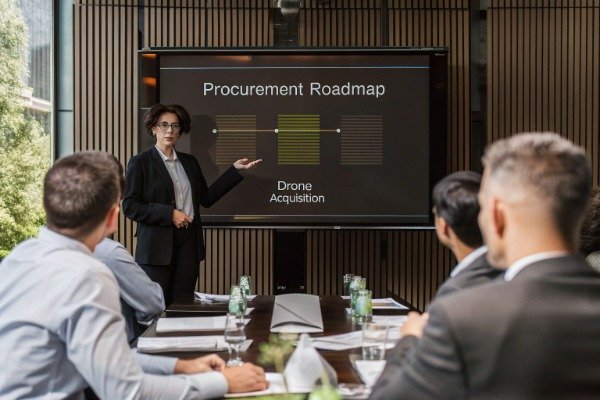
In the B2B industrial drone sector, credibility is currency. When we receive an email from a generic Gmail address asking for a "best price" on a high-end firefighting drone, it usually goes to the bottom of the pile. To unlock the best pricing tiers usually reserved for distributors, you must position yourself as a high-value enterprise partner from the very first interaction.
The "Hobbyist vs. Enterprise" Filter
Manufacturers use strict filters to qualify leads. We look for signs of organizational maturity. A hobbyist asks about top speed and camera resolution; a procurement manager asks about MTBF (Mean Time Between Failures), supply chain stability, and certification compliance. To get a discount, you need to speak the language of enterprise procurement.
متوسط الوقت بين الأعطال 5
Building a Business Case with Documentation
Don't just promise future orders; prove you have the capacity to place them. Prepare a "Vendor Onboarding Packet" to send along with your inquiry. This should include:
- Procurement Roadmap: A document outlining your department's plan to modernize equipment over the next 3-5 years.
- Company/Agency Profile: Details about your operational jurisdiction, team size, and existing fleet.
- Proof of Funds/Authority: Mentioning grant funding (like FEMA grants in the US) or budget approvals signals that the money is ready.
Table 3: Credibility Indicators vs. Red Flags
| Credibility Indicator (Gets Discounts) | Red Flag (Gets Retail Price) |
|---|---|
| Official government or corporate email domain. | Generic email (gmail, yahoo, hotmail). |
| Reference to specific regulatory needs (e.g., FAA Part 107, BVLOS). | Vague requests ("I want a drone that flies far"). |
| Requesting a video meeting to discuss engineering support. | Asking for the price list immediately without technical questions. |
| Mentioning specific competitors and their weaknesses. | No knowledge of the market landscape. |
The "Regional Beta-Tester" Strategy
One of the most powerful negotiation tactics is to offer data in exchange for dollars. The firefighting drone market is growing, but real-world operational data is still scarce. We are constantly hungry for case studies and feedback from the field to improve our flight controllers and thermal algorithms.
Propose a Regional Beta-Tester Agreement. Tell the supplier:
"We are willing to provide detailed flight logs, thermal mapping data from real fire exercises, and a written testimonial regarding the drone's performance in high-wind conditions. We will also allow you to use our department's name in your marketing materials for this region."
This is incredibly valuable to a manufacturer. It provides us with marketing collateral that would cost thousands of dollars to produce otherwise. In exchange, asking for a 20% to 30% discount on the sample unit is entirely reasonable. You are not just buying a product; you are selling a marketing service.
Leveraging Competitive Benchmarking
Finally, use the "Anchor and Pivot" technique. Research competitive pricing from other Chinese or Western manufacturers. When negotiating, present these findings:
"We are evaluating your SkyRover model against the DJI Matrice 30T. Their local distributor offered us a pilot unit at $X. We prefer your open-source architecture, but we need the pricing to be competitive with their offer to justify the switch to our board."
This shows you have done your homework and forces the supplier to compete for your business. It shifts the dynamic from you asking for a favor to the supplier needing to win the deal.
Should I accept a standard configuration sample to lower the initial testing cost?
Customizing a prototype on our production line takes significant time and engineering resources. Demanding unique features for a mere test unit often inflates the price unnecessarily and delays delivery.
Accepting a standard configuration is highly recommended for initial testing as it avoids non-recurring engineering (NRE) fees. By stripping away non-essential accessories like extra batteries or custom branding, you can secure a "bare-bones" sample at a lower price point while still validating the core flight performance.
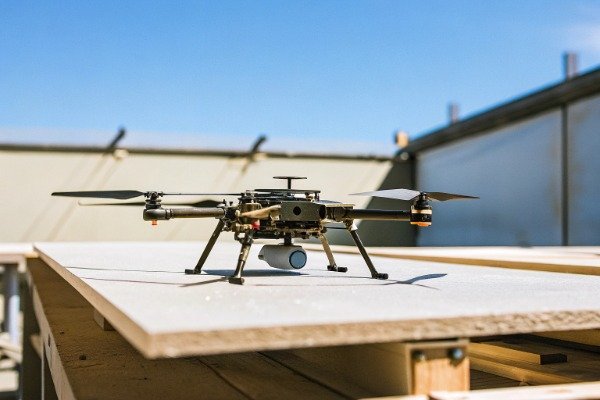
When procuring complex machinery like firefighting drones, there is a temptation to order the "dream configuration" right away—custom paint jobs, specific payload integrations, and maximum battery kits. However, from a manufacturing standpoint, every deviation from our standard assembly line adds cost. These are often categorized as Non-Recurring Engineering (NRE) fees or customization surcharges.
The "Bare-Bones" Hardware Strategy
To get the absolute lowest price on a sample, your goal should be to strip the order down to the essentials required for validation. You are testing the platform's stability, the transmission range, and the thermal sensor quality. You do not need the ruggedized travel case, the branding decals, or the triple-redundant battery charger for this specific phase.
قانون الطيران الفيدرالي الجزء 107 6
Ask the supplier for a "Base Unit Only" quote.
- Remove Redundancies: Instead of ordering 4 sets of batteries, order 1 set. Batteries are heavy and expensive to ship. You can buy more later or source compatible standard batteries locally if the drone supports them.
- Standard Packaging: Request standard cardboard packaging instead of the aluminum flight case. This reduces weight and cost.
- Software Locks: Some manufacturers charge for advanced software features (like automated mapping or swarm control). Ask for a temporary license or a trial version for the sample unit instead of paying for the lifetime license upfront.
Avoiding the Customization Trap
We often see clients request integration of specific third-party cameras or sensors on the sample unit. This requires our engineers to design new mounts, balance the gimbal, and rewrite drivers. This can easily double the cost of a sample.
FEMA grants 7
Instead, negotiate to test the Standard Platform.
"We will accept the standard payload for the sample to verify flight characteristics. If the platform performs well, we will discuss custom payload integration for the bulk order."
This approach signals that you are practical and understand the engineering process. It makes it easier for us to say "yes" to a lower price because we can simply pull a unit off the shelf rather than disrupting our production schedule for a custom build.
الأعمال السابقة (EXW) 8
H3: The Hidden Cost of "Demo" Units
Be cautious when suppliers offer "Demo Units" or "Refurbished Units" at a discount. While this can be a good way to save money, you must ensure the warranty terms are identical to a new unit.
- اسأل: "Is this a fresh production unit or a returned demo?"
- Negotiate: "If we accept a refurbished unit for testing, we expect a 40% discount off the MSRP, but with a full 12-month warranty."
Table 4: Standard vs. Custom Sample Cost Comparison
| الميزة | Standard Configuration (Lower Cost) | Custom Configuration (Higher Cost) | التأثير على سعر العينة |
|---|---|---|---|
| هيكل الطائرة | Standard Color (Black/Grey) | Custom Fire Department Red/Yellow | +$500 – $1,000 |
| التعبئة والتغليف | Industrial Cardboard Box | Aluminum Hard Case | +$300 – $800 |
| الحمولة | Standard Thermal Camera | Specific Sensor Integration | +$2,000 – $5,000 (NRE) |
| البرمجيات | تطبيق الطيران القياسي | Custom UI / API Access | +$1,000+ |
| المهلة الزمنية | 3-5 أيام | 20-30 Days | Delays testing schedule |
By sticking to the standard configuration, you not only save money but also speed up the shipping process. This allows you to complete your evaluation faster and move to the bulk ordering phase—where you can then leverage your volume to get the customizations you really want at a better price.
المصطلحات التجارية الدولية 9
الخاتمة
Successful negotiation transforms a simple purchase into a partnership. By leveraging volume potential and flexible terms, you secure the best sample price while ensuring long-term support.
البضائع الخطرة من الفئة 9 10
الحواشي
1. Authoritative academic source explaining the negotiation concept. ︎
2. Defines the business metric used in the negotiation logic. ︎
3. Explains the standard commercial document mentioned. ︎
4. Provides technical background on the specific battery technology. ︎
5. Technical definition of the reliability metric. ︎
6. Official regulations for commercial drone operators. ︎
7. Official source for the specific government funding mentioned. ︎
8. Government resource defining this specific shipping term. ︎
9. Links to the official organization defining Incoterms. ︎
10. Official regulatory source for hazardous material classification. ︎

 English
  Español de México
  Deutsch
  Français
  Русский
  العربية
