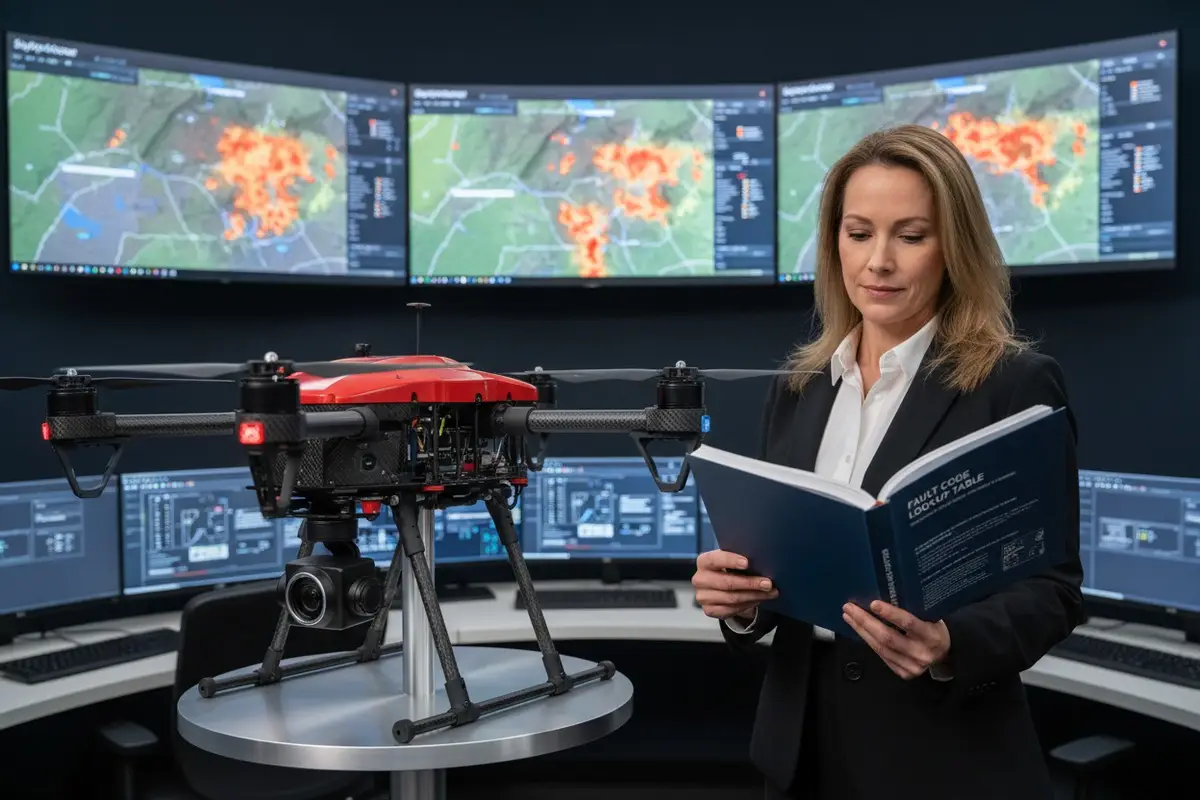
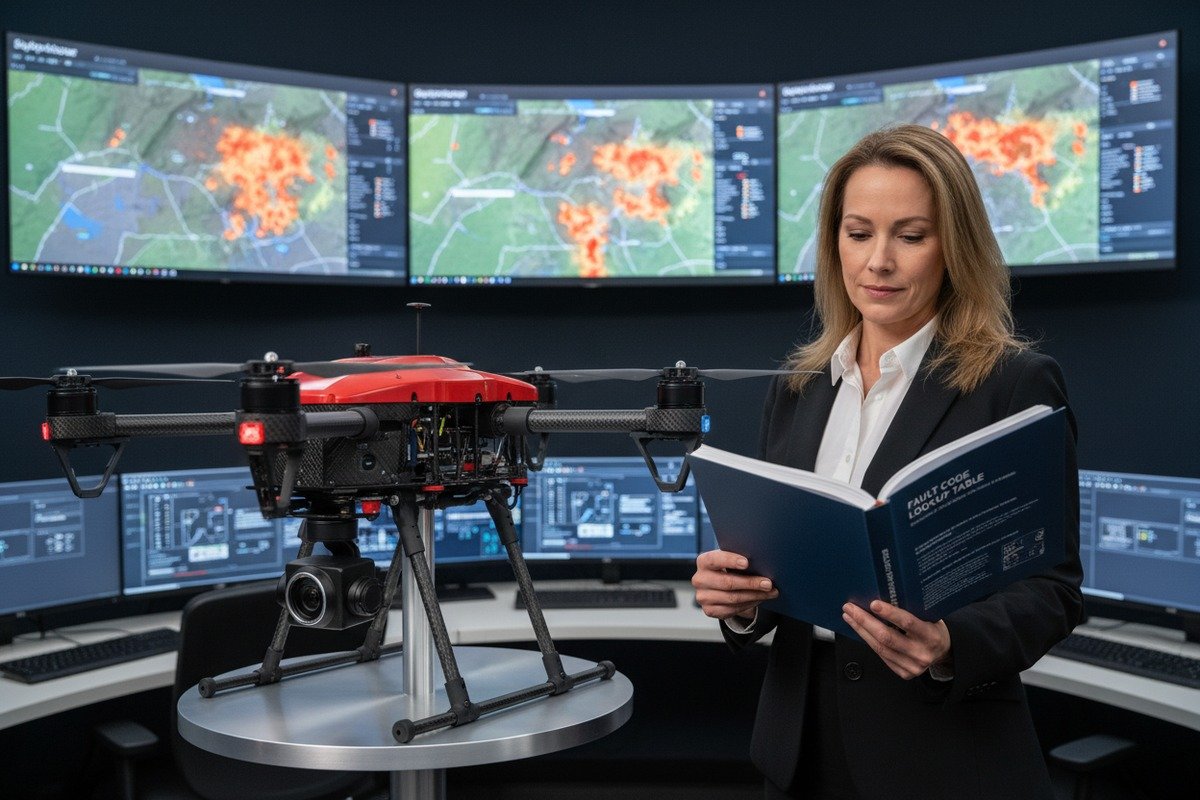
عندما بدأ فريق الهندسة لدينا في تلقي مكالمات من إدارات الإطفاء غير القادرة على فك رموز الأخطاء أثناء المهمة، أدركنا وجود فجوة حرجة بين تكنولوجيا الطائرات بدون طيار وسهولة الاستخدام في الميدان.
نعم، يجب عليك بالتأكيد طلب جدول رموز الأعطال قبل شراء طائرات بدون طيار لمكافحة الحرائق. تتيح هذه الوثائق استكشاف الأخطاء وإصلاحها بسرعة أثناء حالات الطوارئ، وتقلل الاعتماد على دعم البائع، وتضمن بقاء أسطولك جاهزًا للعمل عندما تكون الأرواح والممتلكات على المحك أثناء عمليات الاستجابة لحرائق الغابات.
سيرشدك هذا الدليل خلال سبب أهمية جداول التشخيص هذه بالضبط، وكيف تفيد قدرات الدعم الفني لديك، وتأثيرها على التكاليف طويلة الأجل، وما تكشفه عن موثوقية المورد الخاص بك.
لماذا يعتبر جدول البحث الشامل لرموز الأعطال ضروريًا لصيانة طائرة الدرون الخاصة بمكافحة الحرائق؟
يقوم مرفق الإنتاج لدينا بإجراء اختبارات إجهاد مستمرة على كل وحدة تحكم طيران، وقد شهدنا بأنفسنا كيف يمكن لرمز خطأ واحد غير موثق أن يعطل طائرة بدون طيار بأكملها خلال مراحل الاختبار الحرجة. طائرات بدون طيار صناعية 1.
جدول شامل للبحث عن رموز الأعطال ضروري لأنه يترجم إشارات الخطأ الغامضة إلى خطوات صيانة قابلة للتنفيذ. بدون هذه الوثائق، لا يمكن لفنييك التمييز بين مشكلة بسيطة في معايرة المستشعر وفشل حرج في البطارية يتطلب التأريض الفوري، مما يؤدي إلى توقف غير ضروري أو إشراف خطير.

فهم كيفية عمل رموز الأعطال في الطائرات بدون طيار الصناعية
تعمل رموز الأعطال بشكل مشابه لنظام نظام التشخيص OBD-II 2 في السيارات. عندما يكتشف الكمبيوتر الموجود على متن الطائرة بدون طيار خللاً، فإنه ينشئ رمزًا قياسيًا يتوافق مع مشكلة معينة. تندرج هذه الرموز عادةً في ثلاث فئات: تأكيدات الحالة، وأخطاء التشغيل، والأعطال الحرجة.
بالنسبة لـ طائرات بدون طيار لمكافحة الحرائق 3, ، فإن المخاطر أعلى بكثير من تطبيقات المستهلك. قد تواجه طائرتك بدون طيار تداخلًا حراريًا من اللهب النشط، أو جزيئات الدخان التي تؤثر على المستشعرات البصرية، أو اضطرابات الاتصال من تضاريس غنية بالمعادن. كل سيناريو من هذه السيناريوهات يولد رموز أعطال فريدة تتطلب تفسيرًا فوريًا.
فئات رموز الأعطال الشائعة للطائرات بدون طيار لمكافحة الحرائق
| نطاق الرمز | الفئة | أمثلة على المشكلات | مستوى الأولوية |
|---|---|---|---|
| 200-299 | تأكيدات الحالة | تم الانتهاء من التوجيه، النظام جاهز، تم الانتهاء من المعايرة | منخفضة |
| 400-410 | أخطاء التشغيل | بطارية منخفضة (405)، تعارض المستشعر (406)، تأخير الاتصال | متوسط |
| 411-450 | تعارضات النظام | تداخل التوجيهات (411)، انحراف نظام تحديد المواقع العالمي (GPS)، عدم تطابق مستشعر الحمولة | عالية |
| 500+ | أعطال حرجة | فشل المحرك، فقدان الاتصال الكامل، تشغيل الهبوط الاضطراري | فوري |
عندما نقوم بمعايرة وحدات التحكم في الطيران لدينا أثناء الإنتاج، نقوم بتوثيق كل رمز ممكن يمكن لأنظمتنا إنشاؤه. تصبح هذه الوثائق لا تقدر بثمن عندما يواجه فريق الصيانة الخاص بك طائرة بدون طيار تعرض "خطأ 406" في الساعة 3 صباحًا قبل مهمة استطلاع مجدولة للحرائق.
لماذا تفشل استكشاف الأخطاء وإصلاحها العامة
يفترض العديد من المشغلين أنه يمكنهم استكشاف أخطاء الطائرات بدون طيار وإصلاحها باستخدام المعرفة العامة أو المنتديات عبر الإنترنت. يفشل هذا النهج في سياقات مكافحة الحرائق لعدة أسباب. أولاً، تشتمل طائرات مكافحة الحرائق بدون طيار على مكونات متخصصة مثل كاميرات التصوير الحراري 4, ، وأنظمة حمولة مقاومة للحريق، وأغلفة متينة تولد رموز خطأ فريدة غير موجودة في وثائق الطائرات بدون طيار الاستهلاكية القياسية.
ثانيًا، تخلق بيئات حرائق الغابات ظروفًا لا تواجهها أي طائرة بدون طيار استهلاكية. يمكن أن تربك البصمات الحرارية المستشعرات بالأشعة تحت الحمراء. تؤثر كثافة الدخان على قراءات الليدار. التداخل الكهرومغناطيسي 5 من اتصالات طائرات قمع الحرائق يمكن أن تؤدي إلى تشغيل بروتوكولات فقدان الارتباط. يتطلب كل سيناريو معرفة تشخيصية محددة متاحة فقط من خلال جداول الأعطال المقدمة من الشركة المصنعة.
كيف يمكن أن يساعدني الوصول إلى هذه الرموز في تقديم دعم فني أفضل لعملائي في قسم الإطفاء المحلي؟
من خلال خبرتنا في التصدير إلى إدارات الإطفاء في جميع أنحاء الولايات المتحدة وأوروبا، تعلمنا أن الموزع الذي يقدم أسرع الحلول التقنية يبني أقوى علاقات العملاء.
يُمكّن الوصول إلى رموز الأعطال الموزعين من تقديم إرشادات فورية وقابلة للتنفيذ لاستكشاف الأخطاء وإصلاحها لعملاء فرق الإطفاء. بدلاً من انتظار أيام لاستدعاءات الشركة المصنعة، يمكنك تشخيص المشكلات في غضون دقائق، وحل المشكلات البسيطة عن بُعد، وترسيخ مكانتك كمورد ذي معرفة وموثوق به يفهم احتياجات المعدات ذات الأهمية القصوى.

بناء ثقة العميل من خلال الاستجابة السريعة
تعمل فرق الإطفاء بجداول زمنية ضيقة مع عدم التسامح مطلقًا مع تعطل المعدات. عندما يعرض طائرة بدون طيار خطأً قبل مسح جوي مخطط له للمناطق المعرضة للحريق، يحتاج عميلك إلى إجابات فورية. إذا كان عليك إرسال كل استفسار إلى المورد الخاص بك في الخارج والانتظار للحصول على ردود متأخرة بسبب فروق التوقيت، فإنك تفقد المصداقية مع كل ساعة تمر.
باستخدام جدول شامل لرموز الأعطال، تتحول من وسيط إلى سلطة فنية. عندما يتصل رئيس الإطفاء بشأن ظهور "خطأ 412" على قائمة التحقق قبل الرحلة، يمكنك على الفور شرح أن هذا الرمز يشير إلى تسلسل تهيئة مستشعر الحمولة يتطلب إعادة تشغيل بسيطة بدلاً من إصلاح الأجهزة.
إنشاء حزم خدمات ذات قيمة مضافة
غالبًا ما يعمل فريق الهندسة لدينا مع الموزعين لتطوير مواد دعم مخصصة بناءً على وثائق رموز الأعطال الخاصة بنا. يتيح هذا التعاون للموزعين تقديم مستويات خدمة متميزة تميزهم عن المنافسين الذين يبيعون أجهزة متطابقة.
| مستوى الخدمة | الوصول إلى رمز الخطأ | استجابة الدعم | القيمة للعميل |
|---|---|---|---|
| الأساسيات | لم يتم تقديم أي | إحالة الشركة المصنعة خلال 48-72 ساعة | الحد الأدنى |
| قياسي | الرموز الشائعة فقط | دعم هاتفي للموزع خلال 24 ساعة | معتدل |
| بريميوم | جدول بحث كامل | تشخيص عن بعد في نفس اليوم | عالية |
| المؤسسة | جدول كامل + تدريب | شهادة فني في الموقع | الحد الأقصى |
تقليل عبء الدعم الخاص بك
على عكس المتوقع، فإن مشاركة معرفة رموز الأعطال مع عملائك تقلل بالفعل من عبء الدعم الخاص بك بمرور الوقت. عندما يفهم موظفو صيانة فرق الإطفاء رموز التشخيص الأساسية، فإنهم يتعاملون مع المشكلات الروتينية بشكل مستقل. هاتفك يرن فقط للمشكلات الحقيقية التي تتطلب قطع غيار أو تدخلًا متقدمًا.
لقد لاحظنا هذا النمط مرارًا وتكرارًا مع شركائنا الموزعين. أولئك الذين قاوموا في البداية مشاركة الوثائق الفنية وجدوا أنفسهم غارقين في مكالمات استكشاف الأخطاء وإصلاحها الأساسية. أولئك الذين دربوا عملائهم على تفسير رموز الأعطال بنوا عمليات دعم أكثر كفاءة وولاء أقوى للعملاء.
التكامل مع أنظمة تقارير فرق الإطفاء
تستخدم العديد من فرق الإطفاء نظام الإبلاغ الوطني عن حوادث الحرائق (NFIRS) 6 للتوثيق. يمكن لرموز أعطال الطائرات بدون طيار التكامل مع هذه الأطر الحالية، مما ينشئ مسارات تدقيق تلبي المتطلبات التنظيمية واحتياجات توثيق التأمين.
عندما يتمكن عميلك من إثبات أن "الخطأ 405 - انخفاض البطارية العودة إلى المنزل" قد تم تفعيله بالضبط كما هو مصمم، فإنه يثبت أن معداته تعمل بشكل صحيح. يحمي هذا التوثيق كلاً من فرقة الإطفاء وأنت كمورد لهم من أسئلة المسؤولية بعد أي حادث.
هل سيؤدي وجود دليل أخطاء مفصل إلى تقليل تكاليف الإصلاح طويلة الأجل لأسطول طائراتي المسيرة الصناعية؟
عندما نصمم بروتوكولات الصيانة لدينا في منشأتنا في شيان، فإننا نحسب التكلفة الإجمالية للملكية على مدار العمر التشغيلي الكامل للطائرة بدون طيار، ويظهر الوصول التشخيصي باستمرار كمحرك رئيسي للتكلفة.
نعم، تقلل أدلة الأخطاء التفصيلية بشكل كبير من تكاليف الإصلاح على المدى الطويل من خلال تمكين الصيانة الوقائية، وتجنب استبدال الأجزاء غير الضرورية، وتقليل استدعاءات الخدمة الطارئة المكلفة. عادةً ما يبلغ مشغلو الأساطيل الذين لديهم وثائق شاملة للأعطال عن نفقات صيانة أقل بنسبة 30-40٪ مقارنة بأولئك الذين يعتمدون كليًا على الدعم الفني الخارجي.
التكلفة الحقيقية للعمى التشخيصي
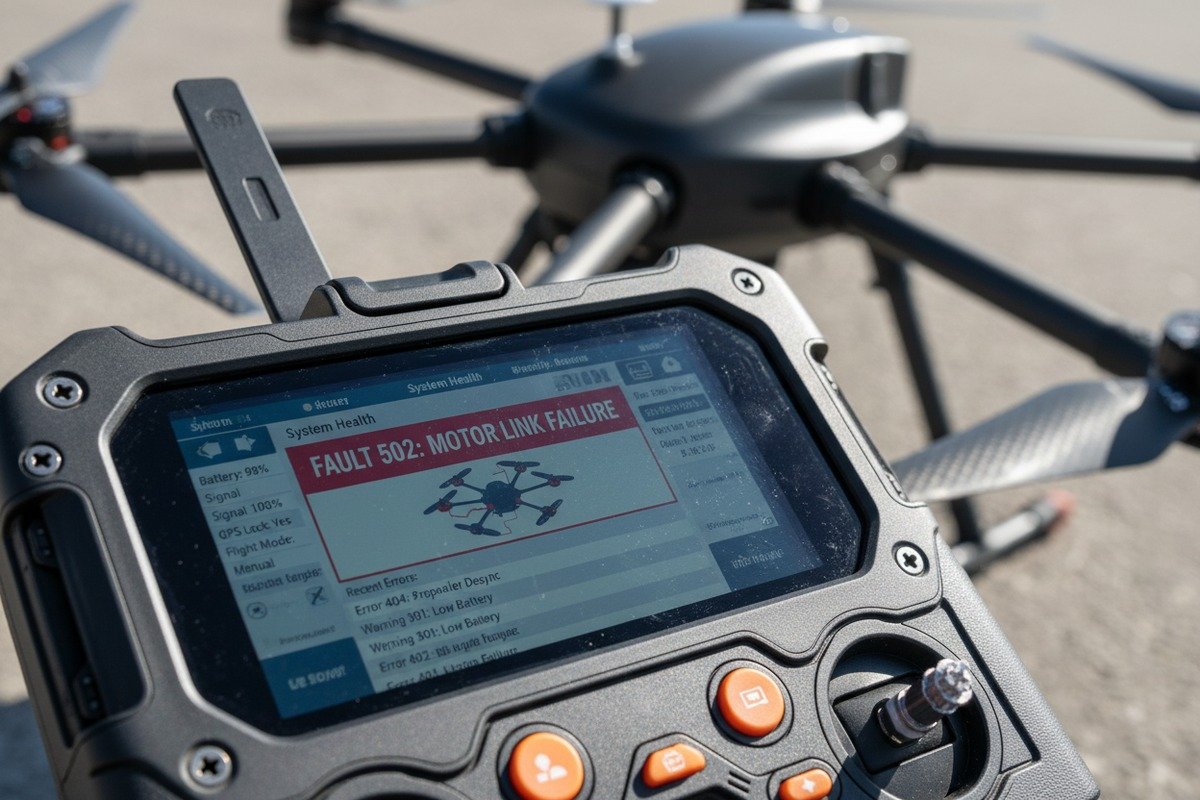
بدون الوصول إلى رموز الأعطال، تتبع كل مشكلة في الطائرة بدون طيار مسار حل مكلف. يحدد الفني الخاص بك مشكلة، ويتصل بالشركة المصنعة، وينتظر الرد، ويشحن الطائرة بدون طيار للتشخيص، وينتظر التقييم، ويوافق على الإصلاحات، وينتظر الشحن العائد. تستهلك هذه الدورة أسابيع وتكلف مئات أو آلاف الدولارات للمشكلات التي ربما كانت تتطلب مجرد إعادة ضبط معايرة مدتها خمس دقائق.
الصيانة الوقائية من خلال التعرف على الأنماط
أكواد الأعطال تحكي قصصًا عندما تتتبعها بمرور الوقت. طائرة بدون طيار تولد "خطأ 408 - تحذير درجة حرارة المحرك" مرة واحدة كل مائة رحلة تعمل بشكل طبيعي. نفس الطائرة بدون طيار التي تولد هذا الرمز كل ثلاث رحلات تشير إلى تآكل المحمل يتطلب استبدالًا استباقيًا قبل فشل المحرك الكارثي.
| نهج الصيانة | التكلفة النموذجية لكل حادث | تكلفة الأسطول السنوية (10 طائرات بدون طيار) | تأثير وقت التوقف عن العمل |
|---|---|---|---|
| تفاعلي (لا يوجد تتبع للأعطال) | $800-2,500 | $15,000-40,000 | 5-15 يومًا لكل حادث |
| أساسي (الأكواد الشائعة فقط) | $400-1,200 | $8,000-20,000 | 2-7 أيام لكل حادث |
| شامل (جدول كامل + تتبع) | $150-600 | $3,000-10,000 | 0-3 أيام لكل حادث |
تجنب استبدال المكونات غير الضرورية
أحد الأنماط التي نلاحظها بشكل متكرر يتضمن استبدال المشغلين للمكونات باهظة الثمن بناءً على الأعراض بدلاً من التشخيصات. قد تبدو طائرة بدون طيار تظهر سلوكًا غير مستقر في التحويم وكأنها تتطلب وحدة تحكم طيران جديدة. ومع ذلك، قد يكشف سجل أكواد الأعطال عن أكواد متقطعة لإشارة GPS تشير إلى اتصال هوائي غير محكم يمكن إصلاحه في دقائق باستخدام مفك براغي.
تتضمن وثائقنا الهندسية أشجار قرارات تساعد الفنيين على استبعاد الاحتمالات بشكل منهجي. بدلاً من استبدال وحدة التحكم في الطيران بقيمة $1,200، وموصل الهوائي بقيمة $50، ووحدة GPS بقيمة $300 "للتأكد فقط"، فإن كود الخطأ يوجههم مباشرة إلى المشكلة الفعلية.
إطالة عمر المكونات من خلال التدخل المبكر
تشير العديد من رموز الأعطال إلى مشاكل متطورة قبل أن تصبح أعطالًا. تكشف رموز الإدارة الحرارية عن تدهور نظام التبريد. تكشف رموز البطارية عن اختلال توازن الخلايا قبل أن يصبح فقدان السعة شديدًا. تحدد رموز المحرك المشكلات الكهربائية قبل حدوث تلف ميكانيكي.
عندما يستجيب فريق الصيانة الخاص بك لهذه التحذيرات المبكرة، فإنهم يطيلون عمر المكون بشكل كبير. قد تصل البطارية التي تصدر رموز تحذير عند 300 دورة إلى 500 دورة مع إعادة تأهيل مناسبة. قد تتلف نفس البطارية التي تم تجاهلها حتى الفشل نظام إدارة الطاقة في الطائرة بدون طيار أثناء تفريغها النهائي، مما يضاعف تكاليف الإصلاح.
التكامل مع أنظمة إدارة الصيانة المحوسبة
يستخدم مشغلو الأساطيل الحديثون منصات CMMS 7 لتتبع جداول الصيانة ومخزون قطع الغيار وسجل الخدمة. تتكامل بيانات رموز الأعطال بسلاسة مع هذه الأنظمة، مما يتيح خوارزميات الصيانة التنبؤية 8 التي تحدد موعد الخدمة قبل حدوث الأعطال.
يقوم شركاؤنا الموزعون الأكبر بتوصيل بيانات الطائرات بدون طيار الخاصة بنا بمنصات CMMS الخاصة بهم، مما يؤدي إلى إنشاء أوامر عمل آلية عند ظهور رموز أعطال محددة. يحول هذا التكامل الصيانة من مكافحة الحرائق التفاعلية إلى التحسين الاستباقي للأسطول.
Should I consider a supplier's transparency with fault documentation as a sign of their engineering reliability?
قضى فريقنا سنوات في بناء أنظمة توثيق تعكس ثقتنا في جودة المنتج، وقد لاحظنا أن الموردين الذين يخفون معلومات التشخيص غالبًا ما يكون لديهم أسباب لهذا الغموض.
Absolutely. A supplier's willingness to provide comprehensive fault documentation signals engineering maturity, product confidence, and long-term partnership commitment. Manufacturers who restrict diagnostic access often lack robust quality control, fear exposing design weaknesses, or prioritize short-term sales over sustainable customer relationships.

ما تكشفه شفافية الوثائق عن جودة التصنيع
يرحب الموردون الواثقون من منتجاتهم بالتدقيق. عندما نقدم جداول رموز أعطال كاملة لموزعينا، فإننا نظهر أن طائراتنا بدون طيار تولد سلوكيات يمكن التنبؤ بها وموثقة بدلاً من الأعطال الغامضة. تعكس هذه الشفافية عمليات هندسية منهجية تم فيها النظر في كل وضع فشل محتمل واختباره وتوثيقه.
على العكس من ذلك، غالبًا ما لا يتمكن الموردون الذين يرفضون الوصول إلى رموز الأعطال من توفيرها لأن وثائقهم الهندسية غير موجودة. المنتجات المجمعة بدون بروتوكولات اختبار صارمة تولد أخطاء غير متوقعة لا يفهمها المصنعون أنفسهم. يخشى هؤلاء الموردون أن يؤدي الكشف عن أنظمة التشخيص الخاصة بهم إلى كشف ضعف مراقبة الجودة لديهم.
تقييم استجابات الموردين لطلبات الوثائق
| استجابة المورد | ما تشير إليه | مستوى المخاطرة | التوصية |
|---|---|---|---|
| جدول كامل مقدم على الفور | هندسة ناضجة، واثق في الجودة | منخفضة | مرشح قوي |
| جدول جزئي، المزيد متاح عند الطلب | وثائق منظمة، حذر معقول | منخفضة-متوسطة | المتابعة |
| "رفض "معلومات خاصة" | مخاوف محتملة بشأن الجودة، استراتيجية احتكار البائع | متوسط-عالي | طلب توضيح |
| "غير متاح" أو "غير موجود" | وثائق هندسية غير كافية | عالية | البحث عن بدائل |
| Aggressive pushback against request | Defensive posture, potential hidden issues | عالية جداً | تجنب |
مؤشرات الشراكة طويلة الأجل
Suppliers who provide comprehensive documentation invest in your success beyond the initial sale. They want you to maintain their products correctly because proper maintenance means fewer warranty claims, better product reputation, and repeat purchases. This alignment of interests indicates a supplier focused on sustainable business relationships rather than one-time transactions.
Our approach involves training distributor technicians on our fault code systems during onboarding. We want every SkyRover drone maintained by someone who understands its diagnostic language. This investment in your technical capability reflects our confidence that properly maintained drones generate satisfied customers who return for fleet expansions.
Red Flags in Supplier Documentation Practices
Beyond outright refusal, watch for suppliers who provide documentation with suspicious gaps. Missing code ranges suggest undocumented failure modes. Vague descriptions like "contact manufacturer" for specific codes indicate incomplete engineering knowledge. Documentation versions that do not match current firmware reveal neglected maintenance of technical resources.
Also consider response speed. Suppliers with organized engineering departments provide documentation quickly because it already exists in accessible formats. Those requiring weeks to "compile" fault code information likely create it retroactively from scattered sources, if it exists at all.
The Military Parallel
Defense contractors maintain exhaustive diagnostic documentation for every system they produce. Air Force work unit codes track maintenance at component level across entire aircraft fleets. This rigorous approach ensures accountability, enables pattern analysis, and supports operational readiness.
Firefighting drones serve missions where equipment failure can cost lives. While not military equipment, they deserve similar documentation standards. Suppliers who treat their engineering documentation with military-grade seriousness demonstrate appropriate respect for the critical applications their products serve.
الخاتمة
Requesting a fault code lookup table 9 قبل شراء طائرات بدون طيار لمكافحة الحرائق ليس اختياريًا - إنه العناية الواجبة الأساسية التي تحمي استثمارك، وتمكّن قدراتك التقنية، وتقلل التكاليف طويلة الأجل، وتكشف عن معلومات حاسمة حول موثوقية هندسة المورد الخاص بك.
الحواشي
1. يحدد الطائرات بدون طيار الصناعية ويحدد غرضها الأساسي وتطبيقاتها. ︎
2. يوفر تعريفًا رسميًا وغرضًا لنظام OBD-II. ︎
3. معلومات رسمية من إدارة الطيران الفيدرالية (FAA) حول استخدام الطائرات بدون طيار في الاستجابة لحرائق الغابات. ︎
4. تم استبداله بصفحة إعلامية تشرح تقنية التصوير الحراري. ︎
5. يوفر تعريفًا واضحًا للتداخل الكهرومغناطيسي وأسبابه. ︎
6. مصدر حكومي رسمي للنظام الوطني للإبلاغ عن حوادث الحرائق. ︎
7. يحدد CMMS ويشرح دوره في أتمتة عمليات الصيانة. ︎
8. تم استبداله بمنشور مدونة من IBM Research يناقش خوارزميات الصيانة التنبؤية. ︎
9. يشرح ما هي رموز الأعطال التشخيصية والغرض منها في تشخيص المركبات. ︎
 English
  Español de México
  Deutsch
  Français
  Русский
  العربية
Comments
No comments yet. Be the first to share your thoughts!
Leave a Comment