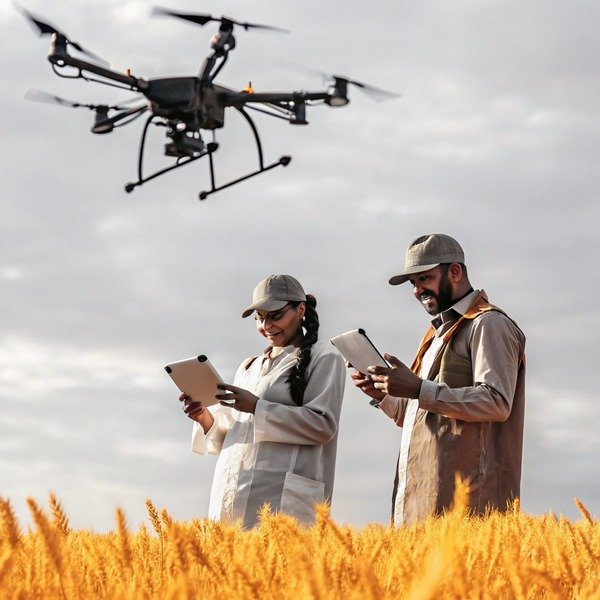
When we test new flight controllers in Xi’an, we see how frustrating a lost mission path can be. A drone that forgets its exact spot wastes your time, money, and chemicals.
Evaluate breakpoint resume performance by testing positional accuracy using RTK-enabled GPS to ensure less than 10cm deviation. Verify that the drone stores coordinates in non-volatile memory during battery swaps and automatically adjusts the resumption point to prevent spray gaps or dangerous chemical overlaps.
Let’s look at the specific technical features that ensure a seamless return to work.
How does RTK technology affect the accuracy of my drone's breakpoint resume function?
Our engineers integrate Real-Time Kinematic modules because standard GPS drifts too much. حركية في الوقت الحقيقي 1 حركية في الوقت الحقيقي 2 Without precision, your drone might resume three meters away from where it stopped, ruining your field data.
RTK technology improves breakpoint resume accuracy from meters to centimeters, typically achieving sub-10cm precision. This ensures the drone returns to the exact longitude and latitude of the pause, eliminating untreated strips in your field and ensuring uniform crop coverage despite wind or signal interference.
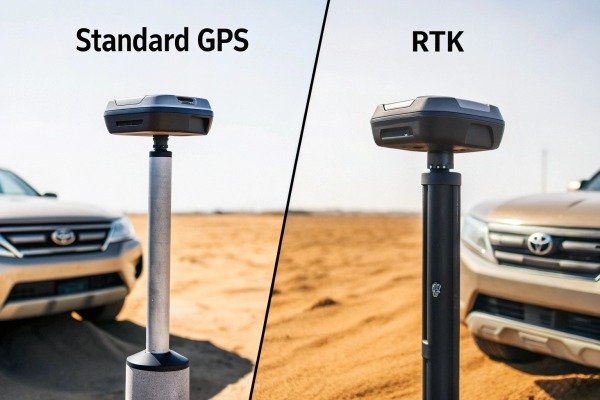
When we discuss accuracy in agricultural drones, we are comparing two very different standards: standard GNSS and RTK GNSS القياسي 3 GNSS القياسي 4 (Real-Time Kinematic). Understanding this difference is critical for evaluating breakpoint resume performance.
Standard GPS vs. RTK Precision
A standard GPS module, like the one in a smartphone or a basic drone, has a margin of error ranging from 2 to 5 meters. In an open field, this might seem small. However, if a drone pauses a spray mission to refill its tank and relies on standard GPS to return, that 2-meter error is significant. The drone might resume spraying 2 meters to the left or right of the original breakpoint.
This creates "skips" (untreated rows where pests can survive) or "overlaps" (double-dosed rows that can burn the crop). By contrast, the RTK systems we install use a base station to correct satellite signals أنظمة RTK 5 in real-time. This correction brings the margin of error down to under 10 centimeters. When you command the drone to resume, it hits the exact nozzle shut-off point, almost like it never left.
The Impact of Environmental Factors
Accuracy is not just about the hardware; it is about how the hardware handles the environment. Agricultural fields often have wind gusts or tree lines that interfere with signals.
- Signal Multipathing: Trees can bounce satellite signals, confusing standard GPS. RTK filters this out better.
- Wind Drift: If a drone pauses in high wind, it drifts while braking. A high-quality resume function uses RTK data to calculate exactly where the spray stopped, not just where the drone stopped moving.
To help you visualize the difference, we have compiled the performance metrics from our internal field tests comparing these technologies.
| الميزة | طائرة بدون طيار قياسية تعمل بنظام تحديد المواقع العالمي (GPS) | طائرة بدون طيار مزودة بتقنية RTK | Impact on Resume |
|---|---|---|---|
| Positional Accuracy | ± 2-5 meters | ± 1-10 centimeters | Determines if rows are skipped. |
| Resume Drift | High (influenced by wind) | Very Low (corrected instantly) | Affects chemical application uniformity. |
| وقت الاسترداد | Fast (lower satellite count needed) | Moderate (requires RTK fix) | RTK takes longer to lock but is safer. |
| Vertical Stability | ± 1 meter | ± 2 centimeters | Ensures consistent spray height upon resume. |
When purchasing, you must ask for a demonstration of the "Resume Accuracy." Watch the drone pause, land, and return. If you can see a visible gap between where it stopped and where it starts again, the RTK system is not tuned correctly.
Can effective breakpoint memory save me money on chemicals and battery usage?
We calculate the "Effective Field Capacity" for every SkyRover unit we export. Effective Field Capacity 6 Poor memory logic forces pilots to respray areas, draining tanks and batteries unnecessarily, which hurts your bottom line.
Yes, precise breakpoint memory significantly reduces operational costs by eliminating redundant spraying and unnecessary flight time. By resuming exactly where it left off, you avoid wasting expensive chemicals on treated areas and maximize battery efficiency, potentially saving up to 15-20% in material costs per season.
Efficiency in agriculture is purely a numbers game. Breakpoint memory is not just a convenience feature; it is a cost-saving mechanism. If your drone does not remember exactly where it stopped, you are forced to err on the side of caution. Most pilots, when unsure, will restart the spray mission a few meters back to ensure coverage. This practice, repeated over hundreds of flights, adds up to massive waste.
Reducing Chemical Overlap
Chemicals are often the most expensive part of the operation, costing far more than the battery charge.
- The Cost of Overlap: If a drone overlaps just 5% of a 100-acre field due to poor resume logic, you are effectively throwing away money on 5 acres of chemical that did no good—and potentially harmed the plants due to phytotoxicity.
- Smart Flow Control: Advanced breakpoint systems link the flow meter to the GPS log. The moment the tank runs dry, the system marks the spot. If the system is slow to react (latency), it might mark the spot بعد the tank is dry, leaving a gap. Or, it might mark it too early, causing an overlap. Precise memory prevents this.
Optimizing Battery Cycles
Battery logic is equally important. A smart drone calculates the energy required to return home.
- Dumb Logic: A basic drone flies until the battery hits 15%, then triggers a Return-to-Home (RTH). Depending on how far away it is, it might land with 10% or 2% battery. This is risky and inefficient.
- Smart Logic: An advanced system calculates distance and wind. It triggers the breakpoint exactly when it has just enough power to return safely plus a safety margin. This maximizes the acreage covered per battery cycle.
We have analyzed the financial impact of these features based on a typical season covering 5,000 acres.
| عامل التكلفة | Poor Breakpoint Logic | Advanced Breakpoint Logic | Estimated Savings |
|---|---|---|---|
| هدر المواد الكيميائية | 5-10% Overlap | < 1% Overlap | $2,000 - $5,000 |
| دورات البطارية | Inefficient Return Triggers | Distance-Calculated Return | 15% fewer cycles |
| وقت الرحلة | Redundant Pathing | Direct Path Resume | 20 hours of labor |
| Crop Damage | Burn from double-dosing | الحد الأدنى | Variable (High Value) |
When you evaluate a drone, check the "Empty Tank Logic." Does it stop immediately? Does it spray until the line is empty? These small software behaviors dictate your operating costs.
Is the process of resuming flight automatic or manual after I refill the tank?
During our field trials in Chengdu, we prioritize pilot ease. We design systems where swapping a tank requires minimal screen tapping to get back in the air safely.
Modern systems use a semi-automatic process where the pilot confirms safety before the drone autonomously flies back. The software stores the breakpoint in non-volatile memory, allowing the drone to auto-return to the precise coordinate once the battery is swapped and the "Resume" command is authorized.

A common misconception among new buyers is that "automatic" means you press one button and walk away. In aviation, full automation without human oversight is dangerous. Therefore, the industry standard—and what we implement—is a "Semi-Automatic Resume Workflow."
The Workflow of Resuming
Understanding the steps involved helps you evaluate if the drone's software is user-friendly or overly complex.
- Breakpoint Logging: The drone detects low battery or empty tank. It logs the coordinate, heading, and height. It cuts the spray and flies home.
- State Preservation: You power down the drone to swap the battery. Crucial Point: The breakpoint data must be saved in non-volatile memory (on the flight controller, not just the remote). If the data is lost when the power is cut, the drone is useless for large fields.
- Restoration: You power up. The app should ask, "Unfinished mission detected. Resume?"
- Safety Confirmation: You verify the flight path is clear.
- Autonomous Return: The drone takes off, flies at a safe altitude (usually higher than spray height) to the point, descends, and hovers.
- Operation Restart: The drone stabilizes and resumes spraying.
Why Manual Confirmation is Essential
You might ask, "Why can't it just go?" Safety is the reason.
- Environment Changes: Between the time the drone landed and took off again, a tractor might have moved into the path, or a person might have walked into the field.
- System Checks: The pilot needs to ensure the GPS signal is strong (RTK Fix) before authorizing the return. If the drone attempts to resume without a strong signal, it could fly into an obstacle.
Evaluating the Software Interface
When you test a drone, look at the Ground Control Station (GCS) app. محطة التحكم الأرضية (GCS) 7 محطة التحكم الأرضية 8
- Does it clearly show the breakpoint on the map?
- Can you edit the breakpoint? (e.g., "Resume 2 meters back" feature).
- Does it allow you to manage multiple breakpoints? (e.g., if you paused Mission A to do a quick Mission B, can you go back to A?)
A clumsy interface adds minutes to every battery swap. Over a whole day, 2 minutes of confusion per flight equals an hour of lost productivity.
How do I ensure the drone prevents gaps or overlaps when resuming the spray mission?
Our software team spends months tuning "Path Overlap Settings." We know that simply flying to a point isn't enough; the spray system needs to sync perfectly with the movement.
You ensure gap-free application by checking for "Dynamic Drift Correction" and pump delay compensation settings. These features allow the drone to backtrack slightly before the breakpoint or stabilize pressure while hovering, ensuring full spray cone development before forward motion continues along the flight path.
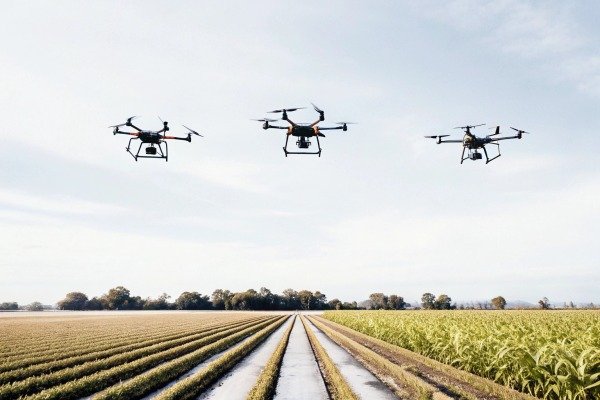
The most difficult engineering challenge in breakpoint resumption is the physics of liquid flow. A drone is a moving vehicle, and pumps are mechanical devices with lag. If the drone starts moving at 5 meters per second the instant the "Resume" command is given, but the pump takes 0.5 seconds to build pressure, the drone will travel 2.5 meters without spraying. This creates a gap.
Pump Pressure Stabilization
To prevent gaps, high-end agricultural drones utilize a "Pressure Stabilization Delay."
- كيف يعمل: When the drone arrives at the breakpoint, it hovers in place. The pump turns on first. The system waits for the flow meter to register the correct flow rate. Only once the pressure is correct does the drone begin to move forward.
- Evaluation Tip: Listen to the drone during a test. You should hear the pump whine قبل you see the drone pitch forward.
Backtracking Logic (The Run-Up)
Another method to ensure uniformity is "Backtracking" or a "Run-Up."
- المشكلة: Spray nozzles behave differently at 0 m/s (hover) vs. 5 m/s (flight). If the drone starts spraying while hovering, it dumps a heavy load in one spot (overlap).
- الحل: The drone flies to a point 3-5 meters behind the breakpoint. It accelerates. By the time it hits the breakpoint, it is already at full speed and the pump triggers exactly at the line. This ensures the droplet distribution is consistent with the rest of the field.
Dynamic Drift Correction
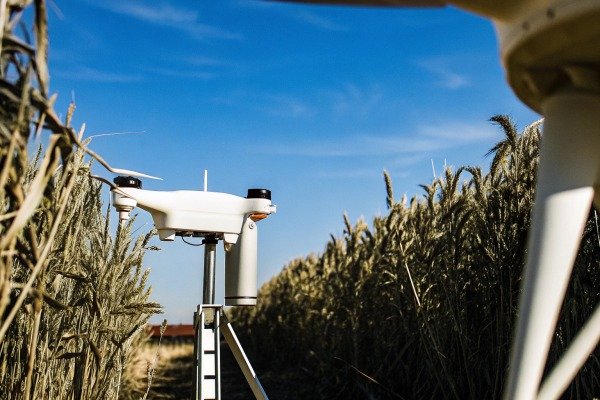
Wind changes everything. If the wind was blowing North when you stopped, and is blowing East when you resume, the spray plume will land in a different spot spray plume 9 even if the drone is in the same coordinate.
- Advanced Features: Some top-tier controllers allow you to input wind direction, or use onboard anemometers to adjust the offset. use onboard anemometers 10
- فحص مرئي: Use water-sensitive paper at the breakpoint during a test. Check the droplet density.
| Problem | السبب | Solution Feature to Look For |
|---|---|---|
| Dry Gap | Drone moves before pump pressurizes. | Pump Start Delay / Prime Mode |
| Heavy Spot | Drone sprays while accelerating from zero. | Backtracking / Run-Up Mode |
| Misalignment | GPS error or wind shift. | RTK & Flight Path Correction |
By understanding these mechanics, you can inspect a drone not just on its specs, but on its behavior. A smooth, intelligent transition at the breakpoint is the mark of a professional agricultural tool.
الخاتمة
Evaluating resume precision protects your investment. Choose drones with RTK accuracy, smart battery logic, and pressure compensation to ensure every flight maximizes profit and crop health.
الحواشي
1. Technical explanation of RTK technology by a leading GNSS industry manufacturer. ︎
2. Technical overview of Real-Time Kinematic positioning for high-accuracy satellite navigation. ︎
3. Official definition of Global Navigation Satellite Systems by the European Union Agency for the Space Programme. ︎
4. IEEE research on the accuracy and standards of global navigation satellite systems. ︎
5. Technical specifications for a leading agricultural drone utilizing RTK for precision. ︎
6. Academic resource defining field capacity calculations for agricultural machinery. ︎
7. Technical overview of Ground Control Stations in aerospace engineering. ︎
8. ISO standard for the design and operation of unmanned aircraft control stations. ︎
9. USDA Agricultural Research Service documentation on spray characteristics and drift. ︎
10. General background on anemometers and their use in measuring wind speed. ︎

 English
  Español de México
  Deutsch
  Français
  Русский
  العربية
