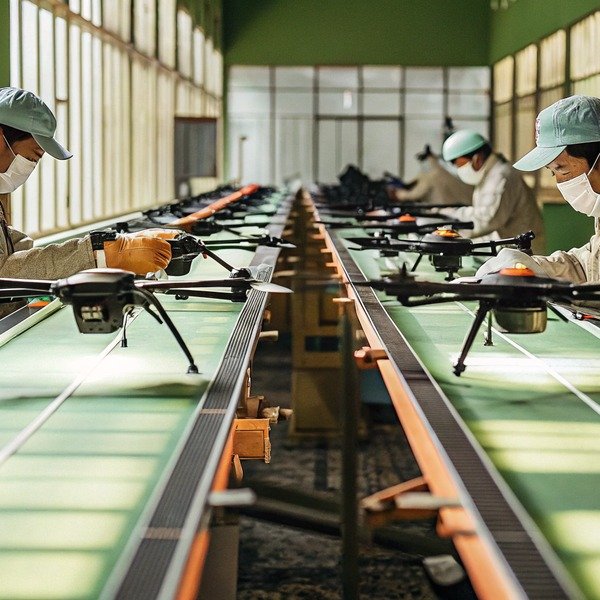
When we analyze the production costs on our assembly lines in Xi’an, we often see a huge gap between what buyers expect to pay and the reality of industrial manufacturing. You might see two drones that look identical, yet one costs twice as much as the other. This confusion can lead to dangerous procurement mistakes, causing you to either overpay for features you do not need or purchase underpowered equipment that fails in the field.
Wholesale prices of agricultural drones are primarily determined by hardware specifications like payload capacity and sensor types, the scale of your order volume, and the level of software customization required. Additionally, hidden factors such as component origin, battery ecosystem quality, and after-sales support packages significantly influence the final factory-gate quote you receive.
Let’s break down the specific cost drivers so you can negotiate a better deal for your business.
How do technical specifications like payload and flight time impact the wholesale price I pay?
We frequently explain to our partners that increasing a drone’s tank size does not just mean molding a larger piece of plastic; it fundamentally changes the physics of the aircraft. When we engineer a heavy-lift platform, every component must be upgraded to handle the stress, which drastically shifts the cost structure.
Payload capacity and flight endurance are the most significant hardware cost drivers because heavier loads demand reinforced carbon fiber airframes, high-torque propulsion systems, and expensive high-voltage battery arrays. Moving from a standard 10-liter sprayer to a heavy-lift 50-liter model exponentially increases material costs and engineering complexity, directly raising the wholesale unit price.
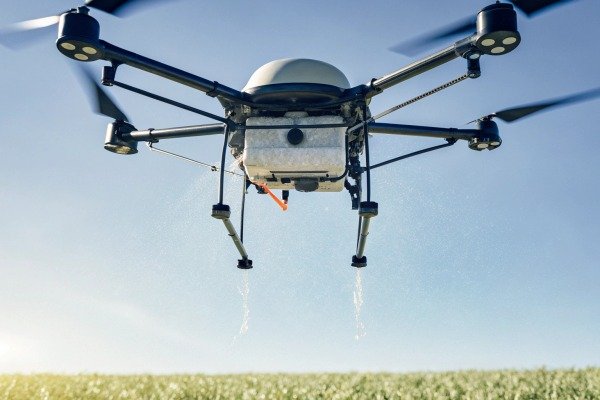
The Cost of "Heavy Lifting"
In the world of agricultural aviation, payload is king الطيران الزراعي 1, but it is also the biggest budget eater. If you are looking for a small sprayer for spot treatment, the wholesale cost is manageable because the motors and electronic speed controllers (ESCs) are standard وحدات التحكم الإلكترونية في السرعة (ESCs) 2 وحدات التحكم الإلكترونية في السرعة 3, off-the-shelf components. However, once you demand a payload capacity above 30 liters (roughly 8 gallons), we have to use specialized industrial-grade components.
For a 50-liter drone, the frame cannot just be standard plastic or aluminum; it must be aviation-grade carbon fiber to support the weight without snapping during a high-G turn. The motors need to generate massive thrust, often requiring thick copper windings and heat-resistant magnets that cost five times more than standard motors. This is why a 40L drone isn't just double the price of a 20L drone; it is often triple due to the exponential cost of high-performance parts.
The Battery Ecosystem
Another major factor tied to specifications is the power system. A drone with a long flight time requires high-density batteries. In our factory, we see that the battery ecosystem—including the smart batteries and the high-power charger—can represent up to 30% of the total wholesale package price.
If you require a drone that flies for 20 minutes with a full load, we cannot use standard lithium-polymer cells. We must use high-discharge, intelligent batteries with internal intelligent batteries 4 management systems (BMS) to prevent overheating. These "smart" features add a premium to the wholesale price but are necessary for safety.
Navigation and Sensing Modules
Finally, the "brain" of the drone dictates the price. A basic GPS module is cheap. However, if your specification sheet asks for RTK (Real-Time Kinematic) positioning for centimeter-level نظام تحديد المواقع العالمي (RTK) (الحركية في الوقت الفعلي) 5 accuracy, or obstacle avoidance radar that works at night, the price jumps. These sensors are sophisticated pieces of hardware that require expensive chips, often imported, which drives up the bill of materials (BOM).
Specification vs. Price Tier Overview
The table below illustrates how stepping up in technical specifications impacts the relative wholesale cost base.
| فئة الطائرات بدون طيار | سعة الحمولة | Navigation Tech | نظام الطاقة | Estimated Wholesale Price Factor |
|---|---|---|---|---|
| Entry-Level Spot Sprayer | 10 Liters (2.6 gal) | Standard GPS, Basic Radar | Standard LiPo (6S/12S) | 1.0x (Base) |
| Mid-Range Workhorse | 30 Liters (8 gal) | RTK Ready, Obstacle Avoidance | Smart Battery (14S), Fast Charger | 2.5x – 3.0x |
| Heavy-Lift Professional | 50 Liters (13 gal) + Spreader | Dual RTK, Phased Array Radar | High-Voltage Smart Battery (18S) | 4.5x – 6.0x |
Will ordering in bulk or establishing a long-term partnership lower my unit cost?
When we plan our production schedules in Chengdu, stability is our most valuable asset, and we reward buyers who provide it. We often see procurement managers hesitate to commit to volume, but spot buying prevents us from optimizing our supply chain for you سلسلة التوريد 6.
Bulk orders significantly lower unit costs by allowing manufacturers to amortize setup fees and negotiate raw material discounts. Manufacturers typically offer tiered pricing structures where establishing a long-term partnership or ordering full container loads can reduce wholesale rates by 15-30% compared to purchasing single sample units or sporadic small batches.
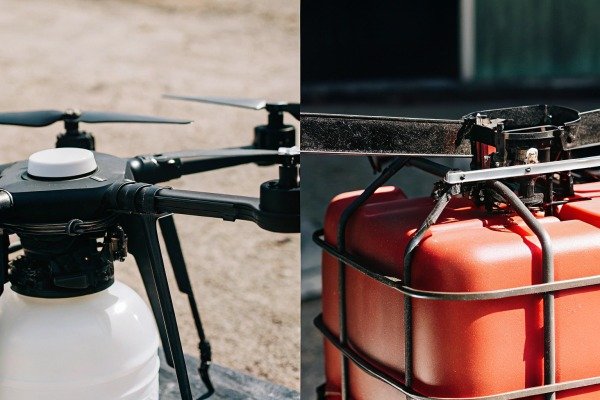
The Economics of the Assembly Line
Manufacturing drones is not like printing paper; it requires setting up assembly lines, calibrating testing equipment, and training workers for specific models. When you order a single unit or a small batch of five drones, we have to disrupt our standard flow to accommodate that order. This inefficiency is passed on to you as a higher unit price.
However, if you place an order for a full 20ft or 40ft container (which might hold 50 to 100 units depending on the model), we can dedicate a production line to your order for a week. This reduces our labor cost per unit. Furthermore, a confirmed large order allows us to buy motors, carbon fiber tubes, and flight controllers in bulk from our upstream suppliers, securing lower prices that we then pass on to you.
Long-Term Partnership Benefits
Beyond just the immediate order size, the promise of a long-term relationship affects pricing. If we know you are a distributor who will buy 200 units over the course of a year, we can lock in pricing for you. This protects you from fluctuations in material costs (like lithium or copper prices).
Partnerships also unlock "soft" savings. For our long-term VIP clients, we often waive customization fees, provide free spare parts kits (usually worth 2-3% of the order value), or prioritize their production during the busy season. These perks effectively lower your real cost per unit, even if the invoice price looks similar.
Logistics and Shipping Costs
You must also consider the landed cost. Shipping one drone via air freight is incredibly expensive due to the hazardous nature of large batteries. Shipping 50 drones via sea freight reduces the logistics cost per unit by hundreds of dollars. When negotiating wholesale prices, always ask for the "EXW" (Ex Works) price versus الأعمال السابقة 7 the "DDP" (Delivered Duty Paid) price to understand how much logistics is eating into your budget.
Volume Discount Structure Example
Here is a typical breakdown of how volume impacts the discount rate in the industry.
| نوع الطلب | Quantity (Units) | Discount on Hardware | Logistics Efficiency | Negotiation Power |
|---|---|---|---|---|
| Sample Order | 1 – 2 | 0% (List Price) | Low (Air Freight – Expensive) | لا يوجد |
| Small Batch | 5 – 20 | 5% - 10% | Medium (LCL Sea Freight) | منخفضة |
| فئة الموزع | 21 – 50 | 12% – 18% | High (Palletized Freight) | متوسط |
| حمولة حاوية | 50+ | 20% - 30% | Maximum (FCL Sea Freight) | عالية |
Does requesting OEM branding and customized software significantly increase my procurement budget?
Our engineering team loves working on custom projects, but we often have to have difficult conversations with clients about the difference between a simple logo change and a full system overhaul. Misunderstanding these distinctions can blow a hole in your procurement budget.
OEM branding for hardware usually adds minimal cost if Minimum Order Quantities are met, whereas customized software development significantly increases the budget due to engineering hours. Simple logo placement is often free with bulk orders, but altering flight control firmware or interface protocols requires expensive, non-recurring engineering fees.
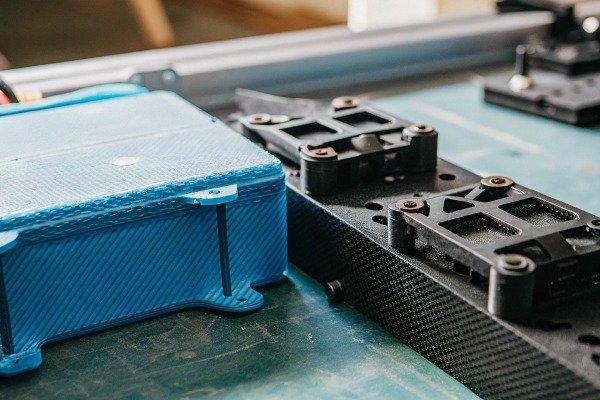
Hardware Customization: The "Skin" Deep Costs
If you simply want to sell our drones under your own brand name, this is relatively affordable. This is what we call "White Labeling" or light OEM التسمية البيضاء 8.
- Stickers and Logos: If you order enough units (usually 20+), we can apply your logo to the shell and the remote controller for free or a nominal fee.
- Color Changes: Changing the color of the fuselage requires changing the plastic injection mold raw materials or painting the carbon fiber. This usually requires a higher Minimum Order Quantity (MOQ), perhaps 50 or 100 units. If you meet the MOQ, the price difference is negligible. If you don't, you might have to pay a "setup fee" of a few thousand dollars.
- التعبئة والتغليف: Custom boxes are cheap in bulk. But designing and printing a unique box for only 5 drones is cost-prohibitive.
Software Customization: The Real Cost Driver
This is where the wholesale price can skyrocket. Many clients want a custom Ground Control Station (GCS) app that features their language, their logo, and specific workflow logic.
- Surface Level: Changing the boot logo on the remote control screen is easy.
- Deep Integration: If you need the drone to communicate with your proprietary farm management server, or if you want to modify the flight behavior for a specific crop, our R&D team has to get involved. We charge NRE (Non-Recurring Engineering) fees for this. A custom software project can easily cost $10,000 to $50,000 upfront, regardless of how many drones you buy.
When you spread this NRE cost over 1,000 drones, it adds $10 to the unit price. If you only buy 10 drones, it adds $1,000 to each unit.
Component Customization
Sometimes clients ask for specific non-standard parts, like a T-Motor propulsion system instead of our T-Motor propulsion system 9 standard Hobbywing setup, or a specific American-made radio link to bypass certain regulations. Integrating these non-standard parts breaks our supply chain efficiency. We have to source them specifically for you (often at retail prices), test them to ensure they work with our flight controller, and recertify the drone. This always increases the wholesale price significantly.
Cost Impact of Customization Levels
| مستوى التخصيص | الوصف | Impact on Wholesale Price | المتطلبات |
|---|---|---|---|
| Level 1: Branding | Logo on shell, boot logo on remote, custom manual. | Negligible / Free | Requires MOQ (e.g., 20+ units). |
| Level 2: Aesthetics | Custom fuselage color, custom carrying case. | Low (+2-5%) | High MOQ or Setup Fee applies. |
| Level 3: Hardware | changing motors, radio links, or adding unique cameras. | Medium (+15-25%) | Pays for parts + testing labor. |
| Level 4: Software | Custom GCS App, API integration, Flight Controller logic. | High (Upfront NRE Fee) | Charged as a separate project fee. |
How does the quality of components and after-sales support influence the final quote I receive?
In our experience exporting to the US and Europe, we constantly see competitors offering “too good to be true” prices by cutting corners on invisible components. We refuse to compromise on safety, but we want you to understand exactly what you are paying for when the quote is slightly higher.
High-quality components like proprietary flight controllers and durable carbon fiber significantly raise the initial quote but ensure operational longevity. Additionally, comprehensive after-sales support, including warranty coverage, spare parts availability, and technical training, adds a premium to the wholesale price that protects your long-term investment.
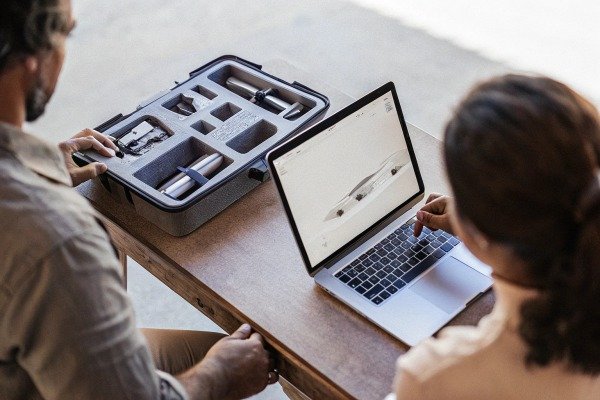
The Hidden Quality of Components
A drone is a sum of its parts. You can buy a "50L drone" from two different factories. One might cost $5,000 and the other $8,000. Why?
- The Flight Controller (FC): This is the brain. A generic, open-source FC is cheap but may lack stability in complex magnetic environments. A proprietary, industrial-grade FC (like the ones comparable to DJI or XAG systems) costs significantly more but guarantees the drone won't fly away when it passes near a high-voltage power line.
- Carbon Fiber Grade: Not all carbon fiber is equal. Cheaper drones use tubes with less carbon weave and more resin filler. They look the same but crack under vibration. We use high-modulus carbon fiber which drives up the BOM (Bill of Materials) but ensures the drone lasts for years, not months.
- العزل المائي: Agricultural drones work in wet, corrosive environments (pesticides). Proper potting of electronics and IP67-rated connectors IP67-rated 10 adds labor and material cost. Cheap drones skip this, leading to corrosion and failure after one season.
The Value of After-Sales Support
When you buy wholesale, you aren't just buying a machine; you are buying the capability to keep that machine flying.
- Warranty: A supplier offering a 1-year warranty on major parts has to build a "risk premium" into the price to cover potential replacements. If a quote is extremely low, it usually means there is zero warranty.
- التدريب: We often include online training or even on-site training for large distributors. The cost of our engineers' time is factored into the wholesale margin.
- توفر قطع الغيار: A reputable manufacturer keeps a stock of spare parts for at least 3-5 years. Maintaining this inventory costs money (warehousing, capital tie-up). Cheap "assemble-and-go" workshops don't keep parts; once they sell the batch, you are on your own.
Compliance and Certification
Finally, entering markets like the US or Europe requires certifications (FCC, CE, RoHS). Obtaining these certifications costs thousands of dollars in lab testing fees. Legitimate manufacturers amortize these costs into the wholesale price. If a drone is surprisingly cheap, it likely lacks the necessary certifications to legally clear customs or operate commercially in your country, which is a massive risk for an importer.
الخاتمة
Determining the wholesale price of agricultural drones is a balancing act between performance, volume, and long-term reliability. While payload size and sensor technology set the baseline cost, your final price is heavily influenced by your order volume and the level of customization you demand. Ultimately, the lowest quote is rarely the best value; paying a premium for quality components and reliable after-sales support is often the most cost-effective strategy for building a sustainable business.
الحواشي
1. Industry association representing agricultural aviation professionals. ︎
2. Wikipedia article explaining electronic speed controller technology. ︎
3. Provides technical definition of a key component affecting drone propulsion costs. ︎
4. Product page illustrating intelligent battery technology in agriculture. ︎
5. Wikipedia overview of real-time kinematic positioning. ︎
6. Defines the logistical network concept mentioned in the context of manufacturing optimization. ︎
7. Official government guide to Incoterms including Ex Works. ︎
8. Explains the business model of rebranding generic hardware mentioned in the text. ︎
9. Official manufacturer page for the mentioned propulsion system. ︎
10. Links to the official International Electrotechnical Commission standard for ingress protection. ︎

 English
  Español de México
  Deutsch
  Français
  Русский
  العربية
