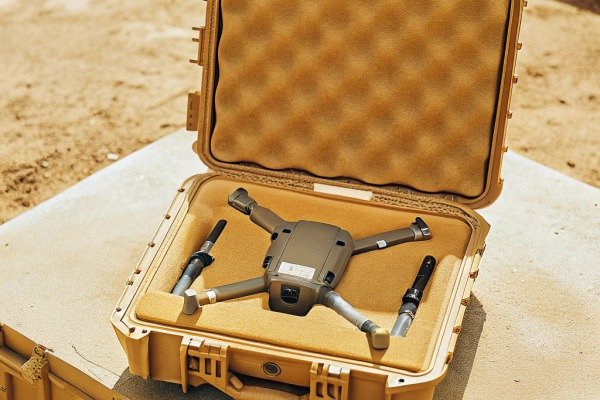
When we hear from clients about damaged shipments, it is almost always due to inadequate packaging rather than hardware failure. We know that a firefighting drone is useless if the gimbal snaps before it even reaches the fire line.
Firefighting drone packaging must meet MIL-STD-810H standards for shock and vibration, ensuring it can withstand repeated drops from heights up to 48 inches. Additionally, look for ATA 300 Category 1 certification for long-term reusability and IP67 ratings to maintain the integrity of the internal shock-absorbing foam against moisture and environmental contaminants.
Here are the specific details you need to verify to ensure your investment arrives ready for deployment.
What specific impact protection ratings or certifications should I check for?
Our engineering team often rejects generic cases because they simply cannot handle the G-forces involved in emergency response logistics IP67 (water and dust proofing) 3. We find that standard commercial boxes fail to protect sensitive thermal sensors during rapid deployment.
Prioritize cases certified to MIL-STD-810H Method 516.8 for shock resistance, ensuring the drone survives 26 drops on all faces, edges, and corners. Also, verify ATA 300 Category 1 compliance, which guarantees the container withstands at least 100 round-trip shipments without structural failure or transmission of damaging impact forces.
When evaluating the protective capabilities of a case for a high-value asset like a firefighting drone, understanding the hierarchy of certifications is crucial. You aren’t just buying a box; you are buying insurance against kinetic energy. kinetic energy 4
The Gold Standard: MIL-STD-810H
The most critical standard we look at is MIL-STD-810H, specifically Method 516.8. This is a US military standard that has become the benchmark US military standard 5 for rugged industrial equipment. It involves a rigorous set of tests where the case (loaded with a dummy weight or the actual drone) is dropped 26 times.
- The Drop Pattern: The test isn’t random. It targets every potential weak point: 6 faces, 8 corners, and 12 edges.
- The Height: For equipment the size of a large firefighting quadcopter, the drop height is typically 48 inches (approx. 1.2 meters).
- The Goal: The case must remain functional, but more importantly, the “transmitted shock” (the G-force that reaches the drone inside) must remain below a specific threshold, usually 15G to 20G depending on the sensitivity of the optical sensors.
Aviation Transport Standards: ATA 300
While military standards handle the “crash” aspect, the Air Transport Association (ATA) Specification 300 handles longevity. Firefighting drones are often shipped between departments or flown to disaster zones.
- Category 1: This is what you must demand. It certifies the container for a minimum of 100 round trips.
- Category 2 & 3: These are for limited use (10 trips or single trip) and are unacceptable for professional firefighting equipment.
Ingress Protection (IP) and Shock
You might wonder why IP67 (water water and dust proofing 6 and dust proofing) matters for shock resistance. If moisture enters the case, it can degrade the Open-Cell or Closed-Cell foam used for cushioning. Wet foam loses its compression set properties. If the foam degrades, the shock resistance drops effectively to zero. Therefore, a watertight seal is a prerequisite for maintaining shock protection over time.
Comparison of Critical Certifications
| Certification | Primary Focus | Test Condition | Why it Matters for Firefighting Drones |
|---|---|---|---|
| MIL-STD-810H | Impact & Shock | 26 drops, 48-inch height | Ensures the drone survives falls from trucks or shelves. |
| ATA 300 Cat 1 | Durability & Lifespan | 100 round-trip shipments | Guarantees the latches and hinges won’t fail after months of use. |
| IP67 | Environmental Seal | Submersion at 1 meter | Prevents water from rotting the shock-absorbing foam inserts. |
| ASTM D4169 | Distribution Cycle | Vibration + Drop sequences | Simulates the exact stresses of FedEx/DHL international shipping. |
Which case materials provide the best durability against heavy drops and rough handling?
We strictly select specific polymer blends for our SkyRover export crates because cheap plastic cracks in the cold. A cracked shell during a winter operation endangers the flight controller and the entire mission.
Polypropylene copolymer (PP) is superior for firefighting drone cases due to its high impact resistance and flexibility at extreme temperatures (-20°C to 60°C). Unlike standard ABS, PP resists cracking upon heavy impact, while high-density EVA foam inserts offer the best shock absorption for heavy, complex payloads.
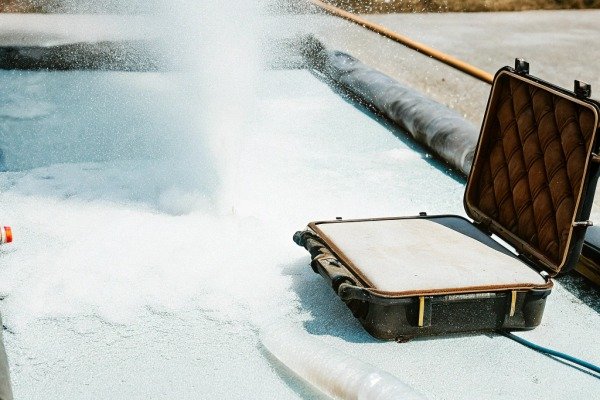
The material of the outer shell and the inner liner are the two variables that define how energy is managed during an impact. If the shell is too hard, it transfers all the energy to the drone. If it’s too soft, it crushes the equipment.
Outer Shell: Why Polypropylene (PP) Wins
In the past, many manufacturers used ABS plastic. While ABS is hard, it is brittle. When a 20kg case hits the concrete, ABS tends to shatter.
- Polypropylene Copolymer (PP): This material has a unique molecular structure that allows for “elastic deformation.” When dropped, the case flexes slightly to absorb energy and then returns to its shape. This flexibility is vital in cold weather.
- Resin Blends: Premium cases often use a proprietary resin blend (like HPX®) that is lighter than standard PP but stronger.
- Chemical Resistance: Firefighting drones operate near AFFF (Aqueous Film Forming Foam) and other retardants. PP is highly resistant to chemical corrosion, ensuring the structural integrity of the case doesn’t degrade if exposed to fireground chemicals.
Inner Protection: The Science of Foam
The outer shell stops penetration; the inner foam stops the G-forces. For a drone with a bright, coral-orange body and ridged texture, the foam must be precision-cut.
- EVA (Ethylene-Vinyl Acetate): This is the industry standard for high-end drones. It is a closed-cell foam that is firm, durable, and resists water. It provides excellent cushioning for the heavy components like the motors and battery.
- Custom Water-Jet Cutting: The foam must be cut to the exact geometry of the drone. If there is a 2mm gap between the drone’s landing gear and the foam, the drone will accelerate into the foam during a drop, creating a secondary impact spike.
- Load Spreading: For the camera mounted beneath the orange body, the foam must be designed to float the gimbal. The camera should never touch the bottom of the case. The foam supports the main chassis, leaving the delicate camera suspended in a void.
Material Performance Under Stress
| Material Type | Shock Absorption | Temperature Range | Durability | Verdict |
|---|---|---|---|---|
| Standard ABS | Low (Brittle) | Poor (Cracks in cold) | Medium | Avoid for industrial use. |
| Polypropylene (PP) | High (Flexible) | Excellent (-20°C to +70°C) | High | Recommended |
| Aluminum | Zero (Rigid) | Good | High (but dents) | Good for aesthetics, bad for shock. |
| Pick-n-Pluck Foam | Medium | Good | Low (Tears easily) | Avoid; use custom-cut EVA. |
How do I verify if the supplier performs rigorous drop testing on their packaging?
During our factory tours in Xi’an, we show clients our drop-test rig because seeing a case fall on concrete proves reliability better than any brochure. We believe transparency in testing protocols is the only way to build trust.
Request a detailed test report showing the Transit Drop Test results, specifically referencing the drop height (usually 30-48 inches) and the number of drops. Ask for video evidence of the test being performed on your specific drone model’s case to ensure the foam density matches the payload weight.
It is common for suppliers to claim their cases are “shockproof,” but “shockproof” is a marketing term, not an engineering specification Air Transport Association (ATA) Specification 300 7. You need to validate the claim with hard data.
Analyzing the Test Report
When you ask a supplier for their packaging test report, do not settle for a single certificate page. You need the raw data.
- G-Force Curves: A professional lab report will show a graph of the G-forces measured inside the case during the drop. If the external impact was 100G, the internal sensor on the drone should register significantly less (e.g., <15G). If the internal G-force is high, the foam is too hard or too thin.
- The “Dummy” Problem: Some manufacturers test empty cases or use a solid block of steel as a dummy weight. This is invalid. The test must use a payload that mimics the weight distribution of the actual drone. A block of steel behaves differently than a quadcopter with extended propeller arms.
Visual Inspection of the Design
Even before you see the report, you can check the design for signs of shock engineering:
- Lid-to-Base Interface: Does the foam in the lid interlock with the drone, or does it just sit on top? There should be “convoluted foam” (egg-crate shape) or custom-cut blocks in the lid that press down on the drone’s central body to prevent vertical movement.
- Corner Reinforcement: The corners of the case are where impact energy is most concentrated. Look for cases with double-walled corners or extra external ribbing.
- Hardware Protection: Are the latches recessed? If a latch sticks out, it will shear off during a drop, causing the case to open. Recessed latches are a hallmark of drop-tested designs.
Checklist for Validating Supplier Claims
| Verification Step | What to Look For | Red Flag |
|---|---|---|
| Request Test Report | Reference to ASTM D4169 ASTM D4169 8 or MIL-STD-810 | “Internal Factory Standard” or no reference. |
| Check Drop Height | 76cm to 122cm (30-48 inches) | Drop heights below 70cm. |
| Inspect Foam Design | Custom Water-Jet Cut EVA or EPE | “Pick-and-Pluck” or soft polyurethane sponge. |
| Video Evidence | Video of the case hitting concrete on a corner | Edited videos or drops onto soft surfaces. |
Will the shock resistance level be sufficient to protect my equipment during international shipping?
Shipping to the US involves cranes, trucks, and turbulence, so we design our packaging to survive the journey from our Chengdu factory to your warehouse intact. We know that the “last mile” is often where the most damage occurs.
Standard domestic packaging often fails during international freight. To ensure safety, ensure the case features an automatic pressure equalization valve to prevent vacuum lock and structural warping, and verify that the internal cushioning is rated for the cumulative vibrations of air and sea transport.
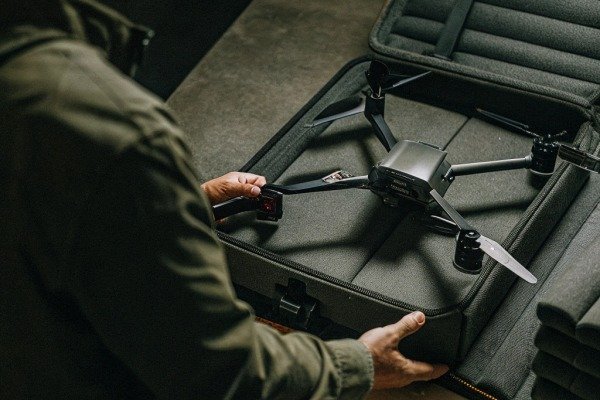
International shipping introduces two factors that simple drop International shipping 9 testing doesn’t always cover: Atmospheric Pressure Changes and Harmonic Vibration.
The Pressure Problem
When we fly drones from China to Europe or the US, they go into the cargo hold of an aircraft. The altitude changes cause pressure Atmospheric Pressure Changes 10 differentials.
- Vacuum Lock: If a case is perfectly sealed (IP67) without a valve, high altitude causes the air inside to expand. When the plane lands, the higher external pressure compresses the case. This can warp the plastic shell, compromising its structural integrity before it even gets dropped.
- The Solution: An Automatic Pressure Equalization Valve. This consists of a Gore-Tex membrane that allows air to pass through but blocks water molecules. It balances the pressure instantly, ensuring the case shell retains its shape and shock-absorbing properties.
Vibration: The Silent Killer
While “shock” refers to a sudden impact, “vibration” is the continuous shaking that occurs on a truck or a ship.
- Loosening Hardware: High-frequency vibration can loosen the screws on the drone’s black propellers or the landing gear.
- Foam Abrasion: If the drone is not held tightly, constant vibration will cause the drone to rub against the foam. Over a 30-day sea voyage, this can sand down the ridged texture of the orange body or damage the camera lens.
- Testing Protocol: We use ASTM D4169 distribution cycle testing, which places the case on a vibration table for hours to simulate a truck driving on a highway. The foam density must be tuned to dampen these specific frequencies so they don’t resonate with the drone’s internal components.
Handling “Crush” Forces
International pallets are often stacked two or three high. The case at the bottom must support the weight of the cases above it without bowing.
- Structural Ribbing: This is why rugged cases have ridges on the outside. They act like beams in a building, transferring the weight to the ground rather than onto the drone inside.
- Safety Margin: We recommend cases rated for a crush weight of at least 1000kg. This ensures that even if the freight forwarder mishandles the stacking, your firefighting equipment remains safe.
Conclusion
Investing in the right packaging is as critical as choosing the drone itself. By insisting on MIL-STD-810H drop testing, ATA 300 durability, and PP Copolymer materials, you ensure your equipment is mission-ready. At SkyRover, we prioritize these standards to protect your fleet from the factory floor to the fire line.
Footnotes
- Leading educational institution for packaging science and dynamics. ↩︎
- Standard for drones in public safety operations. ↩︎
- Official definition of Ingress Protection ratings by the IEC. ↩︎
- General physics concept relevant to impact forces. ↩︎
- Official resource from the technical society managing MIL-STD-810. ↩︎
- International body defining IP codes. ↩︎
- Official source for ATA specifications from Airlines for America. ↩︎
- Official standard specification for shipping container testing. ↩︎
- Government regulations on shipping lithium batteries. ↩︎
- Manufacturer of pressure equalization vents. ↩︎
 English
  Español de México
  Deutsch
  Français
  Русский
  العربية
Comments
No comments yet. Be the first to share your thoughts!
Leave a Comment