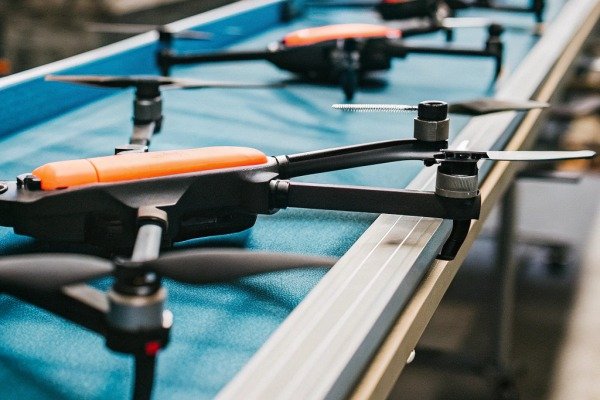
Our production line in Xi’an runs non-stop to meet the demand for high-performance firefighting UAVs, yet we often see clients frustrated by logistics delays after the goods leave our factory. Seeing a shipment of critical life-saving equipment stuck at customs due to paperwork errors is painful for everyone involved.
To find a capable forwarder, verify their proficiency with HS Code 8806, demand specific dangerous goods certifications for high-capacity lithium batteries, and ensure they understand dual-use technology regulations. Prioritize forwarders with proven track records in industrial aviation or ask your supplier for their established logistics partners to avoid costly border delays.
Navigating these regulations requires precision, so let’s examine the exact steps to secure your supply chain.
What specific questions should I ask to verify a forwarder’s experience with industrial drones?
Our logistics team frequently receives panic calls from buyers whose local forwarders are confused by the technical specifications of our heavy-lift drones. You need a partner who understands that these are not simple consumer toys but complex industrial machines.
Ask them directly about their history with HTSUS classification for remote-controlled aircraft and their process for handling Section 301 tariffs on Chinese imports. Request recent case studies specifically involving industrial UAVs to confirm they can navigate complex regulatory landscapes without stalling your critical equipment delivery.

Digging Into Technical Competence
When you interview a potential freight forwarder, general answers are freight forwarder 4 a red flag. The industrial drone sector is governed by a web of regulations that shifts constantly. You need to verify that their team understands the specific HTSUS codes, particularly the 8806 series, which covers unmanned aircraft. A generalist might misclassify your firefighting drone as a toy or a generic camera device, which can lead to severe penalties or seizure by Customs and Border Protection (CBP).
The “Dual-Use” Challenge
One of the most critical aspects we deal with when exporting to the U.S. or Europe is the concept of “dual-use” technology. Firefighting drones are equipped with high-precision GPS, thermal cameras, and autonomous flight thermal cameras 5 capabilities. While these are designed for saving lives, regulators also view them as potential military technologies.
Your forwarder must be familiar with the Export Administration Regulations (EAR). They should know how to check the Export Control Classification Number (ECCN). If they look blank when you mention “ECCN” or “EAR99,” they are not the right partner for you. We often have to provide technical data sheets to forwarders to prove our products are for civil use. An experienced forwarder will ask for these documents before the shipment even leaves our warehouse in Chengdu.
Essential Vetting Checklist
To help you filter out inexperienced candidates, we have compiled a list of questions based on the successful clearances we have managed for our clients.
| Question Category | Specific Question to Ask | What a Good Answer Looks Like |
|---|---|---|
| Classification | “Which HTSUS subheading do you use for industrial quadcopters over 25kg?” | They should reference Heading 8806 immediately and discuss weight categories. |
| Tariffs | “How do you handle Section 301 duties for Chinese-origin drones?” | They should acknowledge the additional duties and discuss accurate valuation strategies. |
| Agencies | “Do you coordinate with the DOT or FCC for drone imports?” | They must know about DOT foreign aircraft permits (if applicable) and FCC radio frequency forms (Form 740). |
| Experience | “Have you cleared shipments with thermal imaging payloads recently?” | They should mention the specific scrutiny thermal cameras face regarding export controls. |
The Importance of “Reasonable Care”
Under U.S. law, the importer Importer of Record 6 of record (you) bears the burden of “reasonable care.” This means you cannot simply blame the forwarder if they make a mistake. By asking these specific questions, you are demonstrating reasonable care. We always advise our clients to document these conversations. If a forwarder assures you that “drones are easy, no special paperwork needed,” run the other way. Industrial drones are never “easy” in the eyes of customs authorities; they require precision, transparency, and expertise.
How do I ensure the forwarder is certified to handle dangerous goods like high-capacity drone batteries?
We test every battery cell in our laboratory to ensure stability, but even the safest lithium battery is considered a hazardous material during transport. A forwarder who treats these high-capacity power units like standard cargo puts your entire shipment at risk of rejection.
Verify that the forwarder holds valid certifications for Class 9 Dangerous Goods and strictly follows UN38.3 testing standards for lithium polymer batteries [UN38.3 testing standards](https://unece.org/transport/dangerous-goods/un-manual-tests-and-criteria) 7. Ensure they have established protocols for splitting airframes and batteries if required by carrier regulations to maintain safety compliance during air or sea transport.

The Risks of Class 9 Dangerous Goods
Firefighting drones require immense power. The batteries we supply are high-capacity lithium polymer (LiPo) units, far exceeding the limits of standard consumer electronics. In the logistics world, these are classified as Class 9 Dangerous Goods (DG) Class 9 Dangerous Goods 8. This classification changes everything about how the shipment moves, from the labeling on the box to the position of the pallet inside the aircraft or ship.
If your forwarder is not certified to handle DG cargo, they will likely hand your shipment off to a third party, adding delays and cost. Worse, if they fail to declare the batteries correctly, the shipment can be grounded indefinitely. We have seen cases where a client’s cargo was held at a transfer hub because the forwarder forgot to attach the Class 9 label.
Understanding UN38.3 and MSDS
Before we ship any battery, we provide a Material Safety Data Sheet (MSDS) and a UN38.3 test summary. Your forwarder must know how to read these documents. They need to verify that the Watt-hour (Wh) rating on the battery matches the documents exactly.
- UN38.3: This is the global standard for testing lithium batteries. It proves the battery won’t explode under pressure or heat.
- MSDS: This tells the carrier how to handle a fire or leak.
An experienced forwarder will ask us for these documents immediately. If they don’t ask, they are likely planning to ship the goods as “general cargo,” which is illegal and dangerous.
Shipping Configurations: PI 965 vs. PI 966
A crucial technical detail is the “Packing Instruction” (PI). Regulations differ depending on whether the batteries are packed with the drone or separately.
- PI 966 (Packed with equipment): Often easier to ship but has strict limits per box.
- PI 965 (Loose batteries): Much stricter regulations. Cargo aircraft only in many cases.
We often recommend a “Split-Shipment Strategy.” This involves sending the drone airframe (which is light and safe) via expedited air freight, while the heavy, dangerous batteries travel via a specialized sea or ground route. A capable forwarder will propose this solution to save you money and reduce compliance risk.
Documentation Requirements for Battery Imports
| Document Name | Purpose | Who Provides It? | Forwarder’s Role |
|---|---|---|---|
| UN38.3 Test Summary | Proves battery safety testing. | Manufacturer (Us) | Verifies matches against physical cargo. |
| MSDS | Safety handling instructions. | Manufacturer (Us) | Submits to airline/shipping line for approval. |
| Shipper’s Declaration for DG | Legal declaration of hazard. | Manufacturer/Forwarder | Must be signed by a DG-certified agent. |
| Class 9 Labeling | Visual hazard warning. | Manufacturer (Us) | Checks placement and visibility on pallets. |
Should I choose a specialized forwarder or rely on my supplier’s door-to-door delivery service?
When finalizing contracts, many of our clients hesitate between handling logistics themselves or letting us manage the entire process. While controlling your own supply chain feels secure, it often introduces unnecessary complexity for those new to importing industrial equipment.
Relying on your supplier’s door-to-door service is often more efficient because they already possess the necessary export licenses and established relationships with specialized carriers. However, if you require strict control over import records or have complex internal compliance protocols, hiring your own specialized forwarder might be safer.
The Case for Supplier Logistics (DDP)
As a manufacturer, we ship drones every day. We have long-standing contracts with logistics providers who specialize in our specific product category. They know our boxes, they know our batteries, and they have our MSDS on file. When you choose a “Door-to-Door” (DDP) service, we take the risk. If customs blocks the shipment in China, it is our problem to fix, not yours.
For many procurement managers, this is the path of least resistance. You pay a single price, and the drone arrives at your warehouse. We handle the export clearance from China, which can be tricky due to strict export controls on high-tech drones. If you use your own forwarder, they must coordinate with us to get the export license, and any miscommunication can cause the cargo to miss its flight.
When to Use Your Own Forwarder (FOB/EXW)
However, there are valid reasons to use your own forwarder. If you are a government agency or a large corporation, you might need to be the “Importer of Record” for tax or legal reasons. You might have a negotiated rate with a global logistics giant that we cannot match.
Furthermore, using your own forwarder gives you total visibility. You are not relying on our updates; you can track the shipment directly through your provider’s portal. This is crucial if you are consolidating the drone shipment with other equipment from different suppliers.
Comparative Analysis
To help you decide, compare these factors against your internal capabilities.
| Feature | Supplier’s Door-to-Door Service | Your Own Specialized Forwarder |
|---|---|---|
| Ease of Use | High: “Set it and forget it.” Minimal effort for you. | Low: You manage the communication and documentation. |
| Cost Control | Medium: Often bundled into product price; less transparency. | High: You negotiate every fee directly. |
| Risk Liability | Low: Supplier holds risk until delivery. | High: You own the risk once goods leave the factory (FOB). |
| Clearance Speed | Fast: Our agents know the product codes by heart. | Variable: Depends on your agent’s specific drone experience. |
| Customs Audits | Opaque: We handle the questions. | Transparent: You handle the audit directly. |
My Personal Recommendation
If you cannot find a freight forwarder in your country who explicitly answers “Yes” to having drone experience, ask us. It is a far more efficient method. We can introduce you to the agents who deliver our products successfully every week. Trying to force a generalist freight forwarder to learn drone regulations on the fly is a recipe for disaster.
What common customs clearance pitfalls could delay my firefighting drone shipment?
We have seen urgent orders sit in bonded warehouses for weeks simply because a single document was ambiguous. In the firefighting industry, time is not just money; it is a matter of public safety, making these delays unacceptable.
Common pitfalls include incorrect HTSUS classification leading to tariff disputes, missing FCC radio frequency compliance filings, and failure to provide proof of non-forced labor under the UFLPA. Incomplete valuation declarations that fail to separate software costs from hardware values also frequently trigger prolonged customs audits.
The UFLPA and Supply Chain Scrutiny
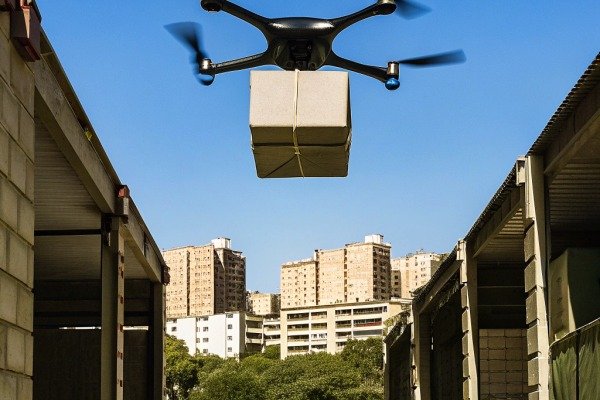
The most significant recent hurdle for importing goods from China to the US is the Uyghur Uyghur Forced Labor Prevention Act 9 Forced Labor Prevention Act (UFLPA). Customs and Border Protection (CBP) has been increasingly strict with electronics and drones. Even if a manufacturer like us is based in Xi’an or Chengdu, far from the targeted regions, CBP may still flag shipments for review.
A common pitfall is a forwarder who does not prepare the “tracing” documentation in advance. To clear this hurdle, your forwarder needs to present a clear supply chain map. They need to show that the magnesium alloy in the frame and the cobalt in the battery did not originate from prohibited entities. We provide this data, but if your forwarder doesn’t present it proactively, your drones will sit in a detention exam for months.
FCC Radio Frequency Compliance
Firefighting drones rely on powerful radio transmitters for video transmission and control signals. In the United States, the Federal Communications Commission (FCC) regulates these devices.
A frequent mistake is the missing FCC Form 740. Even though the physical filing of Form 740 has been suspended in some systems, the data is still required at the time of entry. If your forwarder forgets to input the FCC ID of the drone into the Automated Commercial Environment (ACE) system, the entry will be rejected. Ensure your forwarder asks for the FCC Grant of Equipment Authorization before the goods ship FCC Grant of Equipment Authorization 10.
Valuation: Software vs. Hardware
Industrial drones are expensive, but a large portion of that cost is often the software license for autonomous flight or thermal analysis.
- The Pitfall: Declaring the full invoice value as “hardware.” This increases the amount of duty you pay.
- The Solution: An experienced forwarder can help you legally separate the value of the software (often duty-free) from the physical hardware. This is known as “valuation consulting.” However, this must be done correctly on the Commercial Invoice. If we lump the price together without breaking it down, you pay tariffs on the intangible software.
Missing DOT Permits
For larger drones, specifically those that might fall under definitions closer to “aircraft” than “models,” the Department of Transportation (DOT) may require a foreign aircraft permit. This is rare for standard quadcopters but common for heavy-lift cargo drones. A pitfall here is timing: these permits can take 15 to 30 days to process. If your forwarder waits until the drone lands at JFK or LAX to apply, you are facing a month of storage fees.
Summary of Delays and Solutions
- Delay: CBP Hold for Origin Check.
- Fix: Have a full bill of materials and supply chain map ready.
- Delay: Battery Hazardous Hold.
- Fix: Pre-approve MSDS with the carrier 72 hours before departure.
- Delay: FDA/FCC Hold (for cameras/radios).
- Fix: Submit accession numbers and FCC IDs with the initial entry data.
Conclusion
Purchasing a firefighting drone is a significant investment in public safety, and the logistics behind it are just as critical as the engineering of the aircraft itself. Whether you choose to leverage our established door-to-door channels or hire a specialized third-party agent, the key is vetting for specific experience with dangerous goods, dual-use technology, and HS Code 8806. By asking the right questions and preparing for regulatory hurdles like the UFLPA and battery certifications, you ensure that your equipment arrives ready for deployment, rather than gathering dust in a customs warehouse.
Footnotes
- Official US government source for Harmonized Tariff Schedule classifications. ↩︎
- General background definition of dual-use concepts. ↩︎
- Official US government tool for determining Harmonized Tariff Schedule codes. ↩︎
- General definition of the logistics role discussed. ↩︎
- Leading manufacturer documentation on thermal imaging technology applications. ↩︎
- Official CBP guidance defining the legal responsibilities of the Importer of Record. ↩︎
- Official source for the UN Manual of Tests and Criteria defining UN38.3 standards. ↩︎
- Industry authority on air transport regulations for hazardous materials. ↩︎
- Official CBP page outlining enforcement and compliance for the UFLPA. ↩︎
- Official FCC page detailing the equipment authorization process required for radio devices. ↩︎

 English
  Español de México
  Deutsch
  Français
  Русский
  العربية
Comments
No comments yet. Be the first to share your thoughts!
Leave a Comment