

When our engineering team first started working with system integrators 1 five years ago, we quickly learned that their needs are vastly different from individual farm buyers. They need drones that can adapt, integrate, and scale—not just fly.
To evaluate agricultural drone suppliers for system integrator requirements, assess their flight control API accessibility, custom hardware collaboration capabilities, quality control certifications, long-term technical support infrastructure, and reliable bulk delivery logistics. Prioritize suppliers who offer open integration protocols and proven OEM experience.
This guide breaks down the exact criteria you need to evaluate suppliers effectively. Let’s examine each critical factor step by step.
How can I verify if the drone's flight control system supports my custom software integration?
Our production facility handles integration requests weekly, and the most common challenge we see is integrators struggling to connect their proprietary farm management platforms with drone telemetry systems. This mismatch wastes months of development time.
To verify flight control integration support, request detailed API documentation, SDK access, and data protocol specifications from the supplier. Test their system's compatibility with your software through a pilot project. Confirm they support standard protocols like MAVLink, OGC standards, and common telemetry formats before committing to bulk orders.

Understanding API and SDK Requirements
The flight control system 2 is the brain of any agricultural drone. For system integrators, this brain must communicate with external software. When we design our flight controllers, we build them with open architecture specifically for this purpose.
Start by requesting the supplier's API documentation 3. Quality suppliers provide comprehensive documentation that covers telemetry data access 4, command protocols, and real-time data streaming capabilities. Our engineering team always recommends testing with at least three different scenarios before finalizing any partnership.
Key Data Protocols to Verify
| Protocol Type | Purpose | Integration Importance |
|---|---|---|
| MAVLink | Standard drone communication | Essential for cross-platform compatibility |
| OGC Standards | Geospatial data exchange | Critical for farm management system sync |
| REST API | Web-based data access | Important for cloud platform integration |
| MQTT | Real-time IoT messaging | Valuable for multi-drone fleet management |
| Custom SDK | Deep hardware access | Necessary for advanced customization |
Testing Integration Before Commitment
Never rely solely on documentation. Request a demo unit or pilot program access. During our collaboration with integrators in the US market, we learned that real-world testing reveals compatibility issues that documentation cannot predict.
Test these specific functions: waypoint mission uploads, real-time telemetry streaming, sensor data extraction, and emergency command protocols. Each function must work seamlessly with your existing software stack.
Evaluating Sensor Modularity
System integrators often need to swap sensors based on client needs. The drone's flight control system must support plug-and-play sensor integration. Check if the supplier's system recognizes multispectral cameras 5, thermal sensors, LiDAR units, and NDVI sensors without requiring firmware modifications.
Our hexacopter models, for example, feature universal sensor mounts and automatic sensor recognition. This design philosophy comes from years of feedback from integrators who needed flexibility without complexity.
Can the supplier collaborate with my engineering team on custom hardware designs and OEM branding?
In our experience working with distributors across Europe and North America, the ability to customize hardware separates serious manufacturing partners from simple resellers. When we receive OEM requests, our design team dedicates weeks to understanding each client's specific market requirements.
Yes, quality suppliers can collaborate on custom hardware designs and OEM branding. Look for suppliers with dedicated R&D teams, documented design modification processes, minimum order quantities for custom work, and clear intellectual property agreements. Verify their OEM portfolio and request references from existing customization partners.

Assessing R&D Capabilities
Not every drone manufacturer has genuine engineering capabilities. Some only assemble components from other suppliers. When evaluating OEM partners, ask direct questions about their in-house capabilities.
Our facility in Xi'an houses a 70-person team including dedicated hardware engineers, firmware developers, and industrial designers. This structure allows us to modify frame designs, adjust motor configurations, and customize control systems based on partner requirements.
Custom Hardware Modification Options
| Modification Type | Typical Lead Time | Complexity Level |
|---|---|---|
| Color and branding | 2-3 weeks | Low |
| Logo placement and packaging | 2-4 weeks | Low |
| Frame material changes | 4-6 weeks | Medium |
| Motor and propeller specifications | 6-8 weeks | Medium |
| Payload system redesign | 8-12 weeks | High |
| Flight controller customization | 12-16 weeks | High |
Understanding OEM Agreement Terms
Before entering any OEM partnership 6, clarify intellectual property ownership. Who owns the custom designs? Can the supplier sell similar products to your competitors? These questions prevent future conflicts.
Our standard OEM agreements include exclusivity options for specific markets. We believe integrators who invest in custom development deserve protection for their investment.
Minimum Order Quantities for Custom Work
Custom hardware requires tooling investments and engineering hours. Expect suppliers to set minimum order quantities (MOQs) for different modification levels. Basic branding might start at 50 units, while significant hardware changes could require commitments of 200+ units.
Ask about tiered pricing structures. Higher volumes should reduce per-unit costs for custom features. Transparent suppliers share their cost breakdowns openly.
Evaluating Design Process Quality
Request documentation of the supplier's design process. Professional manufacturers use formal stage-gate processes: concept review, prototype development, testing validation, and production approval. Each stage should have clear deliverables and sign-off requirements.
When we collaborate on custom designs, our engineering team provides weekly progress reports, 3D renderings, and prototype testing videos. This transparency builds trust and ensures the final product matches expectations.
What quality control standards should I look for to ensure the drones are durable enough for my clients' large-scale farming operations?
When we calibrate our production lines, durability testing is never optional. Agricultural drones face harsh conditions: dust, moisture, temperature extremes, and thousands of flight hours. Integrators serving large farms cannot afford equipment that fails during critical spraying windows.
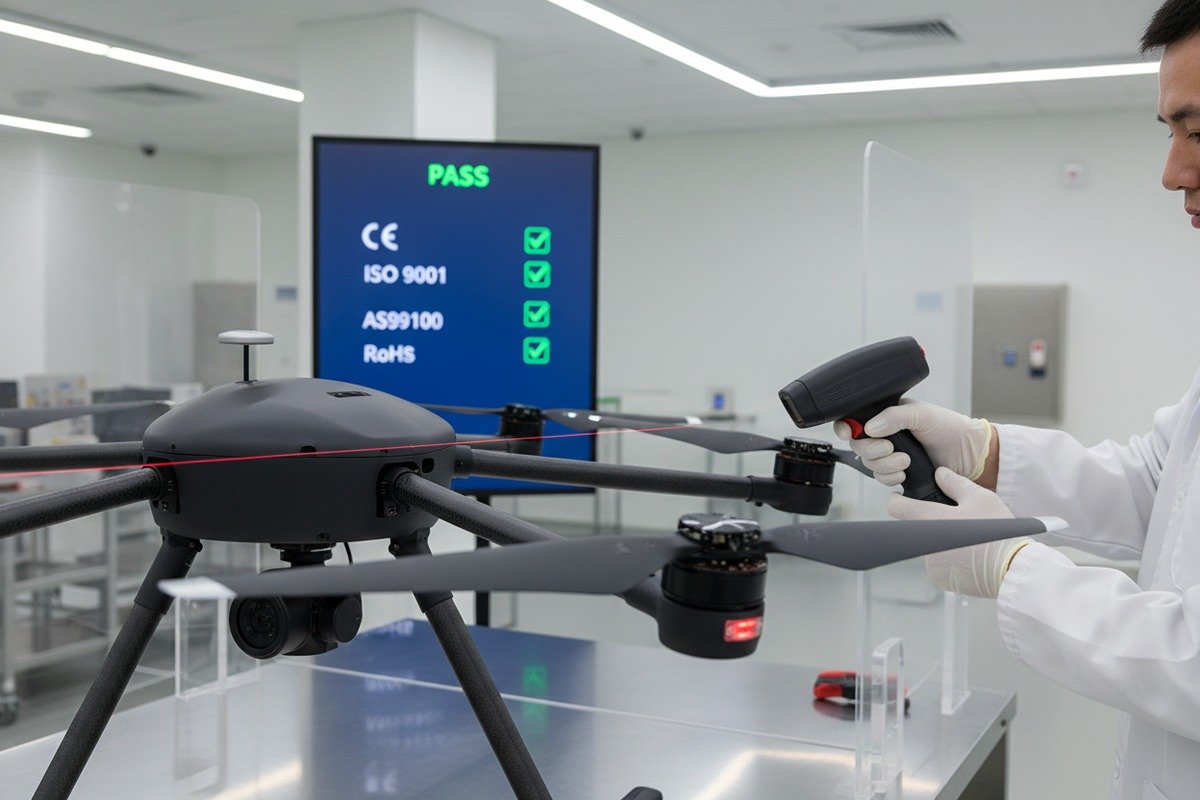
Look for ISO 9001 quality management certification, documented environmental testing (IP ratings, temperature ranges), component-level quality certifications, batch testing protocols, and field reliability data. Request third-party test reports and verify the supplier maintains traceable quality records for every production batch.
Essential Quality Certifications
Certifications provide baseline assurance but require verification. ISO 9001 7 confirms quality management systems exist. CE marking indicates European safety compliance. FCC certification covers radio equipment standards for US markets.
| Certification | Coverage Area | Relevance for Integrators |
|---|---|---|
| ISO 9001 | Quality management systems | Essential baseline standard |
| CE Marking | European product safety | Required for EU market entry |
| FCC Part 15 | Radio frequency compliance | Required for US operations |
| IP Rating (IP54+) | Dust and water resistance | Critical for field durability |
| UN38.3 | Battery transport safety | Required for international shipping |
Environmental Testing Requirements
Agricultural drones operate in conditions that destroy consumer electronics. Demand specific environmental test data from suppliers.
Our testing protocol includes 48-hour continuous vibration testing, temperature cycling from -20°C to +50°C, dust chamber exposure at IP54 levels, and water spray resistance validation. Each test has pass/fail criteria documented in our quality reports.
Component Quality Traceability
Durable drones start with durable components. Ask suppliers about their component sourcing and incoming inspection processes. Quality manufacturers maintain full traceability from raw materials to finished products.
When component issues occur, traceability allows rapid identification of affected units. Our system assigns unique serial numbers to motors, batteries, flight controllers, and frames. This granularity helps integrators manage warranty claims efficiently.
Field Reliability Data
Laboratory testing predicts performance. Field data confirms it. Ask potential suppliers for mean time between failures (MTBF) data from actual agricultural deployments. Suppliers with genuine field experience can provide this information.
Our agricultural drone models accumulate over 50,000 collective flight hours annually across customer deployments. This data feeds back into our design process, identifying weak points before they become widespread problems.
Batch Testing Protocols
Even with excellent designs, manufacturing variation creates quality risks. Understand how suppliers test production batches. At minimum, expect random sampling of critical parameters: motor thrust, battery capacity, sensor calibration, and communication range.
Our production line performs 100% functional testing on every unit plus destructive testing on statistical samples from each batch. This dual approach catches both systematic and random defects.
How do I assess a supplier's ability to provide long-term technical support and secure door-to-door delivery for my bulk orders?
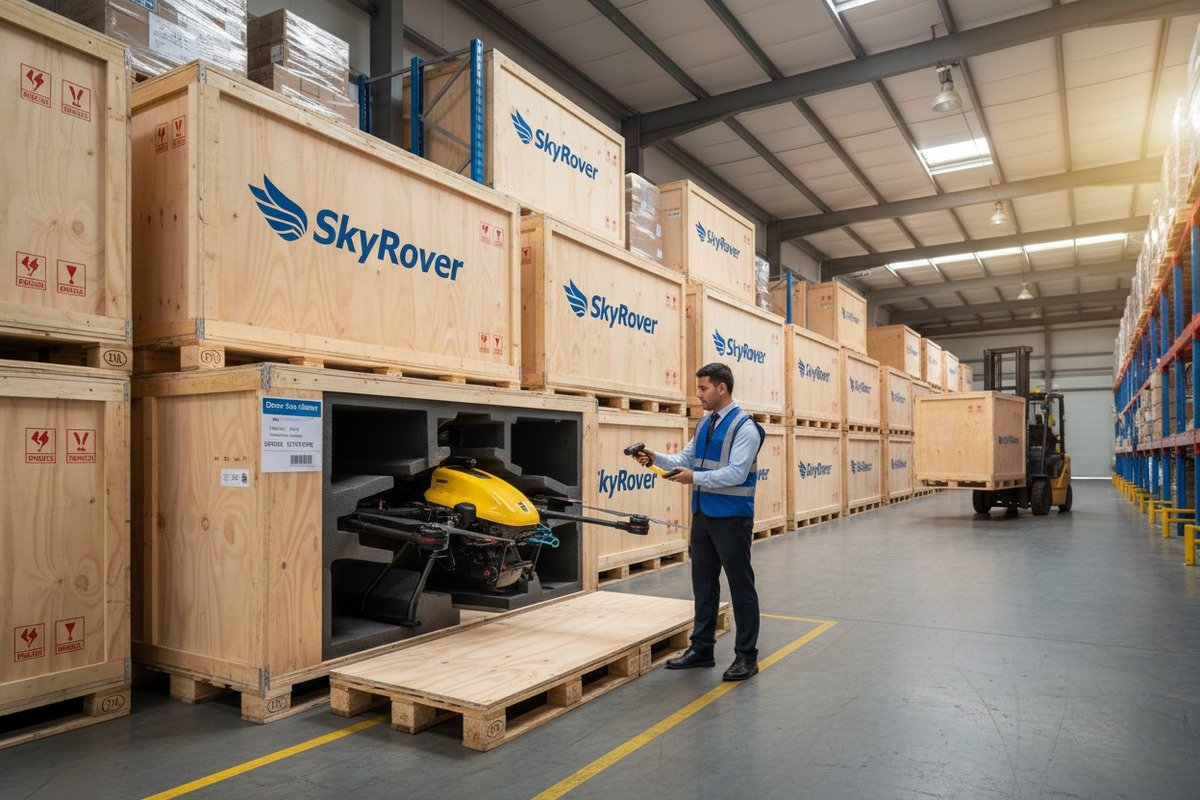
Our export team handles shipments to the US and Europe every week. We have learned that reliable logistics and ongoing support determine whether partnerships succeed or fail. Product quality means nothing if drones arrive damaged or customers cannot get help after purchase.
Assess long-term support capability by verifying dedicated technical support staff, response time guarantees, remote diagnostic capabilities, spare parts availability, and training program offerings. For delivery, confirm the supplier's experience with international logistics, customs documentation expertise, shipping insurance coverage, and track record with bulk agricultural equipment shipments.
Evaluating Technical Support Infrastructure
Technical support separates professional suppliers from opportunistic sellers. Before signing any agreement, understand exactly what support you will receive.
Our support structure includes dedicated English-speaking technical staff, 24-hour response time guarantees for critical issues, remote firmware update capabilities, and video-based troubleshooting support. These services exist because integrators told us they needed them.
Support Service Level Comparison
| Support Feature | Basic Supplier | Professional Supplier |
|---|---|---|
| Response time | 3-5 business days | Within 24 hours |
| Communication channels | Email only | Email, video call, chat |
| Remote diagnostics | Not available | Real-time telemetry access |
| Spare parts lead time | 4-6 weeks | 1-2 weeks |
| Training programs | Documentation only | Video courses, on-site options |
| Firmware updates | Infrequent | Regular scheduled releases |
Spare Parts Availability and Pricing
Drone fleets require ongoing maintenance. Evaluate spare parts availability before committing to any supplier. Request a complete parts list with pricing and typical lead times.
Key parts to evaluate include motors, propellers, batteries, sensors, and flight controllers. Pricing should be reasonable relative to complete unit costs. Lead times should support your clients' operational requirements.
International Logistics Capabilities
Shipping agricultural drones internationally involves complex regulations. Lithium batteries require UN38.3 certification 8 and special packaging. Oversized components may need freight rather than express shipping. Customs documentation must be accurate to prevent delays.
Our logistics team prepares complete documentation packages: commercial invoices, packing lists, certificates of origin, and battery compliance certificates. We work with established freight partners who understand drone shipping requirements.
Customs Clearance Experience
Inexperienced suppliers create customs nightmares. Incorrect HS codes, missing documentation, or improper battery declarations can delay shipments for weeks. Ask potential suppliers for references from customers in your target market who have successfully imported their products.
For US imports, verify the supplier understands FAA registration requirements and can provide necessary compliance documentation. European imports require CE conformity declarations. These details matter for smooth customs clearance.
Insurance and Risk Management
Bulk orders represent significant financial exposure. Confirm shipping insurance coverage and understand claim procedures. Our standard practice includes full replacement value insurance on all international shipments. We process claims directly with carriers, so customers never navigate insurance bureaucracy alone.
Conclusion
Evaluating agricultural drone suppliers for system integrator requirements demands careful attention to integration capabilities, customization flexibility, quality standards, and support infrastructure. The right supplier becomes a long-term partner who helps your business grow.
Footnotes
1. Defines the role and function of system integrators in technology and business. ↩︎
2. Explains the function and components of a drone’s flight control system. ↩︎
3. Replaced broken link with an authoritative resource on API documentation from Postman, a widely recognized platform in API development. ↩︎
4. Defines telemetry and its application in collecting real-time data from drones. ↩︎
5. Details the use and benefits of multispectral cameras in agricultural applications. ↩︎
6. Defines Original Equipment Manufacturer (OEM) and the nature of OEM partnerships. ↩︎
7. Official information on the ISO 9001 standard for quality management systems. ↩︎
8. Explains the UN 38.3 standard for the safe transport of lithium batteries. ↩︎

 English
  Español de México
  Deutsch
  Français
  Русский
  العربية
Comments
No comments yet. Be the first to share your thoughts!
Leave a Comment