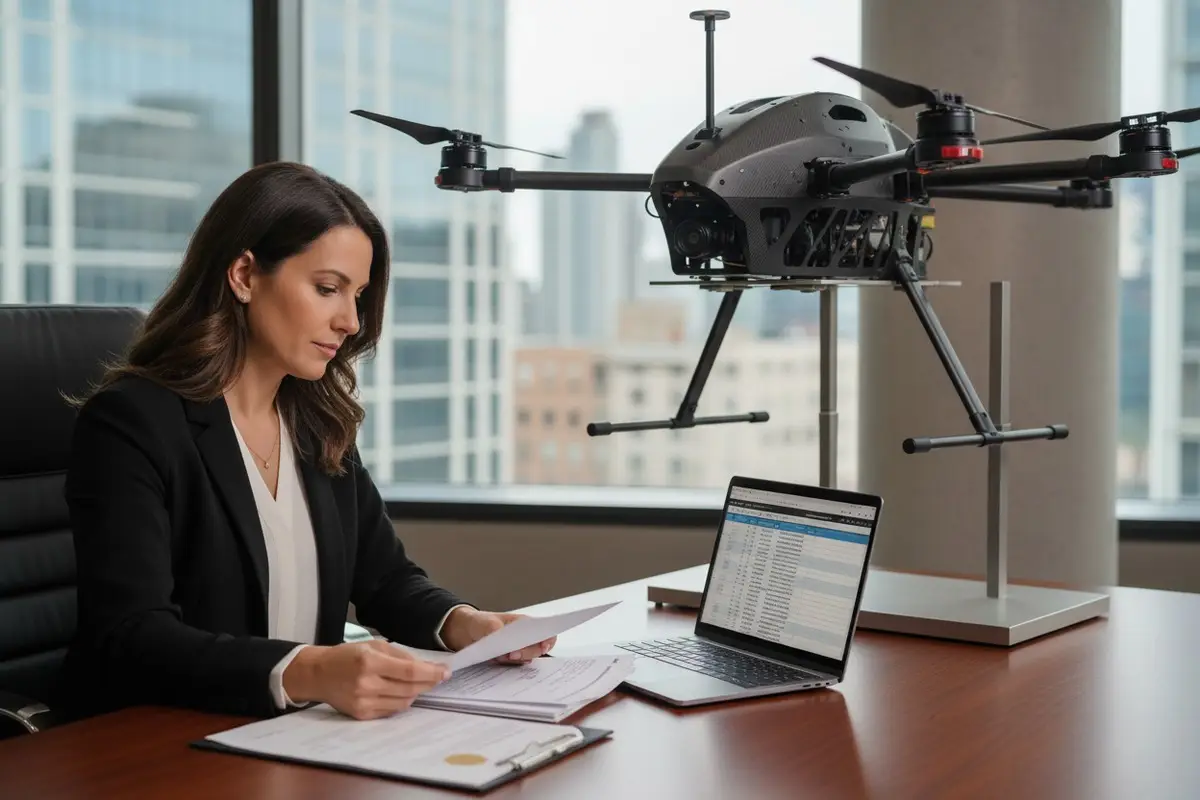

When our production team ships agricultural drones 1 overseas, we constantly navigate complex trade regulations. Import duties and bans create real headaches for buyers who want cost-effective drone technology.
To avoid anti-dumping duties and trade barriers when sourcing agricultural drones from China, verify supplier export certifications, correctly classify products under HS codes, consider OEM rebranding strategies, explore component-level sourcing from allied countries, and work with experienced freight forwarders who understand drone-specific customs requirements.
The global agricultural drone market faces unprecedented regulatory changes CE, FCC Part 107 compliance 2. Let me walk you through practical strategies that help importers stay compliant while maintaining competitive pricing.
How can I verify that my supplier has the right export certifications to help me avoid trade restrictions?
Finding a reliable supplier with proper documentation feels overwhelming. Many buyers discover compliance issues only after goods arrive at customs, causing costly delays and potential seizures.
Verify your supplier's export certifications by requesting copies of their business license, export license, and product-specific certifications like CE, FCC Part 107 compliance, and ISO quality standards. Cross-check these documents with issuing authorities and confirm the supplier's registration with China's drone export control system.
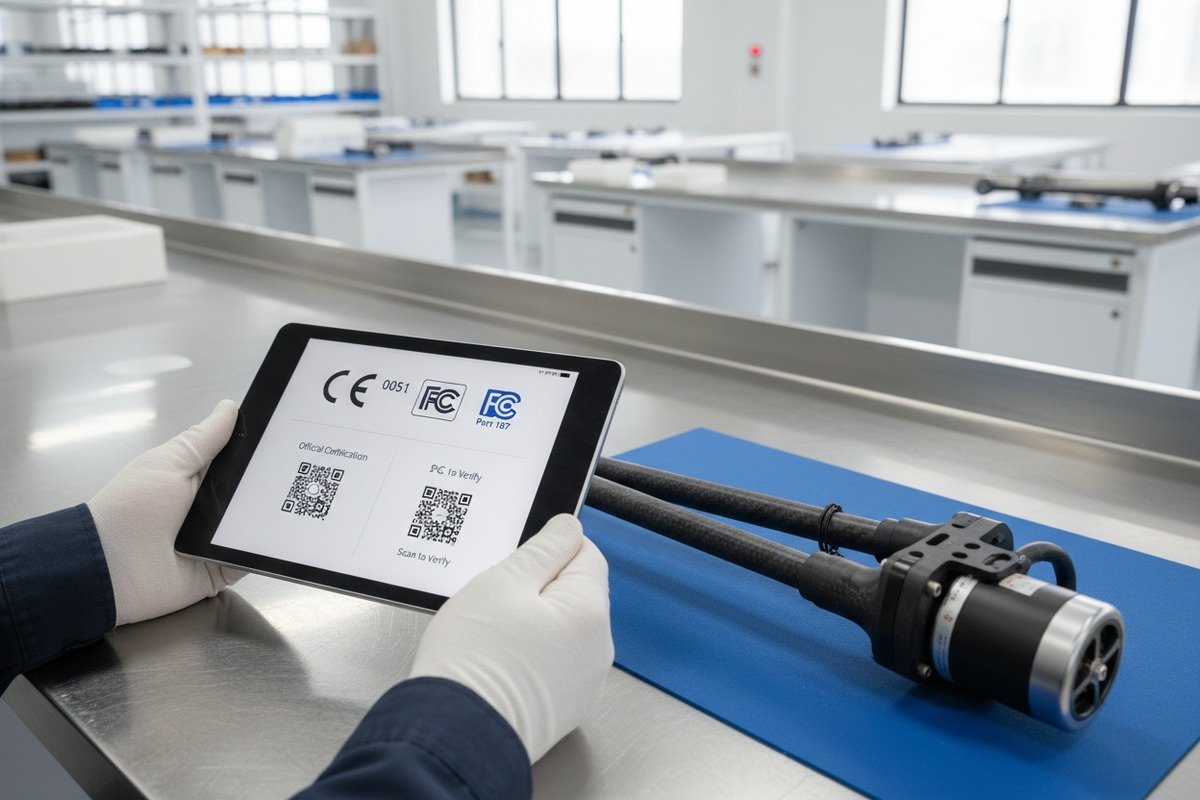
Essential Export Certifications to Request
In our experience exporting to the US and Europe, we have learned which documents matter most. Not all certifications carry equal weight. Some are mandatory. Others simply build trust.
China's Ministry of Industry and Information Technology requires all drone manufacturers to register their products. This registration number appears on every legitimate export document. Without it, your shipment faces automatic red flags at customs.
The Bureau of Industry and Security (BIS) 3 in the United States maintains strict export control classifications. Your Chinese supplier must understand ECCN codes. Drones falling under ECCN 9A012.a face different restrictions than general consumer electronics.
| Certification Type | Issuing Authority | Purpose | Verification Method |
|---|---|---|---|
| Export License | MOFCOM China | Legal export authorization | Check MOFCOM database |
| CE Marking | EU Notified Bodies | European market access | Request test reports |
| FCC Declaration | Self-declared/Lab tested | US radio frequency compliance | Verify FCC ID lookup |
| ISO 9001 | Accredited registrars | Quality management system | Contact registrar directly |
| CAAC Type Certificate | Civil Aviation Administration of China | Airworthiness standard | CAAC public records |
Red Flags That Signal Compliance Problems
Our quality control team has identified warning signs that indicate unreliable suppliers. Legitimate manufacturers provide documentation without hesitation. Delays or excuses suggest problems.
Watch for these issues:
- Certificates with inconsistent company names
- Missing registration numbers on official documents
- Reluctance to provide original copies
- Certifications from unknown testing laboratories
- Expired validity dates on time-sensitive documents
How to Cross-Verify Certification Authenticity
Never accept documents at face value. Contact the issuing authority directly. Most regulatory bodies maintain online databases for verification.
For Chinese export licenses, the Ministry of Commerce website allows public searches. European Notified Bodies maintain registers of CE certifications they have issued. The FCC database lets you search by ID number.
When we prepare export documentation for clients, we include verification links for every certificate. This transparency builds trust and speeds customs clearance.
What are the best ways for me to handle customs clearance and door-to-door delivery for my drone imports?
Customs delays destroy profit margins. A single classification error can hold your shipment for weeks while storage fees accumulate daily.
Handle customs clearance effectively by working with freight forwarders experienced in drone logistics, preparing complete documentation including HS code classification letters, obtaining advance rulings from customs authorities, and choosing delivery terms (DDP vs. DAP) that match your risk tolerance and customs expertise level.
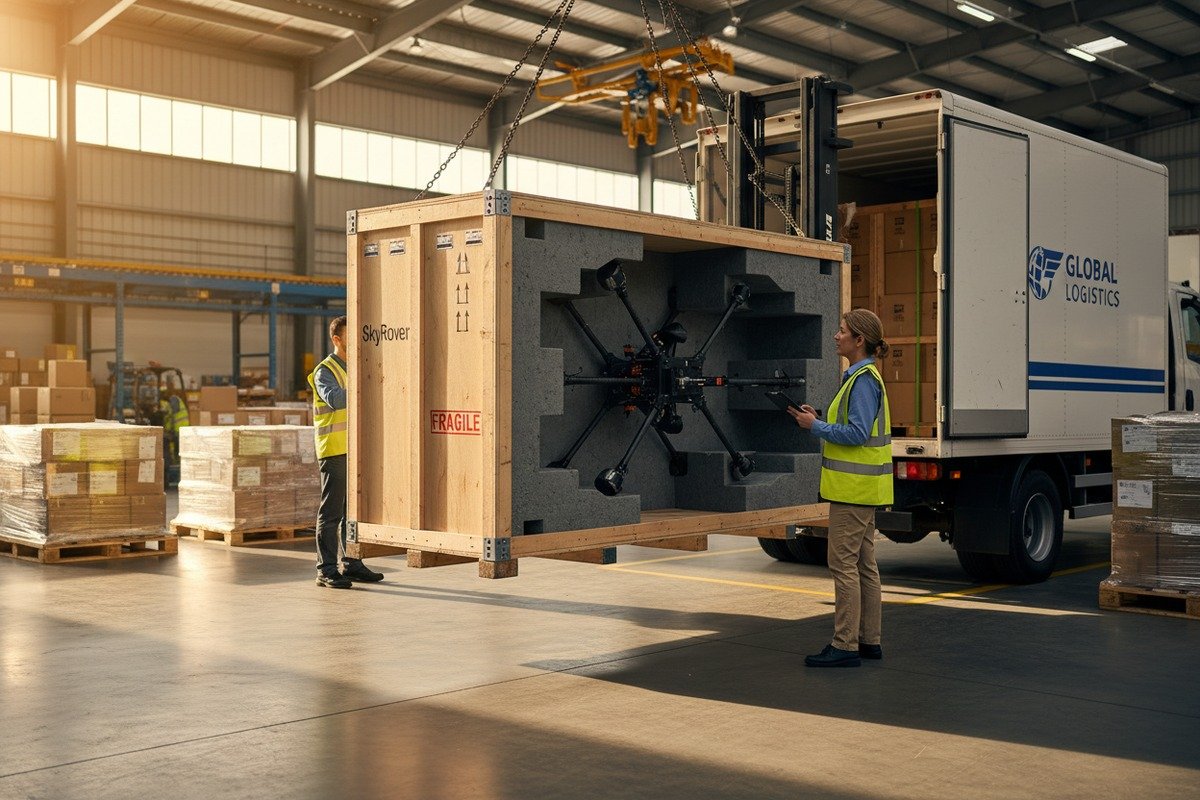
Choosing the Right Incoterms for Drone Imports
Our logistics team recommends DDP (Delivered Duty Paid) 4 for buyers unfamiliar with drone import procedures. Under DDP, we handle all customs formalities. You receive products at your door with duties pre-paid.
However, DDP costs more. Some experienced importers prefer DAP (Delivered at Place) or even FOB (Free on Board). These terms shift customs responsibility to the buyer but offer cost savings.
| Incoterm | Customs Responsibility | Risk Level for Buyer | Best For |
|---|---|---|---|
| EXW | Buyer handles everything | High | Experienced importers with customs brokers |
| FOB | Buyer from port of origin | Medium-High | Buyers with established logistics partners |
| DAP | Buyer at destination | Medium | Importers with customs knowledge |
| DDP | Seller handles all | Low | First-time importers, complex regulations |
Documentation Requirements for Smooth Clearance
Agricultural drones require more paperwork than typical electronics. Missing even one document triggers inspection requests.
Prepare these documents before shipment:
- Commercial invoice with detailed product descriptions
- Packing list specifying drone models and serial numbers
- Bill of lading or air waybill
- Certificate of origin
- Export control classification determination
- Product specification sheets with technical parameters
- Battery safety certifications (UN38.3 for lithium batteries 5)
Navigating US-Specific Import Challenges
The January 2026 BIS rule changes affect how agricultural drones enter the United States. Drones with aerosol spraying systems over 20L capacity face heightened scrutiny. Long-range capabilities exceeding 300km trigger additional licensing requirements.
When we configure agricultural sprayers for US-bound shipments, we carefully document tank capacities and flight ranges. These specifications must match customs declarations exactly. Any discrepancy raises red flags.
For clients importing to the US, we recommend requesting a binding ruling from CBP (Customs and Border Protection) before the first shipment. This ruling provides official classification guidance and prevents disputes later.
Working with Specialized Freight Forwarders
General freight companies often lack drone expertise. They may misclassify your shipment or fail to anticipate regulatory requirements.
Seek forwarders with these qualifications:
- Previous experience shipping unmanned aerial systems
- Understanding of ECCN classifications
- Relationships with customs brokers in your destination country
- Knowledge of battery shipping regulations
- Insurance coverage for high-value electronics
Our preferred logistics partners handle over 500 drone shipments annually. This volume creates efficiency and reduces per-unit costs.
Can I use OEM customization and rebranding to help mitigate specific anti-dumping duties on my agricultural drones?
Some buyers believe that simply changing a brand name avoids trade restrictions. This misconception leads to serious legal consequences including fraud charges.
OEM customization and rebranding do not directly avoid anti-dumping duties, which are based on country of origin rather than brand ownership. However, substantial transformation through local assembly, software customization, or significant component sourcing from non-restricted countries may legally change the product's origin classification and duty treatment.

Understanding Country of Origin Rules
When our engineering team develops OEM solutions, we explain origin rules clearly. US Customs determines origin based on where "substantial transformation 6" occurs. Simply attaching a new label does not change origin.
Substantial transformation means the product fundamentally changes character through manufacturing processes. For drones, this might include:
- Final assembly of major components
- Programming and calibration of flight systems
- Integration of locally-sourced sensors or cameras
- Custom firmware development
Legitimate OEM Strategies That Affect Duty Treatment
Our clients have successfully reduced duty exposure through careful supply chain structuring. These approaches require upfront investment but create long-term compliance security.
| Strategy | Implementation | Potential Benefit | Complexity Level |
|---|---|---|---|
| Third-country assembly | Ship components to Vietnam/India for final assembly | May change country of origin | High |
| Local component sourcing | Replace Chinese flight controllers with US/EU alternatives | Reduces restricted component percentage | Medium |
| Software localization | Develop custom firmware in destination country | Adds local value; may affect classification | Medium |
| Joint venture manufacturing | Partner with allied-country manufacturer | Creates non-Chinese origin | Very High |
What Anti-Dumping Duties Actually Target
Anti-dumping duties 7 punish unfair pricing, not country of origin per se. The US Commerce Department investigates when domestic manufacturers claim foreign competitors sell below production cost.
Historical cases against Chinese agricultural products show duties ranging from 50% to over 200%. Honey, garlic, and steel have all faced such duties. While no specific agricultural drone cases exist yet, the precedent exists.
If Commerce Department initiates a drone investigation, they examine:
- Production costs in China
- Export prices to the US
- Price differences between US market and Chinese domestic market
- Government subsidies affecting pricing
Risks of Improper Origin Manipulation
Customs fraud carries severe penalties. Mislabeling country of origin constitutes a federal offense. Penalties include:
- Seizure of goods
- Fines up to $10,000 per violation
- Criminal prosecution for intentional fraud
- Debarment from future importing
Our legal team advises complete transparency in origin documentation. If you pursue legitimate substantial transformation, maintain detailed records of every manufacturing step.
Building a Compliant OEM Program
When we develop OEM partnerships, documentation starts from day one. We photograph production processes, record component sources, and timestamp every assembly step.
For clients concerned about future trade barriers, we recommend diversifying component sources now. Even partial substitution of Chinese components with alternatives from Taiwan, South Korea, or allied countries creates flexibility.
How do I correctly classify my industrial drones under HS codes to ensure I am not overpaying on import tariffs?
Incorrect HS code classification costs importers millions annually. Some pay excessive duties on misclassified goods. Others face penalties for under-declaration.
Correctly classify industrial drones by identifying whether they fall under HS 8802 (aircraft) or 8525 (transmission apparatus with cameras), consulting customs rulings on similar products, considering the drone's primary function (spraying, surveying, transport), and requesting binding classification rulings from customs authorities before major shipments.

Primary HS Code Options for Agricultural Drones
Our export documentation team navigates classification complexities daily. Agricultural drones present unique challenges because they combine multiple functions.
The primary classification question: Is it aircraft or electronic equipment?
| HS Code | Description | Typical Duty Rate (US) | Applies To |
|---|---|---|---|
| 8802.20 | Airplanes and other aircraft, unladen weight ≤2,000 kg | 0% | Drones classified as aircraft |
| 8525.89 | Television cameras, digital cameras, video recorders | 0-3.9% | Drones primarily for imaging |
| 8424.82 | Agricultural/horticultural sprayers | 2.4% | Spraying drones by function |
| 8479.89 | Machines with individual functions | 2.5% | Multi-purpose industrial drones |
Factors That Determine Correct Classification
Classification depends on primary function, not all possible uses. An agricultural spraying drone primarily applies chemicals. The camera serves navigation, not imaging products.
When we calibrate our spraying systems, we document the primary agricultural purpose. This documentation supports 8424.82 classification, which often carries favorable duty rates.
Key determining factors include:
- Primary commercial purpose as marketed
- Technical specifications emphasizing main function
- Accessory vs. essential component relationships
- Industry standard classifications for similar products
How to Request Binding Rulings
A binding ruling from CBP provides certainty. Once issued, customs officers must honor the classification unless circumstances change.
To request a ruling:
- Prepare detailed product specifications
- Include photographs from multiple angles
- Describe the commercial use case
- Reference similar products already classified
- Submit through the CBP e-Ruling system
Processing takes 30-90 days. Plan shipments around this timeline.
Common Classification Mistakes to Avoid
Our clients have shared costly classification errors they encountered before working with us:
- Classifying camera-equipped spraying drones under imaging equipment codes
- Using generic "aircraft" codes without considering specific subcategories
- Failing to account for software value in customs valuation
- Ignoring component-level classifications when importing parts separately
The Section 301 Tariff Complication
Beyond base duties, Chinese-origin drones may face Section 301 tariffs of 25% or more. These tariffs apply based on HS code classifications included in specific tariff lists.
Classification strategy matters here. Some HS codes 8 appear on Section 301 lists while functionally similar codes do not. Working with an experienced customs broker helps identify optimal classification approaches within legal boundaries.
Our export team provides classification guidance letters with every shipment. These letters explain our classification rationale and provide supporting documentation for customs review.
Conclusion
Trade barriers and anti-dumping risks demand proactive planning. Verify certifications, classify products correctly, structure supply chains strategically, and work with experienced logistics partners. These steps protect your investment and ensure compliant access to cost-effective Chinese agricultural drone technology.
Footnotes
1. Provides market size, growth, and applications of agricultural drones. ↩︎
2. Official EU guidance on CE marking, applicable to drones. ↩︎
3. Official website of the Bureau of Industry and Security, detailing its mission and export controls. ↩︎
4. Defines DDP Incoterm, seller’s responsibilities, and risk transfer in international shipping. ↩︎
5. IATA guidelines and resources for safe air transport of lithium batteries. ↩︎
6. Explains the concept of substantial transformation in determining country of origin for customs. ↩︎
7. Provides an overview of anti-dumping measures and their purpose in international trade. ↩︎
8. Official explanation of Harmonized System codes by the World Customs Organization. ↩︎

 English
  Español de México
  Deutsch
  Français
  Русский
  العربية
Comments
No comments yet. Be the first to share your thoughts!
Leave a Comment