
Every year, our customer service team receives calls from frustrated buyers MIL-STD-810 standards 1. Their thermal sensors 2 have drifted. Their batteries degraded during shipping. The culprit? Poor temperature control in transport cases.
To verify temperature control in firefighting drone transport cases, request thermal testing reports, examine insulation materials and R-values, check for compliance with MIL-STD-810 standards, and conduct independent temperature logging tests under simulated shipping conditions before committing to bulk orders.
This guide walks you through the exact verification steps. You will learn what to ask suppliers, which tests matter most, and how to customize cases for your climate. Let’s dive into each critical area.
How do I evaluate the insulation quality of a firefighting drone transport case before placing a bulk order?
Our engineering team has tested hundreds of transport cases over the years. The difference between quality insulation and poor insulation can mean the difference between mission-ready drones and expensive paperweights.
Evaluate insulation quality by checking the material type (polyurethane foam or aerogel is preferred), measuring the R-value rating, inspecting seal integrity around closures, and requesting third-party thermal conductivity test reports that show heat transfer rates under controlled conditions.

Understanding Insulation Materials
Not all insulation performs equally. The material inside your transport case determines how well it protects sensitive components like thermal cameras and lithium-ion batteries.
Polyurethane foam 3 remains the industry standard for mid-range cases. It offers good thermal resistance at reasonable cost. However, for extreme environments, aerogel composites provide superior protection. R-value rating 4 Aerogel can be three times more effective than traditional foam while adding minimal weight.
When we design cases for clients in desert regions, we often recommend multi-layer insulation systems. These combine reflective barriers with foam cores. The reflective layer bounces radiant heat away. The foam core slows conductive heat transfer.
Key Metrics to Request from Suppliers
| Metric | Good Range | Excellent Range | Why It Matters |
|---|---|---|---|
| R-Value | 4-6 per inch | 7+ per inch | Higher values mean better insulation |
| Thermal Conductivity 5 | 0.03-0.04 W/mK | Below 0.025 W/mK | Lower values slow heat transfer |
| Seal Compression | 20-30% | 15-20% | Proper compression prevents air gaps |
| Temperature Range | -20°C to 50°C | -30°C to 60°C | Must exceed your shipping conditions |
Practical Testing Before Bulk Orders
Before placing a large order, request sample cases. Run your own tests. Place temperature data loggers inside the case. Put the case in a freezer at -20°C for 24 hours. Record how quickly internal temperatures drop.
Then reverse the test. Place the case in direct sunlight or a heated environment at 45°C. Monitor how long the case maintains safe internal temperatures. Quality cases should maintain internal temperatures within safe ranges for at least 8-12 hours under extreme conditions.
Our quality control team uses this exact protocol. We reject any case design that allows internal temperatures to exceed battery-safe ranges within 6 hours of exposure.
Red Flags to Watch For
Watch for suppliers who cannot provide specific insulation specifications. Vague claims like "high-quality materials" mean nothing. Demand numbers. Ask for test data.
Also inspect physical samples for gaps in foam coverage. Look at corners and around hardware mounting points. These areas often have thin spots. Air gaps destroy insulation effectiveness.
What thermal testing reports should I ask my supplier to provide to guarantee my drone battery safety?
When buyers contact our sales team, battery safety is their top concern. Lithium-ion batteries in firefighting drones can fail catastrophically if exposed to temperature extremes. The right documentation protects both your investment and your reputation.
Request MIL-STD-810 thermal shock and temperature cycling test reports, UN38.3 battery transport compliance certificates, independent laboratory thermal conductivity measurements, and real-world shipping simulation data showing internal case temperatures during 72-hour transit scenarios.

Essential Certifications and Standards
MIL-STD-810 is the gold standard for environmental testing. This military specification includes specific procedures for temperature testing. Method 501.7 covers high-temperature exposure. Method 502.7 covers low-temperature testing. Method 503.7 addresses temperature shock.
Ask your supplier for test reports showing their cases passed these methods. The reports should include specific temperature ranges tested, exposure durations, and pass/fail criteria.
UN38.3 certification 7 is mandatory for shipping lithium batteries internationally. While this standard focuses on the batteries themselves, your transport case should support UN38.3 compliance. The case should prevent battery damage that could compromise this certification.
Critical Test Reports to Request
| Report Type | What It Shows | Why You Need It |
|---|---|---|
| MIL-STD-810 Method 501.7 | High temp performance to 71°C | Validates protection in hot climates |
| MIL-STD-810 Method 502.7 | Low temp performance to -51°C | Validates protection in cold climates |
| Thermal Cycling Test | Repeated hot/cold exposure effects | Shows long-term durability |
| Transit Simulation | Real shipping condition performance | Proves real-world effectiveness |
| Humidity Resistance | Moisture intrusion prevention | Protects against condensation damage |
Understanding Thermal Testing Methodology
Quality suppliers conduct thermal testing in controlled chambers. They place temperature sensors at multiple points inside the case. They record data continuously during exposure periods.
Ask for the raw data, not just pass/fail summaries. Look at temperature curves. How quickly did internal temperatures respond to external changes? Did any hot spots develop near battery compartments?
Our testing facility runs 72-hour shipping simulations. We replicate actual shipping conditions including temperature swings from warehouse to truck to airplane cargo hold. This real-world approach catches problems that laboratory tests miss.
Battery-Specific Temperature Requirements
Firefighting drone batteries have specific storage temperature requirements. Most lithium-ion cells prefer storage between 15°C and 25°C. They can tolerate short-term exposure to -20°C to 45°C. Extended exposure outside these ranges causes permanent capacity loss.
| Battery Condition | Temperature Impact | Recovery Possible? |
|---|---|---|
| Brief cold exposure (-20°C, <24 hrs) | Temporary capacity reduction | Yes, full recovery |
| Extended cold exposure (-20°C, >72 hrs) | Electrolyte damage | Partial recovery |
| Brief heat exposure (45°C, <24 hrs) | Accelerated aging | No, permanent damage |
| Extended heat exposure (45°C, >72 hrs) | Severe degradation | No, significant capacity loss |
Your transport case must maintain internal temperatures within safe ranges for the entire shipping duration. For international shipments, this often means 5-7 days in uncontrolled environments.
Verifying Report Authenticity
Unfortunately, some suppliers provide fake or manipulated test reports. Verify authenticity by contacting the listed testing laboratory directly. Reputable labs maintain records and will confirm whether they tested specific products.
Look for ISO 17025 accreditation on testing laboratory documentation. This international standard ensures the lab follows proper testing procedures and maintains calibrated equipment.
Can I customize the temperature control features of my drone cases to meet specific local climate demands?
Our design team works with clients from Arizona deserts to Alaskan wilderness. Each region demands different solutions. What works in temperate climates fails in extreme environments.
Yes, reputable manufacturers offer customizable temperature control features including upgraded insulation materials, active heating or cooling systems, specialized thermal liners, humidity control modules, and integrated temperature monitoring systems tailored to your specific climate challenges and operational requirements.

Passive Customization Options
Passive systems require no power. They are simpler, lighter, and more reliable than active systems. For most climates, well-designed passive systems provide adequate protection.
Insulation upgrades are the most common customization. We can swap standard polyurethane for closed-cell foam with higher R-values. For extreme cold regions, we add reflective thermal barriers that trap body heat from the equipment.
Thermal mass plates help moderate temperature swings. These dense materials absorb heat during hot periods and release it during cold periods. They smooth out temperature spikes that damage sensitive electronics.
Phase-change materials 8 offer advanced passive protection. These substances absorb large amounts of energy when melting and release it when solidifying. They maintain specific temperature ranges without any power source.
Active Temperature Control Systems
For extreme environments, active systems may be necessary. These include battery-powered heating elements for cold climates and compact cooling systems for hot climates.
When we build cases for clients in Middle Eastern markets, we often integrate small thermoelectric coolers. These Peltier-effect devices can drop internal temperatures by 10-15°C below ambient. The trade-off is power consumption and added weight.
For cold-climate clients, we install flexible heating pads connected to small battery packs. These maintain battery temperatures above freezing during winter transport. Solar panels on the case exterior can supplement battery power during extended storage.
Modular Design Approaches
Smart buyers request modular systems. Instead of fixed configurations, modular cases let you swap thermal components based on mission requirements.
Our most popular modular design uses interchangeable thermal liner inserts. Summer operations use liners optimized for heat rejection. Winter operations swap in liners designed for heat retention. The same base case serves year-round needs.
| Climate Zone | Recommended Passive Features | Recommended Active Features |
|---|---|---|
| Desert/Hot Arid | Reflective exterior, ventilated design | Thermoelectric cooler, solar power |
| Tropical/Humid | Vapor barriers, desiccant systems | Dehumidifier, sealed design |
| Cold/Arctic | Multi-layer insulation, thermal mass | Heating pads, insulated battery pack |
| Temperate | Standard closed-cell foam | Optional monitoring only |
Integration with Fleet Management
Advanced customization includes temperature monitoring that connects to fleet management software. Sensors inside the case transmit real-time data. You know exactly what conditions your equipment experienced during transit.
This data integration serves multiple purposes. It documents proper handling for warranty claims. It alerts you to shipping problems before equipment arrives. It builds historical data showing which shipping routes cause the most temperature stress.
When we work with government contractors, we often build cases with tamper-evident temperature logging. The system records any temperature excursions and cannot be reset. This creates an unbroken chain of custody documentation.
How can I be sure the transport case will maintain a stable internal environment during long-haul shipping to my warehouse?
Shipping containers sit on hot tarmacs. Cargo holds freeze at altitude. Trucks bake in summer sun. Our export team has seen equipment damaged by every scenario imaginable. Verification before shipment prevents expensive surprises.
Ensure stable internal environments by requiring pre-shipment temperature logger placement, establishing maximum temperature variance thresholds in purchase contracts, requesting shipping route thermal analysis, and implementing real-time GPS temperature tracking for high-value shipments.
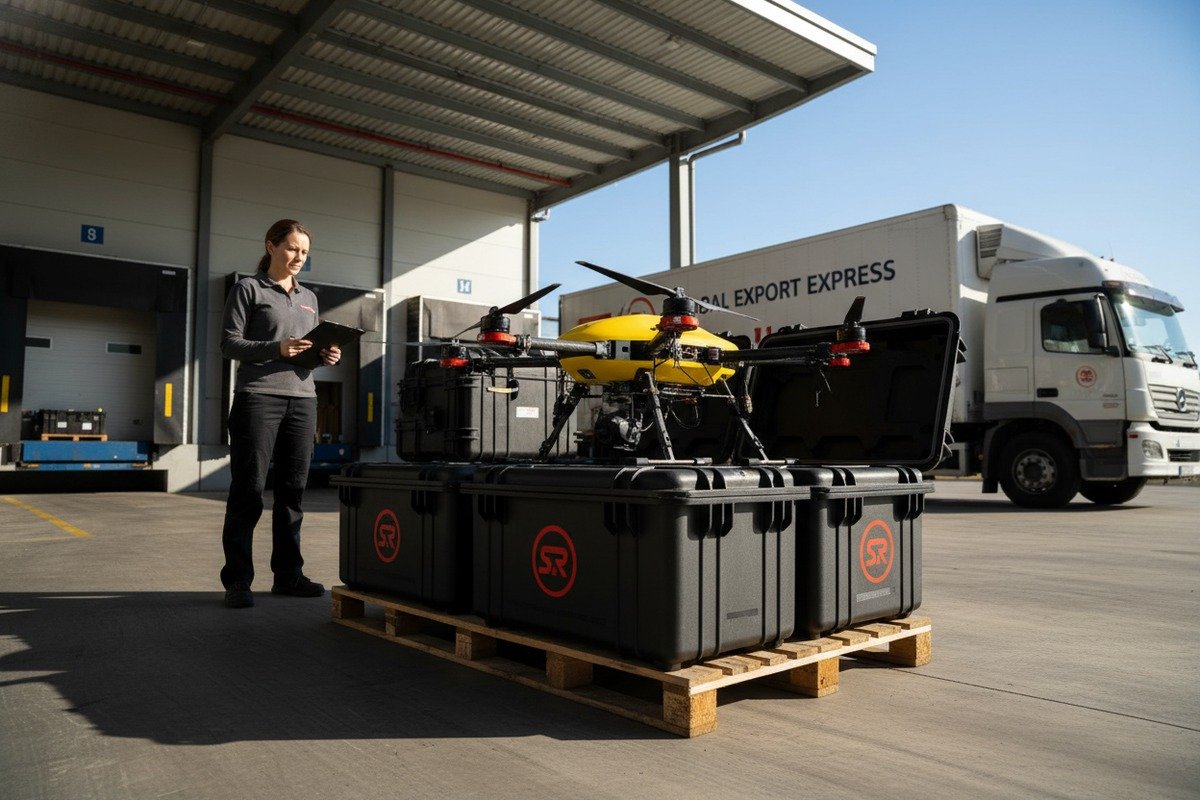
Pre-Shipment Verification Protocol
Before any bulk shipment leaves our facility, we offer buyers the option to place their own temperature loggers inside cases. These independent loggers record temperatures throughout transit. When shipments arrive, buyers can verify conditions met specifications.
This verification protocol should be written into your purchase contract. Specify acceptable temperature ranges. Define what happens if temperatures exceed limits. Make clear who bears responsibility for temperature-related damage.
Understanding Shipping Route Risks
Different shipping routes present different thermal challenges. Air freight involves rapid altitude changes that cause condensation. Sea freight means extended exposure to tropical heat in shipping containers. Ground transport varies wildly by season and geography.
Work with your supplier to analyze your specific shipping route. Map out where temperature extremes are most likely. Plan protection accordingly.
| Transport Mode | Primary Thermal Risk | Typical Duration | Protection Priority |
|---|---|---|---|
| Air Freight | Rapid temp changes, condensation | 1-3 days | Humidity control, insulation |
| Sea Freight | Sustained heat in containers | 2-6 weeks | Maximum insulation, thermal mass |
| Ground Truck | Variable by route/season | 1-7 days | Route-specific customization |
| Multi-Modal | Combined risks | Variable | Comprehensive protection |
Real-Time Monitoring Solutions
For high-value shipments, real-time monitoring provides peace of mind. GPS-enabled temperature loggers transmit data throughout transit. You see conditions as they happen, not after damage occurs.
Several third-party services offer this monitoring. Devices attach to cases and report via cellular networks. Alerts notify you immediately if temperatures exceed safe limits. Some services even coordinate with carriers to reroute shipments showing problems.
Our team uses this monitoring for shipments to extreme climate regions. We have intervened multiple times when monitoring showed problems developing. A simple call to the carrier can move cargo to climate-controlled storage before damage occurs.
Contractual Protections
Your purchase agreement should include specific temperature control provisions. Define acceptable internal temperature ranges during transit. Specify monitoring requirements. Establish liability for temperature-related damage.
Consider requiring the supplier to maintain cargo insurance that covers temperature damage. Standard freight insurance often excludes this coverage. Special riders are available but must be specifically requested.
Documentation matters for claims. When we ship to clients with strict requirements, we photograph temperature logger placement, record initial case temperatures, and provide chain-of-custody documentation. This evidence supports warranty claims if problems occur.
Arrival Inspection Procedures
Establish a standard inspection procedure when shipments arrive. Check temperature logger data immediately. Open cases in climate-controlled environments. Allow equipment to stabilize to room temperature before powering on.
Thermal sensors and batteries can appear fine but have hidden damage from temperature exposure. Batteries may show normal voltage but have reduced capacity. Thermal cameras may power on but drift out of calibration. Proper inspection catches these issues during warranty periods.
Conclusion
Temperature control verification protects your investment and your operations. Request proper documentation, test samples independently, and customize solutions for your climate. Your firefighting drones depend on it.
Footnotes
1. Provides information about the MIL-STD-810 environmental testing standard. ↩︎
2. Explains the function and types of thermal sensors for temperature measurement. ↩︎
3. Details properties and uses of polyurethane foam as an insulation material. ↩︎
4. Replaced HTTP 404 with an authoritative Department of Energy page that defines and explains R-value for insulation. ↩︎
5. Replaced HTTP 404 with a Wikipedia page providing a comprehensive definition and explanation of thermal conductivity. ↩︎
6. Explains the concept of thermal conductivity and its measurement. ↩︎
7. Replaced HTTP 403 with an authoritative FAA page detailing regulations and safety testing requirements for transporting lithium batteries, which includes UN38.3. ↩︎
8. Replaced HTTP 404 with a Wikipedia page offering a general and authoritative overview of phase-change materials. ↩︎
9. Describes how phase-change materials work for temperature regulation. ↩︎

 English
  Español de México
  Deutsch
  Français
  Русский
  العربية
