
When our engineering team first started receiving requests for drones capable of collecting destructive testing samples 1, we realized the market lacked clear evaluation standards. Many buyers struggle to find suppliers who truly understand the precision required for DT workflows.
To evaluate agricultural drone suppliers for destructive testing samples, assess their build quality durability, technical support depth, component consistency, and export logistics experience. Request engineering data, stress test results, and verify their track record with DT-specific payloads, contamination-free grippers, and lab integration capabilities before committing to any purchase.
This guide walks you through every critical factor Vibration analysis reports 2. We will cover build quality assessment, technical support requirements, component consistency, and export logistics. Each section provides actionable criteria based on real manufacturing insights.
How do I determine if a supplier's agricultural drone build quality can withstand my rigorous destructive testing?
Our production team runs every frame through vibration stress cycles before shipping ISO 9001 certification 3. Yet many buyers never ask about these tests. Build quality determines whether your drone survives harsh field conditions while protecting delicate samples.
A supplier's drone build quality can withstand rigorous destructive testing if the frame uses aerospace-grade carbon fiber, motors handle continuous high-torque loads, and the entire assembly passes documented stress tests including vibration, thermal cycling, and impact resistance protocols.

Understanding Frame Material Quality
The frame is your drone's skeleton. Cheap suppliers use fiberglass or low-grade composites. These crack under repeated stress. Premium builds use matte black carbon fiber with proper resin ratios.
Our hexacopter frames undergo 500-hour vibration tests. This simulates three years of heavy agricultural use. Ask any supplier for their vibration test data. No data means no quality assurance.
Motor and Propulsion System Durability
Motors fail first in demanding applications. Look for brushless motors 4 rated for 50,000+ hours. Check the bearing type. Sealed ceramic bearings last longer in dusty fields.
| Component | Budget Supplier Spec | Premium Supplier Spec |
|---|---|---|
| Frame Material | Fiberglass/ABS | T700 Carbon Fiber |
| Motor Bearing | Steel, unsealed | Ceramic, sealed |
| ESC Rating | 30A continuous | 60A continuous |
| Vibration Test | None documented | 500+ hours |
| Operating Temp Range | 0°C to 40°C | -20°C to 60°C |
Stress Test Documentation to Request
Request these specific documents from any supplier:
- Vibration analysis reports showing resonance frequencies
- Thermal cycling test results from -20°C to 60°C
- Drop test certifications from standard heights
- Payload stress curves under maximum weight
- Motor longevity data from continuous operation tests
When we calibrate our flight controllers 5, we document every parameter. Your supplier should provide similar transparency. If they hesitate, consider alternatives.
Real-World Durability Indicators
Collision-tolerant designs matter for DT sample collection. Drones may contact plants during tissue extraction. Look for protective motor guards and reinforced landing gear.
Our agricultural spraying drones feature six radiating arms. This configuration distributes stress evenly. Single points of failure cause cascading damage. Redundant arm designs prevent total loss from minor impacts.
What technical support and engineering data should I request from a manufacturer for my drone stress tests?
In our experience exporting to the US market, buyers often underestimate technical support needs. They focus on price, then struggle during integration. Strong engineering support separates successful DT implementations from expensive failures.
Request complete CAD files, API documentation for lab integration, flight controller source parameters, payload interface specifications, and dedicated engineering contact channels. Suppliers should provide stress test protocols, failure mode analysis, and real-time telemetry data access for your custom DT workflow development.
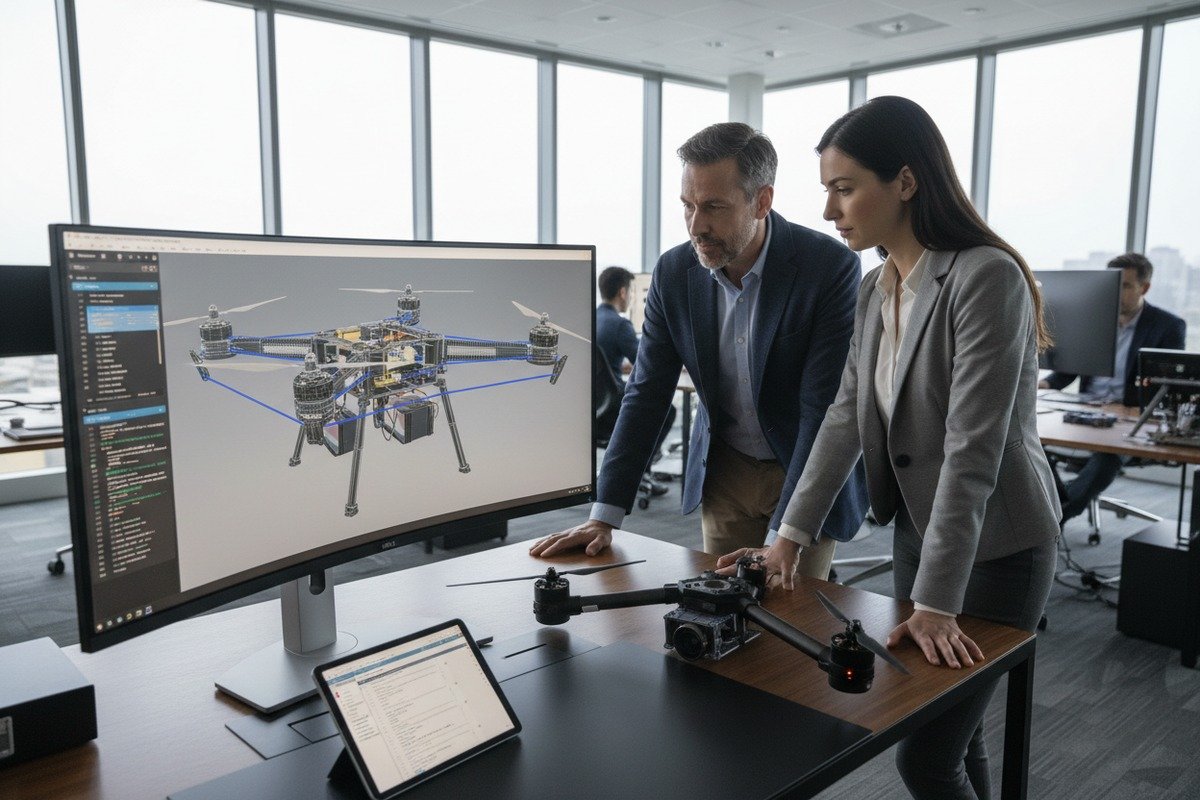
Essential Engineering Documents
Your DT workflow requires precise data. Standard marketing brochures are insufficient. Demand these engineering-level documents:
| Document Type | Purpose | Red Flag if Missing |
|---|---|---|
| CAD/STEP Files | Custom payload mounting | Cannot verify fit |
| API Documentation 7 | Lab software integration | Manual data transfer only |
| Flight Controller Parameters | Fine-tuning for sample transport | Limited optimization |
| Wiring Diagrams | Payload power integration | Risk of electrical damage |
| Firmware Update Logs | Version tracking | Unstable software |
Software Integration Capabilities
Modern DT requires seamless data flow. Your drone should talk to your lab analyzers. Ask about these integrations:
- Pix4D or similar mapping software compatibility
- REST API for custom application development
- MQTT protocols for real-time telemetry
- CSV/JSON export for lab management systems
- SDK availability for gripper control
Our engineers provide Python libraries for payload control. This lets buyers develop custom sample collection sequences. Open ecosystems beat proprietary lock-in every time.
Technical Support Response Standards
Define support expectations before purchasing. We maintain dedicated WhatsApp groups for overseas clients. Response time matters when drones are grounded mid-mission.
Ask potential suppliers:
- What is your average response time for technical queries?
- Do you offer video call troubleshooting?
- Can you provide remote firmware updates?
- Is on-site support available for large orders?
- What engineering resources exist in my time zone?
Stress Test Protocol Sharing
Reputable manufacturers share their testing methodologies. This transparency builds trust. Request these specific protocols:
Vibration Protocol: Frequency range, duration, amplitude, and pass/fail criteria
Thermal Protocol: Temperature ramp rates, soak times, and functional tests at extremes
Payload Protocol: Maximum weight, center of gravity limits, and dynamic load factors
When we test our firefighting drones, we simulate 200+ flight cycles with full payloads. Your agricultural DT drones deserve equal rigor. Suppliers hiding test data likely have poor results.
How can I evaluate a supplier's ability to provide consistent, high-end components for my testing samples?
Our quality control team rejects 3-5% of incoming components monthly. This rate seems high until you realize what passes through unchecked at budget suppliers. Component consistency determines whether your hundredth drone performs like your first.
Evaluate component consistency by requesting batch traceability documentation, incoming quality control rejection rates, supplier qualification audits, and long-term reliability data. Consistent suppliers maintain ISO 9001 certification, use approved vendor lists, and provide serial number tracking for critical components like motors, ESCs, and flight controllers.

Component Traceability Systems
Every critical component should have a traceable history. Ask suppliers about their traceability depth:
| Traceability Level | What It Covers | Buyer Benefit |
|---|---|---|
| Basic | Final assembly date | Minimal recall capability |
| Intermediate | Component lot numbers | Batch-specific issue tracking |
| Advanced | Sub-component origins | Full supply chain visibility |
| Premium | Individual part serial numbers | Exact failure analysis |
Our drones include QR codes linking to complete component histories. This level of traceability supports your DT documentation requirements.
Incoming Quality Control Standards
Component quality starts at receiving. Rigorous suppliers test before accepting shipments. Weak suppliers trust vendor claims blindly.
Key metrics to request:
- Incoming rejection rate: Should be 2-8% for honest suppliers
- Motor balance verification: Every unit or sample basis
- ESC thermal testing: Prevents field failures
- Battery cell matching: Critical for consistent flight times
- Sensor calibration verification: Ensures measurement accuracy
Approved Vendor List Management
Premium suppliers maintain strict AVLs. They qualify component vendors through audits. They remove poor performers quickly.
Ask these questions:
- How many vendors supply your motors?
- When did you last audit your battery supplier?
- What criteria disqualify a component vendor?
- Do you dual-source critical components?
- How do you handle vendor quality escapes?
When our team qualifies a new carbon fiber supplier, we test 50+ samples before approval. This process takes months but prevents field failures.
Long-Term Reliability Data
Short-term tests miss degradation issues. Request reliability data spanning multiple production years:
- MTBF (Mean Time Between Failures): Should exceed 2,000 flight hours
- Warranty claim rates: Below 2% indicates quality
- Field failure analysis reports: Show continuous improvement
- Component lifecycle projections: Support long-term planning
Our agricultural drone platforms show consistent performance data across 36-month periods. Newer suppliers cannot provide this depth. Factor experience into your evaluation.
Sample Collection Component Specifics
For DT applications, certain components demand extra scrutiny:
Grippers and End Effectors: Must maintain contamination-free surfaces through hundreds of cycles. Medical-grade materials prevent sample cross-contamination.
Vibration Dampening: Protects fragile tissue samples during transport. Gel mounts outperform rubber in temperature extremes.
Payload Sensors: Weight and position sensors ensure sample security. Real-time alerts prevent mid-flight losses.
What should I look for in a supplier's export experience to ensure my testing drones arrive safely and on time?
We have shipped over 2,000 units to North American buyers since 2019. Each shipment taught us something about customs documentation, packaging requirements, and logistics partnerships. Export experience prevents your drones from sitting in customs limbo.
Look for suppliers with documented export history to your country, established freight forwarder relationships, proper customs documentation knowledge, appropriate packaging certifications, and clear communication protocols. Experienced exporters provide tracking visibility, handle import paperwork proactively, and maintain contingency plans for logistics disruptions.
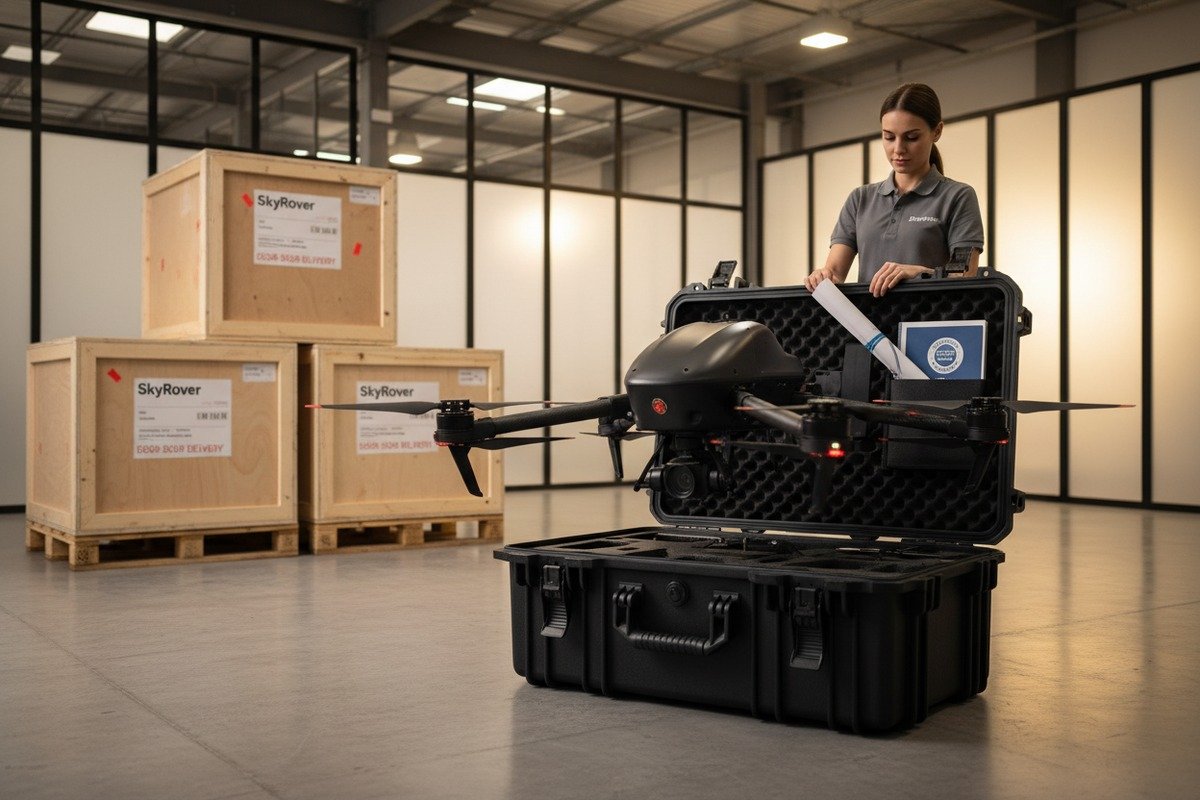
Export Documentation Expertise
Agricultural drones face complex import requirements. Lithium batteries 8 require special declarations. RF equipment needs FCC documentation. Your supplier should handle these proactively.
| Document | Purpose | Delay Risk if Missing |
|---|---|---|
| Commercial Invoice | Customs valuation | 1-2 weeks |
| Packing List | Content verification | 3-5 days |
| Certificate of Origin | Tariff determination | 1-2 weeks |
| MSDS for Batteries | Hazmat compliance | Shipment rejection |
| FCC/CE Certificates | RF equipment approval | Seizure possible |
| Export License | Controlled technology | 4-8 weeks |
Packaging Standards for Drone Transport
Drones are fragile electronics. Ocean freight involves rough handling. Air freight has pressure changes. Proper packaging prevents DOA (dead on arrival) situations.
Quality indicators to verify:
- Custom foam inserts: Molded to specific drone shape
- Double-wall corrugated boxes: Minimum 275 lb burst strength
- Humidity indicators: Prevent moisture damage
- Drop test certifications: Passed ISTA 3A or equivalent
- Lithium battery packaging: UN3481 compliant
Our cargo delivery drones ship in reusable flight cases. These add cost but eliminate damage claims. Ask suppliers about their damage rate history.
Freight Forwarder Relationships
Established suppliers have vetted logistics partners. They know which forwarders handle drone shipments correctly. They have backup options when primary routes fail.
Questions to ask:
- Who are your primary freight forwarders?
- What is your average door-to-door transit time to my country?
- How do you handle lithium battery shipping restrictions?
- Can you provide shipment tracking visibility?
- What is your historical on-time delivery rate?
Customs Clearance Support
Many buyers underestimate customs complexity. HS codes matter. Declared values affect duties. Missing paperwork causes delays.
Experienced exporters provide:
- Correct HS code classification: Prevents reclassification delays
- Accurate commercial invoices: Match physical shipment exactly
- Pre-clearance documentation: Sent before arrival
- Broker recommendations: Vetted partners in destination country
- Duty estimates: No surprise costs at delivery
Communication During Transit
Shipments encounter problems. Weather delays happen. Customs asks questions. Your supplier should communicate proactively throughout transit.
Expect these touchpoints:
- Production completion notice: With photos
- Pickup confirmation: With tracking number
- Export clearance update: Confirms departure
- Arrival notification: Triggers import process
- Delivery confirmation: Closes the loop
When we ship firefighting drones to European clients, we provide daily updates during transit. This transparency builds trust and enables planning on the receiving end.
Conclusion
Evaluating agricultural drone suppliers for destructive testing requires systematic assessment across build quality, technical support, component consistency, and export logistics. Use the criteria and tables provided to create your supplier scorecard. The right partner will demonstrate transparency, provide documentation, and support your DT workflow long after the sale.
Footnotes
1. Explains the fundamental concept of destructive testing. ↩︎
2. Directly explains what vibration analysis reports are and how to interpret them. ↩︎
3. Describes the international standard for quality management systems. ↩︎
4. Authoritative and comprehensive explanation of brushless DC electric motors from Wikipedia. ↩︎
5. Explains the function and components of drone flight controllers. ↩︎
6. Authoritative source from a leading carbon fiber manufacturer, directly discussing carbon fiber for aerospace applications. ↩︎
7. Defines API documentation and its role in integration. ↩︎
8. Provides information on regulations for shipping lithium batteries. ↩︎

 English
  Español de México
  Deutsch
  Français
  Русский
  العربية
Comments
No comments yet. Be the first to share your thoughts!
Leave a Comment