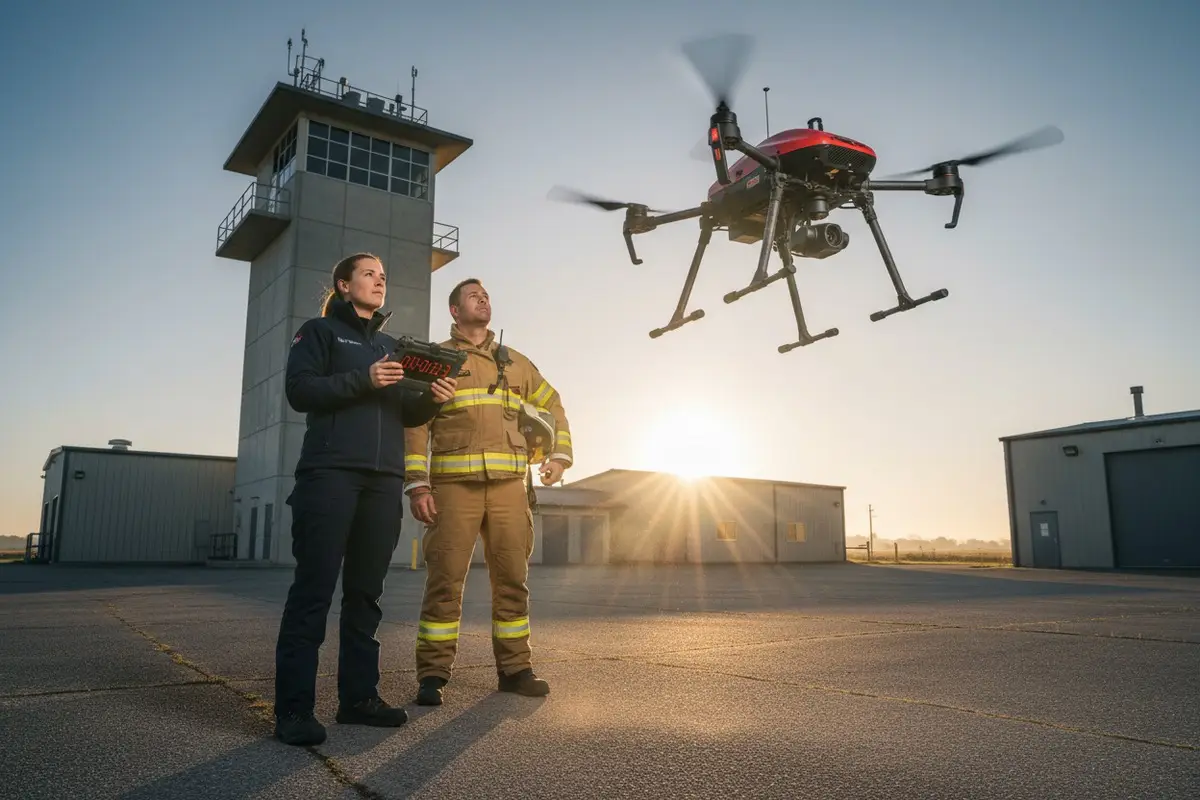
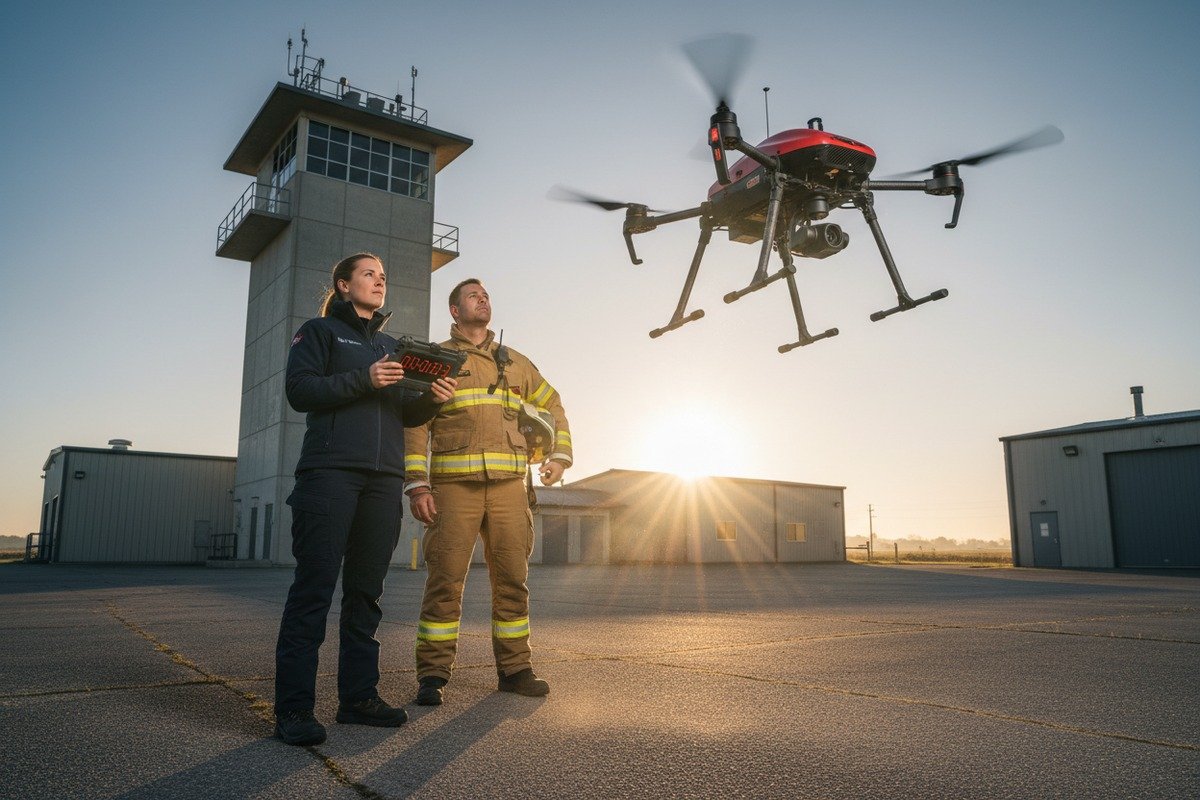
Every second counts when flames spread through a high-rise building Electronic Speed Controllers 1. On our production floor, we test dozens of drones daily for vertical speed performance. Many fire departments struggle to understand which speed specifications truly matter for emergency response.
To evaluate firefighting drone ascent and descent speeds, fire departments should measure vertical rates against response time requirements, typically targeting 5-8 m/s ascent for rapid deployment and 3-5 m/s controlled descent for stable payload delivery. Testing should occur under realistic wind conditions and full payload weight to ensure reliable emergency performance.
This guide breaks down the key factors that determine whether a drone’s vertical performance matches your department’s needs. We will cover practical testing methods, payload considerations, customization options, and long-term durability concerns.
How do I determine if the ascent speed is fast enough for high-rise fire suppression?
When our engineering team works with urban fire departments, the same question comes up repeatedly. They need drones that reach optimal assessment altitude before flames spread to adjacent floors. Slow ascent means delayed situational awareness 2 and potentially tragic outcomes.
A firefighting drone should achieve minimum 5 m/s ascent speed under full payload to adequately support high-rise fire suppression. This allows reaching 100-meter altitude within 20 seconds for rapid thermal assessment. Testing should simulate actual emergency conditions with thermal cameras and communication equipment attached.
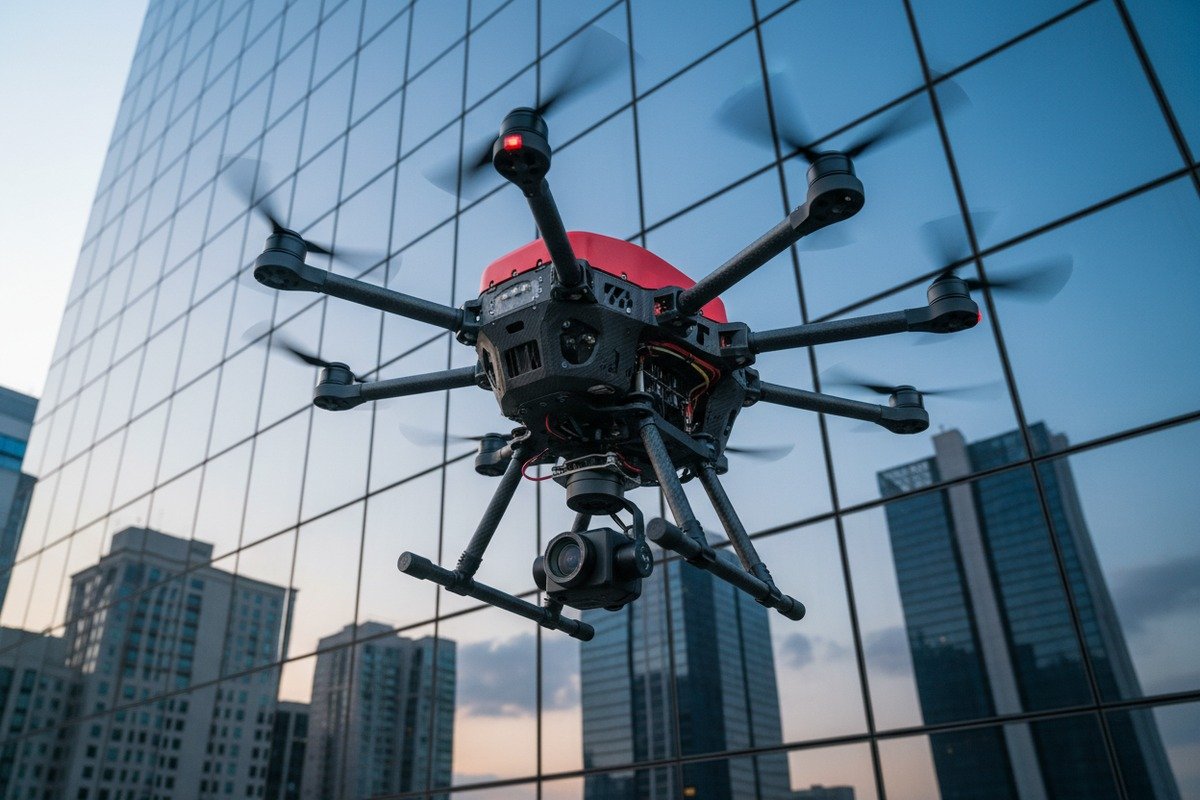
Understanding Altitude Requirements for Different Building Types
High-rise fire suppression demands different altitude capabilities than ground-level incidents. Your drone must reach assessment altitude quickly enough to provide actionable intelligence 3 before conditions worsen.
| Building Type | Optimal Assessment Altitude | Minimum Ascent Speed | Time to Altitude |
|---|---|---|---|
| Low-rise (1-4 floors) | 20-30 meters | 3 m/s | 10 seconds |
| Mid-rise (5-12 floors) | 40-60 meters | 5 m/s | 12 seconds |
| High-rise (13+ floors) | 80-120 meters | 6-8 m/s | 15-20 seconds |
| Skyscraper (40+ floors) | 150+ meters | 8 m/s | 20 seconds |
These benchmarks come from real deployment data we have collected from partner fire departments across North America and Europe. The relationship between building height and required ascent speed is not linear. Taller structures create more complex wind patterns that affect vertical performance.
Testing Methodology for Ascent Speed Verification
We recommend a three-phase testing protocol before purchasing any firefighting drone:
Phase 1: Baseline Testing
Conduct ascent tests in calm conditions with no payload. Record maximum vertical speed and compare against manufacturer specifications. Most drones perform 10-15% below advertised speeds in real conditions.
Phase 2: Loaded Testing
Attach full operational payload including thermal camera, communication relay, and any firefighting equipment. Measure ascent speed degradation. A well-designed drone should maintain at least 70% of unloaded ascent speed.
Phase 3: Environmental Testing
Test in wind speeds up to 25 km/h, which represents typical urban conditions. Note any stability issues or further speed reduction. Drones that struggle in moderate wind will fail during actual emergencies.
Real-World Deployment Considerations
During the 2024 Oak Ridge Fire in Colorado, thermal-equipped drones helped firefighters assess perimeters rapidly. Departments reported that drones reaching assessment altitude within 15 seconds provided significantly better tactical information than slower units.
Our flight controllers include automatic wind compensation 4 that maintains vertical speed targets even in gusty conditions. This feature becomes critical when every second of delay allows fire to spread further.
Will rapid descent speeds compromise the stability of my firefighting drone's payload?
Our quality control team encounters this concern frequently during customer training sessions. Fire departments want fast vertical movement but worry about damaging expensive thermal imaging equipment. This fear is valid but manageable with proper understanding.
Rapid descent speeds above 4 m/s can compromise payload stability if the drone lacks proper gimbal stabilization and descent rate limiting. Modern firefighting drones with 3-axis gimbal systems maintain stable thermal imaging at descent speeds up to 5 m/s. Controlled descent profiles protect sensitive equipment while enabling quick repositioning.

Physics of Descent and Payload Stress
When a drone descends rapidly, several forces act on the payload. Understanding these forces helps operators make informed decisions about descent speed limits.
The primary concern is not the descent itself but sudden stops. A drone descending at 5 m/s that stops abruptly creates significant G-forces on mounted equipment. Our flight controllers implement gradual deceleration curves that limit payload stress.
| Descent Speed | G-Force on Payload (Abrupt Stop) | G-Force (Controlled Deceleration) | Risk Level |
|---|---|---|---|
| 2 m/s | 1.5 G | 1.1 G | Low |
| 4 m/s | 2.8 G | 1.4 G | Moderate |
| 6 m/s | 4.2 G | 1.8 G | Elevated |
| 8 m/s | 5.5 G | 2.2 G | High |
Gimbal Systems and Vibration Dampening
A quality 3-axis gimbal system 5 isolates the camera from drone body movements. When we design firefighting drones, the gimbal must handle both rapid movement and the vibration from powerful motors.
Key gimbal specifications for firefighting applications include:
Angular Velocity Range: The gimbal must compensate for rotation speeds exceeding 100°/second during aggressive maneuvers.
Vibration Isolation: Rubber dampeners and electronic stabilization work together to maintain image clarity during descent.
Temperature Tolerance: Firefighting environments reach extreme temperatures. Gimbal components must function reliably from -20°C to 50°C.
Operational Best Practices for Descent
Fire department pilots should follow these guidelines when descending with valuable payloads:
First, avoid maximum descent speed unless absolutely necessary. In most situations, 3-4 m/s provides adequate repositioning speed without payload risk.
Second, use terrain-following modes 6 when available. These automated systems adjust descent rate based on proximity to obstacles and ground level.
Third, monitor gimbal status indicators. Modern thermal cameras report stabilization quality in real-time. If quality drops during descent, reduce speed immediately.
Our training programs include specific descent profiles for different payload configurations. A drone carrying only a thermal camera can descend faster than one equipped with both camera and water delivery systems.
Can I customize the vertical speed settings to meet my local fire department's response requirements?
When we ship drones to fire departments across different regions, each has unique requirements. Urban departments prioritize rapid ascent for building fires. Rural departments need extended endurance for wildfire perimeter mapping. Customization is not just possible—it is essential.
Yes, vertical speed settings can be customized through firmware configuration, flight controller parameters, and physical modifications. Most professional firefighting drones allow operators to set maximum ascent and descent rates, acceleration curves, and altitude-specific speed limits. Custom profiles can match specific response protocols and environmental conditions.

Software-Based Customization Options
Modern firefighting drones offer extensive software customization 7. When we configure drones for specific departments, these are the most commonly adjusted parameters:
Maximum Vertical Speed Limits: Operators can cap ascent and descent speeds below hardware maximums. This prevents inexperienced pilots from pushing equipment too hard.
Acceleration Profiles: Gentle acceleration protects payloads and conserves battery. Aggressive acceleration enables faster response but increases component wear.
Altitude-Triggered Speed Changes: Drones can automatically reduce speed near ground level or above certain altitudes. This improves safety without requiring constant pilot attention.
Emergency Override Settings: Some departments want the ability to bypass normal limits during critical situations. This requires careful consideration of training and risk factors.
Hardware Modifications for Speed Optimization
Beyond software, physical modifications can adjust vertical performance:
| Modification | Effect on Ascent | Effect on Descent | Trade-off |
|---|---|---|---|
| Higher KV motors | +15-25% speed | +15-25% speed | Reduced efficiency |
| Larger propellers | +10-15% speed | +5-10% speed | Higher motor stress |
| Additional battery | -5-10% speed | Negligible | Extended flight time |
| Lighter frame | +5-10% speed | +5-10% speed | Reduced durability |
We generally recommend software customization over hardware modification. Software changes are reversible and do not void warranties. Hardware modifications require engineering expertise and ongoing maintenance considerations.
Creating Department-Specific Profiles
Our engineering team works with fire departments to create mission-specific speed profiles. Here is a typical customization process:
Step 1: Requirements Analysis
We review the department's typical response scenarios. What building heights do they commonly encounter? What payloads do they deploy? What wind conditions are normal for their region?
Step 2: Baseline Configuration
Starting from standard parameters, we adjust vertical speeds to match identified requirements. Initial settings are conservative to ensure safety during testing.
Step 3: Field Validation
Department pilots test the configuration in realistic conditions. We collect performance data and pilot feedback over several weeks.
Step 4: Refinement
Based on field data, we fine-tune parameters. This may involve creating multiple profiles for different mission types.
Step 5: Documentation and Training
Final configurations are documented with clear guidelines for when each profile should be used. Pilot training includes hands-on practice with all available profiles.
Integration with Existing Protocols
Customization must align with existing department procedures. Our Waypoint 3.0 flight planning system allows vertical speed parameters to be embedded in pre-planned missions. This ensures consistent performance regardless of which pilot operates the drone.
How does high-speed vertical movement impact the long-term durability of my drone's propulsion system?
In our testing facilities, we run drones through thousands of vertical cycles to understand wear patterns. Aggressive vertical maneuvers stress components differently than horizontal flight. Fire departments making procurement decisions need this information to calculate true ownership costs.
High-speed vertical movement increases motor bearing wear by 20-40% compared to gentle flight profiles. Frequent maximum-rate ascents stress ESCs and reduce battery cycle life by approximately 15%. However, well-maintained drones with quality components can sustain aggressive vertical operation for 500+ flight hours before requiring major propulsion system service.

Component-Specific Wear Analysis
Different propulsion components respond to vertical stress in distinct ways. Understanding these patterns helps departments plan maintenance schedules.
Motors: Rapid ascent requires maximum current draw, generating heat that degrades bearing lubrication over time. Motors used primarily for aggressive vertical flight typically need bearing replacement 30% sooner than those used for cruise-dominated missions.
Electronic Speed Controllers (ESCs): These components regulate motor power. High-speed vertical maneuvers create rapid current fluctuations that stress transistors and capacitors. Quality ESCs with adequate thermal management handle this stress better than budget alternatives.
Propellers: Vertical thrust creates different stress patterns than forward flight. Carbon fiber propellers maintain performance longer than plastic alternatives under these conditions.
Batteries: Maximum discharge rates during rapid ascent accelerate cell degradation. Our Battery Management Systems 8 monitor cell health and can warn operators when battery capacity drops below safe thresholds.
Maintenance Schedule Adjustments
Departments operating drones in high-intensity vertical profiles should adjust maintenance intervals:
| Component | Standard Interval | High-Vertical-Use Interval | Inspection Focus |
|---|---|---|---|
| Motor bearings | 200 flight hours | 150 flight hours | Noise, temperature, vibration |
| ESC thermal paste | 300 flight hours | 200 flight hours | Thermal imaging check |
| Propeller balance | 100 flight hours | 75 flight hours | Vibration analysis |
| Battery cells | 300 charge cycles | 250 charge cycles | Capacity testing |
Design Features That Extend Durability
When we engineer firefighting drones, several design choices improve durability under aggressive use:
Oversized Motors: Using motors rated for 20% more thrust than required provides headroom for high-demand operations without constant maximum stress.
Active Cooling: Heat sinks and cooling channels remove thermal energy from motors and ESCs. Some models include small fans that activate during high-power operations.
Redundant Bearings: Dual-bearing motor designs distribute load across more contact surfaces, extending bearing life.
Smart Power Management: Our BMS systems can limit vertical speed when battery temperature rises, preventing damage while maintaining safe operation.
Cost-Benefit Analysis of Aggressive Vertical Operation
Fire departments must balance response speed against maintenance costs. Our data suggests that aggressive vertical profiles increase annual maintenance costs by approximately 25%. However, faster response times can prevent fire spread that causes far greater property damage.
A practical approach involves reserving maximum vertical speed for genuine emergencies while using moderate speeds for training and non-critical operations. This balances readiness with equipment longevity.
We provide detailed maintenance logs with every drone delivery. These logs help departments track component wear and predict service needs before failures occur.
Conclusion
Evaluating firefighting drone vertical speeds requires understanding ascent requirements, payload stability, customization options, and durability impacts. Our experience manufacturing and supporting fire departments worldwide shows that informed procurement decisions lead to better emergency outcomes. Contact our engineering team to discuss your department's specific vertical performance requirements.
Footnotes
1. Explains the function and importance of Electronic Speed Controllers in drones. ↩︎
2. Explains the concept of situational awareness in emergency response. ↩︎
3. Defines the importance of actionable intelligence in emergency management. ↩︎
4. Explains adaptive wind estimation and compensation technology for drones. ↩︎
5. Describes the function and benefits of a 3-axis gimbal system for drone cameras. ↩︎
6. Provides technical documentation on drone terrain-following capabilities. ↩︎
7. Discusses options for software customization in drone development. ↩︎
8. Describes the role and components of Battery Management Systems in drones. ↩︎
 English
  Español de México
  Deutsch
  Français
  Русский
  العربية
Comments
No comments yet. Be the first to share your thoughts!
Leave a Comment