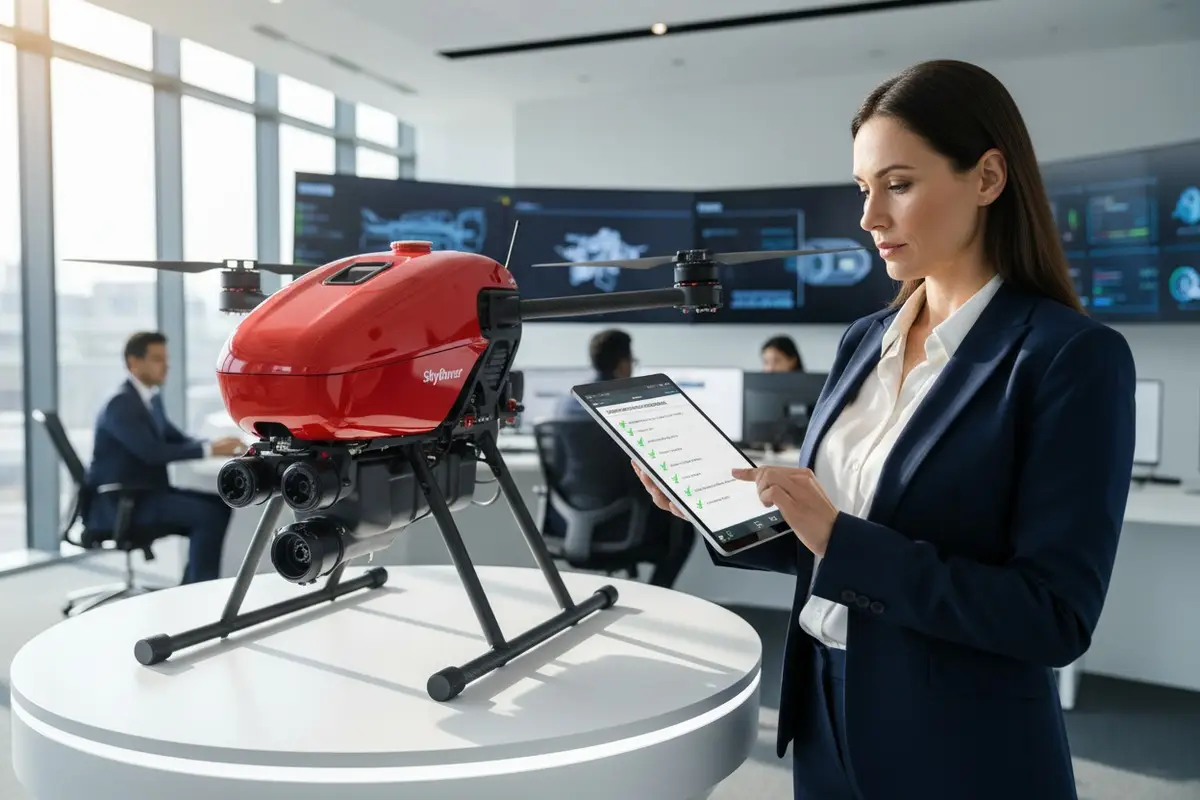
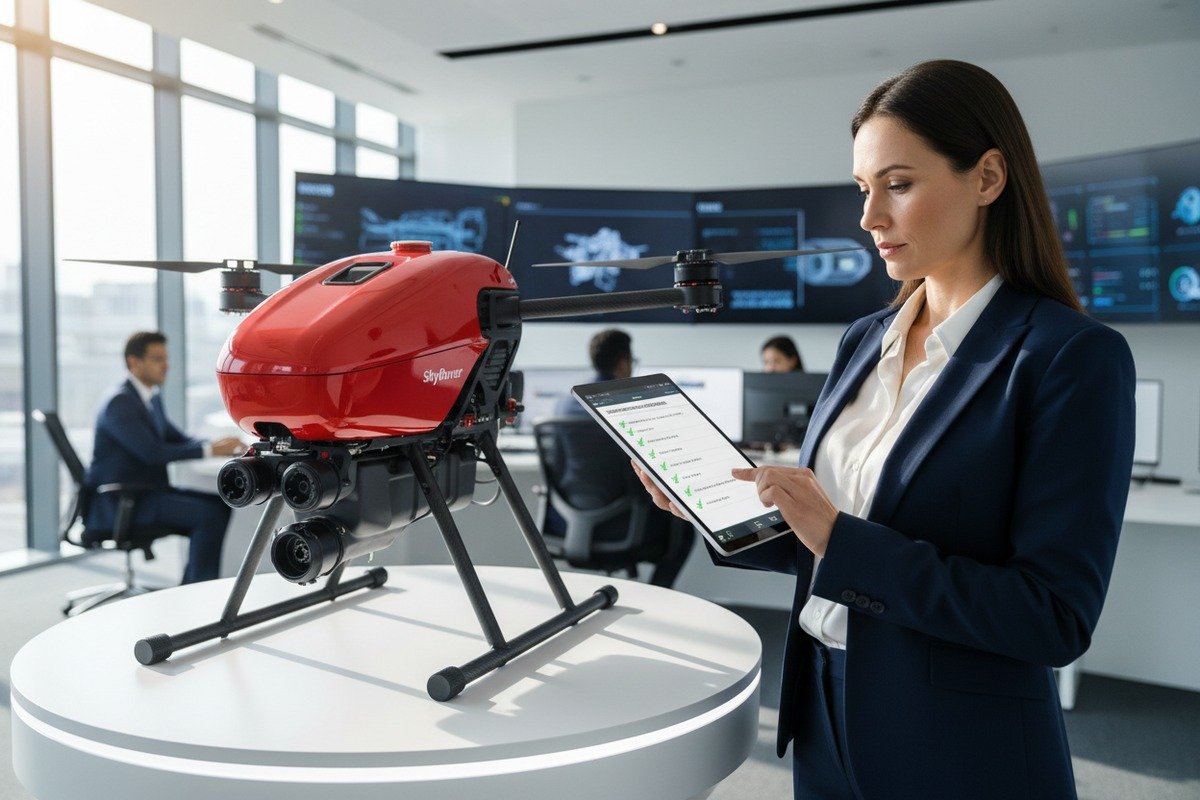
Every week, our engineering team reviews RFQs from fire departments worldwide. Many requests lack critical details. This leads to delays, mismatched specs, and wasted budgets. Getting your configuration right from the start saves time and money.
When sourcing a firefighting drone, you should provide detailed information on payload and sensor requirements, operational environment conditions, OEM branding and software integration needs, and import certifications with delivery logistics. These four categories ensure your supplier delivers a drone that matches your exact mission profile.
This guide breaks down each information category. You will learn what details matter most and why they affect your final product. Let us walk through the essential elements step by step.
What specific payload and sensor requirements should I include in my technical brief?
Our production line handles dozens of sensor configurations each month. The biggest sourcing mistake we see is vague payload requests. Saying "I need a good camera" tells us nothing. Precise specifications prevent costly revisions later.
Your technical brief should specify thermal camera resolution (minimum 640×512 pixels), optical zoom capability (30-40x), radiometric temperature measurement, gas detection sensors if needed, and total payload weight capacity between 2-8 kg. Include requirements for spotlights, loudspeakers, or specialized modules.

Thermal Camera Specifications
Thermal imaging is the core capability for firefighting drones. Your brief must include minimum resolution requirements. Entry-level thermal cameras offer 320×256 pixels. Professional units deliver 640×512 or higher. For accurate hotspot detection through smoke, we recommend 640×512 as the baseline.
Temperature sensitivity matters greatly. Look for sensors with 0.1°C or better sensitivity. This allows detection of hidden fires behind walls or under debris. Radiometric capability is essential. This feature provides actual temperature readings, not just relative heat signatures. radiometric temperature measurement 1
| Thermal Camera Specification | Entry Level | Professional Grade | Advanced |
|---|---|---|---|
| Resolution | 320×256 | 640×512 | 1280×1024 |
| Temperature Sensitivity | 0.5°C | 0.1°C | 0.05°C |
| Radiometric Measurement | No | Yes | Yes |
| Temperature Range | -20°C to 150°C | -40°C to 550°C | -40°C to 1500°C |
| Recommended Use | Basic recon | Structure fires | Industrial fires |
Optical Camera Requirements
Your optical camera handles daytime reconnaissance and documentation. Specify minimum resolution as 4K or 1080p. Zoom capability determines how far operators can identify details safely. A 30x optical zoom allows identification from 500 meters. A 40x zoom extends this to 800 meters.
Low-light performance is critical for night operations. Many fire incidents occur in darkness. Request sensors with large apertures and night vision enhancement. Our engineers typically pair DJI Zenmuse H20T or equivalent systems for dual thermal-optical capability.
Additional Payload Modules
Beyond cameras, consider your mission requirements. Gas sensors detect CO, VOCs, and hazardous chemicals from safe distances. gas detection sensors 2 Detection ranges of 10-500 ppm cover most scenarios. Laser rangefinders provide accurate distance measurement for planning.
Spotlights enable night search operations. Loudspeakers allow communication with trapped victims. Two-way audio systems let rescuers hear responses. Specify each module with power requirements and mounting preferences.
Weight and Power Budget
Total payload capacity limits your options. Multi-rotor drones typically carry 2-4 kg. Heavy-lift platforms handle 6-8 kg. Calculate your total sensor weight plus any fire suppression equipment. Leave 20% margin for accessories and future upgrades.
How do I define my operational environment to ensure the drone handles my specific terrain?
When we calibrate our flight controllers, environmental data determines success or failure. A drone built for California wildfires performs differently in Florida swamps. Your operational environment shapes every design decision.
Define your operational environment by specifying temperature extremes (-25°C to +60°C range), wind tolerance (Level 6-8 or 15-25 m/s), IP rating requirements (IP43-IP55 for dust and moisture), typical terrain features, and altitude requirements. Include information about smoke density, humidity levels, and corrosive conditions.

Temperature and Weather Resistance
Fire scenes expose drones to extreme temperatures. Specify your expected operating range. Standard commercial drones handle 0°C to 40°C. Firefighting requires -10°C to 60°C minimum. Specialized models extend to -25°C to +60°C for wildland operations.
Wind resistance determines operational windows. Level 6 wind (10.8-13.8 m/s) represents moderate conditions. Level 8 (17.2-20.7 m/s) means strong winds. Our experience shows that 15-25 m/s tolerance covers most emergency scenarios.
| Environmental Factor | Standard Rating | Firefighting Minimum | Harsh Environment |
|---|---|---|---|
| Temperature Range | 0°C to 40°C | -10°C to 60°C | -25°C to +60°C |
| Wind Resistance | Level 5 (8-10 m/s) | Level 6-7 (12-17 m/s) | Level 8 (17-21 m/s) |
| IP Rating | IP43 | IP54 | IP55+ |
| Humidity Tolerance | 0-80% | 0-95% | 0-100% |
| Operating Altitude | 500m | 3000m | 5000m |
Ingress Protection Ratings
IP ratings indicate dust and water resistance. IP rating requirements 3 The first digit rates solid particle protection. The second rates liquid protection. IP43 handles light dust and rain spray. IP54 provides better dust exclusion and splash resistance. IP55 offers protection against dust and water jets.
For smoke-heavy environments, IP54 is the minimum recommendation. Wildland fires with ash and debris require IP55. Coastal operations with salt spray need corrosion-resistant materials like marine-grade aluminum alloys.
Terrain and Altitude Considerations
Your terrain affects GPS reliability and flight planning. Urban environments have GPS multipath issues 4 from buildings. Canyons and valleys may lose satellite lock. Specify your typical terrain so we can configure appropriate redundancy systems.
Altitude affects motor performance and battery efficiency. Operations at sea level differ from mountain terrain at 3000 meters. Higher altitudes reduce lift capacity by approximately 3% per 300 meters. Account for this when specifying payload requirements.
Smoke and Visibility Conditions
Dense smoke challenges both operators and sensors. Specify typical smoke conditions at your incidents. Light smoke allows visual flight. Heavy smoke requires thermal-only navigation. Our NightSense and zero-light flight systems enable operation in zero visibility.
Humidity affects electronics and sensors. High humidity environments need sealed compartments and desiccant systems. Specify your average humidity levels and any condensation concerns.
What information do I need to provide for custom OEM branding and software integration?
Our collaborative development process starts with your branding requirements. We have partnered with distributors across Europe and America on custom configurations. Clear specifications ensure your branded product meets market expectations.
For OEM branding, provide your logo files in vector format, color specifications (Pantone or RAL codes), label placement preferences, and packaging design requirements. For software integration, specify your incident command systems, GIS platforms (Pix4D, ESRI), data protocols, and any custom feature development needs.

Visual Branding Requirements
Logo placement affects production tooling. Specify locations on the airframe, controller, and case. Provide vector files (AI, EPS, or SVG format) at minimum 300 DPI. Color matching requires Pantone codes for precise replication.
Our typical branding options include top housing color changes, laser-etched logos, and custom decals. The matte black carbon fiber frame accepts most color contrasts. Vibrant colors like red or yellow improve visibility during operations.
| Branding Element | Information Required | File Format | Lead Time Impact |
|---|---|---|---|
| Logo on Airframe | Vector file, placement coordinates | AI, EPS, SVG | +3-5 days |
| Custom Housing Color | Pantone or RAL code | Color specification | +7-10 days |
| Controller Branding | Logo file, button labels | AI, EPS | +2-3 days |
| Packaging Design | Box dimensions, print files | PDF, AI | +5-7 days |
| User Manual Customization | Content, language | Word, PDF | +3-5 days |
Software Integration Specifications
Modern fire departments use integrated command systems. Specify your existing platforms. Common systems include ESRI ArcGIS, Pix4D for mapping, and various CAD dispatch systems. We develop API connections for real-time data transfer.
Video streaming protocols vary by department. Specify your preferred format: RTMP, RTSP, or proprietary systems. Encryption requirements affect transmission architecture. AES-256 encryption 5 is standard for government contracts.
Autonomous Feature Development
AI-driven features require detailed functional specifications. Autonomous hotspot tracking needs defined parameters: temperature thresholds, tracking persistence, and alert behaviors. Waypoint navigation requires maximum point capacity and route complexity.
Multi-drone coordination features need communication protocols between units. Swarm operations require central command integration. Specify your operational concept for multi-unit deployments.
Data Management and Cybersecurity
Data privacy concerns shape system architecture. Specify storage requirements: local only, cloud backup, or hybrid systems. Government contracts often mandate US-based data centers. European customers may require GDPR compliance.
Cybersecurity measures include encrypted transmission, secure boot processes, and tamper detection. Specify any compliance frameworks: NIST, ISO 27001, or department-specific requirements.
Which import certifications and delivery details should I confirm with my supplier?
In our experience exporting to the US and Europe, certification gaps cause the most shipment delays. We have learned which documents customs agents require. Missing paperwork means stuck cargo and frustrated customers.
Confirm FAA Part 107 compliance documentation, Remote ID certification, FCC communication equipment approval, CE marking for European markets, and any state-specific requirements. For delivery, specify Incoterms preference, insurance requirements, door-to-door versus port delivery, and customs clearance support needs.
Regulatory Certification Requirements
FAA Part 107 governs commercial drone operations in the United States. Your supplier should provide documentation showing the drone meets weight limits (under 55 lbs), Remote ID compliance, and operational parameters. Request certificates of conformity for all electronic components.
FCC certification covers radio transmission equipment. The controller and video downlink must have FCC IDs. European imports require CE marking 6 covering the Radio Equipment Directive. Our products carry both certifications for global distribution.
| Certification | Region | Purpose | Documentation Required |
|---|---|---|---|
| FAA Part 107 Compliance 7 | USA | Commercial operations | Weight certificate, operating specs |
| Remote ID | USA | Aircraft identification | Compliance certificate |
| FCC ID | USA | Radio equipment | Test reports, FCC filing |
| CE Marking | Europe | Product safety | Declaration of conformity |
| C-Tick | Australia | EMC compliance | Test certificates |
| IC | Canada | Radio equipment | Industry Canada approval |
Weight and Classification
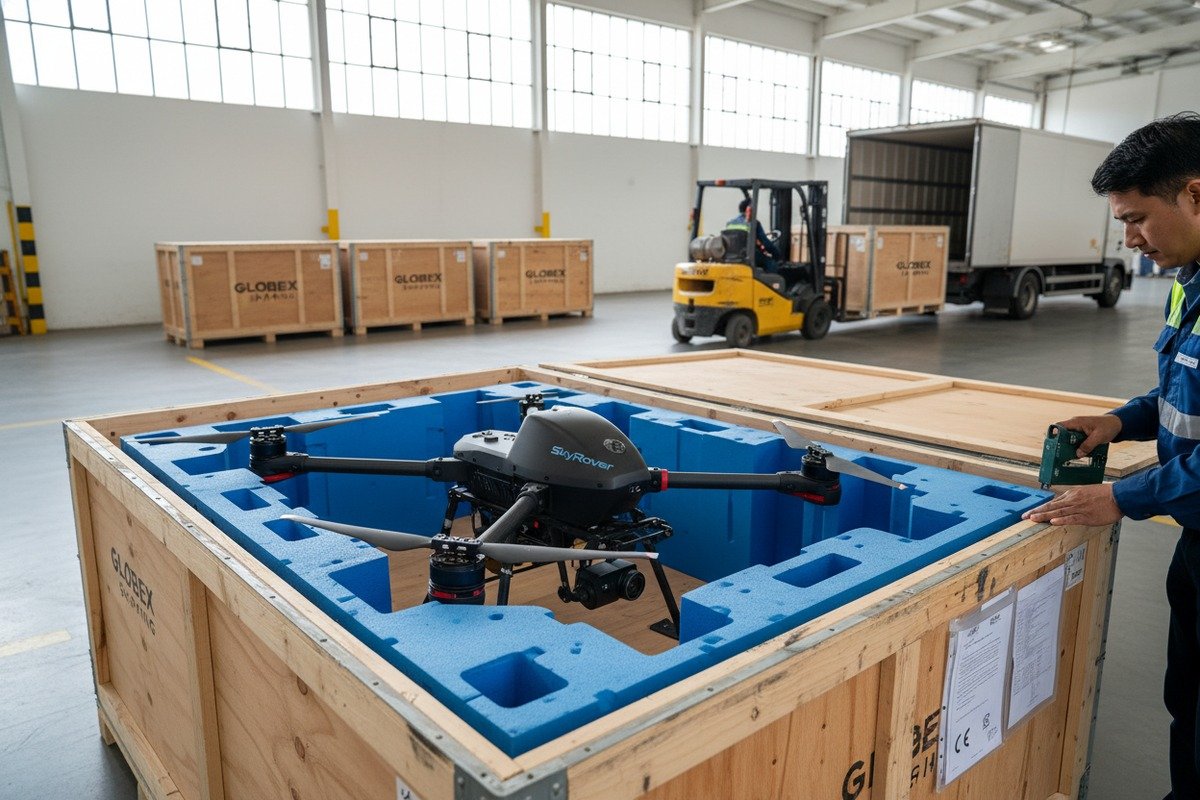
Customs classification affects import duties. Drones typically fall under HS code 8806. Components may classify separately. Clarify total shipment weight including batteries, controllers, and accessories.
Lithium battery shipping requires UN38.3 certification 8. Dangerous goods declarations add processing time. We handle all battery documentation for door-to-door shipments.
Delivery Terms and Insurance
Specify your preferred Incoterms. DDP (Delivered Duty Paid) means we handle all customs and duties. DAP (Delivered at Place) leaves import duties to you. FOB (Free on Board) transfers responsibility at the shipping port.
Insurance coverage should match cargo value. Standard carrier insurance limits may be insufficient. Request certificate of insurance showing full replacement value coverage. Specify any special handling requirements for fragile payloads.
After-Sale Support Documentation
Warranty terms affect long-term costs. Confirm coverage period, included components, and exclusions. Request spare parts pricing and availability timelines. Our standard warranty covers 12 months with optional extensions.
Repair turnaround times matter for operational readiness. Ask about depot repair versus field service options. Confirm availability of technical support in your time zone. We provide 24/7 emergency support for critical operations.
Lifecycle Management Planning
Drones have limited service lives. Clarify expected lifespan and component replacement schedules. Battery cycles typically limit to 300-500 charges. Motors may need replacement after 500-1000 flight hours.
Software update policies affect long-term capability. Confirm update frequency, delivery method, and any associated costs. Our products receive quarterly firmware updates at no charge.
Conclusion
Sourcing a firefighting drone requires detailed preparation across four key areas. Provide complete payload specifications, environmental requirements, branding needs, and certification details. This information ensures your supplier delivers a drone that performs when lives depend on it.
Footnotes
1. Explains how radiometric thermal cameras measure surface temperature by interpreting infrared signals. ↩︎
2. Provides an overview of gas detector types, working principles, and applications in various industries. ↩︎
3. Explains the IP code (Ingress Protection) standard, classifying protection against dust and water. ↩︎
4. Defines GPS multipath error, explaining how reflected signals cause inaccuracies in positioning. ↩︎
5. Found official NIST publication for Advanced Encryption Standard (AES). ↩︎
6. Official European Union information on CE marking, indicating product compliance with EU legislation. ↩︎
7. Official FAA regulations for commercial small unmanned aircraft systems (drones) in the United States. ↩︎
8. Explains UN38.3 as a mandatory safety standard for lithium-ion battery transportation via various means. ↩︎

 English
  Español de México
  Deutsch
  Français
  Русский
  العربية
Comments
No comments yet. Be the first to share your thoughts!
Leave a Comment