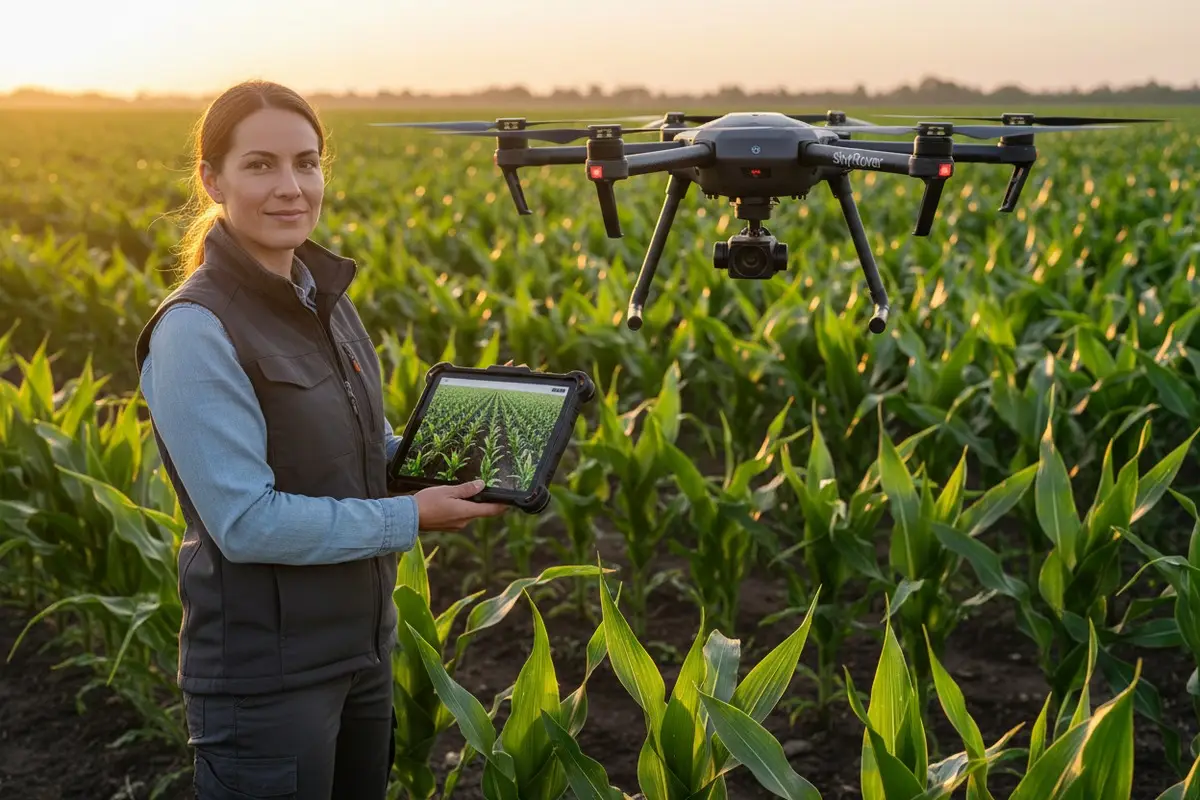
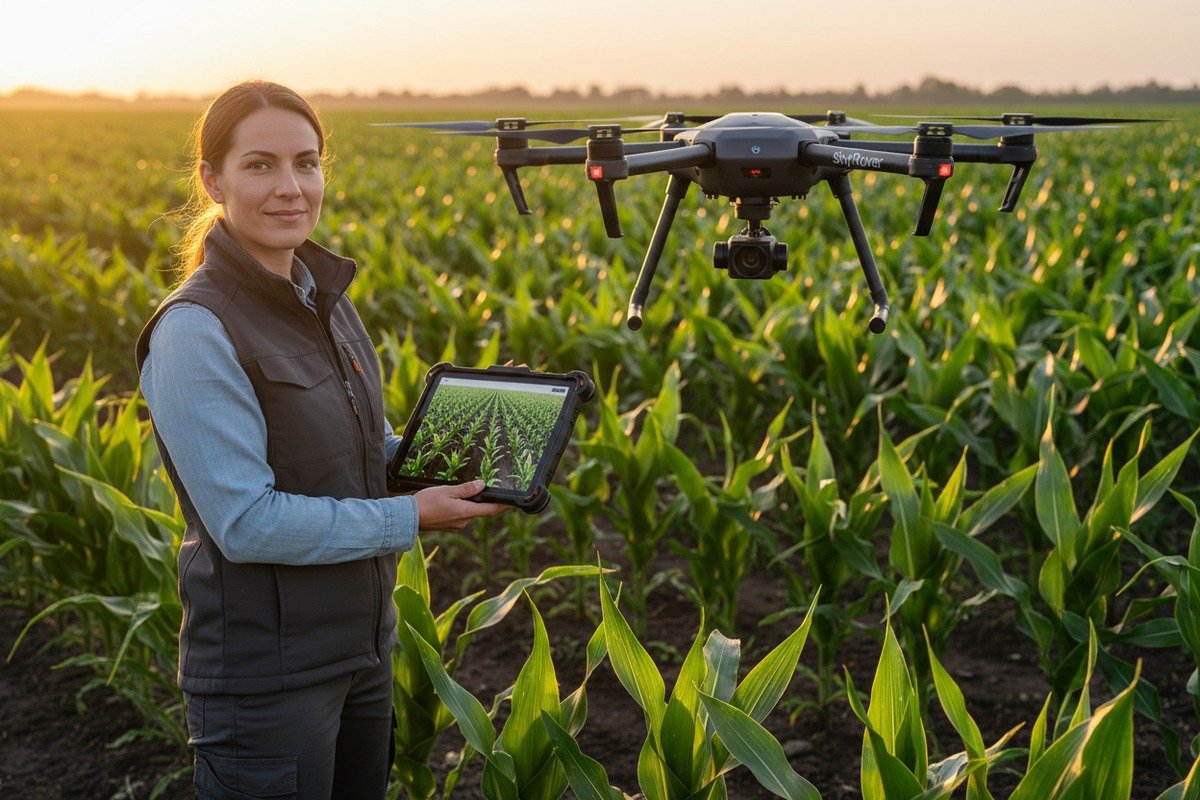
Every week, our production line ships agricultural drones 1 to farms across three continents. Yet the complaint we hear most often from new buyers isn’t about motors or batteries. It’s about blurry FPV feeds that make crop scouting 2 impossible.
To verify agricultural drone FPV camera clarity when sourcing, request sample footage under real field conditions, test transmission latency below 100ms, confirm IP67 waterproofing certification, evaluate gimbal stabilization performance, and compare resolution with field-of-view specifications against your specific monitoring needs before placing bulk orders.
This guide walks you through exactly what to check, how to test, and which red flags to avoid Three-axis gimbals 3. Let’s start with the technical specifications that matter most.
What technical specifications should I prioritize to ensure the FPV camera provides the high-definition clarity my clients need for crop scouting?
When we design FPV systems for our agricultural drones, we balance multiple competing factors. High resolution means nothing if latency ruins real-time monitoring. Our engineers have spent years finding the right mix.
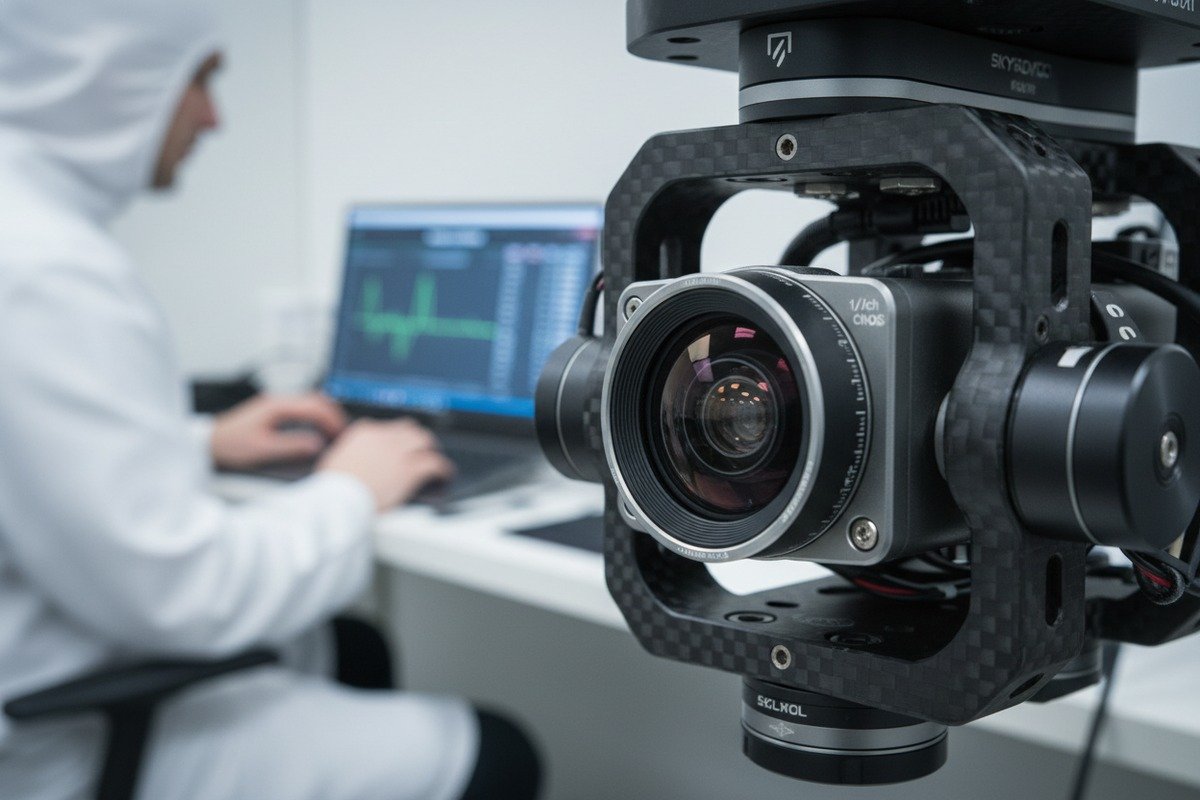
Prioritize resolution (minimum 720p, ideally 4K), sensor size (1/2.9" CMOS or larger), frame rate (30fps minimum), field of view (105°-120° for wide coverage), and transmission latency under 100ms. These five specifications together determine whether your clients see sharp, usable crop imagery or frustrating blur.
Resolution: More Pixels Don't Always Mean Better Results
Resolution gets the most attention in marketing. But here's what most buyers miss. A 4K camera with high latency creates a delayed feed. Your pilot reacts to obstacles that passed two seconds ago. For crop scouting, 720p at 30fps with sub-100ms latency often beats 4K with 300ms delay.
Our recommendation? Match resolution to your use case. Post-flight analysis benefits from 4K. Real-time navigation works better with lower resolution and minimal lag.
Sensor Size and Light Sensitivity
The sensor captures light. Bigger sensors gather more light. This matters in early morning inspections or cloudy conditions. A 1/2.9" CMOS sensor represents the baseline for agricultural work. Premium options like the Sony IMX900M with global shutter technology 4 eliminate rolling shutter distortion during fast maneuvers.
| Specification | Budget Option | Mid-Range | Premium |
|---|---|---|---|
| Resolution | 720p | 1080p | 4K/8MP |
| Sensor Size | 1/3" | 1/2.9" | 1/2" or larger |
| Frame Rate | 25fps | 30fps | 60fps |
| Latency | 150-200ms | 80-120ms | <80ms |
| Typical Price | $150-300 | $400-800 | $1000+ |
Field of View Trade-offs
Wide FOV (105°+) shows more crop area per frame. This speeds up field surveys. But wide angles introduce barrel distortion at the edges. Fine details become harder to spot.
Narrow FOV with zoom capability (6x digital) captures sharp details. But you lose situational awareness. The solution? Many modern systems pair a wide-angle FPV camera with a separate inspection camera. This dual-camera approach costs more but solves both problems.
Frame Rate and Motion Blur
Agricultural drones move fast during spraying missions. At 30fps, each frame captures 33 milliseconds of motion. Faster frame rates reduce blur but increase bandwidth demands. For most crop scouting, 30fps provides adequate clarity. Spraying operations benefit from 60fps.
How can I verify the real-time video transmission quality during a remote factory inspection to avoid receiving substandard products?
Remote inspections have become our standard practice since 2020. We've conducted over 500 video calls showing buyers exactly how their drones perform. But not every supplier offers this transparency. You need to know what to demand.
During remote factory inspections, request live video demonstrations over standard internet connections, demand screen recordings of the ground station display, ask for latency measurements using timestamp overlays, verify signal strength at various distances, and insist on footage captured in conditions matching your operating environment.

Setting Up an Effective Remote Inspection
Before the call, send your supplier a detailed test protocol. Specify exactly what you want to see. Vague requests get vague results. Include these elements:
- Camera powering on from cold start
- Ground station boot sequence and connection
- Live feed quality at 50m, 100m, and 200m distances
- Gimbal movement through full range
- Low-light performance test
- Timestamp overlay showing actual latency
The Timestamp Test
This simple technique reveals true latency. Ask the factory to point the FPV camera at a running stopwatch. Then photograph the ground station screen. Compare the stopwatch reading in the image to real time. The difference shows actual system latency.
| Latency Range | Suitability | Typical Cause |
|---|---|---|
| <80ms | Excellent for all operations | High-quality digital link |
| 80-120ms | Good for most agricultural work | Standard digital transmission |
| 120-200ms | Acceptable for slow-speed mapping | Analog systems or compression delays |
| >200ms | Unacceptable for real-time piloting | Poor equipment or interference |
Sample Footage Requirements
Request raw, uncompressed sample footage. Marketing videos get edited. Compression hides problems. Ask for:
- Original files without editing
- Multiple lighting conditions (dawn, midday, dusk)
- Various crop types and colors
- Both static hovering and moving flight
- Wind conditions if possible
When we send samples to prospective buyers, we include the flight log showing exact conditions. This prevents disputes later.
Software Verification Tools
Several software tools help analyze video quality objectively. Pix4D and DroneDeploy can assess image sharpness. For FPV feeds specifically, look at:
- Consistent frame delivery (no stuttering)
- Color accuracy across the frame
- Edge sharpness versus center sharpness
- Compression artifact levels
Ask your supplier to run these tests and share results. Refusal suggests they know the camera won't pass.
Red Flags During Remote Inspections
Watch for these warning signs:
- Supplier refuses live demonstration
- Pre-recorded footage only
- Excuses about "network conditions" when quality is poor
- Unable to show ground station display clearly
- Different camera model in demo versus quoted specs
Will the FPV camera maintain its clarity and detail when my drones are operating in dusty or low-light agricultural environments?
Our test facilities include a dust chamber and a light-controlled room for exactly this reason. Agricultural environments punish equipment. What works in a factory demo fails in a cotton field at harvest time.
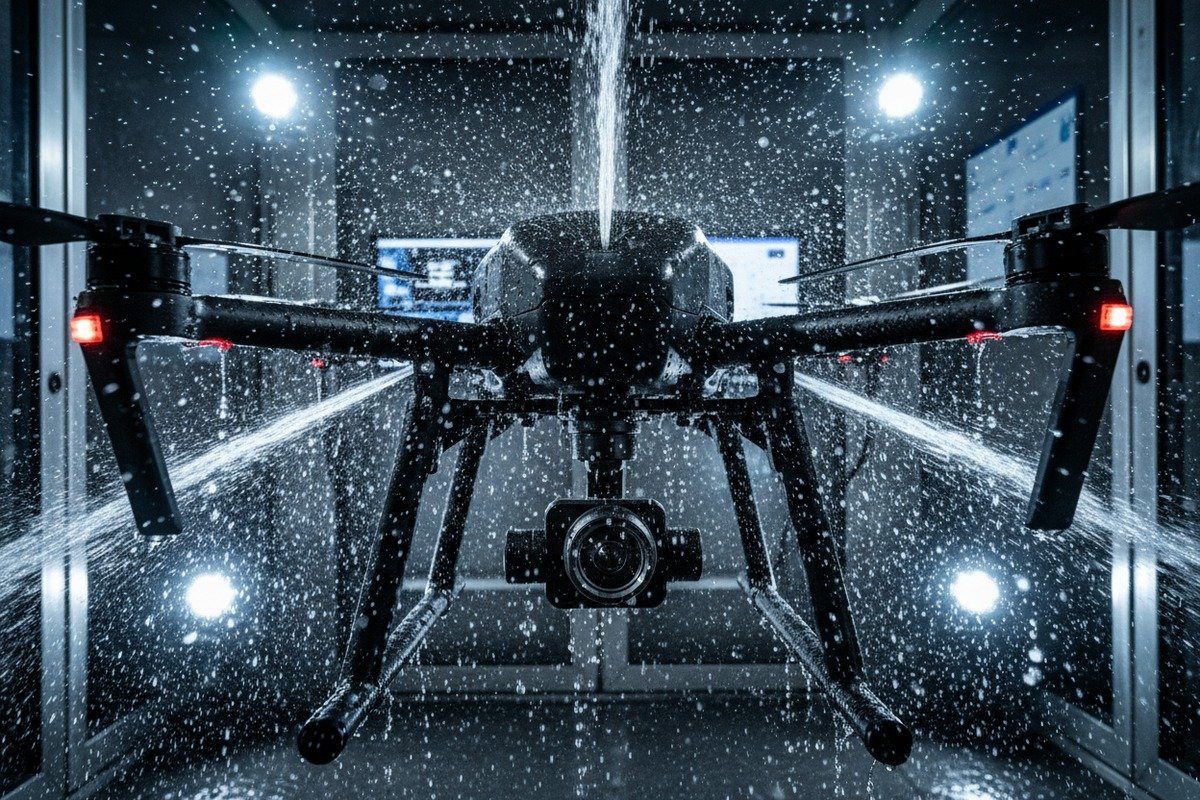
FPV cameras maintain clarity in harsh agricultural conditions only when they feature IP67 or higher waterproof ratings, sealed lens assemblies, integrated LED lighting for low-light operations, appropriate sensor sensitivity (low-lux rating under 0.01 lux), and protective lens coatings that resist dust accumulation and chemical exposure from crop spraying.
Understanding IP Ratings for Agricultural Use
IP ratings tell you exactly what a camera can withstand. The first digit indicates dust protection. The second indicates water protection.
| IP Rating | Dust Protection | Water Protection | Agricultural Suitability |
|---|---|---|---|
| IP54 | Limited dust ingress | Splash resistant | Indoor only |
| IP65 | Dust tight | Low-pressure water jets | Light field use |
| IP67 | Dust tight | Immersion up to 1m | Standard agricultural |
| IP68 | Dust tight | Extended immersion | Heavy spray operations |
For agricultural drones, IP67 represents the minimum. IP67 waterproofing certification 6 Anything less risks lens contamination and internal corrosion from fertilizer spray.
Lens Protection Strategies
Dust doesn't just block light. It scratches lens coatings over time. Look for cameras with:
- Hardened glass elements (not plastic)
- Oleophobic coatings 7 that repel oils
- Hydrophobic treatments for water beading
- Replaceable protective filters
Some operators add sacrificial UV filters. These cost $20 and save a $500 lens. Consider whether your target market would appreciate this as an accessory upsell.
Low-Light Performance Factors
Dawn and dusk offer ideal conditions for thermal stress reduction in crops. But light levels challenge cameras. Key specifications for low-light clarity include:
Sensor sensitivity: Measured in lux. Lower numbers mean better low-light performance. Agricultural cameras should handle 0.01 lux minimum.
Aperture size: Larger apertures (lower f-numbers) gather more light. An f/1.8 lens outperforms f/2.8 in dim conditions.
Electronic noise handling: High ISO settings introduce grain. Better sensors maintain clarity at higher ISO values.
Integrated Lighting Solutions
Some FPV cameras include LED arrays. These provide consistent illumination for twilight operations. Specifications vary widely:
- Power: 8W minimum for useful range
- Beam angle: 120° matches wide FOV cameras
- Color temperature: 5600K approximates daylight
Our hexacopter models feature mounting points for auxiliary lights. This allows buyers to add lighting that matches their specific needs rather than accepting a fixed solution.
Chemical Exposure Considerations
Agricultural spraying exposes cameras to herbicides, pesticides, and fertilizers. These chemicals attack rubber seals, plastic housings, and lens coatings. When evaluating cameras, ask:
- What materials contact chemicals during spray operations?
- Are seals user-replaceable?
- What cleaning procedures does the manufacturer recommend?
- Is the lens recessed or exposed?
How do I confirm that the FPV camera's image remains stable and sharp on my ground station during high-speed spraying missions?
When our agricultural hexacopters hit cruising speed across a 20-hectare field, vibrations travel through every component. The camera mounting system determines whether pilots see smooth footage or nauseating shake.
Confirm FPV image stability during high-speed spraying by testing gimbal performance under vibration, verifying electronic image stabilization (EIS) specifications, checking frame rigidity and vibration dampening systems, measuring actual blur levels at target operating speeds, and evaluating ground station display refresh rates to ensure smooth video playback.
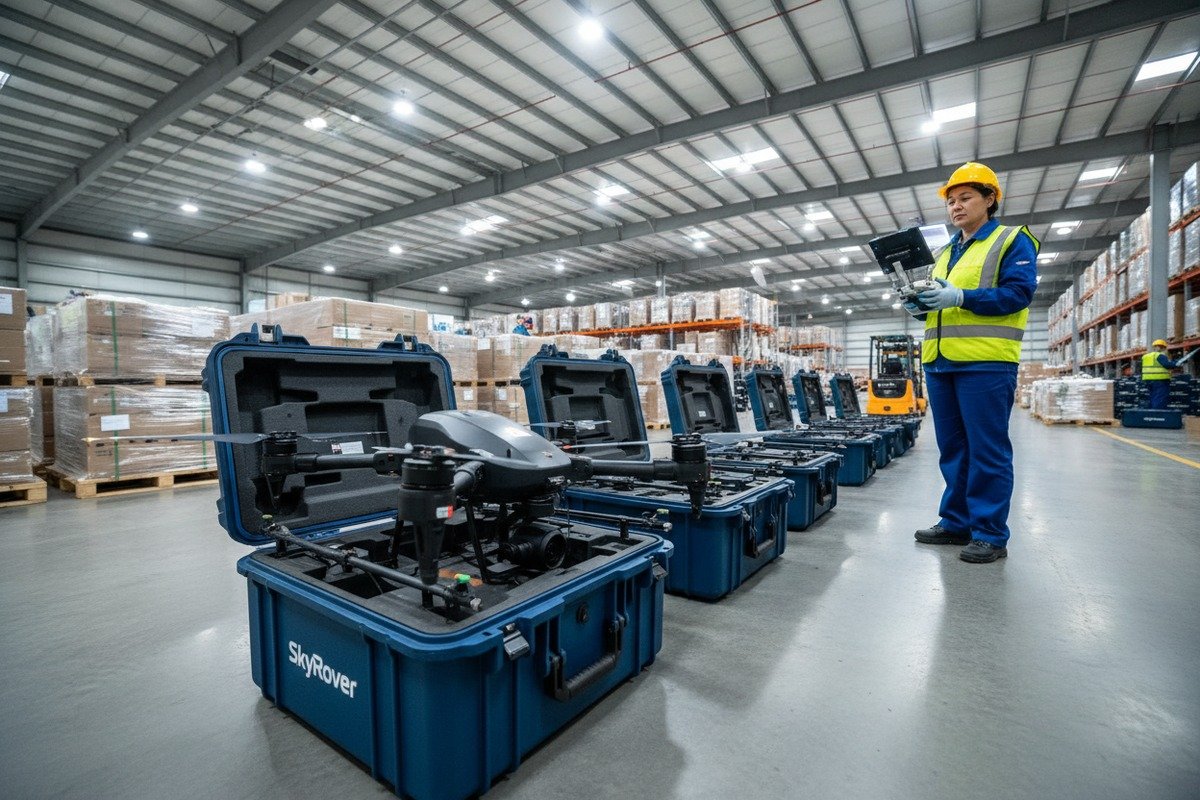
Gimbal Types and Performance
Gimbals mechanically isolate cameras from drone movement. Different designs offer different capabilities:
Single-axis gimbals correct pitch (up/down tilt). These handle altitude changes but not roll or yaw movements. Budget-friendly but limited.
Two-axis gimbals add roll correction. This handles banking during turns. Better for dynamic flight.
Three-axis gimbals provide complete stabilization. These deliver professional-grade stability but add weight and cost.
| Gimbal Type | Axes Stabilized | Weight Penalty | Best Use Case |
|---|---|---|---|
| Fixed mount | None | None | Budget systems only |
| Single-axis | Pitch | 50-100g | Slow survey flights |
| Two-axis | Pitch + Roll | 100-200g | General agriculture |
| Three-axis | All axes | 200-400g | Professional mapping |
Electronic vs. Mechanical Stabilization
Electronic image stabilization (EIS) uses software to reduce shake. It crops the image and shifts the visible area to counteract movement. This works but reduces effective resolution and field of view.
Mechanical stabilization via gimbals maintains full sensor use. The trade-off is weight, complexity, and cost. For agricultural FPV where every gram affects flight time, this choice matters.
Our recommendation: use mechanical stabilization for primary FPV cameras. Reserve EIS for secondary cameras where weight savings justify reduced quality.
Vibration Isolation Systems
The camera mounting system matters as much as the gimbal itself. Vibration dampeners between the airframe and gimbal prevent motor harmonics from reaching the camera. Vibration Isolation Systems 8 Look for:
- Rubber or silicone damping balls
- Wire rope isolators for heavy cameras
- Tuned mass dampers for specific frequency ranges
Ask potential suppliers about vibration testing. Proper testing uses accelerometers to measure vibration transmission through the mounting system.
Testing Stability Before Purchase
Request video samples captured at your target operating speed. Compare these to hovering footage. The difference reveals stabilization effectiveness.
Also test:
- Sudden direction changes (simulating obstacle avoidance)
- Descent and climb transitions
- Recovery from wind gusts
Each scenario challenges stabilization differently. A system that handles hovering perfectly might fail during aggressive maneuvers.
Ground Station Display Considerations
Your pilots see the camera feed on a ground station display. This display affects perceived stability. Check:
- Screen refresh rate (60Hz minimum)
- Processing latency in the receiver
- Display resolution matching camera output
- Anti-glare coatings for outdoor visibility
A perfect camera feed looks terrible on a poor display. Include ground station specifications in your sourcing requirements.
Conclusion
Verifying agricultural drone FPV camera clarity requires testing real-world performance, not just reading specifications. Request sample footage, confirm environmental ratings, evaluate stabilization systems, and test transmission quality before committing to bulk orders. Your clients depend on clear imagery for successful crop monitoring.
Footnotes
1. Provides a comprehensive overview of agricultural drones, their uses, and technology. ↩︎
2. Offers guidance on selecting drones for crop scouting, including technical considerations. ↩︎
3. Explains how three-axis gimbals work, detailing the pitch, yaw, and roll axes for stabilization. ↩︎
4. Explains global shutter technology, its advantages, and how it differs from rolling shutter. ↩︎
5. Explains FPV drone latency, its impact on control, and factors affecting it. ↩︎
6. Clearly defines IP67 rating, its protection levels against dust and water, and applications. ↩︎
7. Replaced with a scientific and authoritative source explaining oleophobic thin film coatings. ↩︎
8. Provides a comprehensive overview of vibration isolation, including passive and active techniques. ↩︎
 English
  Español de México
  Deutsch
  Français
  Русский
  العربية
Comments
No comments yet. Be the first to share your thoughts!
Leave a Comment