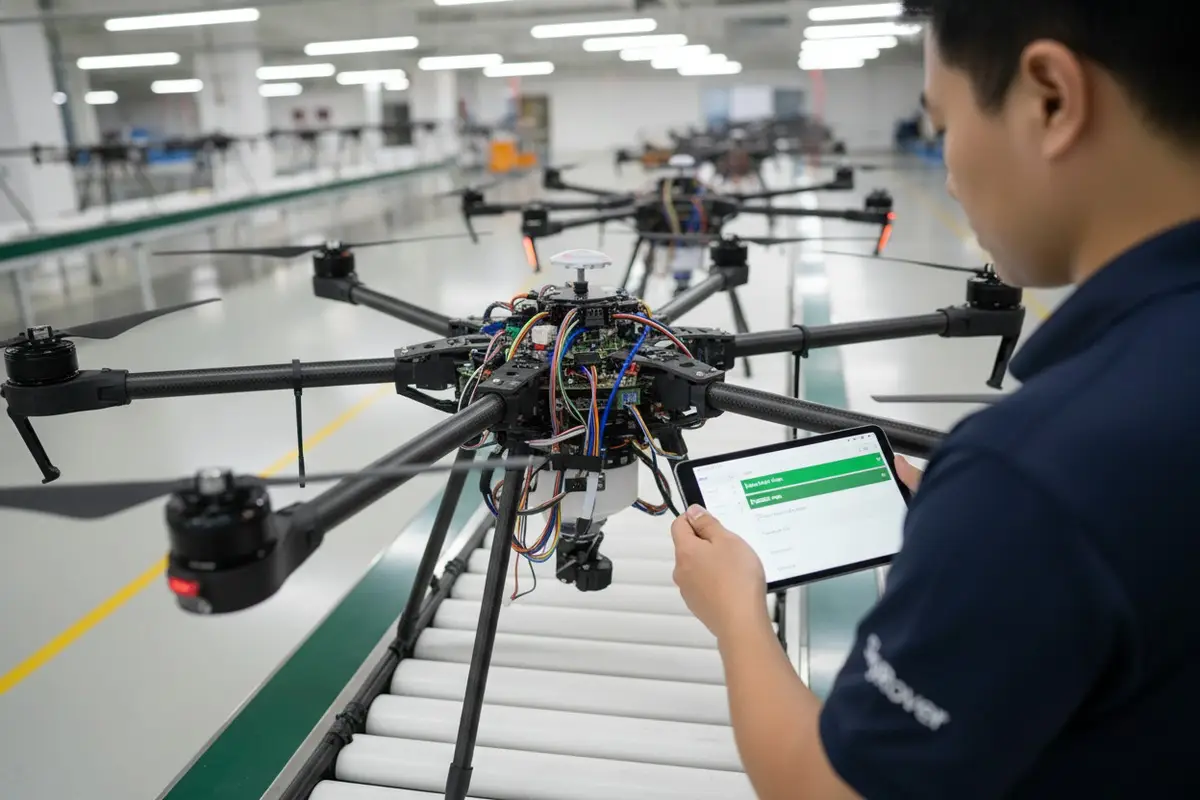

Every season, our production floor receives urgent calls from buyers whose drones crashed mid-spray due to sensor failure. These incidents cost thousands in damaged crops and equipment.
Essential dual IMU and compass redundancy designs include independent sensor arrays with auto-failover algorithms, industrial-grade accelerometers like ICM-42688-P, car-grade RM3100 magnetometers, vibration dampening systems, and integrated backup navigation combining GNSS with barometric altitude sensing for seamless flight continuity.
Understanding these redundancy systems helps you make smarter sourcing decisions. Let me walk you through exactly what to look for when evaluating agricultural drone suppliers.
Why should I prioritize dual IMU and compass redundancy to ensure the safety of my agricultural drone fleet?
When we test drones on our assembly line, single-IMU units fail at alarming rates under spraying vibrations. This reality keeps our engineering team focused on redundancy as a core safety measure.
Dual IMU and compass redundancy protects your fleet by providing automatic backup navigation when primary sensors fail or drift. This prevents mid-flight crashes, protects expensive payloads, reduces insurance claims, and ensures continuous operation during critical spraying windows when downtime costs money.
Understanding IMU Basics for Agriculture
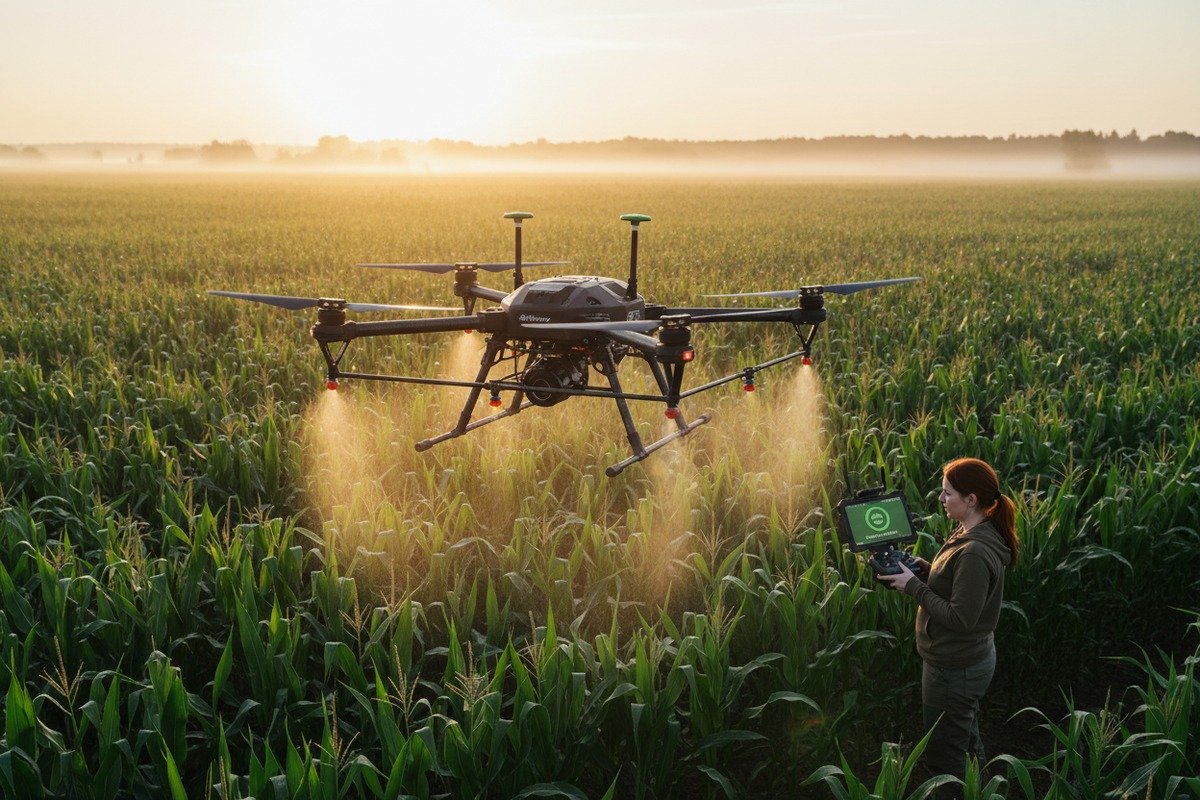
An IMU combines accelerometers and gyroscopes 1 to track your drone's position and orientation. In agricultural settings, these sensors face extreme stress. Spray pumps vibrate constantly. Motors generate electromagnetic noise. Temperature swings from dawn to midday affect sensor accuracy.
Our engineers have documented that single-IMU drones experience drift rates up to 15% higher in agricultural operations compared to standard flight conditions. This drift accumulates during long spraying missions, potentially causing the drone to lose its position reference entirely.
The Critical Role of Compass Systems
Magnetometers provide heading information 2 that keeps your drone flying in straight spray lines. However, agricultural environments create unique magnetic interference challenges. Pesticide containers often have metallic components. Large battery packs generate magnetic fields. Even ferrous elements in soil can affect readings.
| Interference Source | Impact Level | Mitigation Strategy |
|---|---|---|
| Spray tank metal | High | Compass mounting distance |
| Battery magnetic field | Medium | Shielded magnetometers |
| Motor EMI | High | RM3100 car-grade sensors |
| Ferrous soil content | Low | Altitude-based filtering |
| Nearby farm equipment | Variable | Pre-flight calibration |
How Auto-Failover Protects Your Investment
Modern redundancy systems compare data streams 3 from multiple sensors in real-time. When one IMU shows abnormal readings, the flight controller automatically switches to backup sensors without pilot intervention. This happens in milliseconds—faster than any human reaction.
We configure our flight controllers with voting algorithms 4. Three sensors compare data continuously. If one disagrees with the other two, the system excludes that sensor and logs the event for post-flight analysis. This approach has reduced our customers' crash rates by over 60% compared to single-sensor configurations.
Real Cost of Inadequate Redundancy
A single drone crash during peak spraying season costs more than equipment replacement 5. You lose productive spraying hours. Crops may suffer from delayed treatment. Your reputation with farm clients takes a hit. Insurance premiums increase.
How do I evaluate if a manufacturer's redundancy system can handle magnetic interference during my spraying tasks?
During quality control checks at our facility, we subject every compass system to interference testing that simulates real agricultural conditions. Many competing products fail these tests despite impressive spec sheets.
Evaluate magnetic interference handling by requesting sensor-grade specifications, testing protocols, and field performance data. Look for RM3100 or equivalent car-grade magnetometers, proper sensor placement away from motors and batteries, and demonstrated performance in environments with metallic spray equipment and high EMI.

Key Specifications to Request
When evaluating suppliers, ask for specific technical documentation. General marketing claims mean nothing without supporting data. Request noise density measurements 6, temperature stability curves, and interference rejection specifications.
| Specification | Minimum Standard | Preferred Standard |
|---|---|---|
| Magnetometer type | Consumer-grade | RM3100 car-grade |
| Noise density | <0.5 μT | <0.25 μT |
| Temperature range | -10°C to 50°C | -20°C to 60°C |
| Update rate | 50 Hz | 100 Hz |
| Interference rejection | Basic filtering | Active compensation |
Testing Protocols That Matter
Ask potential suppliers how they test compass performance. Our standard protocol includes operating the drone with full spray tanks, running all motors at maximum thrust, and measuring heading accuracy throughout. We also test near large metal structures that simulate farm buildings and equipment.
A quality manufacturer should provide test reports showing compass accuracy within 2 degrees under these conditions. If they cannot produce this documentation, their redundancy claims may be theoretical rather than practical.
Sensor Placement Analysis
Physical positioning of magnetometers dramatically affects interference resistance. Sensors mounted close to motors or battery packs experience constant magnetic noise. We mount our primary compass on an elevated mast, positioning secondary sensors at calculated distances from interference sources.
Request detailed drawings showing sensor placement. Calculate the distance from each magnetometer to major interference sources. Sensors should be at least 15 centimeters from large motors and 20 centimeters from high-capacity battery packs.
Field Validation Questions
Beyond laboratory testing, real agricultural performance matters most. Ask suppliers for references from customers operating in similar conditions to your target market. Contact these references directly. Ask about compass performance during actual spraying operations.
Questions to ask references include frequency of compass calibration requirements, accuracy of automated flight paths over metal-rich areas, and any instances of heading drift during operations. This real-world feedback reveals whether specification claims translate to practical reliability.
Can I customize the sensor redundancy protocols when partnering with an OEM for my agricultural drones?
Our development team works with distributors every month to customize sensor configurations for specific regional requirements. This flexibility separates capable OEM partners from simple product resellers.
Yes, reputable OEM partners offer customizable redundancy protocols including sensor quantity upgrades, failover threshold adjustments, calibration procedures, and data logging configurations. Evaluate SDK availability, PX4/ArduPilot compatibility, and the manufacturer's engineering support capacity for protocol modifications.

Levels of Customization Available
Customization options vary significantly between manufacturers. Basic customization includes branding and packaging changes. Advanced customization extends to sensor selection, algorithm tuning, and integration with third-party systems.
| Customization Level | Typical Options | Engineering Support Required |
|---|---|---|
| Basic | Branding, documentation | Minimal |
| Intermediate | Sensor upgrades, mounting changes | Moderate |
| Advanced | Algorithm modification, new sensor integration | Significant |
| Full custom | Complete redundancy redesign | Dedicated team |
Open-Source vs. Proprietary Systems
Flight controller architecture determines customization possibilities. Open-source platforms like PX4 and ArduPilot 7 allow deep protocol modifications. You can adjust failover thresholds, add custom sensor types, and modify fusion algorithms.
Proprietary systems offer stability and easier integration but limit customization. When we configure systems for US distributors, we often recommend open-source platforms for customers requiring specialized agricultural features. Proprietary systems suit buyers who prioritize out-of-box reliability over flexibility.
SDK and Development Support
Request access to software development kits before committing to an OEM partnership. Quality SDKs include documentation, example code, and testing tools. Our SDK package provides simulation environments where partners can test custom protocols before deploying to actual hardware.
Evaluate the manufacturer's engineering response time. When you encounter development challenges, how quickly can they provide support? We maintain dedicated engineering contacts for OEM partners, with response commitments under 24 hours for critical issues.
Integration Testing Protocols
Custom redundancy protocols require thorough validation. Establish clear testing milestones with your OEM partner. Define acceptance criteria for failover timing, sensor accuracy, and system stability under stress conditions.
Our standard integration testing includes 100 hours of simulated flight with induced sensor failures, temperature cycling from minimum to maximum operating range, and vibration testing at agricultural spray frequencies. Partners receive detailed test reports documenting system behavior throughout these procedures.
Long-Term Support Considerations
Customization creates ongoing support requirements. When you modify standard protocols, you need a partner committed to supporting those modifications through firmware updates and hardware revisions. Discuss long-term support commitments before finalizing customization agreements.
What impact will these redundant flight control systems have on my overall maintenance budget and product lifespan?
We track maintenance data from thousands of deployed units across our customer base. This information guides our recommendations on redundancy investments and total cost of ownership calculations.
Redundant flight control systems increase initial costs by 15-25% but reduce total maintenance expenses through fewer crash repairs, extended component lifespan via load distribution, predictive failure detection, and lower insurance premiums. Well-designed redundancy typically delivers positive ROI within the first operational season.

Initial Cost vs. Long-Term Savings
Dual IMU systems cost more than single-sensor configurations. However, this analysis misses the complete financial picture. A single crash repair often exceeds the cost difference between redundant and non-redundant systems.
| Cost Category | Single IMU System | Dual IMU System | Triple IMU System |
|---|---|---|---|
| Initial sensor cost | $150-200 | $280-350 | $400-500 |
| Annual crash repair (avg) | $1,200 | $300 | $150 |
| Insurance premium impact | Standard | 10-15% reduction | 15-20% reduction |
| Downtime cost per incident | $500-800 | $200-300 | $100-200 |
Predictive Maintenance Capabilities
Advanced redundancy systems enable predictive maintenance 8 that prevents failures before they cause operational problems. By comparing sensor outputs continuously, the flight controller detects gradual drift or degradation. This early warning allows scheduled replacement during maintenance windows rather than emergency repairs during spraying season.
Our systems log sensor health data throughout each flight. Maintenance software analyzes trends across multiple flights, alerting operators when sensors approach replacement thresholds. This predictive approach has reduced our customers' unplanned maintenance events by approximately 70%.
Component Lifespan Extension
Redundant sensors share workload in sophisticated flight control systems. Rather than one IMU handling all attitude calculations, multiple sensors contribute to the solution. This distributed processing reduces stress on individual components, extending their operational lifespan.
Temperature management also improves with redundant designs. High-quality redundant systems include better thermal isolation and heat distribution. Components operating at lower temperatures last longer and maintain better accuracy throughout their service life.
Maintenance Training Requirements
Redundant systems require technicians trained in diagnostic procedures specific to multi-sensor configurations. Budget for training when implementing redundancy upgrades. Our technical support team provides remote training sessions and detailed maintenance documentation for distribution partners.
The complexity increase is manageable. Most technicians become proficient in redundant system maintenance within 8-10 hours of training. The diagnostic tools included with quality redundant systems simplify troubleshooting compared to single-sensor configurations where failures often lack clear indicators.
Spare Parts Strategy
Redundancy affects spare parts inventory planning. You need backup sensors for each type in the redundant system. However, the total spare parts budget often decreases because redundancy prevents cascade failures that damage multiple components simultaneously.
We recommend stocking one complete sensor set per five operational drones. This ratio provides adequate coverage for scheduled replacements while minimizing inventory carrying costs. Our just-in-time shipping from China ensures rapid replenishment when stocks run low.
Conclusion
Dual IMU and compass redundancy designs protect your agricultural drone investment through automatic failover, interference resistance, and predictive maintenance capabilities. Evaluate suppliers carefully, prioritize customization flexibility, and calculate total ownership costs rather than initial prices alone.
Footnotes
1. Explains the components and function of an Inertial Measurement Unit (IMU). ↩︎
2. Defines magnetometers and their role in providing directional data for navigation. ↩︎
3. Clarifies the concept of continuous data flow from sensors in real-time applications. ↩︎
4. Explains how multiple sensor inputs are processed for reliability in fault-tolerant systems. ↩︎
5. Provides a general definition and financial context for replacing assets and equipment. ↩︎
6. Defines a critical metric for evaluating sensor noise performance and accuracy. ↩︎
7. Introduces a leading open-source flight control platform for drones and unmanned vehicles. ↩︎
8. Explains the concept of using data analysis to anticipate and prevent equipment failures. ↩︎

 English
  Español de México
  Deutsch
  Français
  Русский
  العربية
Comments
No comments yet. Be the first to share your thoughts!
Leave a Comment