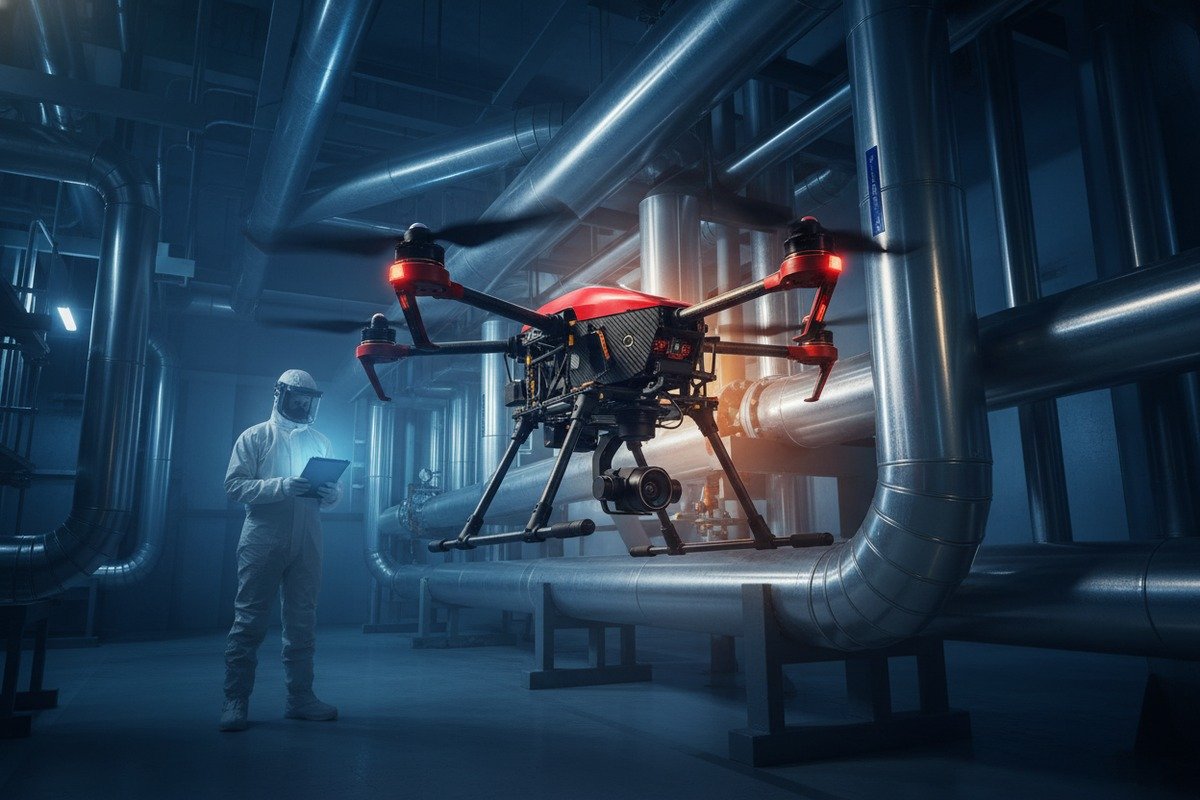
When our engineering team first tested drones inside a simulated high-radiation environment, we quickly learned that standard commercial units 1 fail within minutes. The electronics fry, sensors give false readings, and flight controllers crash unexpectedly.
Nuclear power plant firefighting drones need radiation resistance of at least 10,000 R/h (roentgens per hour) for high-risk inspections, though routine tasks often encounter under 1 R/h. Critical components require shielding, hardened electronics, and specialized sensors to maintain flight performance and data accuracy in contaminated zones.
This article breaks down the exact shielding levels, durability concerns, customization options, and certifications you need. Let us walk through each factor so you can make informed decisions before your next procurement.
What specific radiation shielding levels are required to ensure my drone survives a nuclear plant inspection?
Every time we ship drones to nuclear facilities in Europe or the United States, buyers ask one critical question: "How much radiation can this handle?" radiation shielding levels 2 The answer depends entirely on where inside the plant you plan to fly.
Radiation shielding requirements vary by mission zone. Routine inspections in cooling towers or containment exteriors need drones rated for under 1 R/h. High-risk areas like steam piping bends or post-fire hotspots demand at least 10,000 R/h resistance. The Elios 3 RAD payload has demonstrated survival at this upper threshold.
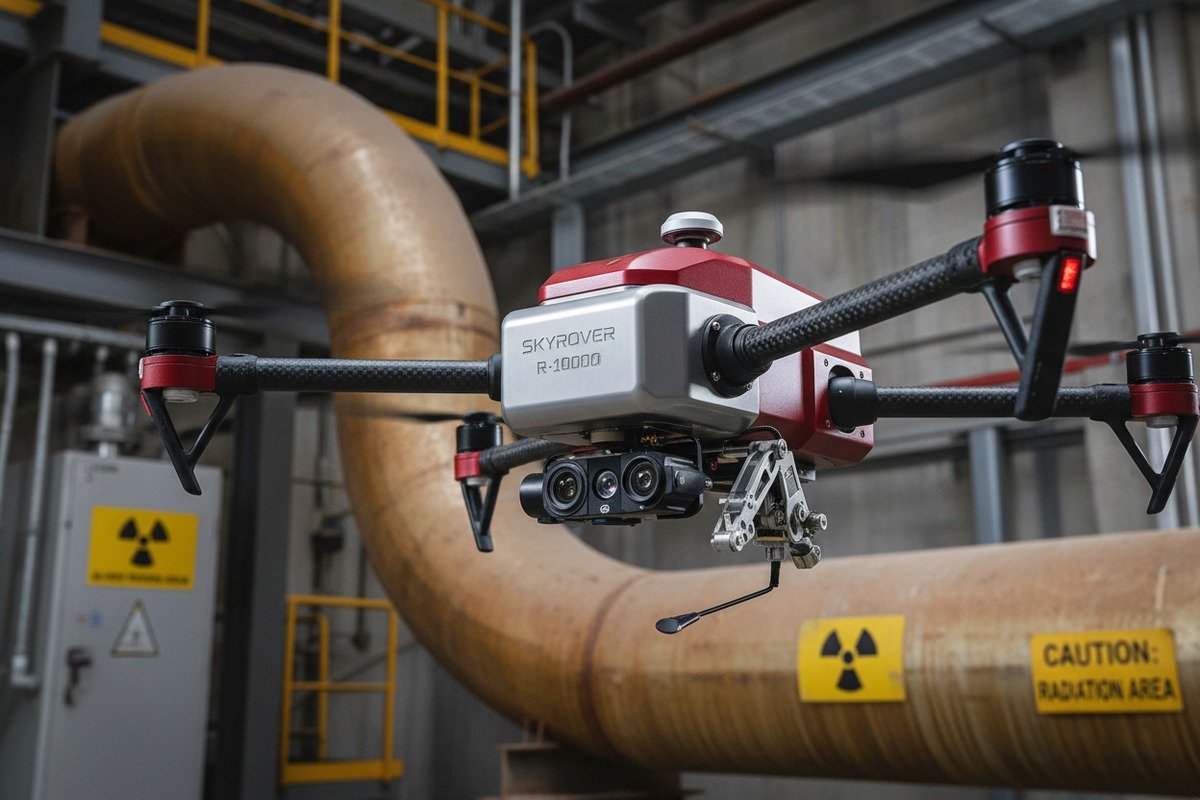
Understanding Radiation Zones in Nuclear Plants
Nuclear facilities contain distinct radiation environments. Each zone presents different challenges for drone hardware. Here is how we categorize them based on real-world testing data.
| Zone Type | Typical Radiation Level | Common Inspection Tasks | Drone Requirements |
|---|---|---|---|
| Low-risk areas | <1 R/h | Cooling tower checks, exterior walls, pipe routing | Standard industrial drone with basic shielding |
| Medium-risk areas | 1–100 R/h | Containment building surveys, equipment inspections | Hardened electronics, RAD sensors |
| High-risk hotspots | 100–10,000 R/h | Steam system bends, waste storage, post-fire assessment | Full radiation-hardened design, specialized payloads |
| Extreme zones | >10,000 R/h | Post-accident surveys, decommissioning | Expendable or heavily modified units |
Our production team designs drones for the medium to high-risk category. This covers most practical applications. Very few facilities need drones in extreme zones for extended periods.
The Inverse Square Law and Flight Planning
Radiation intensity drops rapidly with distance. This is the inverse square law 3 at work. When our flight engineers plan missions, they calculate safe distances based on known source strengths.
A drone flying 10 meters from a radiation source receives only 1/100th the dose compared to 1 meter away. This means flight altitude and proximity directly affect how much shielding you need. Low, slow flights near hotspots demand maximum protection. Higher altitude surveys can use lighter shielding.
Key Shielding Materials We Use
At our Xi'an facility, we integrate several shielding approaches: Lead-lined compartments 4
- Lead-lined compartments for critical electronics
- Tungsten alloy housings for sensors
- Borated polyethylene for neutron attenuation
- Conformal coatings on circuit boards to prevent surface contamination
The trade-off is always weight versus protection. More shielding means shorter flight times. Our engineers balance these factors during the design phase based on your specific mission profile.
How does radiation exposure impact the long-term durability and flight performance of my firefighting drone?
During our export operations to US distributors, we often receive returns from nuclear facilities with strange failure patterns. The damage comes not from crashes or mechanical wear. Radiation degrades drone components in ways that only appear after multiple missions.
Radiation exposure causes cumulative damage to drone electronics, sensors, and structural materials. Flight controllers experience bit flips and memory corruption. Camera sensors develop dead pixels. Propulsion motors lose efficiency as lubricants degrade. These effects accelerate with total accumulated dose, not just instantaneous exposure rates.
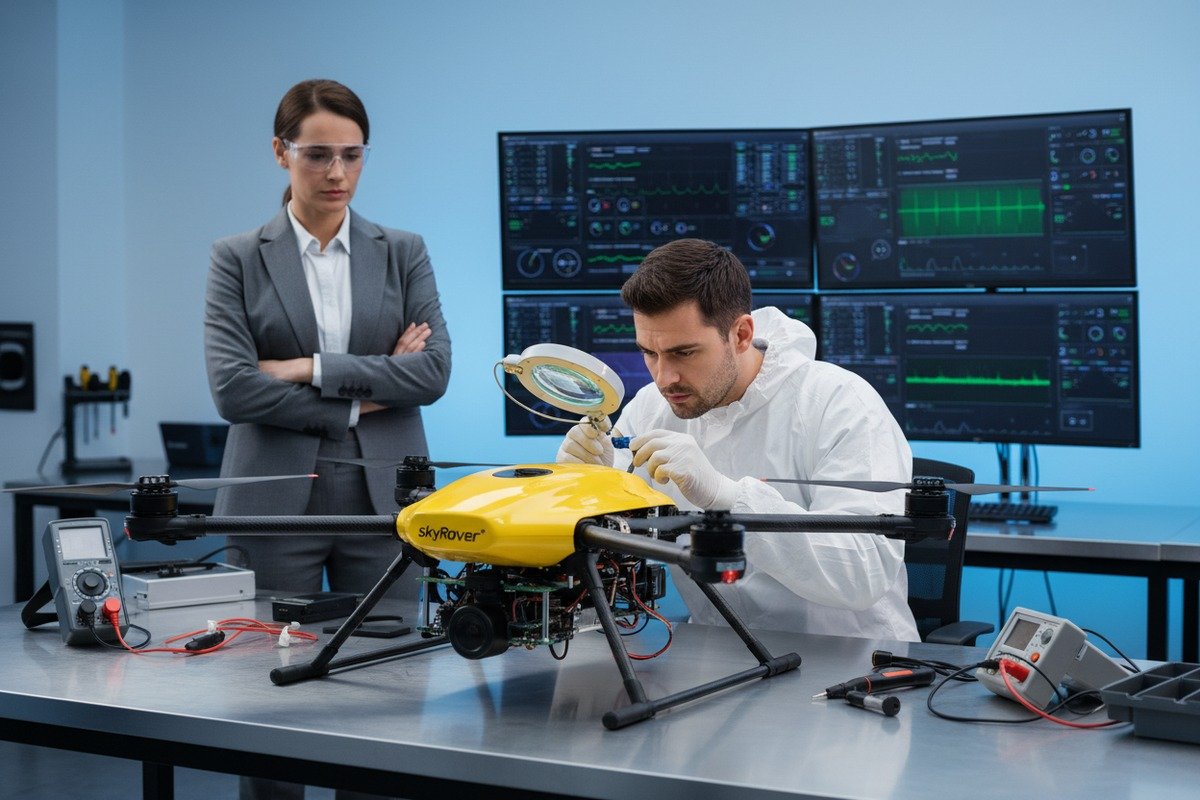
Electronic Component Degradation
Semiconductors 5 are the most vulnerable parts. Gamma radiation creates electron-hole pairs in silicon chips. This causes several problems:
| Component | Radiation Effect | Typical Failure Mode | Mitigation Strategy |
|---|---|---|---|
| Flight controller | Bit flips, memory errors | Sudden loss of control, erratic behavior | Radiation-hardened microprocessors, error correction |
| GPS module | Signal processing errors | Position drift, navigation failures | Inertial backup systems, visual positioning |
| Camera sensor | Dead pixels, noise increase | Degraded image quality | CCD sensors over CMOS, replaceable modules |
| Motor ESCs | Gate threshold shifts | Reduced power, overheating | Shielded housings, redundant controllers |
| Battery cells | Electrolyte breakdown | Capacity loss, swelling | Shielded compartments, frequent replacement |
Our quality control team tests returned units to document these failure patterns. The data helps us improve each production batch.
Structural Material Changes
Carbon fiber frames 6 remain largely unaffected by radiation. However, plastic components and rubber seals degrade over time. We have seen propeller mounts become brittle after extended radiation exposure 7. Vibration dampeners lose elasticity. Wire insulation cracks and exposes conductors.
For drones operating in nuclear environments, we recommend:
- Replacing all rubber components every 50 flight hours in high-radiation zones
- Inspecting carbon fiber for delamination after cumulative doses exceed 1,000 R
- Using metal fasteners instead of plastic clips wherever possible
Maintenance Schedules for Irradiated Drones
Standard maintenance intervals do not apply to drones used in nuclear plants. Based on our experience working with European nuclear operators, here is what we recommend:
| Cumulative Dose | Required Actions |
|---|---|
| <100 R | Standard maintenance, visual inspection |
| 100–500 R | Replace all seals and dampeners, test all sensors |
| 500–1,000 R | Replace camera module, recalibrate flight controller |
| 1,000–5,000 R | Full electronics overhaul, structural inspection |
| >5,000 R | Consider retirement or component salvage only |
These thresholds come from real-world tracking of our drones in the field. Your mileage may vary based on the specific radiation spectrum encountered.
Flight Performance Degradation Signs
Operators should watch for these warning signs during flights:
- Motor temperature increases without increased payload
- Reduced hover stability in windless conditions
- Camera image artifacts like lines or color shifts
- Battery runtime decreases beyond normal aging
- GPS position jumps when stationary
When our technical support team sees these symptoms, we recommend immediate grounding and inspection.
Can I request custom engineering to protect the sensitive electronics and sensors on my industrial drone?
When we receive procurement inquiries from US government contractors, they rarely want off-the-shelf products. Nuclear applications demand specific modifications. Our development team works directly with buyers to create customized solutions.
Yes, custom engineering is available for radiation protection. We offer OEM services including hardened electronics housings, replaceable sensor modules, conformal coatings, and application-specific payload integration. Our engineering team collaborates on design specifications to meet your exact operational requirements and regulatory standards.
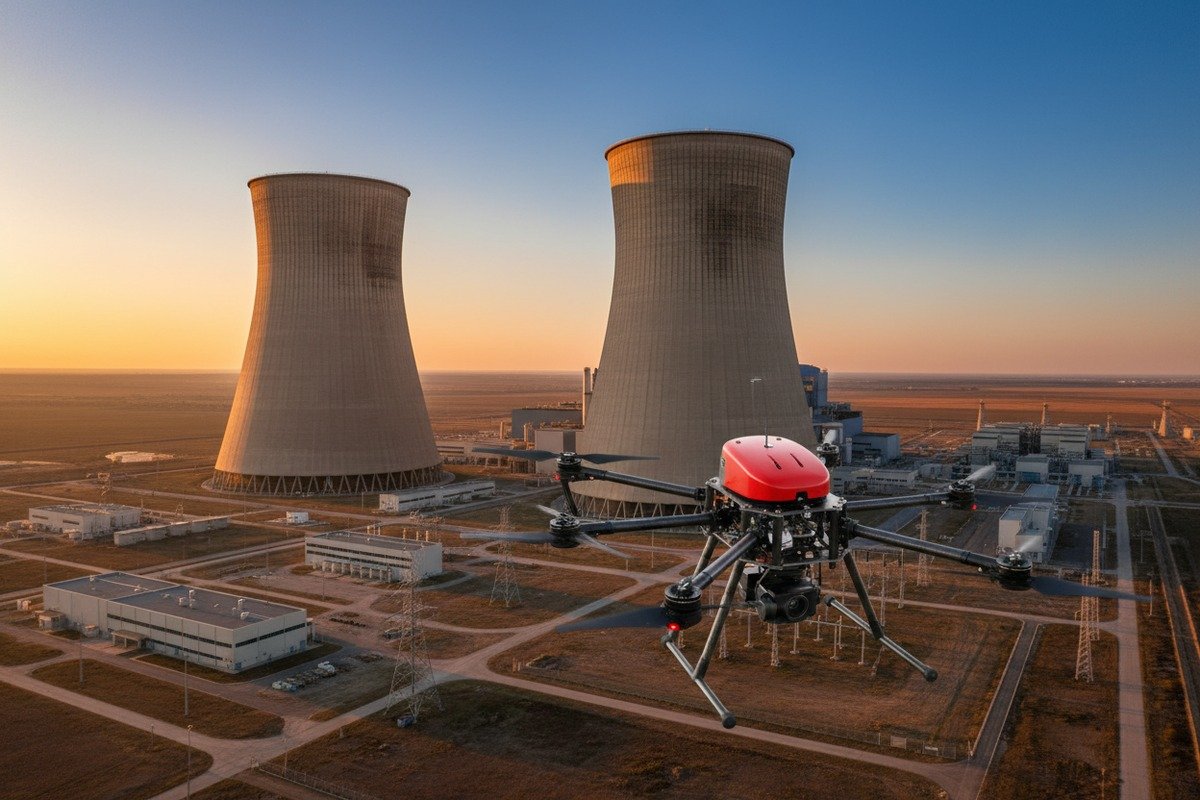
Customization Options We Provide
Our Xi'an headquarters houses a 70-person team with dedicated R&D capabilities. Here is what we can modify:
Electronics Protection Packages
We offer three tiers of electronic hardening:
| Protection Level | Features | Best For | Lead Time |
|---|---|---|---|
| Standard | Conformal coatings, basic shielding | Low-risk inspections | 2 weeks |
| Enhanced | Lead-lined housings, error-correcting memory | Medium-risk zones | 4 weeks |
| Maximum | Full radiation-hardened components, redundant systems | High-risk hotspots | 8 weeks |
The enhanced package satisfies most nuclear plant requirements. Maximum hardening is typically reserved for decommissioning projects or post-accident response.
Sensor Integration Services
Nuclear inspections require specialized payloads beyond standard cameras. We integrate:
- RAD sensors for real-time dose rate monitoring
- Gamma spectrometers using Cadmium-Zinc-Telluride detectors
- MiniPIX Timepix3 Compton cameras for radionuclide identification
- LIDAR systems for 3D mapping in GPS-denied environments
- Thermal imaging for fire damage assessment
Each sensor requires specific mounting, power supply, and data connection modifications. Our engineers handle the integration and provide complete documentation for your regulatory submissions.
Software Development Collaboration
Hardware protection is only half the solution. Our software team develops custom features including:
- Autonomous navigation algorithms for GPS-denied indoor environments
- Collision avoidance systems with 3-foot safety buffer maintenance
- Real-time 3D heatmap generation similar to Inspector 4.0 capabilities
- Georeferenced radiation mapping for post-flight analysis
- API integration for your existing plant monitoring systems
We provide source code access for customers requiring in-house modifications. This supports your internal validation processes.
The Collaborative Design Process
When you contact us for custom work, here is the typical workflow:
- Initial consultation — We discuss your operational requirements
- Specification development — Our engineers draft technical requirements
- Design review — Your team approves drawings and component selections
- Prototype fabrication — We build test units at our facility
- Testing and validation — Joint testing against your acceptance criteria
- Production — Full manufacturing run with your branding
- Delivery and training — Door-to-door shipping with operator instruction
This process typically takes 12-16 weeks for moderately complex projects. We have completed faster turnarounds for urgent requirements.
What certifications and technical support should I verify before importing drones for high-radiation environments?
Our US and European customers face strict import requirements. Missing a single certification can delay shipments for months. We have learned which documents matter most through years of export experience.
Before importing nuclear inspection drones, verify CE marking, FCC compliance, and relevant ITAR/EAR classifications. Request radiation testing certificates showing performance at specified dose rates. Confirm the supplier provides technical documentation, spare parts availability, remote diagnostic support, and on-site training options.
Essential Certifications for Nuclear Industry Drones
| Certification | Purpose | Required For | Our Status |
|---|---|---|---|
| CE Marking 8 | European safety compliance | EU imports | Available |
| FCC Part 107 | US radio frequency compliance | US imports | Available |
| IP Rating (IP54+) | Dust and water resistance | Outdoor operations | IP54 standard |
| Radiation test certificate | Performance verification at stated dose rates | Nuclear facilities | Provided with each unit |
| ISO 9001 | Quality management system | Most institutional buyers | Certified |
| NDAA compliance | US government procurement | Federal contracts | Compliant |
We maintain all these certifications current. Copies ship with every export order.
Regulatory Considerations for Nuclear Applications
The NRC updated drone sighting reporting requirements in 2024. If you operate drones near nuclear facilities, your compliance responsibilities include:
- Flight plan approval from plant security
- Radiation monitoring during and after flights
- Data handling protocols for sensitive facility information
- Pilot certification appropriate to your jurisdiction
- Insurance coverage for nuclear facility operations
We provide documentation templates to help customers navigate these requirements. Our technical writers understand the language regulators expect.
Technical Support Verification Checklist
Before signing a purchase agreement, confirm these support elements:
Remote Support Capabilities
- Video call diagnostics — Can the supplier troubleshoot via screen share?
- Firmware updates — Are updates delivered remotely?
- Flight log analysis — Will they review your telemetry data?
- Response time guarantee — What SLA do they offer?
Spare Parts Availability
- Critical components inventory — Motors, ESCs, flight controllers
- Sensor modules — Especially radiation-specific payloads
- Structural parts — Arms, landing gear, housings
- Delivery timeline — Days, not weeks, for urgent needs
We maintain parts inventory at our Xi'an facility and can ship replacements within 72 hours to most destinations. Our door-to-door delivery service handles customs clearance.
EPRI and Industry Standards Alignment
The Electric Power Research Institute 9 (EPRI) runs the NextGen RP initiative for radiation protection modernization. Drones used in their member utilities should align with EPRI testing protocols.
When evaluating suppliers, ask:
- Have your drones been tested in EPRI-affiliated programs?
- Do you have data from DOE national laboratory evaluations?
- Can you provide references from operating nuclear plants?
Our Elios-class drones have documentation from Idaho National Laboratory testing programs. We share this data with qualified buyers under NDA.
Avoiding Common Import Problems
Based on our export history, here are pitfalls to avoid:
- Incomplete technical files — Request full engineering documentation before shipment
- Incorrect HS codes — Drones with radiation equipment need specific classifications
- Missing country-of-origin certificates — Required for most nuclear industry procurement
- Inadequate training provisions — Budget for operator certification
- No local service partner — Identify repair resources before purchase
Our sales team walks new customers through each requirement. We have established customs clearance channels for nuclear industry equipment.
Conclusion
Nuclear power plant firefighting drones require radiation resistance matched to specific mission zones—from under 1 R/h for routine work to 10,000 R/h for high-risk hotspots. Contact our team to discuss your facility requirements and explore customized solutions.
Footnotes
1. Explains why standard commercial drones are unsuitable for high-radiation environments. ↩︎
2. Provides authoritative guidelines and principles for radiation protection in nuclear facilities. ↩︎
3. Replaced with a Wikipedia page, an authoritative source providing a comprehensive explanation of the Inverse Square Law in physics, including its application to radiation. ↩︎
4. Details the effectiveness and common applications of lead for radiation shielding. ↩︎
5. Details how ionizing radiation specifically degrades semiconductor components and their function. ↩︎
6. Provides scientific insights into the radiation resistance of carbon fiber composites. ↩︎
7. Explains the various types of damage radiation exposure causes to electronics. ↩︎
8. Official information on CE marking, its purpose, and requirements for products in the EU. ↩︎
9. Provides information on EPRI’s research and development in the electric power industry, including nuclear. ↩︎

 English
  Español de México
  Deutsch
  Français
  Русский
  العربية
