
Every week, procurement teams contact our production line asking the same question fire detection AI 1. They focus on the sticker price. Then six months later, they call back frustrated. Repair bills pile up. Pilots need retraining. Batteries fail faster than expected in high-heat missions.
Essential TCO calculation methods for firefighting drones include the standard formula (TCO = Purchase + Installation + Operations + Maintenance + Downtime + Retirement), per-flight cost analysis, and per-acre suppression metrics. These methods capture hidden costs like thermal wear factors, specialized training, and accelerated depreciation from crash damage in fire operations.
Let me walk you through the specific calculations our engineering team uses when helping clients budget for their firefighting drone fleets technology obsolescence rates 2. These methods will help you avoid common pitfalls and justify your investment with hard numbers.
How do I balance the initial purchase price against the long-term operational costs of my firefighting drone fleet?
When we ship firefighting drones to departments across the US and Europe, we see a pattern. Buyers who only compare purchase prices often regret it within the first year. The real cost story unfolds over time.
To balance purchase price against operational costs, use the 3-year TCO formula: multiply your annual operating expenses by three and add them to your initial investment. For firefighting drones priced at $20-50k, expect total ownership costs to reach 2-3x the purchase price due to intensive thermal exposure, battery degradation, and mission-critical maintenance requirements.

Breaking Down the Initial Investment
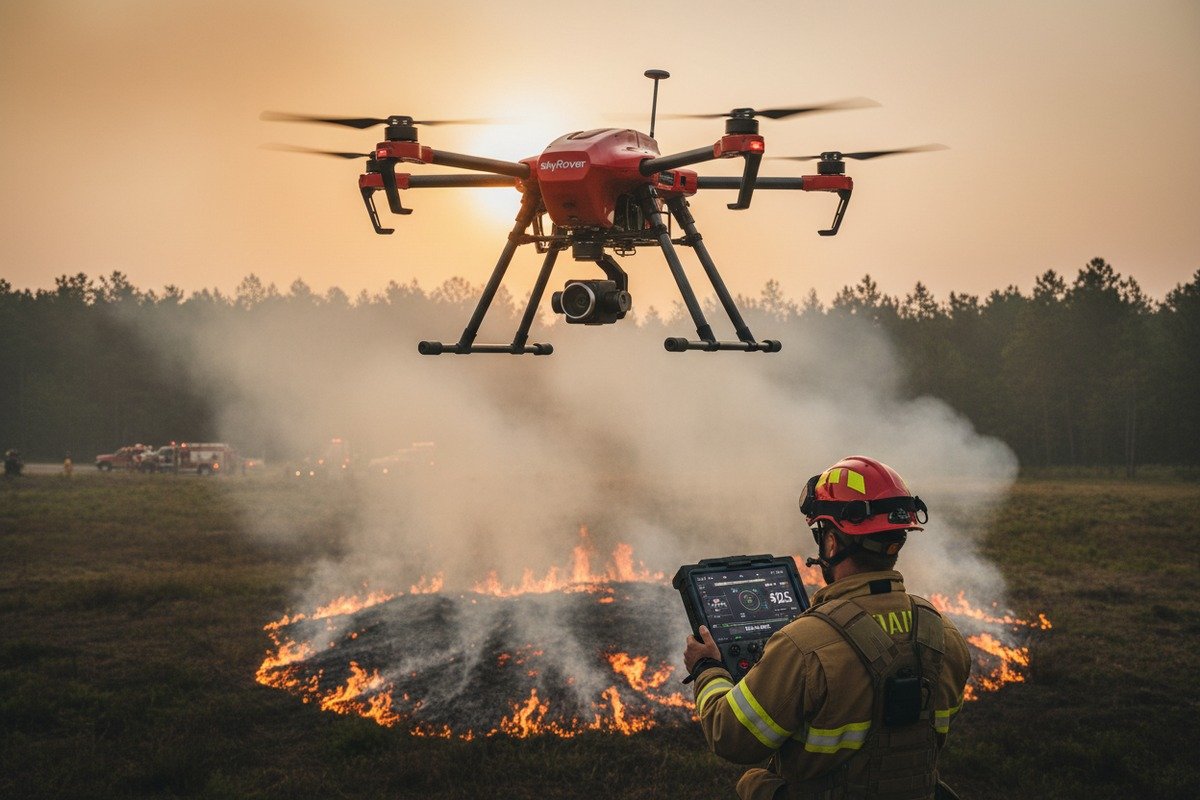
The purchase price is just the starting point. When our clients order a professional-grade firefighting quadcopter like our matte black carbon fiber models with thermal cameras, they need to budget beyond the airframe.
| Cost Category | Typical Range | Notes |
|---|---|---|
| Drone Airframe | $20,000 – $50,000 | Includes base sensors |
| Thermal Camera Payload | $3,000 – $15,000 | FLIR 3 or equivalent |
| Fire Retardant System | $1,000 – $2,000 | Modular drop tanks |
| Ground Control Station | $4,000 – $6,000 | Ruggedized computer |
| Mission Software | $10,000+ | Fire mapping AI |
| Spare Batteries (8 units) | $1,600 – $2,000 | At $200-250 each |
Your true initial investment often reaches 40-60% above the base drone price.
Calculating Long-Term Operational Costs
Our engineering team tracks client feedback carefully. A $25,000 firefighting drone typically incurs $12,000-30,000 in operational costs over three years. Energy costs run about $0.15 per acre for battery charging. Labor costs depend on your pilot structure.
The shift to hybrid electric-gas powertrains 4 reduces energy costs by 40% compared to pure electric. We now recommend this option for departments running more than 50 missions annually.
The Per-Flight Cost Method
Some procurement managers find per-flight calculations more useful than annual totals. Divide your total yearly costs by the number of missions. For a fleet averaging 52 flights per year covering 50 acres per flight, you can calculate cost-per-acre metrics that compare directly to helicopter alternatives.
Helicopters cost $50+ per acre. Ground crews run $20+ per acre. Our clients typically achieve $8-15 per acre with drone operations. This comparison helps justify the initial investment to budget committees.
What maintenance and repair expenses should I include in my TCO model to avoid unexpected downtime?
In our experience exporting to fire departments worldwide, maintenance surprises cause the most budget headaches. Thermal stress from fire operations accelerates wear on every component. Parts fail faster than spec sheets predict.
Include servo replacements ($1,300/year), propeller and wing repairs ($390/year), battery degradation costs ($2,000/year), motor rebuilds, thermal camera recalibration, and heat-resistant coating renewal. Budget 15-25% of purchase price annually for post-warranty repairs. Apply a 1.5x thermal wear factor to standard drone maintenance schedules for firefighting applications.

Standard Maintenance Cost Breakdown
When we calibrate our flight controllers before shipping, we test them to fire operation specifications. But even our ruggedized octocopters with carbon fiber arms need regular attention. Here is what our service records show:
| Component | Replacement Interval | Cost per Cycle | Annual Cost (52 missions) |
|---|---|---|---|
| Propellers | Every 100 hours | $150-300 | $300-600 |
| Batteries | 200-300 cycles | $200-250 each | $800-1,200 |
| Servo Motors | 500 hours | $400-600 | $800-1,200 |
| Thermal Camera Cal | Annual | $500-800 | $500-800 |
| Motor Bearings | 300 hours | $200-300 | $400-600 |
| Heat Shield Coating | 6 months | $300-500 | $600-1,000 |
Total annual maintenance typically runs $3,400-$5,400 for an actively deployed firefighting drone.
The Thermal Wear Factor
Standard drone maintenance schedules assume normal operating temperatures. Firefighting operations expose drones to extreme heat, smoke particles, and corrosive gases 5. Our quality control team recommends applying a 1.5x multiplier to all wear calculations.
A propeller rated for 200 flight hours under normal conditions may need replacement at 130 hours in fire service. Batteries degrade 30-40% faster when charged hot. Thermal cameras require more frequent recalibration due to sensor drift from heat exposure.
Downtime Cost Calculations
Mission delays from failures in critical fire scenarios carry real financial weight. When a drone fails during an active wildfire, you lose more than repair costs. Property damage accelerates. Response coordination suffers. Crews wait for aerial intelligence.
Calculate downtime costs by estimating the hourly value of drone coverage. If drone surveillance saves $1,000+ per hour in property losses compared to blind operations, each hour of unexpected downtime carries that price tag. Build a contingency budget for emergency repairs or backup units.
Spare Parts Inventory Strategy
We advise clients to maintain spare parts on-site. Waiting two weeks for international shipping during fire season is not acceptable. Stock 2-3 propeller sets, 2 backup batteries, one servo motor kit, and essential fasteners. This inventory investment of $1,500-2,500 prevents extended downtime.
How can I factor in the costs of specialized pilot training and custom software integration for my industrial drones?
Our team spends considerable time helping clients understand the human and software side of drone ownership. The drone itself is just hardware. Without trained pilots and proper software, it sits in a case.
Factor training costs at $5,000-10,000 per pilot for FAA Part 107 certification plus firefighting-specific protocols, with $1,000-2,000 annual recurrency training. Software integration costs include fire detection AI ($10,000+ setup), mission management platforms ($2,000-5,000/year subscriptions), and custom API development ($5,000-20,000) for connecting drone data to existing incident command systems.
Pilot Training Cost Components
Regulatory compliance sets the baseline. FAA Part 107 certification costs $150 for the exam plus 20-40 hours of study time. But firefighting drone operations often require BVLOS (Beyond Visual Line of Sight) waivers 6. These advanced certifications add significant training investment.
| Training Component | Initial Cost | Annual Recurrency |
|---|---|---|
| FAA Part 107 Basic | $500-1,000 | $200-400 |
| BVLOS Waiver Training | $3,000-5,000 | $500-1,000 |
| Fire Operations Protocol | $1,500-2,500 | $500-800 |
| Emergency Procedures | $500-1,000 | $200-400 |
| Thermal Imaging Analysis | $800-1,200 | $300-500 |
A fully qualified firefighting drone pilot represents a $6,000-10,000 training investment.
Software Integration Expenses
When we develop custom software features with clients, we see the integration costs firsthand. Fire mapping AI platforms like Pix4D variants require initial licensing plus training. DJI FlightHub or equivalent mission management software runs $2,000-5,000 annually.
Custom integration with existing emergency systems adds complexity. If your department uses specific incident management software, connecting drone data feeds requires API development. Budget $5,000-20,000 for custom integration projects depending on complexity.
Data storage and cybersecurity add ongoing costs. Thermal imagery from fire operations generates large files. Cloud storage for mission archives runs $50-200 monthly. Cybersecurity measures to protect sensitive operational data add $500-2,000 annually.
The AI Autonomy Opportunity
Current trends show AI-autonomous swarms reducing labor requirements significantly. A single operator can manage what previously required teams. This technology shift cuts labor costs by 40-50% but requires upfront software investment.
Subscription software models spread costs over time instead of large upfront payments. Our clients increasingly prefer monthly subscriptions for mission software. This approach improves cash flow and ensures continuous updates.
Program Management Personnel
Do not forget the human infrastructure. Someone must coordinate the drone program, develop policies, analyze data, and engage with the community. Allocate 10-25% of a full-time position for program management in small departments. Larger operations need dedicated staff.
How do I calculate the expected service life and depreciation of high-end firefighting drones to justify my investment?
Our production engineers design for durability, but we are honest about lifecycle realities. Technology moves fast. Fire operations are harsh. Even our best industrial octocopters with vibrant yellow housings and carbon fiber arms have finite service lives.
Calculate firefighting drone service life at 18-24 months with 2-3 year depreciation cycles. High-end units depreciating from $25,000 cost approximately $1,000-1,400 per month. Apply crash damage risk factors (5-10x higher than normal drone operations) and technology obsolescence rates to justify replacement budgets. ROI payback typically occurs within 12-18 months through labor savings of 60-80% versus helicopter operations.

Depreciation Calculation Methods
Standard accounting uses 3-5 year depreciation for equipment. Firefighting drones require accelerated schedules. Technology obsolescence and operational stress shorten useful life. We recommend 2-3 year cycles for budget planning.
A $25,000 drone depreciating over 2 years costs $1,041 per month. Over 3 years, that drops to $694 monthly. But firefighting accelerates depreciation to 18 months in many cases due to crash damage and thermal degradation. That pushes monthly depreciation to $1,389.
Service Life Factors
Several factors determine how long your firefighting drone remains mission-capable:
Crash rates in fire operations run 5-10x higher than normal drone applications. Thermal updrafts, limited visibility, and emergency maneuvers increase collision risk. Each crash repair shortens remaining service life.
Thermal stress accumulates over time. Heat-resistant components degrade gradually. Even without visible damage, material fatigue reduces structural integrity and flight performance.
Technology obsolescence drives replacement decisions. Battery technology improves 15-20% annually. Sensor capabilities advance. AI features become standard. A 3-year-old drone may function but lacks competitive capabilities.
ROI Justification Framework
When presenting to budget committees, frame depreciation against operational savings. Our clients document significant ROI through these metrics:
Labor savings: Drone operations reduce personnel requirements by 60-80% compared to helicopter operations. A helicopter mission requiring pilot, copilot, and ground crew becomes a single drone operator.
Hourly cost comparison: Helicopters cost $10,000+ per hour for firefighting operations. Drone operations run $200-500 per hour including all costs. Each helicopter hour replaced represents massive savings.
Response speed: Drones deploy in minutes. Helicopters require hours for positioning. Faster response means less property damage. Calculate savings based on fire spread rates and property values.
Acres protected per dollar: Track total suppression costs divided by acres protected. Our clients achieving $8-15 per acre demonstrate clear value versus $50+ per acre helicopter costs.
Technology Refresh Planning
Build technology refresh into your TCO model from day one. Set aside 10-15% of annual operating budget for eventual replacement. This creates a replacement fund that prevents budget shocks when upgrade time arrives.
EU mandates for low-emission drones may add compliance costs but often come with grants. Factor potential grant offsets into your refresh planning. Reusable water-drop systems 7 versus single-use foam reduce per-mission costs by 25% and extend payload service life.
Conclusion
Proper TCO calculation transforms firefighting drone procurement from guesswork into strategic investment. Apply the methods we discussed, use realistic thermal wear factors 8, and budget for the full lifecycle. Your fleet will deliver measurable value while avoiding the surprise costs that frustrate so many buyers.
Footnotes
1. NASA project on AI-enabled drone swarms for wildfire detection and mapping. ↩︎
2. Explores how rapid technological advancement leads to shorter drone lifespans. ↩︎
3. Authoritative source on thermal imaging technology for firefighting drones. ↩︎
4. Details advanced propulsion systems for UAVs, including hybrid gas-electric options. ↩︎
5. Discusses the impact of aggressive environments and gases on industrial equipment. ↩︎
6. Guide to obtaining regulatory waivers for advanced drone operations in public safety. ↩︎
7. Discusses heavy-lift drones equipped with water-drop systems for firefighting. ↩︎
8. Explains how thermal stress impacts drone components and accelerates wear. ↩︎

 English
  Español de México
  Deutsch
  Français
  Русский
  العربية
