
When our engineering team ships firefighting drones overseas, contract disputes about performance or delivery often catch buyers off guard International Chamber of Commerce 1. Without clear arbitration terms, a simple disagreement can turn into a costly legal battle spanning multiple countries.
To specify arbitration venue and governing law for firefighting drone procurement, buyers should select a neutral arbitration institution like the ICC or AAA, choose governing law from a jurisdiction familiar with drone regulations, and include specific clauses addressing technical performance standards, compliance with ASDA requirements, and cross-border enforcement under the New York Convention.
This guide walks you through the key decisions you need to make American Arbitration Association 2. We will cover governing law selection, venue choices, technical dispute terms, and enforcement strategies. Each section provides practical advice based on real export experiences.
Which governing law should I choose to protect my firefighting drone purchase agreement?
Our contracts team has learned that governing law choices can make or break a deal when problems arise. Many buyers assume their home country law automatically applies, but this assumption creates serious risks.
Choose governing law based on three factors: familiarity with drone-specific regulations, enforceability in both parties' jurisdictions, and clarity on technical performance standards. For U.S. buyers importing from China, selecting U.S. federal law combined with a specific state law (like Delaware or New York) provides strong protection while ensuring compliance with FAA and ASDA requirements.

Understanding Federal Law Requirements
When you buy firefighting drones for federally funded projects, federal law takes priority. FAR Clause 52.240-1 3 The American Security Drone Act 4 (ASDA) and FAR Clause 52.240-1 create mandatory compliance requirements. Your contract cannot override these rules.
Federal procurement law 5 governs:
- Security prohibitions on certain foreign-manufactured drones
- Data encryption and access control standards
- Software update protocols
- Compliance documentation requirements
State law fills gaps where federal law is silent. This includes general contract interpretation, breach remedies, and warranty disputes.
State Law Selection Strategies
Different states offer different advantages. Here is a comparison:
| State | Advantages | Disadvantages |
|---|---|---|
| New York | Extensive commercial law precedent, neutral reputation, experienced courts | Higher litigation costs, busy court dockets |
| Delaware | Business-friendly courts, predictable outcomes, strong contract enforcement | Less drone-specific case law |
| California | Strong consumer protection, tech industry familiarity | Complex regulations, plaintiff-friendly |
| Texas | Lower costs, efficient courts, business-friendly | Less international arbitration experience |
Layered Governing Law Approach
The best contracts use a layered approach. Here is how to structure it:
Layer 1: Federal Law – FAR requirements, ASDA compliance, and security standards govern all procurement-related issues. This layer cannot be changed by agreement.
Layer 2: Selected State Law – Choose one state for contract interpretation, breach remedies, and gap-filling. New York or Delaware work well for international drone procurement.
Layer 3: International Standards – Reference relevant international standards like ISO certifications 6 for drone performance. These provide objective benchmarks for technical disputes.
When we draft export contracts, we always specify that federal law controls compliance questions. This prevents arbitrators from applying foreign standards to U.S. regulatory requirements.
How do I select an arbitration venue that ensures a fair resolution for my drone import business?
In our experience exporting to the U.S. and Europe, venue selection determines whether you can actually enforce a favorable award. A wrong choice means winning on paper but losing in practice.
Select an arbitration venue that offers: (1) enforceability under the New York Convention in both countries, (2) access to arbitrators with drone technology and procurement expertise, (3) reasonable costs and timeline, and (4) procedural rules that accommodate technical evidence. Major centers like Singapore, Hong Kong, or Switzerland provide neutral ground for China-U.S. drone disputes.

Key Venue Considerations
Geographic neutrality matters. Neither party should have home-court advantage. Here are the main options:
| Venue | Neutrality | Expertise | Cost | Enforcement |
|---|---|---|---|---|
| Singapore (SIAC) | High | Growing drone expertise | Medium | Strong in Asia and West |
| Hong Kong (HKIAC) | High | Strong commercial | Medium | Good China-U.S. bridge |
| Switzerland (ICC) | Very High | Established | High | Excellent globally |
| London (LCIA) | High | Strong technical | High | Strong in Commonwealth |
| AAA (U.S. cities) | Medium | Federal procurement experts | Medium-High | Strong in U.S. |
Arbitrator Qualifications
Your contract should specify arbitrator requirements. For firefighting drone disputes, arbitrators need:
-
Technical Background – Engineering or aviation experience helps arbitrators understand flight controller failures, sensor malfunctions, and performance benchmarks.
-
Procurement Law Knowledge – For U.S. buyers, familiarity with FAR and federal acquisition processes is essential.
-
International Trade Experience – Cross-border disputes involve customs, export controls, and foreign legal systems.
We recommend requiring at least one arbitrator with drone or aviation industry experience. This prevents lengthy expert testimony on basic technical concepts.
Institutional vs. Ad Hoc Arbitration
Institutional arbitration provides structure and reliability. The ICC, AAA, and SIAC offer:
- Established procedural rules
- Arbitrator appointment assistance
- Case management support
- Fee schedules and cost predictability
Ad hoc arbitration under UNCITRAL rules 7 offers more flexibility but requires sophisticated parties. For most drone procurement contracts, institutional arbitration works better.
Scope Limitations
Not everything can be arbitrated. Your clause should acknowledge these limits:
Arbitrable Issues:
- Contract performance disputes
- Payment disagreements
- Technical specification compliance
- Warranty claims
- Delivery delays
Non-Arbitrable Issues:
- Sovereign decisions about airspace
- Government security determinations
- ASDA compliance rulings by federal agencies
- Regulatory exemption decisions
Our legal team always includes clear scope language. This prevents wasted time arguing about arbitrator authority.
What specific terms should I include to handle technical disputes over drone performance?
When we calibrate our flight controllers and test payload systems, we document everything. But buyers often face disputes without this documentation. Clear technical terms in your contract prevent most performance disagreements.
Include these technical terms: quantified performance benchmarks (flight time, payload capacity, range), testing protocols referencing industry standards, acceptance testing procedures with pass/fail criteria, warranty coverage for specific components, and escalation procedures for disputed test results. Define what "failure" means using measurable thresholds rather than subjective language.
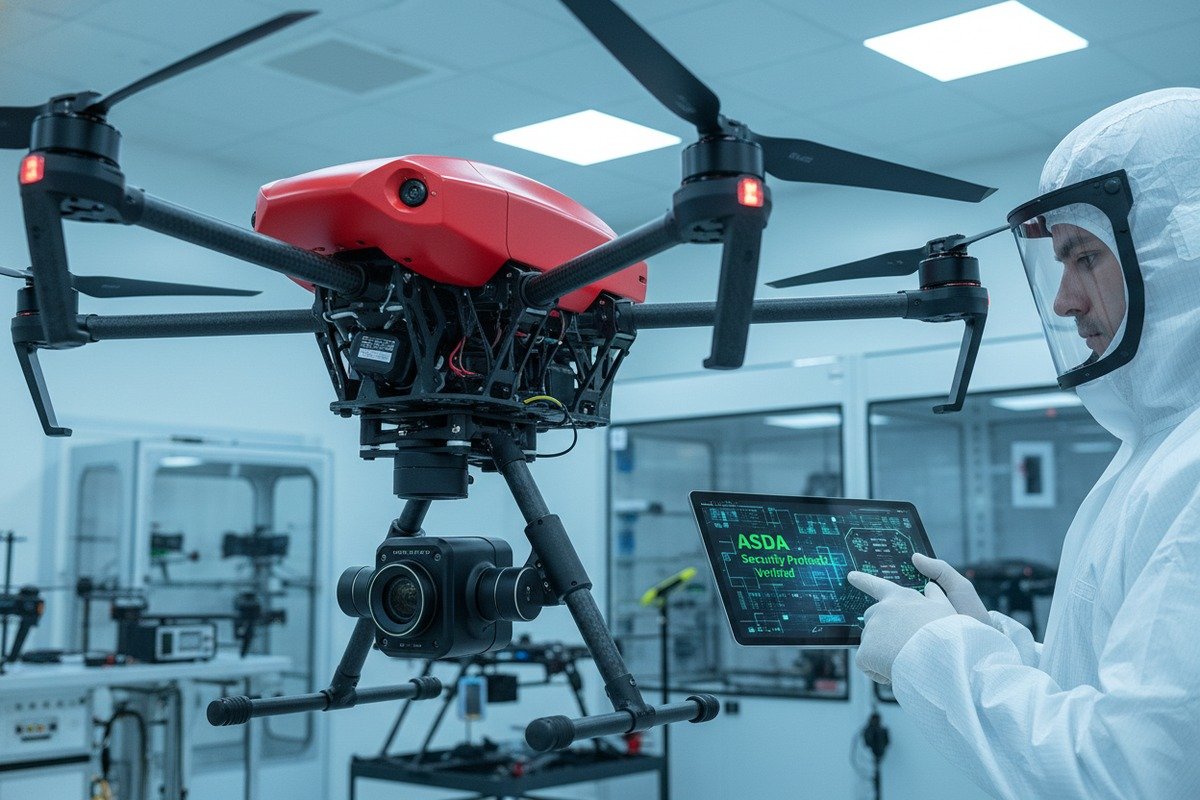
Quantified Performance Benchmarks
Vague terms like "good performance" create disputes. Use specific numbers instead:
| Performance Metric | Minimum Threshold | Testing Condition |
|---|---|---|
| Flight Duration | 45 minutes | Full payload, 15°C, sea level |
| Maximum Payload | 30 kg | Hover at 50m altitude |
| Operational Range | 5 km | Line-of-sight, clear weather |
| Wind Resistance | 12 m/s | Stable hover maintained |
| Water Discharge Rate | 15 L/minute | Full tank, maximum pressure |
| Camera Resolution | 4K at 30fps | Stabilized gimbal active |
These benchmarks give arbitrators clear criteria. Either the drone meets them or it does not.
Testing Protocols
Your contract should specify how testing happens:
Factory Acceptance Testing (FAT):
- Conducted before shipment
- Buyer or third-party inspector present
- All performance metrics verified
- Documentation provided to buyer
Site Acceptance Testing (SAT):
- Conducted after delivery
- Tests real-world conditions
- Local regulatory compliance verified
- Final sign-off before payment
Ongoing Performance Monitoring:
- Flight log requirements
- Maintenance record keeping
- Failure reporting procedures
- Data sharing protocols
Warranty and Liability Terms
Technical disputes often center on warranty coverage. Be specific:
Covered Components:
- Motors and ESCs: 24 months
- Flight controller: 24 months
- Frame and structure: 36 months
- Camera and sensors: 18 months
- Batteries: 12 months or 300 cycles
Exclusions:
- Damage from crashes due to operator error
- Unauthorized modifications
- Use outside specified operating conditions
- Normal wear items (propellers, battery degradation)
Dispute Escalation for Technical Issues
When parties disagree about technical performance, the contract should provide escalation steps:
Step 1: Technical Review – Both parties' engineers review flight data and maintenance records. Target resolution: 14 days.
Step 2: Independent Expert – If Step 1 fails, an independent drone expert examines the equipment and data. Cost split equally. Target resolution: 30 days.
Step 3: Arbitration – If expert determination is rejected, formal arbitration begins with technical evidence from Steps 1-2.
This approach resolves most disputes without full arbitration. Our experience shows that 80% of technical disagreements settle at Step 1 or 2 when documentation is complete.
Data and Cybersecurity Terms
Firefighting drones collect sensitive data. Your contract should address:
- Data ownership and storage location
- Encryption standards for transmitted data
- Access controls and user authentication
- Breach notification procedures
- Liability for data compromise
These terms become important when disputes involve AI analytics, flight path data, or thermal imaging from fire scenes.
How can I ensure that an arbitration award is enforceable in both China and my home country?
Our export contracts must work in multiple legal systems. An unenforceable award is worthless, no matter how clear your legal position.
Ensure enforceability by: (1) selecting a venue in a New York Convention signatory country, (2) following proper arbitration procedures that both countries recognize, (3) avoiding awards that require specific performance conflicting with local law, (4) including clear monetary remedy provisions, and (5) requiring the losing party to maintain assets in enforceable jurisdictions. Both China and the U.S. are New York Convention signatories, making commercial arbitration awards mutually enforceable.

The New York Convention Framework
The 1958 New York Convention 9 provides the foundation for cross-border enforcement. Key points:
- 172 signatory countries including China and the U.S.
- Courts must recognize foreign arbitration awards
- Limited grounds for refusal
- Applies to commercial disputes
However, enforcement is not automatic. You must follow proper procedures.
Procedural Requirements for Enforcement
To enforce an award in China or the U.S., you need:
| Requirement | China | United States |
|---|---|---|
| Original Award | Certified copy required | Certified copy required |
| Arbitration Agreement | Original or certified copy | Original or certified copy |
| Translation | Chinese translation by certified translator | English translation if foreign language |
| Application Deadline | 2 years from award date | 3 years from award date |
| Filing Location | Intermediate People's Court | Federal district court |
Common Enforcement Obstacles
Even with proper documentation, enforcement can face challenges:
Public Policy Exception: Courts can refuse enforcement if the award violates local public policy. This rarely applies to commercial drone disputes but could affect awards involving national security issues.
Improper Notice: If the losing party claims they were not properly notified of arbitration, courts may refuse enforcement. Always use multiple communication methods and document delivery.
Scope Exceeded: If arbitrators decided issues outside the arbitration agreement's scope, courts may refuse enforcement. Keep your arbitration clause scope clear and specific.
Non-Arbitrable Subject Matter: As discussed earlier, some issues cannot be arbitrated. Awards addressing non-arbitrable matters may be unenforceable.
Asset Protection Strategies
Enforcement requires assets to seize. Consider these strategies:
Payment Terms: Structure payments with retention amounts held until performance is verified. This keeps funds in accessible jurisdictions.
Letter of Credit: For large orders, require an LC from a reputable international bank. This provides payment security independent of arbitration.
Parent Company Guarantees: If dealing with a subsidiary, get the parent company to guarantee obligations. This expands enforcement options.
Asset Identification: Know where your counterparty holds assets. Bank accounts, real property, and inventory in New York Convention countries are most accessible.
China-Specific Considerations
When working with Chinese suppliers or buyers, understand these factors:
-
Intermediate People's Courts handle foreign arbitration award enforcement. Larger commercial centers like Shanghai, Beijing, and Shenzhen have more experience.
-
Supreme People's Court Approval may be required if a lower court wants to refuse enforcement. This internal review system generally favors enforcement.
-
Execution Timing can be lengthy. Plan for 6-18 months from application to asset seizure.
-
Currency Controls may affect monetary award transfers. Structure awards in convertible currencies and specify payment mechanisms.
U.S.-Specific Considerations
For awards enforced in the United States:
-
Federal Courts generally favor enforcement under the New York Convention.
-
State Courts may also have jurisdiction depending on asset location.
-
Discovery Tools help identify assets for execution.
-
Attorney Fees may be recoverable in some cases, improving enforcement economics.
Our contracts team includes specific enforcement provisions to avoid common obstacles. This preparation pays off when disputes arise.
Conclusion
Specifying arbitration venue and governing law protects your firefighting drone investment. Choose governing law carefully, select a neutral venue, define technical terms precisely, and plan for enforcement from the start. These steps transform your contract from paper protection into real security.
Footnotes
1. Official site of the ICC International Court of Arbitration, a leading global arbitral institution. ↩︎
2. Official website of the AAA, a major provider of arbitration and alternative dispute resolution services. ↩︎
3. Direct link to the Federal Acquisition Regulation clause concerning drone procurement restrictions. ↩︎
4. Official text of the act outlining federal restrictions on drones from certain foreign entities. ↩︎
5. Official government source for the Federal Acquisition Regulation (FAR), governing federal procurement. ↩︎
6. Wikipedia page explaining the International Organization for Standardization and its certifications. ↩︎
7. Official UNCITRAL page detailing its arbitration rules for international commercial disputes. ↩︎
8. Discusses the importance and types of quantifiable metrics for evaluating engineering performance. ↩︎
9. Provides comprehensive information on the international treaty for enforcing arbitration awards. ↩︎

 English
  Español de México
  Deutsch
  Français
  Русский
  العربية
