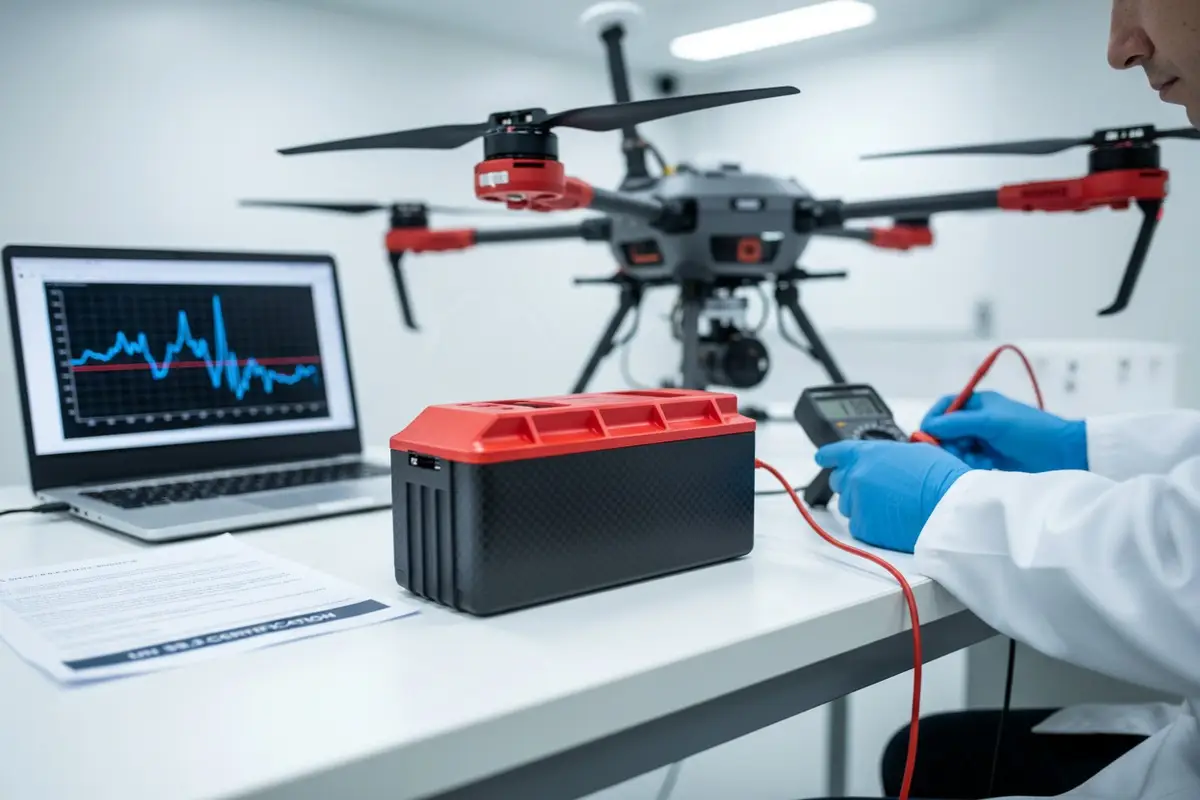
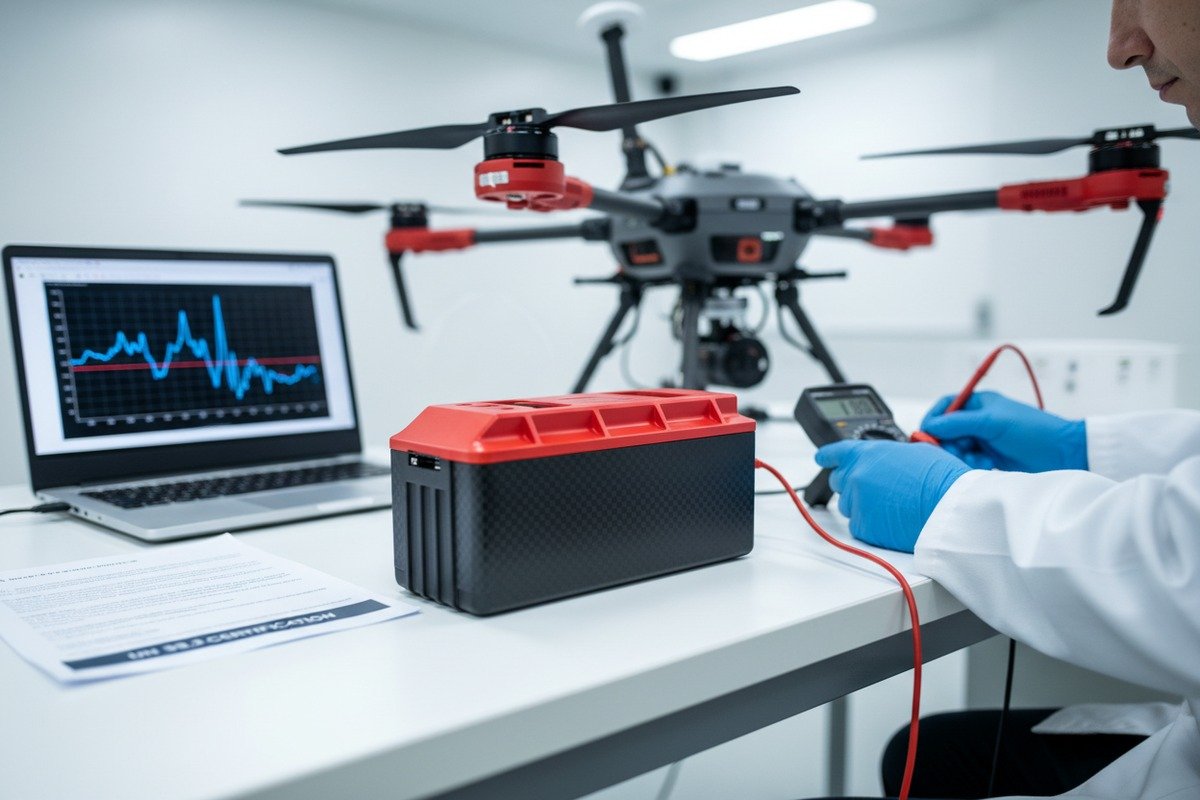
When our production line faced a sudden battery shortage last year, we learned a hard lesson. Our primary supplier failed to deliver, and we scrambled to find alternatives. The backup supplier we rushed to use delivered batteries that looked identical but performed poorly. Three drones failed during client demonstrations. That experience cost us money and trust.
To verify backup battery suppliers, you must confirm safety certifications through third-party audits, test samples in accredited labs, conduct on-site factory inspections, map their raw material supply chains, and validate their quality management systems against international standards like ISO 9001 and UN 38.3 transport requirements.
This guide breaks down the exact steps we now follow. Whether you source batteries for firefighting drones, agricultural sprayers, or cargo delivery UAVs, these verification methods protect your business from costly mistakes.
How can I verify that a backup battery supplier holds the necessary safety certifications for my industrial drone fleet?
Our engineering team has rejected dozens of battery samples over the years. Many suppliers claim certifications they do not actually hold. safety certifications 1 Some show expired documents. Others present certificates for different product models. The risk is real—uncertified batteries can cause fires, void insurance, and trigger regulatory penalties.
Verify backup battery supplier certifications by requesting original certification documents, cross-checking them in official databases like UL Product iQ or the EU NANDO list, demanding third-party test reports for UN 38.3 compliance, and scheduling independent audits through recognized bodies such as TÜV, Intertek, or Bureau Veritas.

Understanding Essential Battery Certifications
Industrial drone batteries must meet strict safety standards. The requirements vary by market and application. Here are the key certifications you should verify:
| Certification | Purpose | Verification Method |
|---|---|---|
| UN 38.3 | Transport safety testing | Request full test report from accredited lab |
| UL 2054/1642 | Product safety for lithium batteries | Check UL Product iQ database |
| IEC 62133 | Safety requirements for portable cells | Demand third-party test certificate |
| CE Marking | EU market access | Verify Declaration of Conformity |
| UN/DOT | US transport compliance | Review shipping documentation |
Steps to Authenticate Certification Claims
First, ask for the original certification document—not a copy. Look for the certificate number, issue date, expiration date, and the exact product model covered. Many suppliers show certificates for a different battery model and hope you won't notice.
Second, verify the certificate in official databases 2. The UL Product iQ database lets you search by certificate number. The EU NANDO database lists all Notified Bodies authorized to issue CE certifications. If the issuing body isn't listed, the certificate may be fraudulent.
Third, request the full test report. A certificate alone tells you the battery passed. The test report shows exactly what tests were performed and the results. Our quality team always reviews UN 38.3 test reports page by page. We look for altitude simulation, thermal cycling, vibration, shock, short circuit, impact, overcharge, and forced discharge test results.
When to Engage Third-Party Auditors
For high-volume orders or critical applications like firefighting drones, we recommend third-party verification audits 3. Companies like Bureau Veritas maintain over 8,000 auditors worldwide. They can visit the supplier's facility, inspect their quality management systems 4, and verify that the certified products match what they actually manufacture.
The cost of a third-party audit ranges from $2,000 to $10,000 depending on scope and location. This seems expensive until you compare it to a product recall or a drone fire incident. One of our clients saved over $50,000 by catching a fraudulent certificate before placing a large order.
What should I look for to ensure a new supplier can meet my specific OEM requirements and technical design standards?
When we develop custom drone configurations for clients, battery compatibility is critical. A battery that works perfectly in one airframe may fail in another due to voltage curves, discharge rates, or physical dimensions. We've seen suppliers promise OEM capabilities they cannot deliver.
Ensure OEM compatibility by providing detailed technical specifications upfront, requesting sample batteries for bench testing, verifying the supplier's engineering team can modify designs, confirming their production equipment matches your volume needs, and establishing clear quality acceptance criteria in written agreements.
Creating a Comprehensive Technical Specification
Your specification document should leave no room for interpretation. technical specifications 5 Include these elements:
| Specification Category | Details to Include |
|---|---|
| Electrical | Nominal voltage, capacity (Ah), max continuous discharge rate, peak discharge rate, charging rate, cut-off voltages |
| Physical | Exact dimensions, weight limits, connector type and pinout, mounting interface |
| Environmental | Operating temperature range, storage conditions, humidity tolerance |
| Performance | Cycle life requirements, capacity retention after X cycles, internal resistance limits |
| Safety | Required certifications, protection circuit specifications, thermal runaway prevention |
Sample Testing Protocol
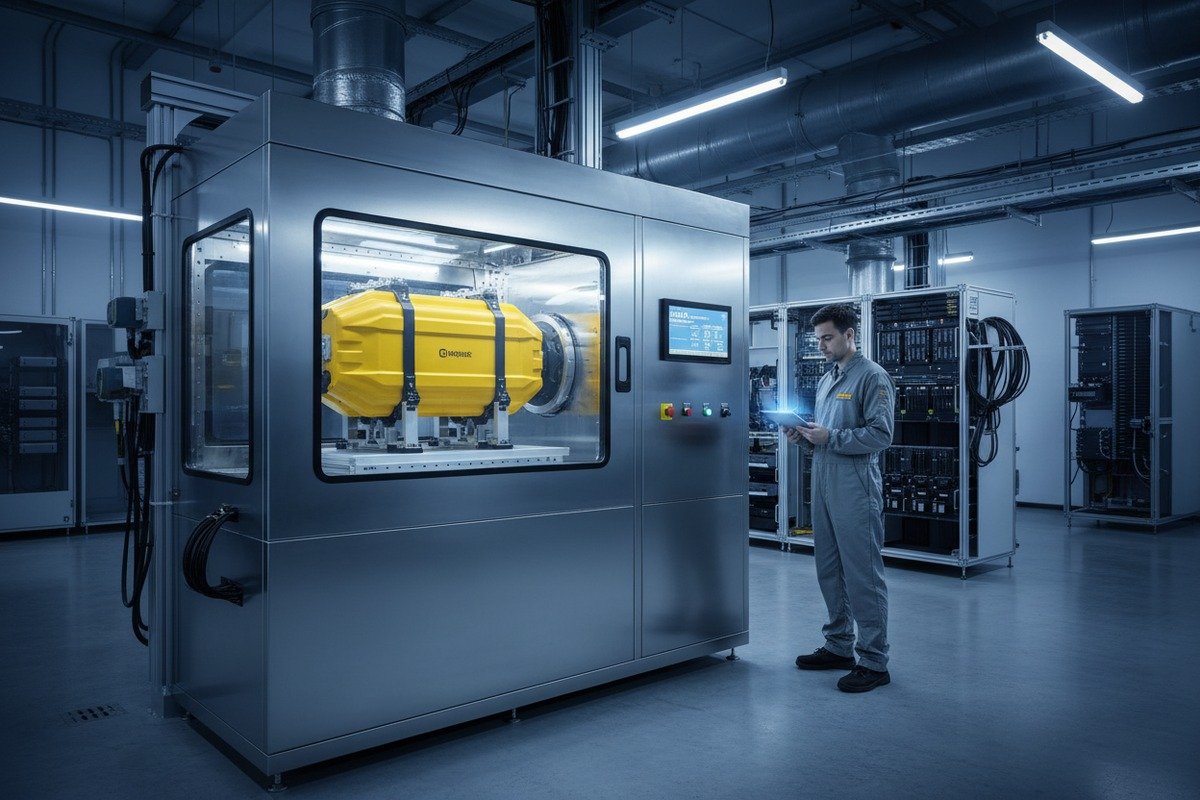
Never trust specifications on paper alone. Our standard practice involves ordering 5-10 sample batteries for rigorous testing. We run them through our own test protocol:
First, we verify physical dimensions with precision calipers. Even 1mm deviation can cause fitment issues in our drone frames. Second, we measure actual capacity through full charge-discharge cycles at rated current. Third, we test discharge performance at various C-rates while monitoring voltage sag and temperature rise. Fourth, we conduct thermal imaging during high-load operation to identify hotspots.
One supplier recently claimed their batteries could deliver 50A continuous discharge. Our testing showed voltage collapse above 35A. Had we not tested samples, our firefighting drones would have experienced mid-flight power failures.
Evaluating Engineering Support Capabilities
A true OEM partner should have engineers who can discuss your requirements intelligently. During initial calls, we ask technical questions to gauge their expertise. Can they explain their cell selection criteria? Do they understand the difference between high-energy and high-power cell chemistries? Can they provide thermal simulation data for their pack designs?
We also request factory tours—virtual or in-person. We want to see their SMT lines for BMS assembly, their spot welding equipment for cell connections, their testing stations for end-of-line quality checks. A supplier who hesitates to show their production floor often has something to hide.
Quality Agreement Essentials
Document everything in a formal quality agreement. This should specify incoming inspection criteria, in-process quality checks, final inspection requirements, and what happens when products fail to meet specifications. Include provisions for lot traceability, defect notification timelines, and corrective action procedures.
How do I assess a supplier's track record for reliable door-to-door delivery and customs clearance during supply chain shifts?
Our export team handles shipments to over 30 countries. We've learned that manufacturing quality means nothing if products sit in customs for weeks or arrive damaged. Battery shipments face extra scrutiny because lithium-ion cells are classified as dangerous goods 6. Many suppliers quote delivery times they cannot meet.
Assess delivery reliability by requesting references from existing customers in your region, reviewing their dangerous goods shipping certifications, verifying their freight forwarder partnerships, examining their customs documentation accuracy, and starting with small trial orders to test their actual performance before committing to large volumes.

Understanding Battery Shipping Requirements
Lithium-ion batteries require special handling throughout the logistics chain. Shippers must comply with IATA regulations for air freight 7 and IMDG codes for sea freight. The supplier should provide:
| Document | Purpose | Your Action |
|---|---|---|
| UN 38.3 Test Summary | Proves batteries passed transport safety tests | Verify test lab accreditation |
| Material Safety Data Sheet (MSDS) | Details hazardous material handling requirements | Confirm matches your battery model |
| Dangerous Goods Declaration | Required for carrier acceptance | Review for accuracy and completeness |
| Packing List with Battery Details | Customs clearance documentation | Check quantities, weights, and values |
| Certificate of Origin | May affect import duties | Verify country of origin claims |
Evaluating Logistics Partner Quality
Ask potential suppliers who handles their international shipments. Established suppliers work with experienced dangerous goods forwarders. They should name specific companies—DHL, FedEx, DSV, or specialized battery logistics firms.
Request tracking data from recent shipments to customers in your country. Look for consistent transit times, minimal customs delays, and proper handling of any issues that arose. A supplier who cannot provide this information likely lacks the export experience your business requires.
Trial Order Strategy
We recommend a phased approach to new supplier relationships:
Phase one: Order a small quantity—perhaps 10-20 battery packs. Track every aspect of the shipment. Note the order-to-ship time, actual transit duration, documentation accuracy, and product condition upon arrival.
Phase two: If the trial succeeds, place a medium-sized order. Test their ability to scale while maintaining quality and delivery performance.
Phase three: Only after two successful orders should you consider them for primary supply or high-volume backup arrangements.
This approach costs more in time than placing one large order. But it has saved us from disasters multiple times. One supplier delivered excellent samples but took 45 days for a production order they quoted at 15 days. We discovered this during a trial order rather than during a critical supply shortage.
Customs Clearance Considerations
Different countries have different import requirements for lithium batteries. Some require pre-approval from transportation authorities. Others mandate specific labeling in local languages. Your supplier should understand these requirements for your market.
Ask them to describe the customs clearance process for your country. Can they provide the specific documents your customs authority requires? Have they successfully cleared shipments there before? A knowledgeable supplier will discuss HS codes, duty rates, and any import restrictions that apply.
What methods can I use to confirm a backup manufacturer provides the long-term technical support and durable components my business needs?
When our field service team diagnoses a drone problem, we often need to consult with the battery supplier. We need fast responses to technical questions. We need access to replacement cells. We need firmware updates for battery management systems 8. A supplier who disappears after the sale creates massive problems for our customers.
Confirm long-term support capability by evaluating the supplier's warranty terms and response time commitments, verifying they stock spare parts and replacement components, testing their technical support responsiveness before purchasing, and reviewing their product roadmap for continued development and improvement.

Warranty and Support Terms Comparison
Not all warranties are equal. Examine the fine print carefully. Here's what to compare:
| Support Element | Minimum Acceptable | Preferred Standard |
|---|---|---|
| Warranty Period | 12 months | 24+ months |
| Response Time | 48 hours | 24 hours |
| Spare Parts Availability | 2 years after purchase | 5+ years after purchase |
| Technical Hotline | Email only | Phone + email + video |
| Firmware Updates | Paid | Included |
| On-Site Support | Available for fee | Available with priority scheduling |
Testing Support Responsiveness
Before signing any agreement, test their support system. Send technical questions via their official channels. Time how long they take to respond. Evaluate the quality of their answers. Are they generic copy-paste responses or thoughtful technical guidance?
We sent the same three technical questions to five potential backup suppliers. Response times ranged from 2 hours to 11 days. Answer quality varied from detailed explanations with diagrams to vague one-sentence replies. This simple test eliminated two suppliers from consideration immediately.
Component Durability Assessment
Battery durability depends on cell quality, BMS design, and construction methods. Ask suppliers for cycle life test data 9. Request accelerated aging test results if available. Inquire about their cell sourcing—do they use tier-one manufacturers like Samsung SDI, LG Chem, CATL, or BYD? Or do they source from unknown factories?
Physical construction matters too. We've seen batteries with poorly welded cell connections that failed after minor vibration. We've encountered BMS boards with components that corroded in humid environments. Our incoming inspection now includes X-ray imaging of sample batteries to verify internal construction quality.
Evaluating Long-Term Viability
A backup supplier should be financially stable and committed to the battery business. Research their company history. How long have they been in business? Are they growing or shrinking? Do they invest in R&D?
Ask about their product roadmap. Battery technology evolves rapidly. A good supplier should discuss upcoming improvements—new cell chemistries, better BMS features, enhanced thermal management. A supplier with no development plans may not exist in five years.
Building Relationships Before Emergencies
The worst time to establish a backup supplier relationship is during an actual supply crisis. Build these relationships proactively. Place occasional small orders to keep the account active. Maintain regular communication even when you don't need anything. When disruptions occur, suppliers prioritize customers they know and trust.
Our company maintains qualified backup suppliers for every critical component. We order from them at least quarterly, even if we don't urgently need the products. This keeps us in their system as an active customer and ensures their quality remains consistent with our expectations.
Conclusion
Supply chain disruptions will happen again. The question is whether your business will be prepared. Verify backup battery suppliers thoroughly before you need them. Check certifications in official databases. Test samples in your own facility. Evaluate delivery capabilities with trial orders. Confirm long-term support commitments. These steps protect your operations and your customers.
Footnotes
1. Provides comprehensive information on battery safety standards and certifications. ↩︎
2. Explains UL Product iQ, a key official database for certification verification. ↩︎
3. Details third-party audit services for battery manufacturers to ensure quality and compliance. ↩︎
4. Defines ISO 9001 and its requirements for effective quality management systems. ↩︎
5. Provides a comprehensive guide to understanding various battery technical specifications. ↩︎
6. Replaced HTTP 404 with the official IATA page on lithium batteries as dangerous goods, an authoritative source for transport regulations. ↩︎
7. Replaced HTTP unknown with the official IATA page on lithium battery regulations for air transport, an authoritative source. ↩︎
8. Replaced HTTP 403 with a Wikipedia article on Battery Management Systems, which provides a comprehensive and accessible overview from a generally authoritative source. ↩︎
9. Discusses what battery cycle life is and methods for verifying manufacturers’ claims. ↩︎



 English
  Español de México
  Deutsch
  Français
  Русский
  العربية
Comments
No comments yet. Be the first to share your thoughts!
Leave a Comment