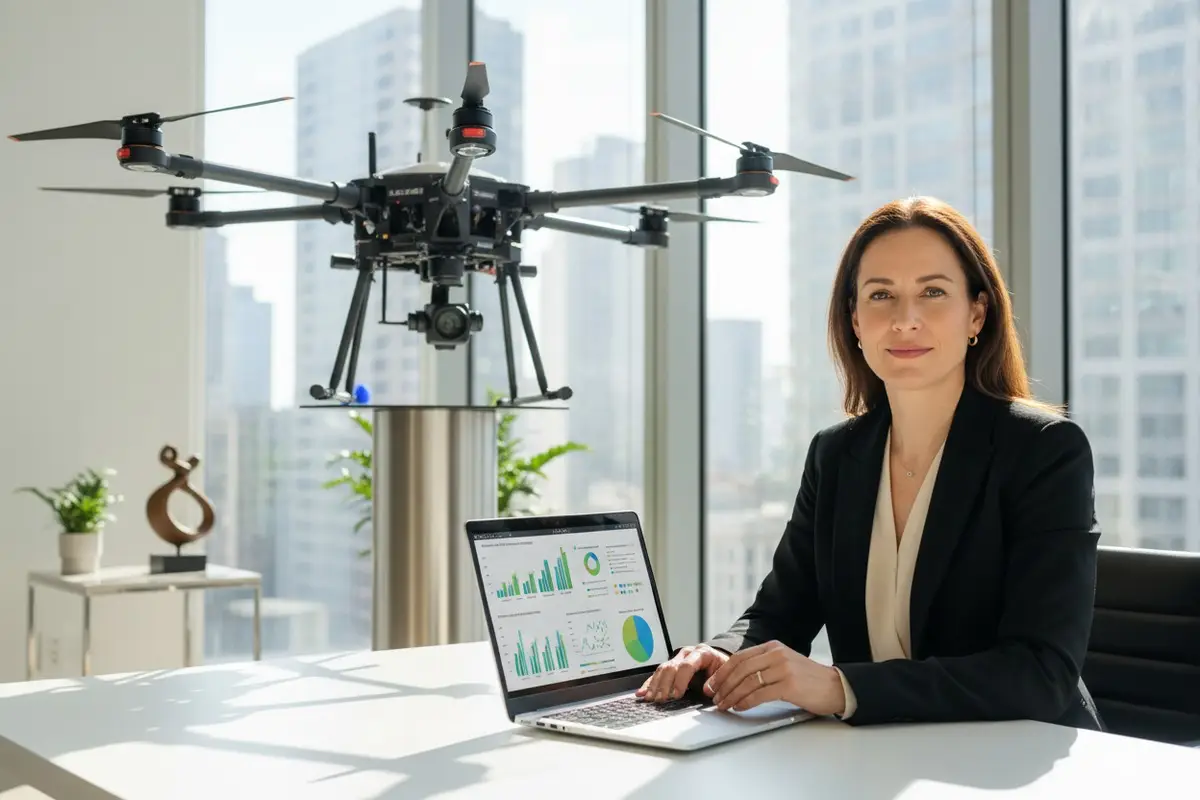

Every week, our production line receives questions from importers and distributors who need carbon data for sustainability reports Global Warming Potential data 1. The problem is clear: you want to prove your agricultural drones are eco-friendly, but finding reliable life cycle data feels impossible.
To inquire about life cycle carbon footprint data for agricultural drones, contact manufacturers directly requesting ISO 14040/14044-compliant Life Cycle Assessment reports. Ask for emissions data across all stages: raw material extraction, manufacturing, operation, and disposal. Specify that you need CO2-equivalent values per hectare or per unit.
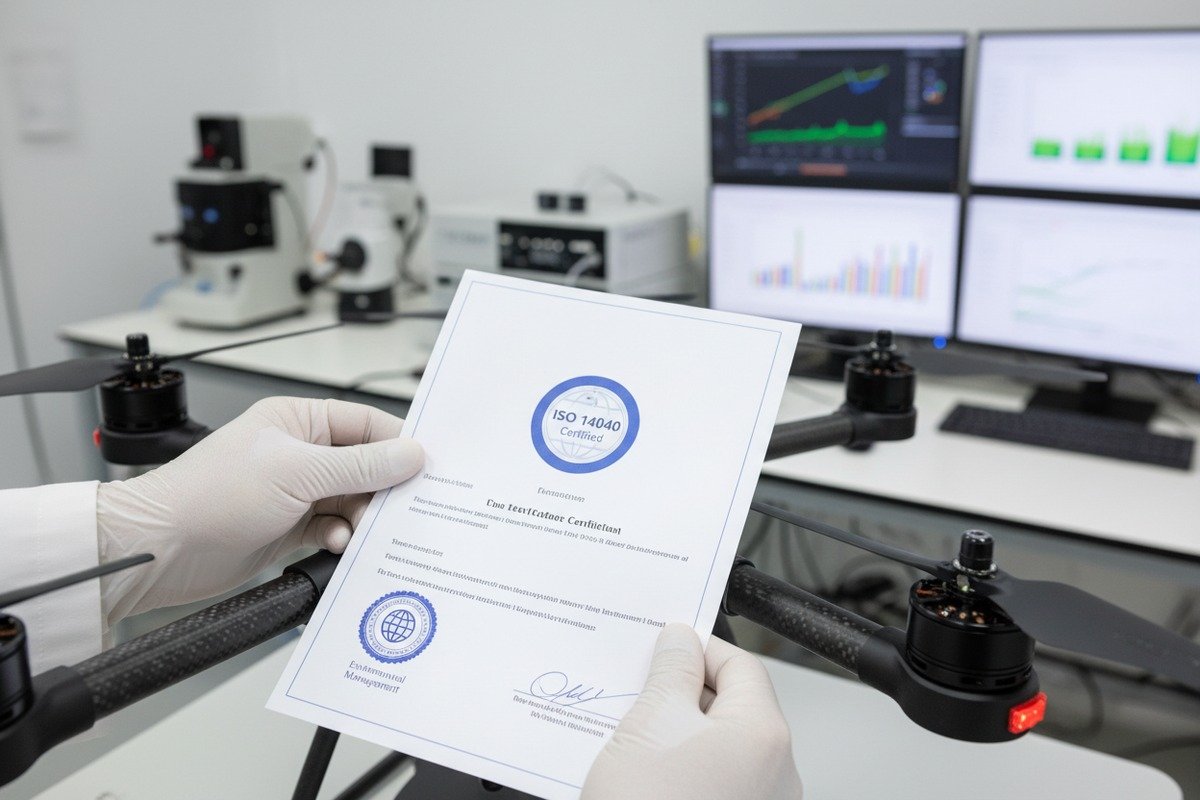
This guide walks you through the exact steps to get this data ISO 14001 environmental management certification 2. We will cover how to request LCA reports, what certifications matter, how to track raw material emissions, and how to use this data for your sustainability reporting.
How do I request a comprehensive life cycle assessment report from my drone manufacturer?
Many procurement managers contact our engineering team asking for environmental data. They know their clients demand proof. But they often do not know what questions to ask or what format the data should come in.
To request a comprehensive LCA report, email your manufacturer's technical support team asking for an ISO 14040/14044-compliant document. Specify you need Global Warming Potential data in kg CO2e per unit or per hectare. Request breakdowns for production, use phase, and end-of-life disposal stages.

Understanding What an LCA Report Contains
A Life Cycle Assessment report 3 covers four main phases of your drone's environmental impact. These phases are raw material extraction, manufacturing, operational use, and disposal or recycling. Each phase contributes differently to the total carbon footprint.
Our engineers track these numbers carefully during production. Battery production 4 creates the largest impact. Studies show battery and electronics manufacturing dominate the production phase emissions. The operational phase depends on how you charge the drone and how many hours you fly.
The Four LCA Phases Explained
| LCA Phase | What It Covers | Key Emission Sources |
|---|---|---|
| Raw Material Extraction | Mining, refining, processing | Lithium, rare earth minerals, carbon fiber |
| Manufacturing | Assembly, testing, packaging | Factory energy, component shipping |
| Operational Use | Flights, charging, maintenance | Electricity for charging, replacement parts |
| End-of-Life | Disposal, recycling, refurbishment | Waste processing, material recovery |
When you contact a manufacturer, be specific. Do not just ask for "environmental data." Send a clear email template like this:
"Please provide the LCA report for [drone model]. I need kg CO2e values for each lifecycle stage: production, use, and disposal. Please include the assessment methodology and any ISO compliance certifications."
Benchmarks You Should Know
Before you send your request, know the benchmarks. This helps you evaluate the response. Research shows drone spraying produces approximately 14.485 kg CO2/ha compared to 36.2 kg CO2/ha for conventional tractor methods. Energy use is also lower—146.84 MJ/ha for drones versus 365.26 MJ/ha for tractors.
| Metric | Agricultural Drone | Conventional Tractor | Difference |
|---|---|---|---|
| CO2 Emissions (kg/ha) | 14.485 | 36.2 | 2.5x lower |
| Energy Use (MJ/ha) | 146.84 | 365.26 | 2.43x lower |
| Energy Ratio (excl. pesticide) | Baseline | 12x higher | 12x advantage |
| Drift Rate (%) | 16.76 | 7.66-38.6 | More controlled |
When our export team prepares documentation for US and European clients, we include these comparisons. This context helps you understand the relative environmental benefit of drone technology.
What to Do If They Cannot Provide Full Data
Some manufacturers do not have complete LCA reports. This is common because there are no universal standards for agricultural drone LCA yet. If you face this situation, ask for partial data. Request energy consumption per flight hour. Ask for battery specifications and expected lifespan. Get information about recyclable components.
Third-party tools can help fill gaps. Platforms like Agmatix or Boomitra offer calculators that integrate drone-specific inputs. You can combine partial manufacturer data with these tools to build a complete picture.
What environmental certifications should I look for when vetting my agricultural drone supplier?
Our quality control team handles certification questions daily. Distributors in Europe especially need this documentation. Without proper certifications, you cannot import products or win government contracts.
Look for ISO 14001 environmental management certification, ISO 14040/14044 LCA compliance, CE marking for European markets, and EPA compliance for US operations. For carbon credits, verify if suppliers work with platforms certified by Verra or ICROA standards.

Core Certifications You Need
Environmental certifications fall into two categories: management system certifications and product-specific certifications. ISO 14001 shows a manufacturer has an environmental management system in place. This means they actively track and reduce their environmental impact.
Product certifications are different. CE marking 6 is mandatory for European markets. It covers safety, health, and environmental protection requirements. For the US market, EPA compliance 7 matters for any equipment used in pesticide application.
Certification Comparison Table
| Certification | What It Covers | Required For | Verification Method |
|---|---|---|---|
| ISO 14001 | Environmental management system | Global credibility | Request certificate, check expiry |
| ISO 14040/14044 | LCA methodology compliance | Sustainability reports | Ask for compliant LCA report |
| CE Marking | Product safety and environment | European Union imports | Check declaration of conformity |
| EPA Compliance | Pesticide application equipment | United States operations | Verify registration number |
| Verra/ICROA | Carbon credit eligibility | Carbon offset programs | Check registry listing |
When we prepare export documentation for our hexacopter models, we include all relevant certificates. Our carbon fiber frames and flight controllers meet CE requirements. We can provide documentation for customs clearance in both US and European markets.
Carbon Credit Certifications
If your clients participate in carbon credit programs, additional certifications matter. Platforms like Boomitra use AI and satellite data to verify soil carbon. They work with drones to improve measurement accuracy. If you want your drone data to count toward carbon credits, ask your supplier about compatibility with these platforms.
Verra and ICROA certifications indicate a carbon offset program meets international standards. Ask manufacturers if their drones have been used in verified carbon measurement projects. This adds credibility to your sustainability claims.
Red Flags to Watch For
Be cautious of suppliers who cannot provide certification documents. Ask for certificate numbers and verify them independently. Check expiration dates. Some certifications require annual renewal.
Our experience shipping to the US taught us that documentation problems cause delays. When certifications are missing or expired, customs holds shipments. This creates economic losses for importers. We maintain current certifications specifically to prevent these issues for our distributors.
How can I track the carbon footprint of the raw materials used in my custom drone production?
When clients work with our design team on custom OEM projects, raw material questions come up often. Custom drones mean custom supply chains. Tracking emissions gets complicated quickly.
Track raw material carbon footprints by requesting supply chain transparency reports from your manufacturer. Ask for Scope 3 emissions data covering component suppliers. Focus on batteries, carbon fiber frames, and electronic components—these contribute the most to production-phase emissions.

Why Raw Materials Matter Most
Battery production dominates the carbon footprint of agricultural drones. Lithium extraction and processing create significant emissions. Carbon fiber production also has a notable impact. When you order a custom drone with specific battery capacity or frame specifications, you change the carbon footprint.
Our production team sources batteries from certified suppliers. We track the origin of lithium and cobalt used in our cells. This information goes into our supply chain documentation. When US distributors need this data for sustainability reports, we can provide it.
Key Components and Their Carbon Impact
| Component | Primary Materials | Carbon Intensity | Tracking Method |
|---|---|---|---|
| Battery Pack | Lithium, cobalt, nickel | Highest impact | Supplier certificates, origin documentation |
| Carbon Fiber Frame | PAN fiber, epoxy resin | High impact | Manufacturing energy records |
| Motors | Copper, rare earth magnets | Medium impact | Supplier declarations |
| Electronics | Silicon, various metals | Medium impact | Component traceability |
| Propellers | Carbon fiber or plastic | Low impact | Material specifications |
Using Scope 3 Emissions Data
Scope 3 emissions cover your supply chain—everything outside your direct operations. For drone importers, this includes manufacturing emissions from your supplier's factory and their component suppliers upstream.
Ask your manufacturer for Scope 3 data. Scope 3 emissions data 8 Tools like Digital Crop Advisor help track these emissions. They integrate with farm-level carbon calculators. When our clients use these tools, they can input drone production data alongside other farm inputs.
Steps for Custom OEM Projects
If you are developing a custom drone with a Chinese manufacturer, request carbon data early. During the design phase, ask how different specifications affect emissions. Larger batteries mean more capacity but higher production emissions. Lighter frames reduce operational energy but may require more carbon-intensive materials.
Our engineering team runs these calculations during custom projects. We can provide emissions estimates for different design options. This helps procurement managers make informed decisions that balance performance and sustainability.
When we work with agricultural service companies on specialized spraying drones, we document every component. The matte black carbon fiber frame on our hexacopter model has full traceability. We know where the fiber came from and how much energy the manufacturing process used.
Building Your Own Tracking System
Create a spreadsheet to track raw material emissions across your drone fleet. Include columns for component type, supplier, origin country, and estimated kg CO2e. Update this when you receive new shipments. Over time, you build a database that supports sustainability reporting.
Can my supplier provide the carbon emission data I need for my company's sustainability reporting?
Many of our distribution partners face pressure from their own clients. Government contractors need sustainability reports. Large farms want documentation for grant applications. The question is whether your supplier can give you usable data.
Yes, reputable suppliers can provide carbon emission data for sustainability reporting. Request operational emissions per hectare, production phase CO2e values, and comparative analysis against conventional methods. Ensure data formats match your reporting framework, whether GRI, CDP, or internal standards.
What Data Format Do You Need?
Different reporting frameworks require different formats. The Global Reporting Initiative uses specific metrics. CDP questionnaires ask for data in particular units. Before you request data from your supplier, know your reporting requirements.
When our US clients prepare sustainability reports, they often need kg CO2e per hectare of treated farmland. They also need comparative data showing drone advantages over traditional methods. We prepare both.
Data Points for Common Reporting Frameworks
| Framework | Required Metrics | Units | What to Request |
|---|---|---|---|
| GRI Standards | Scope 1, 2, 3 emissions | Tonnes CO2e | Annual production emissions, supply chain data |
| CDP | Emissions intensity | kg CO2e/unit | Per-drone manufacturing footprint |
| TCFD | Climate risk assessment | Various | Long-term emission reduction projections |
| Internal KPIs | Operational efficiency | kg CO2e/ha | Per-application emission factors |
How Drones Improve Your Carbon Numbers
Agricultural drones create positive sustainability stories. When you replace tractor spraying with drone spraying, emissions drop significantly. A 2ha operation produces 14.485 kg CO2 with drones versus 36.2 kg CO2 with conventional methods. That is a measurable improvement you can report.
Precision agriculture adds more benefits. Drones enable targeted spraying, reducing chemical use. They enable crop scouting, cutting vehicle trips across fields. Soil monitoring from drones reduces tillage, which preserves soil carbon. All these applications generate reportable sustainability benefits.
Integration with Farm Carbon Calculators
Modern sustainability reporting connects drone data with broader farm operations. Software platforms integrate drone application data with fertilizer tracking, fuel consumption, and yield data. This gives a complete picture of farm-level emissions.
Our clients use several approaches. Some enter drone data manually into calculators. Others use API connections between drone flight logs and reporting software. When you purchase drones with detailed operational data logging, integration becomes easier.
Getting Data for Carbon Credit Programs
Carbon credit opportunities are growing in agriculture. Platforms verify soil carbon increases using satellite and drone data. If your drones collect data that feeds into these systems, you can potentially monetize carbon sequestration 9.
Ask your supplier about data compatibility with carbon verification platforms. Our hexacopter models log flight paths, application rates, and coverage areas. This data can support verification processes. Some clients use drone-mounted sensors to directly measure soil conditions, adding another data layer.
The key is systematic data collection from day one. When you establish proper data practices early, sustainability reporting becomes routine rather than a scramble for information at year end.
Conclusion
Getting carbon footprint data for agricultural drones requires specific requests to manufacturers. Ask for ISO-compliant LCA reports, verify environmental certifications, track raw material origins, and ensure data formats match your reporting needs. The effort pays off in credible sustainability claims.
Footnotes
1. Explains Global Warming Potential (GWP) values, their calculation, and their importance in climate policy. ↩︎
2. Describes ISO 14001 as a framework for environmental management systems to reduce impacts and ensure compliance. ↩︎
3. Provides a comprehensive overview of Life Cycle Assessment methodology and its stages. ↩︎
4. Details the significant environmental impact and carbon footprint associated with battery manufacturing processes. ↩︎
5. Explains the principles, framework, requirements, and guidelines for conducting Life Cycle Assessments. ↩︎
6. Explains CE marking as a mandatory certification for products sold within the European Economic Area. ↩︎
7. Outlines EPA regulations and compliance requirements for pesticide devices and application equipment in the US. ↩︎
8. Defines Scope 3 emissions as indirect emissions in a company’s value chain, crucial for comprehensive reporting. ↩︎
9. Provides an official explanation of carbon sequestration from the U.S. Geological Survey. ↩︎

 English
  Español de México
  Deutsch
  Français
  Русский
  العربية
Comments
No comments yet. Be the first to share your thoughts!
Leave a Comment