

Every year at our production facility in Xi’an, we meet buyers who share horror stories about suppliers who vanished after the first payment IP ratings 1. The problem is real. Many procurement managers struggle to separate reliable manufacturers from flashy marketers. This confusion leads to delayed shipments, poor after-sales support, and costly product failures in the field.
To evaluate agricultural drone supplier reputation, verify their manufacturing history, check independent client testimonials, assess trade show professionalism through live demonstrations, confirm engineering capabilities via technical discussions, and validate delivery records with customs documentation. These steps protect your investment and ensure long-term partnership success.
The sections below break down each evaluation step. You will learn practical methods to research suppliers before meetings and what to observe at trade shows. Let us start with verifying industry reputation.
How can I verify the industry reputation and past client feedback of an agricultural drone manufacturer?
When our export team prepares client reference lists, we understand why buyers ask for proof. Trust is earned through documented performance, not promises. Many suppliers claim excellence but cannot provide evidence. This gap between claims and reality causes major procurement headaches.
Verify agricultural drone manufacturer reputation by requesting client references, checking online reviews on platforms like Alibaba and LinkedIn, reviewing case studies from similar farming operations, confirming company certifications such as ISO 9001, and asking for warranty claim statistics. Reputable manufacturers provide transparent documentation without hesitation.

Start With Online Research
Before any direct contact, spend time researching the supplier online. Visit their official website and check for detailed company history 2. Look for specific information about their founding year, factory location, and team size. Vague descriptions often signal inexperience.
Search for the company name on industry forums and social media. LinkedIn company pages 3 reveal employee count and recent activity. Alibaba seller profiles show transaction history and buyer ratings. Google the company name plus "review" or "complaint" to find unfiltered feedback.
Request Verifiable Client References
Any serious manufacturer should provide at least three client references. Ask for contacts in your target market. If you import to the United States, request references from American distributors or end users.
When contacting references, ask specific questions:
| Question Category | Sample Questions |
|---|---|
| Product Quality | Did the drones match advertised specifications? Any defects? |
| Delivery | Were shipments on time? Any customs issues? |
| Support | How quickly did they respond to technical problems? |
| Parts | Are spare parts available? What are delivery times? |
| Communication | Is the team responsive and professional? |
Check Certifications and Compliance Records
Legitimate manufacturers hold relevant certifications. For agricultural drones, look for ISO 9001 quality management certification 4. IP ratings indicate dust and water resistance levels. CE marking 5 confirms European compliance standards.
Ask for copies of certificates. Verify them directly with issuing bodies when possible. Some suppliers display fake or expired certifications. A quick verification call protects you from fraud.
Evaluate Warranty and Support Terms
Warranty terms reveal manufacturer confidence. Standard agricultural drone warranties range from 12 to 24 months. Ask what the warranty covers. Some warranties exclude batteries, motors, or crash damage.
Request warranty claim statistics. Reputable manufacturers track return rates and common failure points. They use this data to improve products. Suppliers who refuse to share this information may hide quality problems.
What specific signs of professionalism should I look for at a supplier's trade show exhibit?
Our team attends major agricultural trade shows each year. We notice how buyers evaluate booths. The best procurement managers look beyond fancy displays. They focus on substance. Poor suppliers often invest in marketing but lack technical depth.
At trade shows, evaluate supplier professionalism by observing booth staff technical knowledge, requesting live demonstrations under realistic conditions, asking about regulatory compliance, checking for transparent pricing including maintenance costs, and noting willingness to discuss product limitations. Professional suppliers answer difficult questions directly.
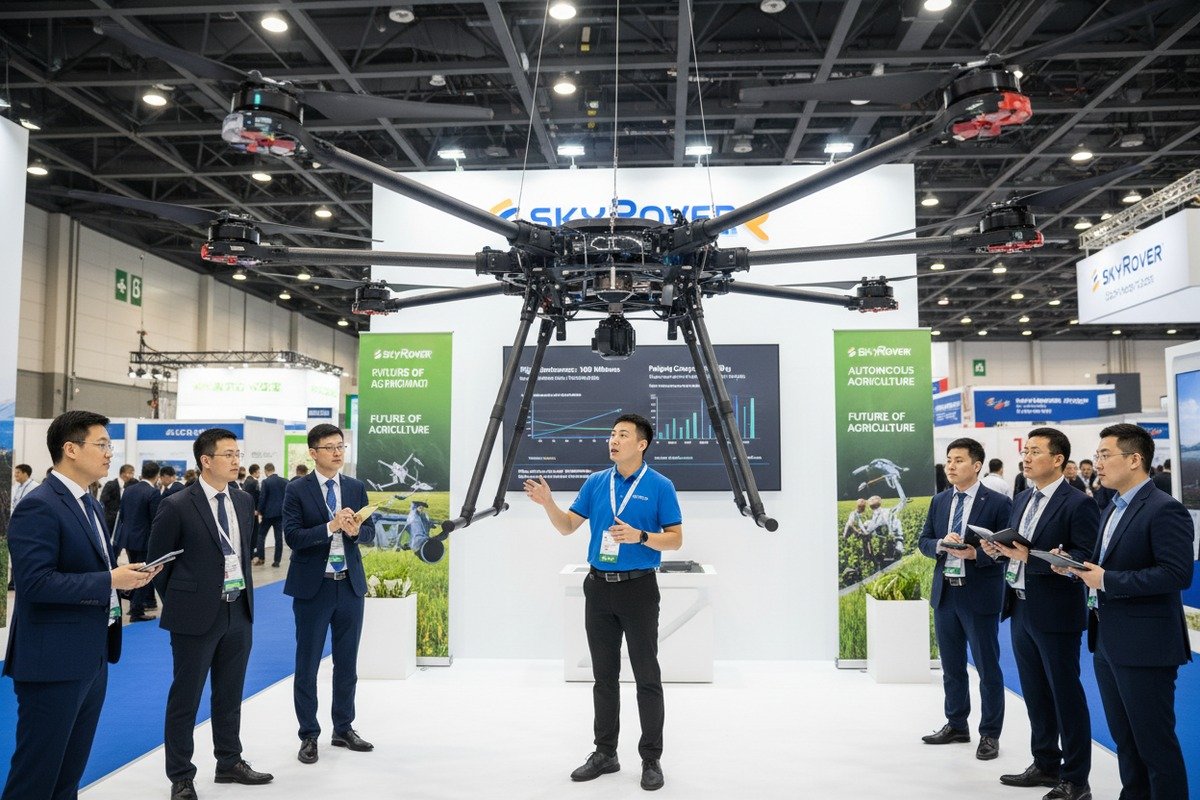
Assess Technical Staff Knowledge
The people at the booth matter more than the display. Ask technical questions about payload capacity, flight time, and sensor compatibility. Professional staff explain specifications clearly. They discuss trade-offs honestly.
Test their knowledge with scenario questions:
| Scenario | What to Listen For |
|---|---|
| "How does payload affect flight time?" | Specific numbers, not vague answers |
| "What happens in 15 mph winds?" | Honest limitations, safety thresholds |
| "Can this integrate with my farm software?" | Compatibility details, API availability |
| "What maintenance is needed monthly?" | Clear schedules, cost estimates |
Beware of staff who deflect questions or promise everything. This signals either poor training or intentional deception.
Demand Realistic Demonstrations
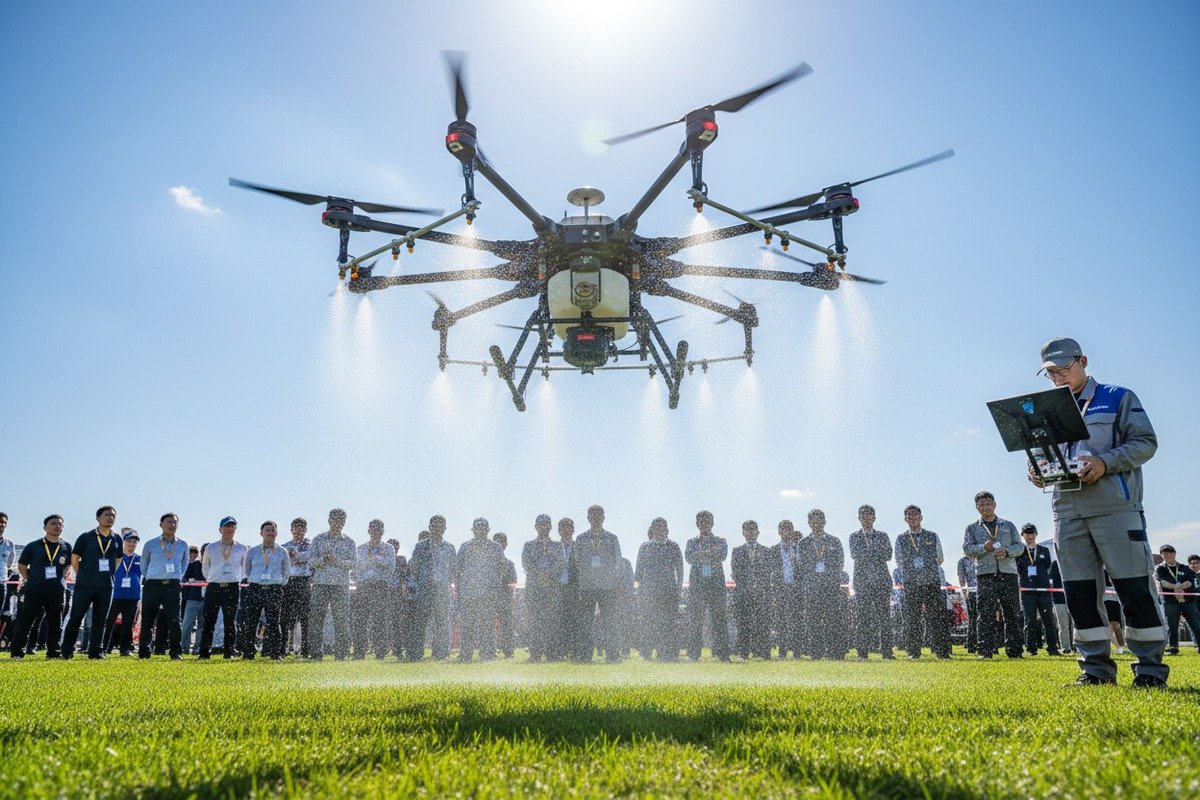
Live demonstrations reveal real performance. Ask to see the drone fly with actual payload weights. Request demonstrations of autonomous features. Watch how the system handles obstacles.
Professional suppliers prepare detailed demonstrations. They show multiple use cases. They explain what you see. Unprofessional suppliers make excuses or only show promotional videos.
Evaluate Regulatory Knowledge
Agricultural drone operations require specific certifications. In the United States, chemical dispensing needs FAA Part 137 compliance 6. Ask booth staff about regulatory requirements in your market.
Knowledgeable suppliers guide customers through certification processes. They understand the difference between Part 107 operations 7 under 55 pounds and Part 91/137 requirements for heavier systems. Suppliers who dismiss regulatory questions may leave you facing compliance problems alone.
Check Pricing Transparency
Professional suppliers discuss total cost of ownership. This includes the purchase price, annual maintenance, software subscriptions, and training. Industry data suggests maintenance costs run 5-10% of the initial drone cost annually.
Ask for written quotes that break down all costs. Suppliers who only quote low upfront prices may hide expensive ongoing fees. Compare quotes from multiple exhibitors using the same criteria.
Note Willingness to Discuss Limitations
Every product has limitations. Honest suppliers acknowledge them. They explain which applications their drones handle well and which might need different solutions.
Suppliers who claim their product solves every problem are either uninformed or dishonest. Neither makes a good long-term partner. Look for balanced presentations that match capabilities to appropriate use cases.
How do I evaluate if a supplier has the engineering expertise to handle my OEM and software development needs?
When we collaborate with clients on custom agricultural drone features, the process requires deep engineering capability. Our team of 70 includes dedicated software developers and hardware engineers. Not all suppliers can offer this. Many resell products without any development capacity.
Evaluate supplier engineering expertise by requesting portfolios of past OEM projects, asking about in-house software development teams, discussing technical specifications for your custom requirements, reviewing their development process and timelines, and checking if they offer ongoing software updates. True engineering partners demonstrate systematic development capabilities.
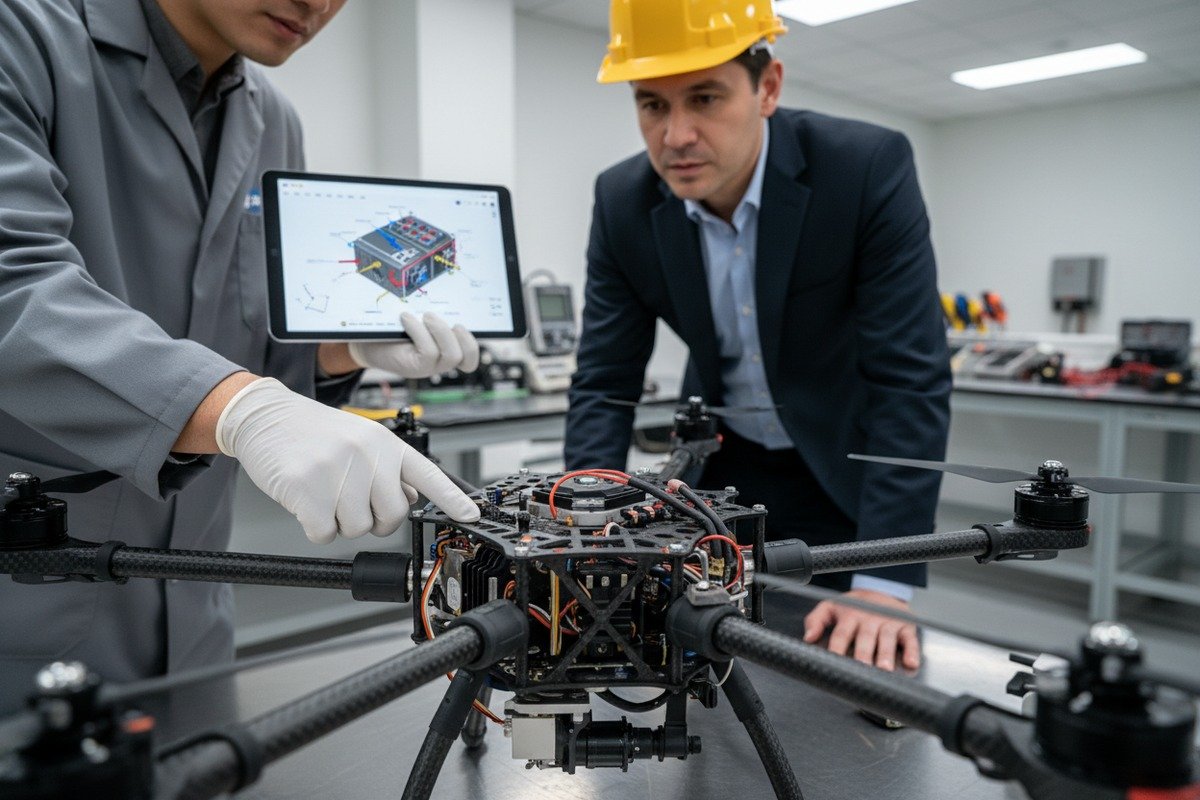
Request OEM Project Portfolios
Experienced OEM suppliers 8 maintain portfolios. Ask to see examples of custom hardware modifications. Review software customization projects. Look for projects similar to your requirements.
Good portfolios include:
- Project scope and client goals
- Technical challenges faced
- Solutions implemented
- Timeline from concept to delivery
- Client feedback or testimonials
Suppliers without portfolios likely lack genuine OEM experience. They may outsource development work or simply rebrand standard products.
Verify In-House Development Teams
Ask directly about their engineering team structure. How many software developers work on agricultural drone systems? How many hardware engineers handle mechanical customization?
| Team Role | What They Handle | Why It Matters |
|---|---|---|
| Firmware Engineers | Flight controller code, motor control | Core drone performance |
| Application Developers | Ground station apps, mission planning | User experience |
| Hardware Engineers | Frame modifications, payload integration | Physical customization |
| Test Engineers | Quality assurance, field testing | Reliability verification |
Suppliers who hesitate to discuss team structure may not have dedicated engineering staff. They might rely on third parties who they cannot control or direct.
Discuss Technical Requirements in Detail
Bring specific technical requirements to your evaluation meetings. Describe the features you need. Note how the supplier responds. Engineering-capable suppliers ask clarifying questions. They suggest approaches based on experience.
For agricultural applications, discuss sensor integration needs. Ask about data output formats and compatibility with farm management platforms. Inquire about autonomous flight capabilities and geofencing features.
Review Development Process and Timelines
Professional engineering teams follow structured development processes. Ask about their workflow from requirement gathering to final delivery. Understand testing phases and quality checkpoints.
Request realistic timelines for your project scope. Compare estimates from multiple suppliers. Timelines that seem too short may indicate corner-cutting. Extremely long timelines might suggest inefficiency or capacity problems.
Check Software Update History
Ongoing software support separates true engineering partners from one-time sellers. Ask for their software update history over the past two years. Review release notes. Note the frequency and substance of updates.
Suppliers who actively improve their software demonstrate long-term commitment. Those who released no updates in years may abandon products after initial sales.
What steps should I take to confirm a supplier's track record for on-time delivery and customs compliance?
Our logistics team manages door-to-door delivery to the United States and Europe weekly. We understand the documentation requirements and timing sensitivities. When our clients face delays, we trace root causes systematically. Many delivery failures stem from supplier inexperience with export processes.
Confirm delivery track records by requesting shipping history documentation, verifying customs compliance certifications, asking for export license copies, checking references specifically about delivery performance, and reviewing their logistics partnerships. Experienced exporters maintain complete documentation and established shipping channels.
Request Shipping History Documentation
Ask suppliers for their export history to your target country. Experienced exporters track shipment records including dates, quantities, and delivery times. They can show average transit times and any delay patterns.
Review this data critically:
| Metric | What to Look For | Red Flag |
|---|---|---|
| On-time rate | Above 90% | Below 80% |
| Average delay | Under 5 days | Over 2 weeks |
| Customs holds | Rare, resolved quickly | Frequent, extended |
| Documentation errors | None or quickly corrected | Repeated mistakes |
Suppliers without organized shipping records likely lack export experience. This increases your risk of delays and compliance problems.
Verify Export Licenses and Certifications
Drone exports require proper documentation. Suppliers must have valid export licenses from their government. Ask for copies. Verify authenticity with relevant authorities.
For agricultural drones with advanced features, check if any components require special export controls. GPS systems, high-resolution cameras, and certain communication equipment may have restrictions. Knowledgeable suppliers understand these requirements and obtain necessary approvals proactively.
Ask References About Delivery Performance
When contacting client references, focus questions on delivery experience. Ask specifically:
- Were delivery dates met as promised?
- Did any shipments face customs delays?
- How did the supplier handle problems when they occurred?
- Was documentation complete and accurate?
- Did the supplier communicate proactively about shipment status?
One or two delayed shipments may be acceptable. Patterns of delays or poor communication signal systemic problems.
Understand Their Logistics Partnerships
Experienced exporters maintain relationships with reliable freight forwarders and customs brokers. Ask who handles their logistics. Established partnerships with known carriers reduce risk.
Suppliers who coordinate logistics themselves need robust systems. Ask about their tracking capabilities. Can they provide real-time shipment updates? Do they monitor customs clearance status actively?
Review Payment and Delivery Terms
Examine standard delivery terms carefully. Understand Incoterms used. DDP or door-to-door delivery shifts customs responsibility to the supplier. This reduces your risk but may cost more.
Clarify what happens when delays occur. Are there penalties for late delivery? What recourse do you have if goods arrive damaged? Professional suppliers include these provisions in contracts and honor them.
Plan for Parts and Repairs Supply Chain
Beyond initial delivery, consider ongoing parts availability. Agricultural drones need replacement propellers, batteries, and sensors. Ask about parts inventory and shipping times.
Suppliers with established export channels ship parts quickly. Those without may take weeks to send simple components. This downtime during growing season can cost farmers significant money.
Conclusion
Evaluating agricultural drone suppliers requires systematic research before trade shows and careful observation during them. Verify reputation through references, assess trade show professionalism through technical discussions, confirm engineering capabilities with portfolio reviews, and validate delivery records with documentation. These steps protect your investment and build partnerships that support your operations for years.
Footnotes
1. Explains the meaning and significance of Ingress Protection (IP) ratings for product durability. ↩︎
2. Explains the significance of a company’s historical background for business evaluation. ↩︎
3. Official guide from LinkedIn on creating company pages. ↩︎
4. Official ISO page defining the requirements for a Quality Management System. ↩︎
5. Details the requirements and purpose of CE marking for products sold in the European Economic Area. ↩︎
6. Official FAA page on dispensing chemicals and agricultural products with UAS under Part 137. ↩︎
7. Explains the FAA rules for small unmanned aircraft systems (drones) for commercial use. ↩︎
8. Defines Original Equipment Manufacturer (OEM) and their role in product development and supply. ↩︎

 English
  Español de México
  Deutsch
  Français
  Русский
  العربية
Comments
No comments yet. Be the first to share your thoughts!
Leave a Comment