

When our production team first heard about US distributors losing accounts to direct supplier sales, it hit close to home NDAA bans 1. The problem is real. Dealers invest heavily in market development, only to watch manufacturers sell directly to the same farmers they cultivated.
To stop agricultural drone suppliers from bypassing you, secure exclusive territorial agreements, implement custom OEM branding with proprietary software, build service-based loyalty programs, and diversify your supply chain with manufacturers who prioritize B2B partnerships over direct retail channels.
This challenge grows more complex with 170% tariffs on Chinese drones and FCC restrictions 2 reshaping the US market. Let me walk you through proven strategies that protect your distribution territory.
How do I secure an exclusive distribution agreement to protect my US market territory?
Our export team has negotiated countless distribution deals across North America custom OEM branding 3. The difference between dealers who thrive and those who get bypassed often comes down to one document: the exclusivity agreement.
To secure an exclusive distribution agreement, negotiate territorial rights covering specific US states or regions, include anti-circumvention clauses preventing direct sales, establish minimum purchase commitments, and define clear consequences for contract violations including termination rights and damages.
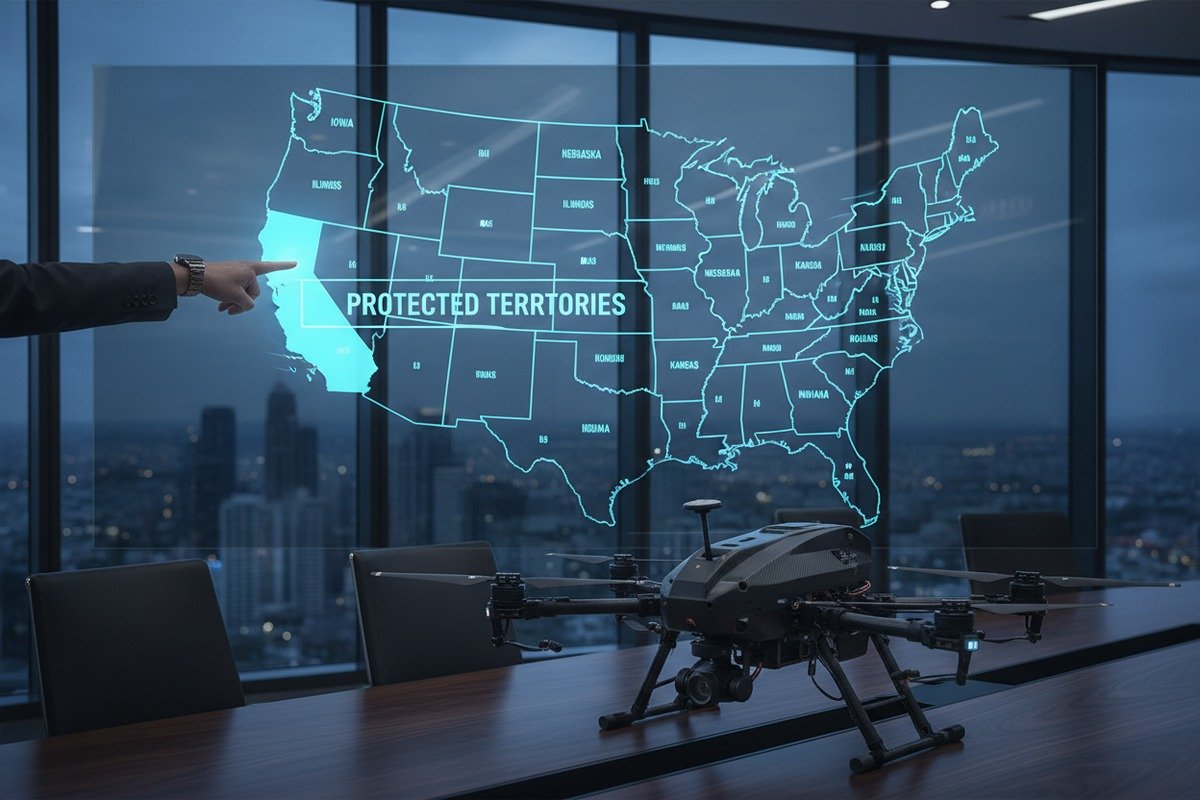
Understanding Territorial Exclusivity
Territorial exclusivity means your supplier cannot sell to anyone else in your defined region. This includes direct sales to farmers, sales through e-commerce platforms, and partnerships with big-box retailers in your area.
The key is specificity. Vague agreements create loopholes. Your contract should name exact states, counties, or ZIP codes. It should list all prohibited sales channels. It should define what "direct sales" means.
Essential Contract Elements
| Contract Element | Purpose | Enforcement Method |
|---|---|---|
| Geographic Definition | Prevents territorial disputes | Maps and ZIP code lists attached as exhibits |
| Channel Restrictions | Blocks e-commerce and retail bypassing | Liquidated damages clause |
| Minimum Purchase Requirements | Ensures supplier commitment | Annual volume thresholds |
| Anti-Circumvention Clause | Stops indirect sales tactics | Right to audit supplier records |
| Term and Renewal | Protects long-term investment | Auto-renewal with performance metrics |
| Termination Rights | Provides exit strategy | 90-day cure period for violations |
Negotiation Leverage Points
Your leverage increases when you bring value beyond simple distribution. When our engineers work with US partners, we see the strongest agreements come from dealers who offer:
Local FAA compliance expertise is valuable. Dealers who guide farmers through Part 107 certification 4 and BVLOS waivers become essential partners, not replaceable middlemen.
Training infrastructure matters. If you can train operators, service aircraft, and stock parts locally, suppliers need you more than they need direct sales.
Market intelligence helps everyone. Provide feedback on crop types, farm sizes, and regional preferences. This data makes you a strategic partner.
Red Flags in Supplier Contracts
Watch for these warning signs during negotiations:
- "Non-exclusive" language anywhere in the document
- Rights to sell "through affiliated entities" or "strategic partners"
- Carve-outs for "government sales" or "large accounts"
- Vague enforcement mechanisms without clear damages
- Short contract terms under two years
- Unilateral modification rights for the supplier
Building Your Case for Exclusivity
With DJI holding 70% of the US agricultural drone market 5 and facing potential NDAA bans, suppliers need reliable American partners more than ever. The FCC's December ruling blocking new foreign drone components creates opportunity. Suppliers seeking market access must work through established dealers.
Present your market development plan. Show your investment in showrooms, demo equipment, and trained staff. Quantify your customer relationships. Make the supplier understand that bypassing you means losing your network.
Can I use custom OEM branding and software to keep my end users loyal to my business?
In our Xi’an facility, we have watched smart distributors transform generic products into proprietary ecosystems. The approach works. When farmers depend on your software, they cannot easily switch to direct supplier purchases.
Yes, custom OEM branding and proprietary software create powerful customer lock-in. Private-label your drones with unique branding, develop custom flight planning applications, integrate with farm management systems, and offer exclusive data analytics that farmers cannot access through direct supplier channels.

The Power of Proprietary Ecosystems
When a farmer uses your branded drone with your software, switching costs multiply. They lose their spray records. Their prescriptions maps become incompatible. Their operators need retraining. This friction protects your business.
Our software development team has built custom solutions for partners worldwide. The most successful include automated FAA reporting, integration with John Deere Operations Center 6, and AI-powered spot spraying algorithms. These features become reasons farmers stay loyal.
OEM Branding Strategy
| Branding Element | Customer Perception Impact | Implementation Cost |
|---|---|---|
| Custom Aircraft Livery | High – visible identity | Low – paint and decals |
| Branded Controller Interface | Medium – daily touchpoint | Medium – software skin |
| Proprietary Mobile App | Very High – operational dependency | High – development required |
| Custom Documentation | Medium – professional image | Low – printing costs |
| Exclusive Accessories | High – parts lock-in | Medium – custom manufacturing |
Software Features That Create Lock-In
Focus on features that accumulate value over time:
Historical spray records grow more valuable each season. Farmers can see what worked and what failed. Leaving your platform means losing years of data.
Prescription map integration connects drone operations to soil sampling and yield data. When your software talks to their precision ag stack, you become embedded in their operation.
Fleet management dashboards help multi-drone operations track utilization, maintenance schedules, and operator performance. This infrastructure cannot transfer to a different supplier's direct-sale product.
Automated compliance reporting generates logs for insurance companies, chemical applicators, and regulatory agencies. Your software becomes their record-keeping system.
Technical Implementation Approaches
Work with manufacturers who support white-label solutions. At our production line, we configure flight controllers to authenticate with partner-specific software. The hardware works only with authorized applications.
Request API access from your supplier. Build middleware that connects their drone to your customer-facing platform. Even if farmers could buy direct, they cannot replicate your software ecosystem.
Consider subscription models. Charge monthly for premium features. This creates recurring revenue and ongoing relationships that direct sales cannot disrupt.
Case Study: Service Provider Success
Hylio in Texas demonstrates this strategy. Their proprietary swarm control software differentiates their aircraft from Chinese alternatives. Farmers buying Hylio get exclusive access to multi-drone coordination that competitors cannot offer.
Similarly, Rantizo built custom precision application software that integrates with major ag retail platforms. Their technology moat protects them even as suppliers consider direct sales.
What steps should I take if my drone supplier starts marketing directly to my local agricultural cooperatives?
Our sales team recently helped a Midwest distributor who faced this exact situation. The supplier began exhibiting at farm shows in “his” territory. The response required immediate action and strategic thinking.
If your supplier starts direct marketing, immediately document contract violations, send formal cease-and-desist notices, accelerate customer relationship building, diversify to alternative suppliers, and strengthen service offerings that direct sellers cannot match from overseas.
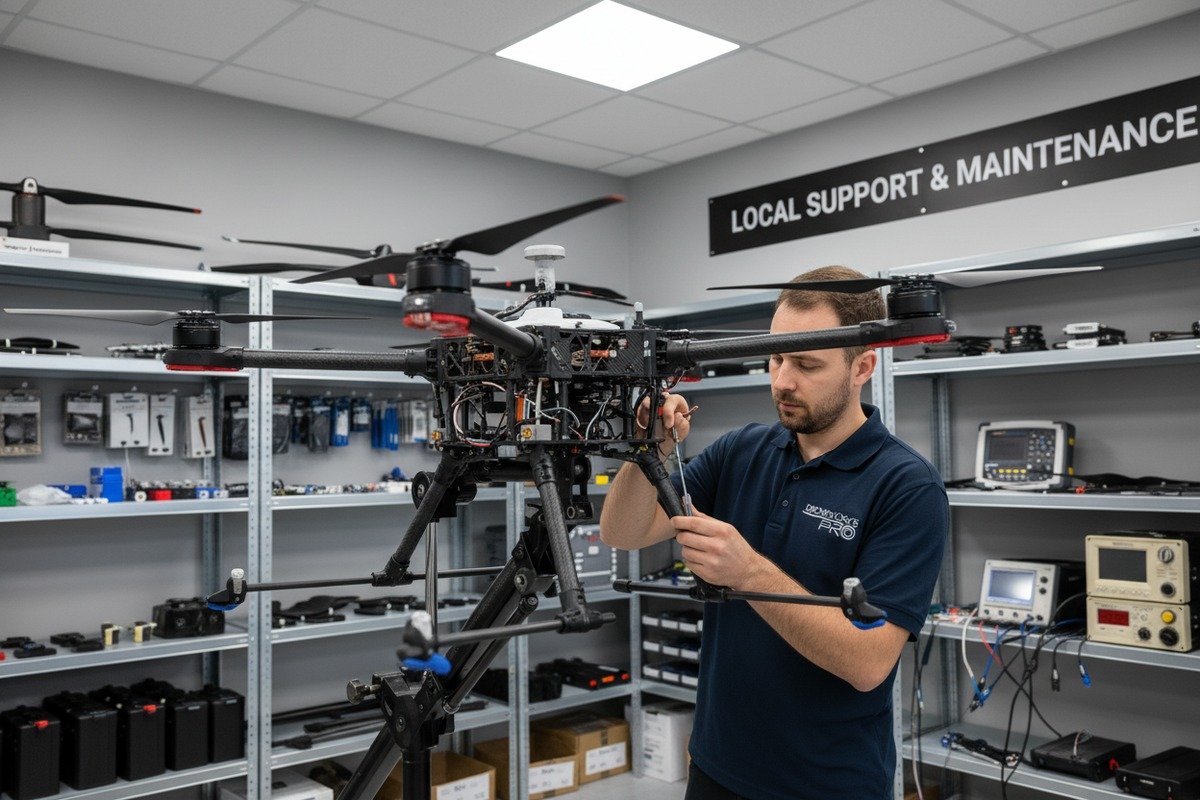
Immediate Response Actions
Time matters. The longer you wait, the more customers the supplier contacts. Start documenting immediately.
Screenshot everything. Capture their social media ads targeting your region. Save emails they send to your customers. Record any direct sales offers.
Contact your attorney. Review your distribution agreement. Identify specific clauses being violated. Prepare formal correspondence.
Notify the supplier in writing. Send a demand letter via international courier with tracking. Reference exact contract provisions. Set a deadline for response.
Strengthening Customer Relationships
While pursuing contractual remedies, protect your customer base through superior service:
| Service Enhancement | Implementation Timeline | Competitive Advantage |
|---|---|---|
| Free on-site training | Immediate | Supplier cannot offer from China |
| 24/7 phone support | Within 1 week | Timezone advantage |
| Same-day parts shipping | Within 2 weeks | Local inventory beats international |
| Extended warranty programs | Within 1 month | Risk reduction for customers |
| Financing partnerships | Within 2 months | Lowers purchase barriers |
Building a Service Moat
Direct suppliers from overseas cannot match local presence. Use this advantage aggressively.
Offer wet-field operation support. When rains delay fieldwork, farmers need immediate help optimizing narrow spray windows. Your local team can respond. A supplier in Vietnam cannot.
Provide regulatory navigation. FAA requirements confuse many farmers. BVLOS waivers 8, Part 107 exemptions, and airspace authorizations require expertise. Position yourself as the compliance partner.
Stock critical parts locally. Battery replacements, propellers, and motor assemblies sitting in your warehouse beat two-week international shipping every time.
Diversification Strategy
Do not remain dependent on a supplier who bypasses you. Begin qualifying alternatives immediately.
US manufacturers like Exedy Drones in Michigan and Hylio in Texas offer domestic options. They need distribution partners and are unlikely to undercut dealers.
South American suppliers through partnerships like GTEEX provide FCC-compliant alternatives. These manufacturers actively seek US dealer relationships.
Our approach at SkyRover prioritizes B2B partnerships. We do not compete with our distributors. Manufacturers with this philosophy exist. Find them.
Legal and Coalition Actions
Join industry groups advocating for dealer protections. The American Spray Drone Coalition represents 80% of the US spray drone market. Their lobbying efforts shape regulations that can protect distribution networks.
Document your case for potential legal action. Calculate damages from lost sales. Track customers who switched due to direct supplier contact. This evidence supports breach of contract claims.
Consider publicizing bad supplier behavior within dealer networks. Other distributors facing similar issues may join collective action.
How can I find a reliable Chinese manufacturer that prioritizes long-term B2B partnerships over direct retail sales?
When we built our Xi’an team of 70 engineers and production staff, we made a deliberate choice. We focus on distributor success, not direct consumer sales. Finding manufacturers with this philosophy requires knowing where to look.
Find reliable B2B-focused Chinese manufacturers by evaluating their existing distribution networks, examining their e-commerce presence, requesting dealer references, negotiating anti-bypass contract terms upfront, and prioritizing suppliers with OEM customization capabilities over mass-market producers.
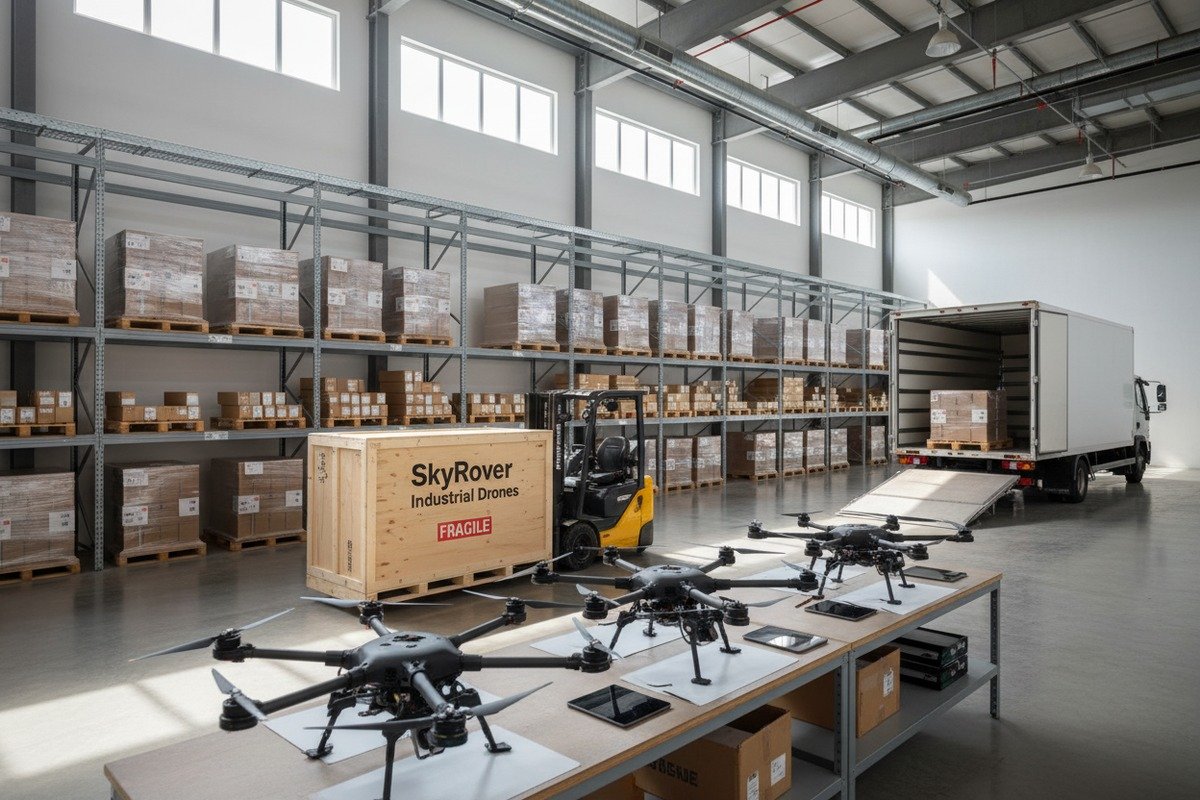
Identifying B2B-Focused Manufacturers
Not all Chinese drone makers operate the same way. Some prioritize Alibaba consumer sales. Others focus exclusively on B2B partnerships. Learn to distinguish them.
Check their online presence. Manufacturers selling direct will have Amazon storefronts, active Alibaba retail listings, and consumer-focused social media. B2B suppliers maintain professional websites targeting importers and distributors.
Ask about minimum order quantities. Consumer-focused suppliers accept single-unit orders. B2B manufacturers require volume commitments that make direct retail impractical.
Examine their customization capabilities. Mass-market producers resist modification requests. Partnership-oriented suppliers invest in engineering teams that can customize products.
Evaluation Criteria for Potential Suppliers
| Evaluation Factor | B2B Partner Indicator | Direct-Seller Warning Sign |
|---|---|---|
| Sales Channel Mix | 90%+ through distributors | Consumer marketplace presence |
| Customization Willingness | Offers OEM branding, software mods | "Standard product only" responses |
| Reference Quality | Provides distributor contacts | References only end users |
| Contract Flexibility | Accepts exclusivity clauses | Refuses territorial restrictions |
| Support Structure | Dedicated B2B account managers | Generic customer service |
| Trade Show Focus | Industrial exhibitions | Consumer electronics shows |
Due Diligence Process
Before committing to any supplier, conduct thorough investigation:
Request dealer references. Ask for contact information for current US distributors. Call them. Ask if the supplier has ever bypassed them. Ask about support quality.
Visit the factory. Our Xi'an facility welcomes partner visits. Legitimate B2B manufacturers encourage inspection. Those hiding direct sales operations will resist.
Review export documentation. Experienced B2B exporters understand import requirements. They provide certificates, test reports, and customs documentation without confusion.
Assess technical support capacity. Can they provide remote diagnostics? Do they offer training for your technicians? Will they send engineers for complex issues?
Structuring the Supplier Relationship
Build protections into the relationship from day one:
Start with a trial period. Order sample quantities before committing to large volumes. Test product quality, shipping reliability, and communication responsiveness.
Negotiate right of first refusal. If the supplier receives direct inquiries from your territory, you should have the option to service that customer.
Establish joint marketing agreements. Co-branded materials reinforce your role as the authorized channel. Suppliers who invest in your success are less likely to undermine you.
Create escalation procedures. Define how disputes will be handled. Establish contacts at multiple levels in both organizations.
Red Flags During Supplier Selection
Avoid manufacturers showing these characteristics:
- Reluctance to share current customer lists
- Heavy presence on Amazon or consumer marketplaces
- Pricing that suggests they undercut their own distributors
- Resistance to exclusivity discussions
- High staff turnover in sales departments
- Inconsistent communication or missed deadlines
The global agricultural drone market 9 projects to reach $29 billion by 2033. Manufacturers who understand channel discipline will capture more of this growth than those who chase short-term direct sales. Find partners who share your long-term perspective.
Conclusion
Protecting your US agricultural drone distribution territory requires proactive strategy across contracts, branding, service excellence, and supplier selection. The manufacturers who value long-term partnerships exist. Find them, build defensible ecosystems, and deliver value that direct sellers cannot match.
Footnotes
1. Clarifies the National Defense Authorization Act’s prohibitions on certain drone manufacturers. ↩︎
2. Authoritative industry FAQ explaining FCC drone restrictions. ↩︎
3. Defines Original Equipment Manufacturer (OEM) and its role in product branding. ↩︎
4. Explains the official FAA certification process for commercial drone pilots. ↩︎
5. Provides statistics on DJI’s market share in the US drone market. ↩︎
6. Provides official information on John Deere’s farm management platform. ↩︎
7. Authoritative .org source providing a general overview of farm management systems. ↩︎
8. Details the process and requirements for obtaining advanced drone operation waivers. ↩︎
9. Offers market size, growth, and forecast for the agricultural drone industry. ↩︎


 English
  Español de México
  Deutsch
  Français
  Русский
  العربية
Comments
No comments yet. Be the first to share your thoughts!
Leave a Comment