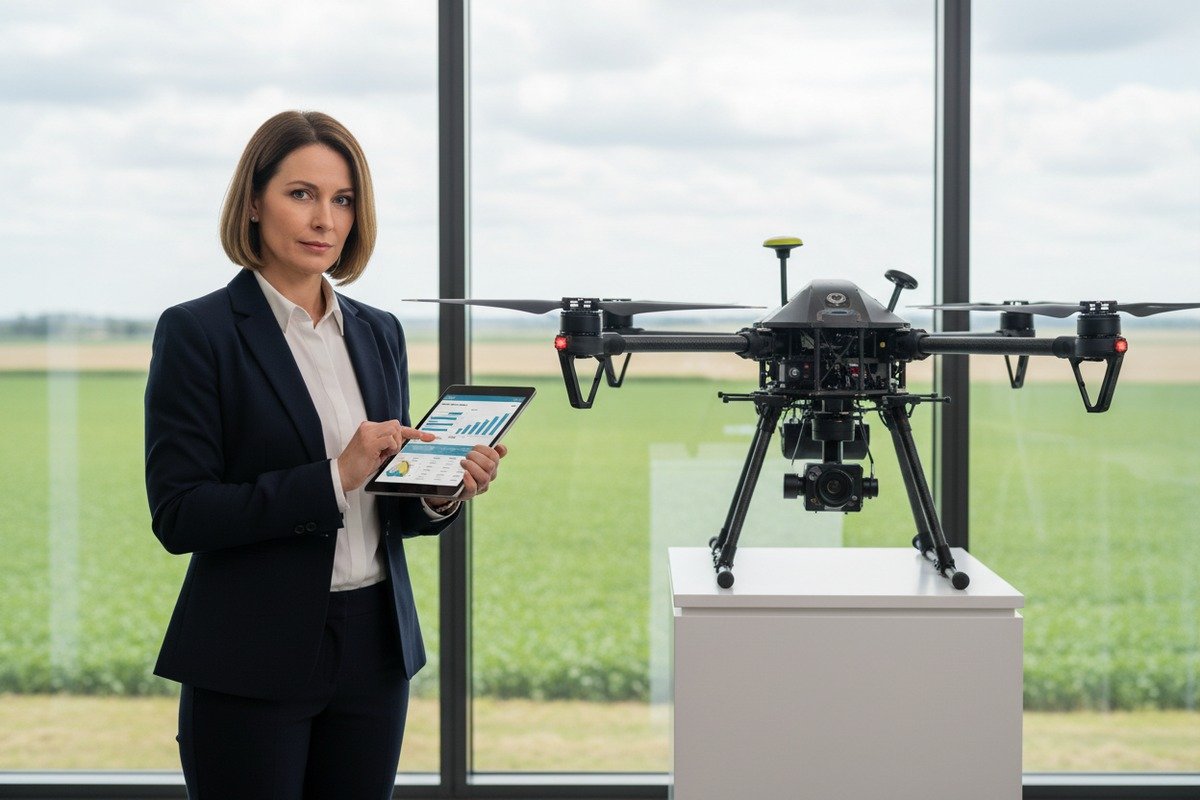
Every week, our sales team receives inquiries from distributors asking the same question: “Is this price competitive?” After manufacturing agricultural drones 1 for over a decade, we understand this frustration deeply.
To evaluate tiered pricing competitiveness for agricultural drones, calculate total cost of ownership including purchase price, operational costs per acre, maintenance expenses, and compare against ROI thresholds. Competitive pricing means breaking even below $12.50 per acre at 980+ acres annually, with volume discounts reducing unit costs by 10-25%.
This guide breaks down the evaluation process into practical steps. We will examine volume discounts 2, reliability trade-offs, logistics costs, and customization impacts on pricing.
How do I know if the volume discounts I'm offered for agricultural drones are truly market-competitive?
When we quote volume discounts to our overseas partners, we often hear them ask how our prices stack up against competitors. This concern is valid. Not all discounts deliver real value.
Market-competitive volume discounts for agricultural drones typically range from 5-8% for 5-10 units, 10-15% for 11-25 units, and 15-25% for 26+ units. True competitiveness requires comparing discounted unit prices against industry benchmarks: $15,000-$30,000 for mid-tier spraying drones and $30,000-$60,000 for high-tier multispectral systems.

Understanding Industry Price Tiers
The agricultural drone market operates across four distinct pricing tiers. Each tier serves different operational needs. Understanding these tiers helps you benchmark any discount offer.
| Tier | Price Range | Typical Features | Best For |
|---|---|---|---|
| Entry-Level | $3,000-$15,000 | Basic monitoring, simple cameras | Small farms, crop scouting |
| Mid-Tier | $15,000-$30,000 | Enhanced sensors, better stability | Medium operations, basic spraying |
| High-Tier | $30,000-$60,000 | Spraying systems, multispectral imaging | Commercial farms, precision agriculture |
| Premium | $60,000+ | LiDAR, advanced payloads, full automation | Large agribusinesses, service providers |
Our production line focuses on mid to high-tier systems. We have found that buyers often underestimate the gap between tiers. A $20,000 drone is not simply "twice as good" as a $10,000 unit. The technology leap involves flight controllers 3, sensor arrays, and build quality.
How to Verify Discount Authenticity
Many suppliers inflate base prices before applying discounts. This makes their percentage look impressive. Here is how to spot genuine value:
First, request itemized pricing. A legitimate manufacturer will break down costs: airframe, batteries, chargers, controllers, and software licenses. Our quotations always separate these components.
Second, compare total bundle costs. The DJI Agras T50 bundle sells around $36,000 post-tariff. Similar Chinese alternatives range from $20,000-$28,000 for comparable specifications. If a supplier offers 20% off but starts at $45,000, you are overpaying.
Third, calculate cost per payload capacity 4. Divide total price by tank volume. Competitive spraying drones cost approximately $1,500-$2,000 per liter of tank capacity.
Red Flags in Volume Discount Offers
Watch for these warning signs:
- Discounts exceeding 30% suggest inflated base pricing
- No tiered structure means the supplier lacks manufacturing scale
- Discounts that require minimum annual commitments without flexibility
- Prices significantly below market average may indicate quality compromises
When our engineering team designs new models, we factor in realistic margins. Sustainable discounts come from production efficiency, not corner-cutting.
Should I prioritize a lower unit price or the long-term reliability and engineering support of my drone fleet?
In our experience exporting to the US and Europe, we have seen buyers make both choices. Some chase the lowest price. Others invest in support infrastructure. The outcomes differ dramatically.
Prioritize long-term reliability and engineering support over lowest unit price when total ownership cost matters. A $25,000 drone with $2,000 annual support often outperforms a $18,000 unit requiring $8,000 in repairs. Calculate five-year TCO: reliable fleets save $0.50-$1.50 per acre through reduced downtime and consistent performance.

The True Cost of Cheap Drones
Our service department tracks failure rates across different price points. The data tells a clear story. Budget drones fail at 3-4 times the rate of quality units.
| Cost Factor | Budget Drone ($15,000) | Quality Drone ($28,000) | 5-Year Difference |
|---|---|---|---|
| Purchase Price | $15,000 | $28,000 | +$13,000 |
| Annual Repairs | $4,500 | $1,200 | -$16,500 |
| Downtime Costs | $6,000/year | $1,500/year | -$22,500 |
| Battery Replacements | $8,000 | $5,500 | -$2,500 |
| 5-Year Total | $58,000 | $46,700 | -$11,300 |
The quality drone costs less over five years despite higher initial investment.
What Engineering Support Should Include
When we onboard new distributors, we provide comprehensive support packages. Competitive suppliers should offer similar coverage:
Remote Diagnostics: Real-time telemetry monitoring to identify issues before failure. Our flight controllers log 200+ parameters per second.
Firmware Updates: Regular software improvements. We release quarterly updates addressing bugs and adding features.
Parts Availability: Guaranteed 48-72 hour shipping for critical components. Stock common wear items locally.
Technical Training: Video tutorials, documentation, and live support for maintenance procedures.
Warranty Terms: Minimum 12-month coverage on airframe, 6 months on batteries. Extended warranties should cost 8-12% of unit price annually.
When Lower Price Makes Sense
Lower unit prices can be justified in specific scenarios:
- Seasonal operations under 500 acres where downtime impact is minimal
- Test purchases before larger fleet commitments
- Disposable applications with high crash risk
- Budget-constrained pilots building initial experience
However, for commercial operations exceeding 1,000 acres annually, reliability dominates. Downtime during critical spraying windows destroys ROI.
Calculating Your Break-Even Point
Use this formula: (Support Premium × Years) vs (Expected Repair Savings × Years)
If premium support costs $3,000 annually and prevents $5,000 in repairs, the investment returns 67% yearly. Our customers operating 2,000+ acre fleets consistently report positive ROI from support packages.
How can I factor door-to-door delivery and customs clearance costs into my tiered pricing analysis?
Our logistics team processes dozens of international shipments monthly. We have learned that delivery costs vary wildly based on destination, volume, and customs complexity. These expenses significantly impact true landed cost.
Factor delivery and customs costs by adding 8-15% of product value for standard air freight to the US/EU, plus 3-7% for customs duties, brokerage fees, and compliance documentation. Door-to-door service typically costs $2,500-$4,500 per unit for agricultural drones, varying by weight, dimensions, and battery shipping restrictions.

Breaking Down Logistics Costs
International shipping involves multiple cost components. Each affects your final landed price differently.
| Cost Component | Typical Range | Variables |
|---|---|---|
| Air Freight | $800-$2,000/unit | Weight, dimensions, urgency |
| Sea Freight | $300-$600/unit | Volume, port proximity, timing |
| Customs Duties | 0-25% of value | Country, HTS classification |
| Brokerage Fees | $150-$400/shipment | Complexity, agent rates |
| Insurance | 1-2% of value | Coverage level, carrier |
| Local Delivery | $100-$300/unit | Distance, handling requirements |
| Battery Compliance | $200-$500/shipment | UN38.3 testing, documentation |
When we quote door-to-door pricing, all these elements are included. Some competitors quote factory prices only, hiding significant additional costs.
Tariff Impacts on Landed Cost
The 2025 US tariff changes dramatically affected agricultural drone pricing. DJI products faced substantial increases. Our customers report the following impacts:
Pre-tariff DJI T50 bundle: approximately $28,000
Post-tariff landed cost: approximately $36,000-$40,000
This 30-40% increase pushed many buyers toward alternatives. Non-Chinese manufacturers in allied countries benefit from preferential duty rates. However, their base prices often start higher.
For Chinese manufacturers like us, we have adapted through:
- Establishing bonded warehouse partnerships in free trade zones 5
- Working with customs brokers to optimize HTS classifications
- Offering DDP (Delivered Duty Paid) pricing for transparency
Hidden Logistics Costs to Watch
Several expenses catch buyers off-guard:
Battery Shipping Surcharges: Lithium batteries 6 require special handling. Expect $300-$800 additional per shipment for compliant packaging and documentation.
Dimensional Weight: Drones ship light but bulky. Carriers charge based on size, not actual weight. A 15kg drone may bill at 35kg dimensional weight.
Port Congestion Fees: Delays at major ports add storage and demurrage charges. Build 5-7 days buffer into delivery timelines.
Import Permits: Some regions require special licenses for drone imports. Processing takes 2-4 weeks and costs $200-$500.
Calculating True Landed Cost
Here is our recommended formula:
Landed Cost = Unit Price + (Freight ÷ Units) + (Duties × Unit Price) + (Brokerage ÷ Units) + Insurance + Local Delivery
For a $25,000 drone shipped to the US:
- Freight: $1,500
- Duties (7.5%): $1,875
- Brokerage: $250
- Insurance: $500
- Local delivery: $200
- Landed cost: $29,325
This represents 17.3% above factory price. Always factor this into tiered pricing comparisons.
Will my tiered pricing change significantly if I request OEM branding and custom software development?
When we calibrate our flight controllers for specific customer requirements, the engineering hours add up quickly. Custom work transforms pricing dynamics. Understanding these impacts helps you budget accurately.
OEM branding and custom software development typically increase tiered pricing by 15-40%. Basic branding (logo, colors, packaging) adds 5-10% or $1,500-$3,000 per model. Custom software development ranges from $8,000-$50,000 depending on complexity, spread across minimum order quantities of 20-100 units to achieve reasonable per-unit costs.
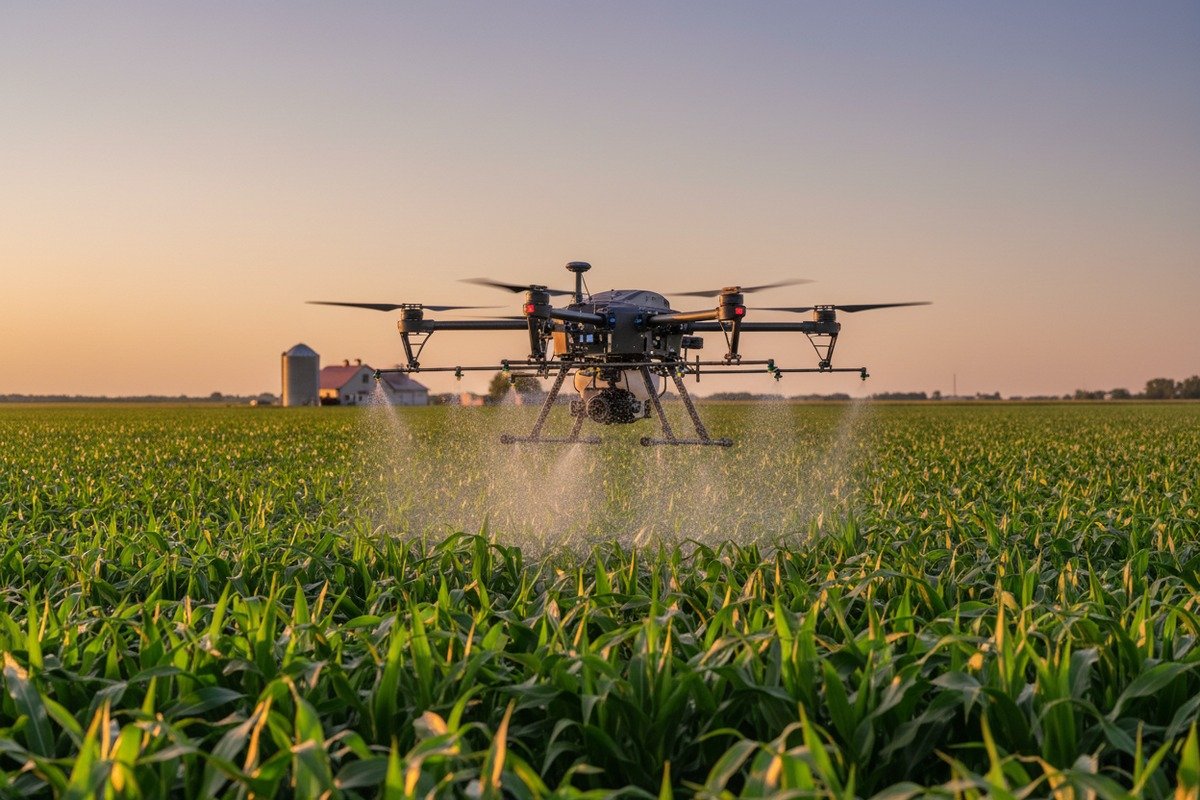
OEM Branding Cost Breakdown
Branding customization spans multiple levels. Each adds incremental cost.
| Customization Level | Typical Cost | Minimum Order | Per-Unit Impact |
|---|---|---|---|
| Logo Stickers | $500-$1,000 | 10 units | $50-$100 |
| Custom Shell Colors | $3,000-$8,000 | 50 units | $60-$160 |
| Branded Packaging | $2,000-$5,000 | 30 units | $65-$165 |
| Custom Controller Labels | $1,500-$3,000 | 25 units | $60-$120 |
| Full White-Label | $8,000-$15,000 | 100 units | $80-$150 |
Our design team handles branding requests weekly. The process typically takes 3-4 weeks for approval and 2-3 weeks for production implementation.
Software Development Pricing Tiers
Custom software represents the most variable cost factor. Complexity determines investment levels:
Basic Customization ($8,000-$15,000):
- Logo and color scheme in mobile app
- Custom splash screens
- Modified user interface layouts
- Language localization
Intermediate Development ($15,000-$30,000):
- Custom flight modes
- Integration with specific farm management platforms 7
- Modified telemetry displays
- Geofencing customization
Advanced Development ($30,000-$80,000):
- Proprietary mission planning algorithms
- Custom AI features for crop analysis
- Unique sensor data processing
- Full API development for third-party integration
When our software engineers scope projects, we estimate 80-120 hours for basic work, 200-400 hours for intermediate, and 500+ hours for advanced development.
Spreading Development Costs
The key to managing custom development costs lies in order volume. Here is how the math works:
A $25,000 custom software project spread across orders:
- 25 units: $1,000/unit (4% increase)
- 50 units: $500/unit (2% increase)
- 100 units: $250/unit (1% increase)
We recommend customers commit to multi-year agreements when requesting significant customization. This spreads development investment across larger volumes.
What Customization Delivers
Beyond branding, customization creates competitive advantages:
Market Differentiation: Your branded drones stand apart from generic alternatives. Customers associate quality with your name.
Integration Superiority: Custom software connecting to your existing platforms creates switching costs for end users.
Support Simplification: Standardized configurations across your fleet reduce training and troubleshooting complexity.
Margin Protection: Unique features command premium pricing. Generic imports face constant price pressure.
Negotiating Custom Development Terms
Based on our experience, successful customization projects share common structures:
- 30% deposit to initiate development
- 40% upon prototype approval
- 30% with first production order
- Intellectual property ownership 8 clearly defined
- Exclusivity periods for unique features (typically 12-24 months)
- Ongoing maintenance fees of 10-15% annually for software updates
Our partnership agreements include clear milestone definitions. This protects both parties and ensures aligned expectations.
Conclusion
Evaluating tiered pricing competitiveness requires analyzing total cost of ownership, not just unit prices. Consider volume discounts, reliability investments, logistics expenses, and customization impacts together. This comprehensive approach ensures your agricultural drone procurement delivers genuine value.
Footnotes
1. Provides an overview of agricultural drones and their applications. ↩︎
2. Explains the economic principle and benefits of volume discounts. ↩︎
3. Details the function and components of drone flight controllers. ↩︎
4. Defines drone payload capacity and its impact on performance. ↩︎
5. Replaced with an authoritative Wikipedia page providing a general definition and overview of free-trade zones. ↩︎
6. Replaced with a comprehensive and authoritative Wikipedia page on lithium-ion batteries, which are the most common type of rechargeable lithium battery. ↩︎
7. Replaced with a comprehensive guide on farm management apps and software, offering a general overview and explanation of the concept. ↩︎
8. Clarifies the legal aspects and importance of intellectual property ownership. ↩︎

 English
  Español de México
  Deutsch
  Français
  Русский
  العربية
