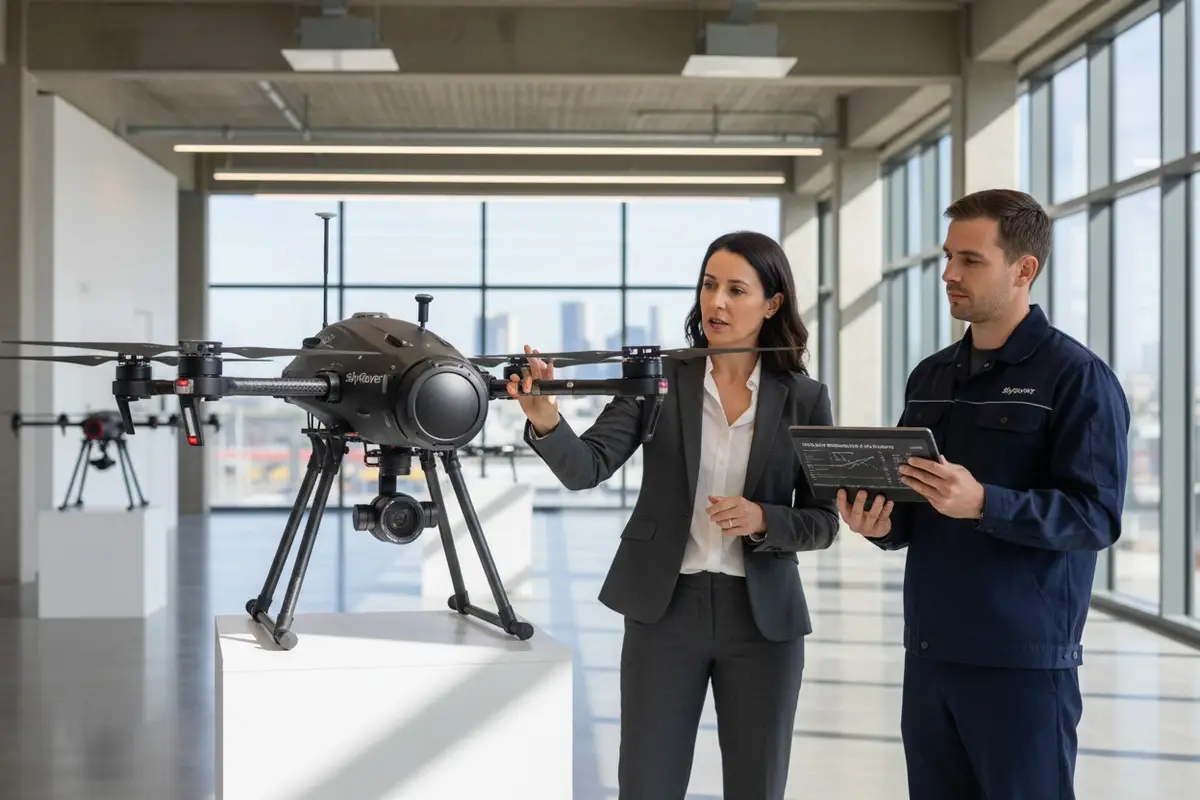

Every season, our production floor receives calls from frustrated farmers whose drones crashed into invisible power lines. These accidents destroy expensive equipment and delay critical spraying operations. The problem is clear: many buyers don’t know what questions to ask suppliers before purchasing.
To properly evaluate agricultural drone radar detection capabilities, ask suppliers about specific radar frequencies (24GHz or 79GHz millimeter-wave), minimum detectable object diameter (under 5cm for thin wires), detection range (15-20 meters minimum), and integration with vision systems. Request performance data sheets and field demonstration videos showing detection of actual power lines and branches.
This guide breaks down the essential questions you need to ask your supplier. Each section covers a specific aspect of radar technology. By the end, you will know exactly how to evaluate any agricultural drone’s obstacle detection system.
What specific radar specifications should I ask about to ensure detection of thin power lines?
When our engineers first tested obstacle avoidance systems five years ago, we learned that not all radars see power lines equally. Some radars excel at detecting walls and buildings but miss thin wires completely. This distinction matters greatly for agricultural operations near infrastructure.
Ask suppliers for three key specifications: radar frequency (79GHz millimeter-wave detects thinner objects than 24GHz), minimum detectable object size (must be under 5cm diameter), and effective detection range (at least 15-20 meters at operational speeds). Also request the radar's update rate in Hz, as faster scanning catches obstacles sooner.

Understanding Radar Frequency and Object Detection
Radar frequency directly affects what objects the system can detect. Lower frequencies like 24GHz work well for larger obstacles. However, they struggle with thin objects like power lines and small branches.
Higher frequencies like 79GHz millimeter-wave 1 technology offer better resolution. These radars can detect objects as thin as 2-3cm in diameter. For agricultural environments with power lines, this capability is essential.
Our production team always recommends 79GHz systems for operations near electrical infrastructure. The cost difference is minor compared to the safety improvement.
Key Specifications to Request
| Specification | Minimum Requirement | Ideal Specification |
|---|---|---|
| Radar Frequency | 24GHz | 79GHz millimeter-wave |
| Minimum Object Size | 5cm diameter | 2cm diameter |
| Detection Range 2 | 15 meters | 25+ meters |
| Update Rate | 10Hz | 20Hz or higher |
| Field of View | 60° horizontal | 100°+ horizontal |
| Power Consumption | Under 10W | Under 5W |
Questions to Ask Your Supplier
Start with basic technical questions. Ask what radar chip manufacturer they use. Reputable suppliers use chips from established companies.
Next, ask about real-world testing. Has the radar been tested against actual power lines? What diameter wires were used in testing? At what distance were they reliably detected?
Finally, request documentation. Any quality supplier should provide specification sheets with these details clearly listed.
Detection Range vs. Speed Considerations
Detection range matters most when combined with flight speed. A drone flying at 10 meters per second needs at least 20 meters of detection range. This gives the flight controller time to calculate and execute an avoidance maneuver.
Ask your supplier about the relationship between detection range and recommended maximum speed. If they cannot answer this question, consider looking elsewhere.
How can I confirm that my drone's obstacle avoidance system will reliably identify small tree branches?
In our experience shipping drones to orchard operators across California and Florida, branch detection remains the biggest challenge. Orchards present complex environments with thousands of small obstacles at varying angles. Simple radar systems get overwhelmed quickly.
Confirm branch detection reliability by requesting multi-sensor fusion specifications (radar plus binocular vision), asking about false positive rates in dense vegetation, and demanding field test data from actual orchard environments. Reliable systems combine 79GHz radar with stereo cameras to create real-time 3D obstacle maps, achieving detection rates above 95% for branches over 3cm diameter.

Why Single-Sensor Systems Fail in Orchards
Radar alone struggles in dense vegetation. Branches create cluttered return signals. The system may see too many obstacles or merge multiple branches into one large false obstacle.
Vision systems alone fail in low light conditions. binocular vision cameras 3 Early morning spraying operations often happen before sunrise. Cameras cannot see branches in darkness.
This is why our engineering team always recommends multi-sensor fusion for orchard applications. Combining radar and vision creates redundancy and improves accuracy.
Multi-Sensor Fusion Explained
Modern agricultural drones use Active Phased Array Radar 4 combined with binocular vision cameras. The radar provides range data in all lighting conditions. The cameras add detail and help distinguish between obstacle types.
Together, these sensors create a 3D point cloud 5 of the environment. The flight controller uses this map to plan safe paths through complex terrain.
Ask your supplier specifically about sensor fusion algorithms. How does the system combine radar and vision data? What happens when sensors disagree?
Performance Metrics to Request
| Metric | Acceptable | Good | Excellent |
|---|---|---|---|
| Detection Rate (3cm+ branches) | 85% | 92% | 98% |
| False Positive Rate | Under 15% | Under 8% | Under 3% |
| Response Time | 500ms | 200ms | 100ms |
| Works in Complete Darkness | No | Partial | Yes |
| Works in Heavy Fog | No | Partial | Yes |
Testing Branch Detection Before Purchase
Never accept marketing claims without verification. Ask for demonstration videos showing the drone navigating actual orchards.
Better yet, request a field demonstration at your own farm. Many reputable suppliers offer pilot programs where you test equipment before committing to large orders.
During testing, pay attention to how the drone handles:
- Branches approaching from the side
- Thin branches under 5cm diameter
- Dense canopy areas with multiple obstacles
- Transitions between open areas and tree rows
Understanding False Positives and Negatives
A false positive means the drone sees an obstacle that isn't there. This causes unnecessary stops and reduces efficiency.
A false negative means the drone misses a real obstacle. This causes crashes and equipment damage.
Both problems cost money. Ask your supplier for documented false positive and false negative rates from field testing. Good suppliers track these metrics carefully.
Can I work with your engineers to customize the radar sensitivity for my specific agricultural environment?
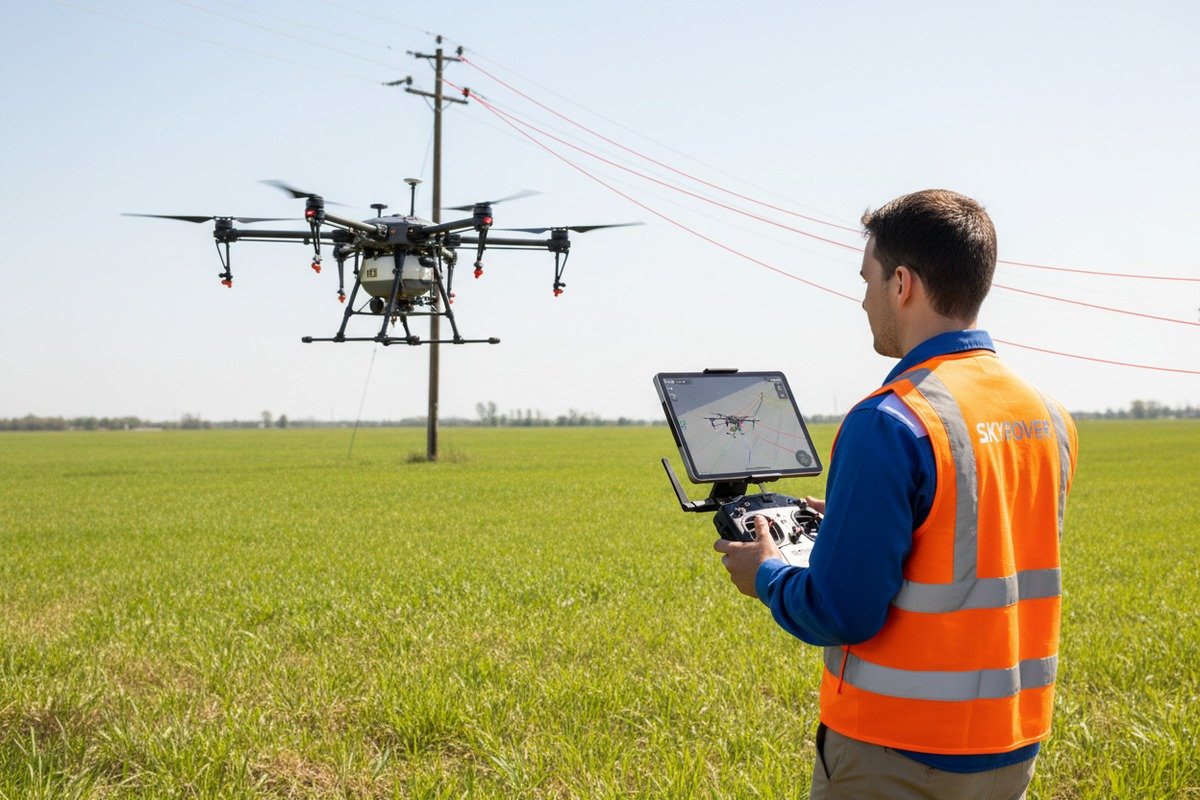
When we collaborate with large agricultural operations on custom drone solutions, radar sensitivity customization 6 is often requested. A rice paddy in Louisiana presents different challenges than a vineyard in Napa Valley. Standard factory settings rarely optimize for every environment.
Yes, reputable suppliers offer radar sensitivity customization through firmware adjustments and parameter tuning. Ask about sensitivity thresholds for different obstacle types, terrain-following mode calibration, and field-specific profiles. Good suppliers provide engineering support for creating custom detection parameters based on your specific crop type, terrain, and infrastructure layout.
What Customization Options Should Exist
Quality agricultural drone manufacturers build flexibility into their radar systems. At minimum, you should be able to adjust:
Detection sensitivity levels for different flight modes. Aggressive spraying runs need different settings than slow mapping missions.
Terrain-following height and response aggressiveness. Flat fields need gentler corrections than hilly orchards.
Obstacle response behaviors. Should the drone stop, reroute, or return home when detecting certain obstacles?
Questions About Engineering Support
| Question to Ask | Why It Matters |
|---|---|
| Do you have field application engineers? | Direct technical support for setup and calibration |
| Can parameters be adjusted remotely? | Enables quick fixes without shipping hardware |
| What training do you provide? | Your team needs to understand the system |
| Is source code available for integration? | Advanced users may need deep customization |
| What is your support response time? | During spraying season, delays cost money |
Creating Environment-Specific Profiles
Our engineering team works with customers to create profiles for specific environments. For example, a profile for operations near power lines would include:
- Increased sensitivity for thin linear objects
- Extended detection range at operational heights
- Conservative avoidance maneuvers with larger safety margins
- Automatic speed reduction when approaching known hazard areas
These profiles can be saved and loaded quickly depending on the day's mission location.
Integration with Farm Management Software
Modern agricultural operations use sophisticated planning software. Ask your supplier if radar-generated obstacle data can be exported.
This data becomes valuable for future missions. Once the radar maps power line locations, that information can be loaded into flight planning software. Future missions automatically avoid these areas without relying solely on real-time detection.
Evaluating Supplier Engineering Capabilities
Not all suppliers have equal engineering resources. Some import finished products and cannot modify them. Others design and manufacture in-house with full access to firmware and hardware.
Ask about your supplier's engineering team size and location. Can you speak directly with engineers if problems arise? What is their experience with agricultural applications specifically?
At our facility, we maintain a dedicated agricultural applications team. They understand farming operations and can translate technical specifications into practical solutions.
What performance certifications should I request from my supplier to guarantee the safety of my drone fleet?
Our customers importing drones into the United States and Europe face strict regulatory requirements. Safety certifications aren't just paperwork—they represent verified performance claims. Without proper documentation, your equipment may be uninsurable or even illegal to operate.
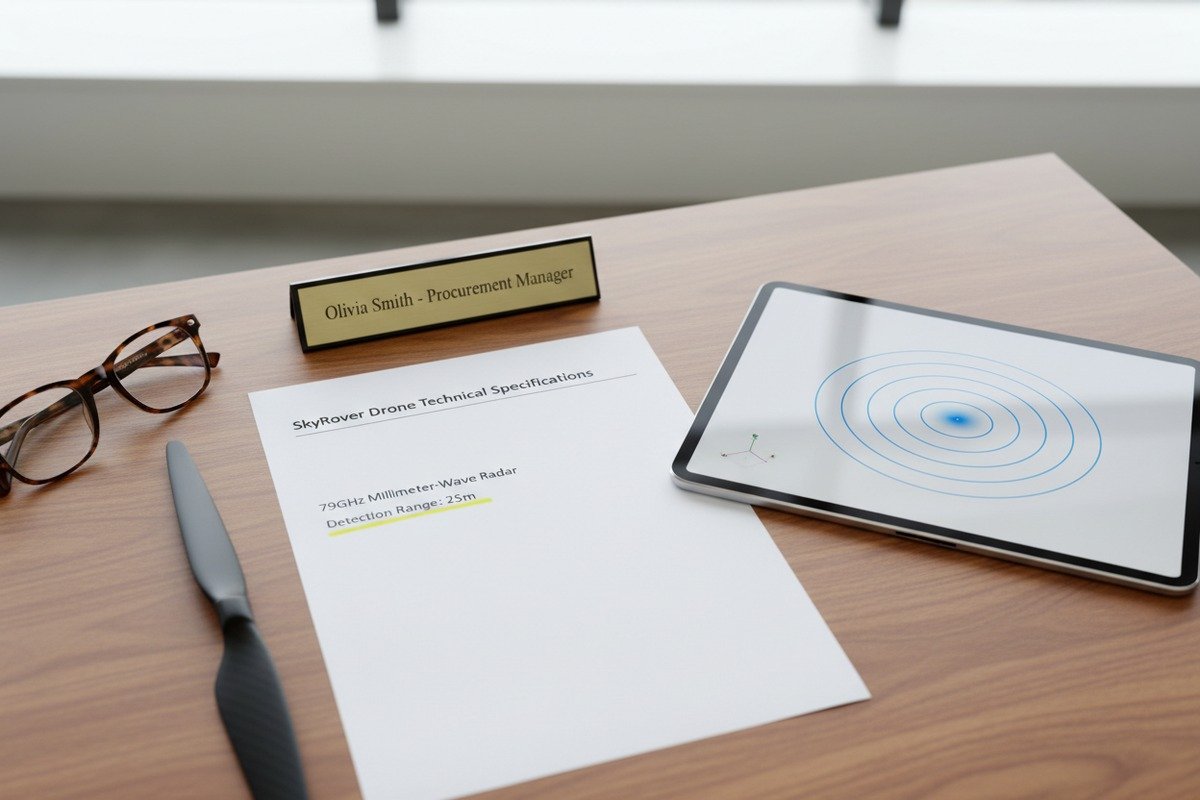
Request these key certifications: IP rating for weather resistance (minimum IP54), CE marking for European compliance, FCC certification for US radio frequency compliance, and documented flight controller redundancy specifications. Also ask for third-party test reports verifying radar detection claims, manufacturer liability insurance documentation, and parts availability guarantees for at least five years.
Essential Certifications Explained
Different markets require different certifications. Understanding these requirements protects your business from regulatory problems.
| Certification | Market | What It Covers |
|---|---|---|
| FCC Part 15/107 | United States | Radio frequency emissions and interference |
| CE Marking | European Union | Safety, health, and environmental standards |
| IP Rating 7 | Global | Dust and water resistance |
| ISO 9001 | Global | Quality management systems |
| RoHS | EU/Many others | Hazardous substance restrictions |
IP Rating Importance for Agricultural Operations
Agricultural drones work in harsh conditions. Dust, humidity, and occasional rain exposure are unavoidable. The IP rating tells you exactly what conditions the equipment can handle.
IP54 is minimum acceptable for agricultural use. The "5" means limited dust ingress protection. The "4" means splash water protection from any direction.
IP65 or higher provides better protection for demanding environments. The "6" means complete dust protection. The "5" means protection against water jets.
Ask your supplier what IP rating applies specifically to the radar unit, not just the overall drone. Radar sensors mounted externally face the harshest exposure.
Verifying Performance Claims
Marketing materials often exaggerate capabilities. Third-party testing provides independent verification.
Ask if the radar detection specifications have been verified by independent testing laboratories. Request copies of test reports, not just certificates.
Pay attention to test conditions. A radar tested in a laboratory may perform differently in dusty field conditions. Look for test reports that include agricultural environment testing.
Post-Incident Documentation Requirements
When crashes do occur, proper documentation supports insurance claims and root cause analysis. Ask your supplier about data logging capabilities.
Does the drone record radar data during flight? Can this data be retrieved after an incident? What format is the data provided in?
This information helps identify whether the obstacle avoidance system failed or if the crash resulted from pilot error or other factors.
Spare Parts and Long-Term Support
Certifications only matter if you can keep your fleet operational. Ask about spare parts availability.
What is the lead time for replacement radar modules? Are parts available from US warehouses or only shipped from overseas? What is the expected parts availability timeline after the product is discontinued?
Our company maintains US and European parts warehouses specifically to address these concerns. We guarantee five-year parts availability from purchase date.
Conclusion
Asking the right questions separates successful agricultural drone investments from expensive mistakes. Focus on radar frequency, detection range, multi-sensor integration, customization options, and proper certifications. Document everything and request demonstrations before purchase.
Footnotes
1. Explains the benefits of 79GHz radar for object detection. ↩︎
2. Explains a key performance metric for obstacle avoidance systems. ↩︎
3. Explains the technology behind depth perception in robotic systems. ↩︎
4. Provides information on advanced radar technology used in drones. ↩︎
5. Describes the output of multi-sensor fusion for environmental mapping. ↩︎
6. Discusses the ability to fine-tune radar for specific environments. ↩︎
7. Provides details on environmental protection standards for electronics. ↩︎
8. Explains a key regulatory compliance for electronic devices in the US. ↩︎

 English
  Español de México
  Deutsch
  Français
  Русский
  العربية
Comments
No comments yet. Be the first to share your thoughts!
Leave a Comment