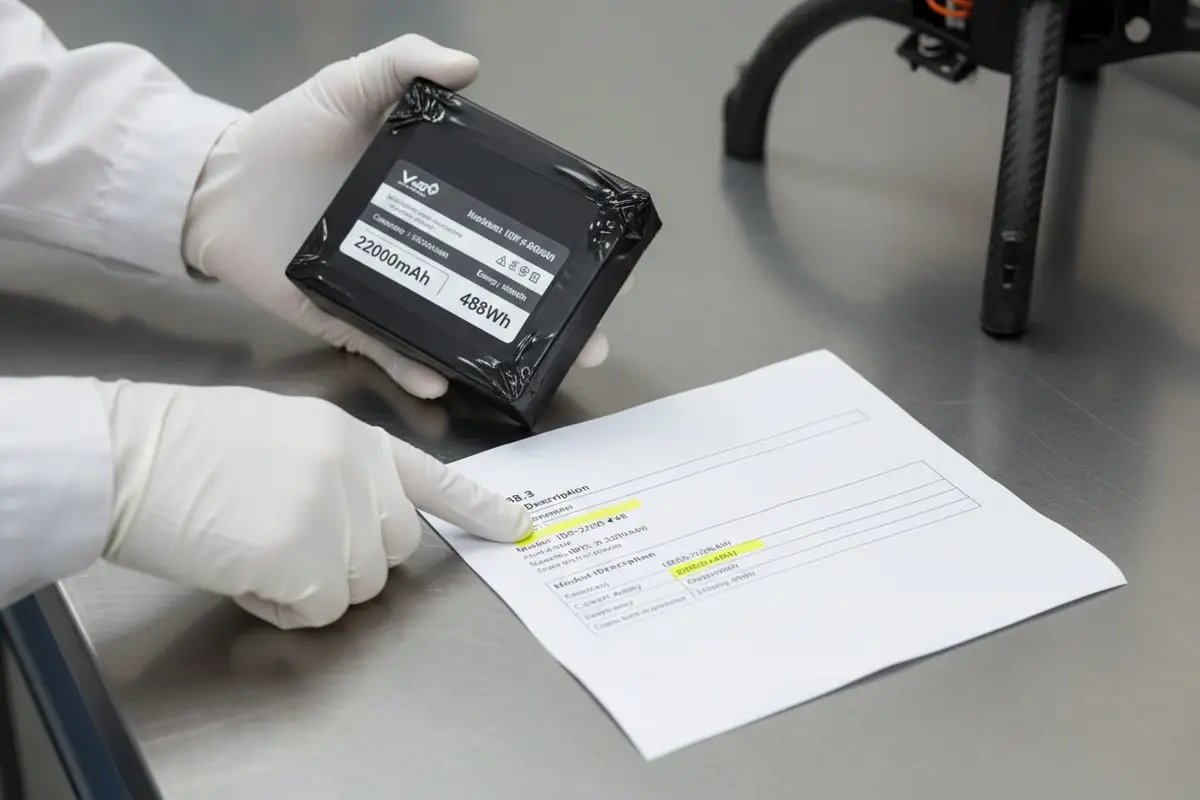

Every week, our export team receives calls from distributors facing customs delays lithium batteries 1. The reason is almost always the same: incomplete or mismatched UN38.3 documentation 2 for lithium batteries. When high-capacity drone batteries get flagged at ports, entire shipments sit idle for weeks. This costs money and damages business relationships.
When verifying UN38.3 battery certification with agricultural drone suppliers, you must confirm the test report matches your exact battery model, request complete Test Summary documents from accredited labs, check all eight test results, and ensure the certification date reflects current production batches.
This guide walks you through every verification step IEC 62133 3. We cover what documents to request, which test results matter most, and how to spot fake reports. Let us help you avoid costly mistakes and build a safer drone fleet.
How can I confirm that the UN38.3 certification covers the exact high-capacity battery model I am importing?
Our production facility handles multiple battery configurations for different drone models. We have seen buyers receive UN38.3 reports that look official but reference completely different battery specifications. This mismatch causes shipment rejections and legal troubles at customs.
To confirm UN38.3 certification covers your exact battery, verify the test report lists the same model number, capacity rating, cell chemistry, and manufacturer name as your purchase order. Cross-reference watt-hour ratings and cell configurations to ensure complete alignment.
Understanding Battery Model Identification
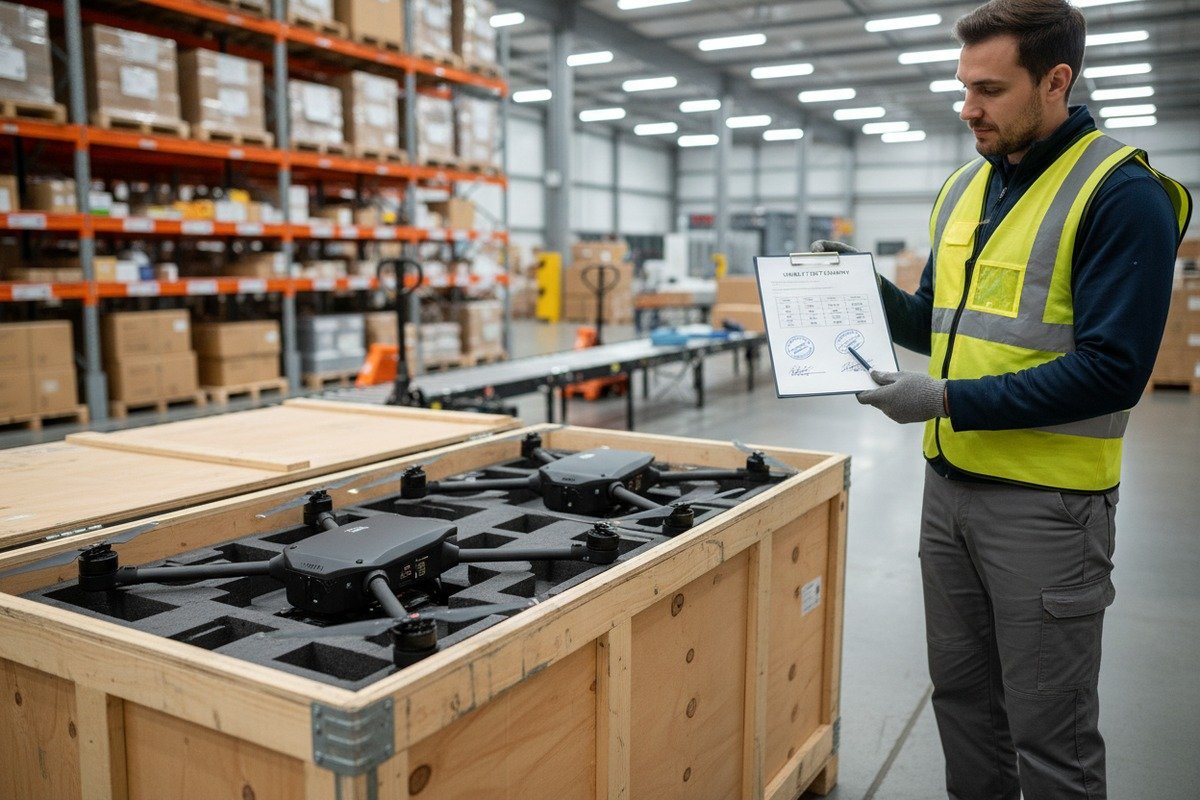
Battery model verification requires attention to specific technical details. A UN38.3 report is only valid for the exact battery configuration tested. Any change in cell type, capacity, or design requires new testing.
When our engineers prepare shipments, they match every detail between the purchase order and certification documents. Here is what you need to check:
| Verification Point | What to Look For | Red Flag Signs |
|---|---|---|
| Model Number | Exact match with PO | Partial matches or generic codes |
| Capacity (mAh/Ah) | Matches drone specs | Round numbers that seem estimated |
| Watt-hour Rating | Within 5% of stated value | Missing or inconsistent Wh data |
| Cell Chemistry | Li-ion, LiPo, LiFePO4 | Vague terms like "lithium" |
| Cell Configuration | Series/parallel count | Missing configuration details |
| Manufacturer Name | Full legal entity name | Abbreviated or generic names |
Checking Laboratory Accreditation
Not all test labs carry equal weight. Customs authorities recognize reports from accredited laboratories 4 more readily. Labs like Intertek, TÜV, SGS, and UL have established reputations.
Ask your supplier these questions:
- Which laboratory performed the UN38.3 testing?
- Is the lab ISO 17025 accredited?
- Can you provide the lab's accreditation certificate number?
We work exclusively with accredited labs for our battery testing. This costs more upfront but saves money on customs clearance.
Matching Battery Specifications to Drone Requirements
Agricultural drones typically use high-capacity batteries ranging from 10,000mAh to 30,000mAh. These often exceed the 100Wh threshold, requiring stricter documentation.
For example, a 6S 22,000mAh battery pack at 22.2V nominal contains approximately 488Wh. This falls under UN3480 classification for standalone batteries. Your UN38.3 report must reflect this specific configuration.
What specific UN38.3 test summary documents must my supplier provide to ensure smooth customs clearance?
When we ship drone batteries to North America and Europe, customs officers request specific documents in specific formats. Missing even one page can trigger inspection delays. Our documentation team has learned exactly what satisfies border authorities.
Your supplier must provide a complete UN38.3 Test Summary containing test lab details, battery specifications, all eight test results (T1-T8), manufacturer declaration, testing dates, and authorized signatures. Additionally, request the Material Safety Data Sheet and proper shipping declarations.

The Eight Required Tests Explained
The UN38.3 standard mandates eight sequential tests. Each test simulates real-world transport conditions. Your supplier's documentation must show passing results for all eight.
| Test | What It Simulates | Pass Criteria |
|---|---|---|
| T1: Altitude Simulation | Air cargo hold pressure at 11.6kPa | No leakage, venting, rupture; mass loss <0.5% |
| T2: Thermal Test | Temperature cycling -40°C to +75°C | No leakage, venting, fire, explosion |
| T3: Vibration | Transport vibrations 7-200Hz | No leakage, fire; capacity ≥90% retention |
| T4: Shock | 150g acceleration impacts | No leakage, fire; capacity ≥90% retention |
| T5: External Short Circuit | Terminal short at 55°C | No rupture, fire; temp ≤170°C |
| T6: Impact/Crush | Mechanical crushing force | No rupture, fire; temp ≤170°C |
| T7: Overcharge | Charging at 3x rated current | No rupture, fire; temp ≤170°C |
| T8: Forced Discharge | Discharge at 2.5x max rate | No rupture, fire, explosion |
Document Checklist for Customs Clearance
Based on our export experience, here is the complete document package you should request:
Primary Documents:
- UN38.3 Test Summary Report with all eight test results
- Testing laboratory accreditation certificate copy
- Manufacturer declaration of conformity
- Battery specification sheet
Supporting Documents:
- Material Safety Data Sheet 5 (MSDS/SDS)
- Packing declaration for dangerous goods
- Shipper's declaration for dangerous goods
- Air waybill with proper UN classification (UN3480 or UN3481)
Spotting Fake or Incomplete Reports
Counterfeit UN38.3 reports flood the market. Our quality team has identified these warning signs:
- Blurry scans with unreadable text
- Missing laboratory contact information
- No unique report reference number
- Spelling errors in technical terms
- Generic manufacturer information
- Test dates older than design changes
- Missing signatures or stamps
Always contact the testing laboratory directly to verify report authenticity. Legitimate labs maintain searchable databases of issued certificates.
How does verifying UN38.3 compliance protect my agricultural drone fleet from safety risks and battery malfunctions?
In our testing facilities, we have witnessed what happens when batteries fail under stress. Thermal runaway events 6 can destroy entire drone fleets within minutes. The UN38.3 tests exist because transport conditions can trigger these failures in non-compliant batteries.
Verifying UN38.3 compliance protects your fleet because the eight mandated tests validate battery behavior under extreme conditions similar to field operations—temperature swings, vibrations, impacts, and electrical faults. Compliant batteries demonstrate structural integrity and thermal stability.

Transport Conditions Mirror Field Stresses
Agricultural drones operate in harsh environments. They experience:
- Rapid temperature changes during dawn-to-dusk operations
- Constant vibration from rotor systems during spraying missions
- Physical impacts during loading and transport between fields
- Electrical stress from high-current discharge during heavy payload flights
The UN38.3 tests simulate similar conditions. Batteries that pass these tests have proven resilience that extends to actual field use.
Real-World Safety Benefits
Our engineering team tracks failure data across thousands of deployed batteries. Here is what we observe:
| Safety Concern | How UN38.3 Addresses It | Field Benefit |
|---|---|---|
| Mid-flight thermal runaway | T2 validates thermal cycling tolerance | Reduced fire risk during hot weather operations |
| Crash-induced fires | T4 and T6 verify impact resistance | Safer crash scenarios |
| Charging station fires | T7 tests overcharge protection | Protected depot storage |
| Transport incidents | T1 validates altitude stability | Safe air freight delivery |
| Short circuit events | T5 confirms isolation integrity | Reduced maintenance fires |
Beyond Transport: Operational Safety Links
While UN38.3 technically covers transport safety, the test conditions overlap significantly with agricultural drone operations.
Consider vibration testing (T3). The test exposes batteries to frequencies between 7Hz and 200Hz—the same range produced by hexacopter rotors. Batteries that survive this testing handle thousands of flight hours better than untested alternatives.
Our production line uses UN38.3 test results as quality benchmarks. We reject battery batches that show borderline results, even if they technically pass. This protects your fleet and our reputation.
Complementary Certifications for Complete Protection
UN38.3 alone does not guarantee operational safety. We recommend verifying these additional certifications:
- IEC 62133: Covers end-use safety including overcharge, over-discharge, and short circuit protection during actual operation
- UL 2054/2271: North American safety standards for battery systems
- CE Marking: European conformity for electrical equipment
Together, these certifications create comprehensive protection from factory to field.
Can my drone manufacturer provide updated UN38.3 reports that meet the latest international shipping regulations for lithium batteries?
Every year, our compliance team reviews updated IATA, IMDG, and DOT regulations. The rules for lithium battery transport keep getting stricter. Suppliers who tested batteries five years ago may hold outdated documentation that fails current requirements.
Yes, reputable manufacturers should provide current UN38.3 reports reflecting latest regulatory requirements. Ask for reports dated within 12-24 months, verify compliance with 2024-2025 IATA editions, confirm re-testing after any design modifications, and request documentation of ongoing compliance monitoring.

Key Regulatory Updates to Verify
International shipping regulations evolve continuously. Here are recent changes affecting agricultural drone battery shipments:
| Regulatory Body | Recent Change | Impact on Documentation |
|---|---|---|
| IATA DGR 65th Edition (2024) | Enhanced Test Summary requirements | More detailed manufacturer declarations needed |
| UN Model Regulations Rev. 23 | Updated cell/battery definitions | Specification language must match new terms |
| US DOT 49 CFR | State of charge shipping limits | SOC documentation required for air freight |
| EU Battery Regulation 2023 | Extended producer responsibility | Additional sustainability documentation |
Questions to Ask Your Supplier
Our export department recommends asking these specific questions:
- When was the UN38.3 testing last performed for this battery model?
- Have any design changes occurred since the last test date?
- Does your test report comply with the current IATA Dangerous Goods Regulations 7 edition?
- Can you provide re-testing documentation if the battery design changed?
- Do you have a compliance monitoring program for regulatory updates?
The Re-Testing Trigger Points
UN38.3 certification does not expire by date alone. However, certain changes invalidate existing reports:
Design Changes Requiring Re-Testing:
- Cell chemistry modification
- Capacity increase beyond tested parameters
- Cell configuration changes
- Protection circuit redesign
- Manufacturing location change
- Cell supplier change
Changes Not Requiring Re-Testing:
- Minor firmware updates
- Cosmetic housing changes
- Labeling modifications
- Connector style changes (if electrically identical)
Future-Proofing Your Supply Chain
The lithium battery regulatory landscape will continue tightening. We advise our distribution partners to:
- Request annual certification updates from suppliers
- Build re-testing costs into long-term contracts
- Maintain documentation archives for audit purposes
- Monitor IATA and DOT announcements for upcoming changes
Our company invests in proactive compliance. We re-test batteries before regulations mandate it. This protects your import operations from sudden compliance gaps.
Conclusion
Verifying UN38.3 battery certification protects your business and your customers. Match every document detail to your actual battery specifications. Request complete test summaries from accredited laboratories. Use compliant batteries to build safer, more reliable agricultural drone fleets. Contact suppliers who prioritize ongoing compliance and transparent documentation.
Footnotes
1. Provides a comprehensive overview of lithium-ion battery technology and safety. ↩︎
2. Official source for UN38.3 tests and criteria for dangerous goods transport. ↩︎
3. Official page for the IEC 62133 standard for secondary cells and batteries. ↩︎
4. ISO’s official page explaining the standard for testing and calibration laboratories. ↩︎
5. OSHA’s official guidance on Safety Data Sheets (SDS), formerly MSDS. ↩︎
6. Explains the phenomenon of thermal runaway in lithium-ion batteries and its dangers. ↩︎
7. Official source for the International Air Transport Association’s Dangerous Goods Regulations. ↩︎


 English
  Español de México
  Deutsch
  Français
  Русский
  العربية
Comments
No comments yet. Be the first to share your thoughts!
Leave a Comment