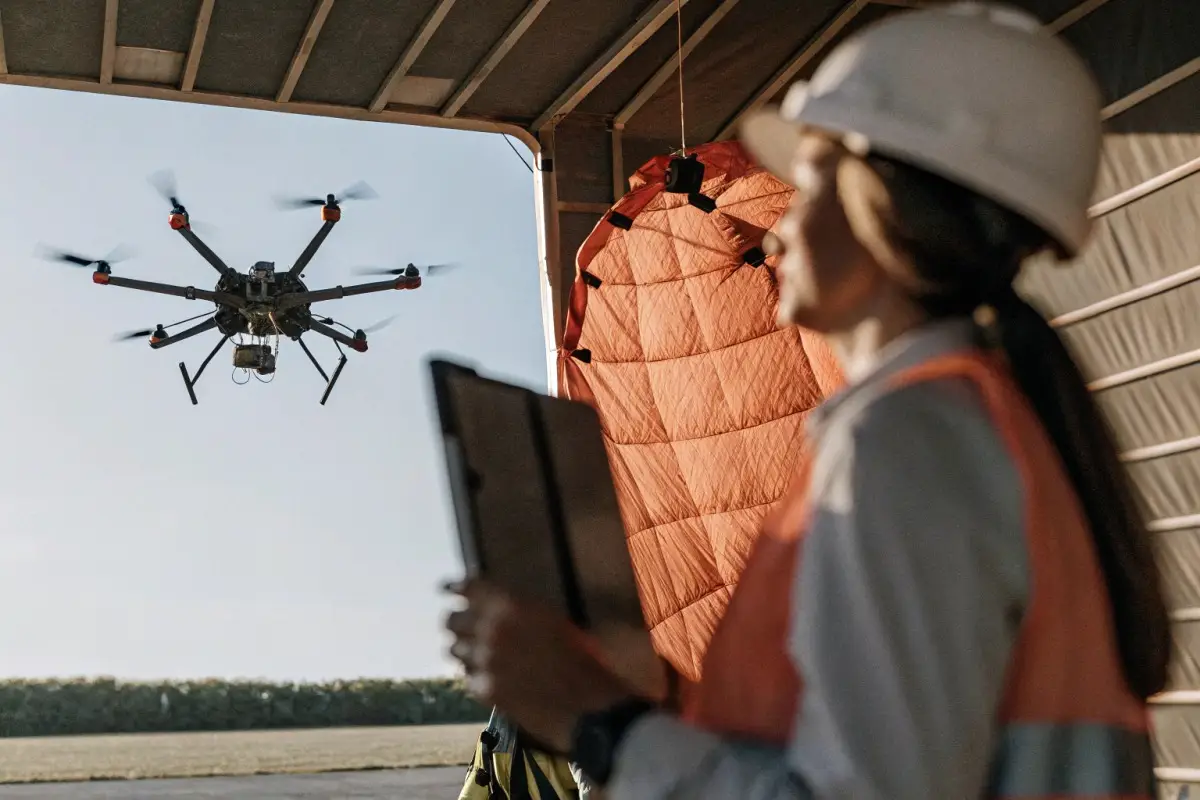
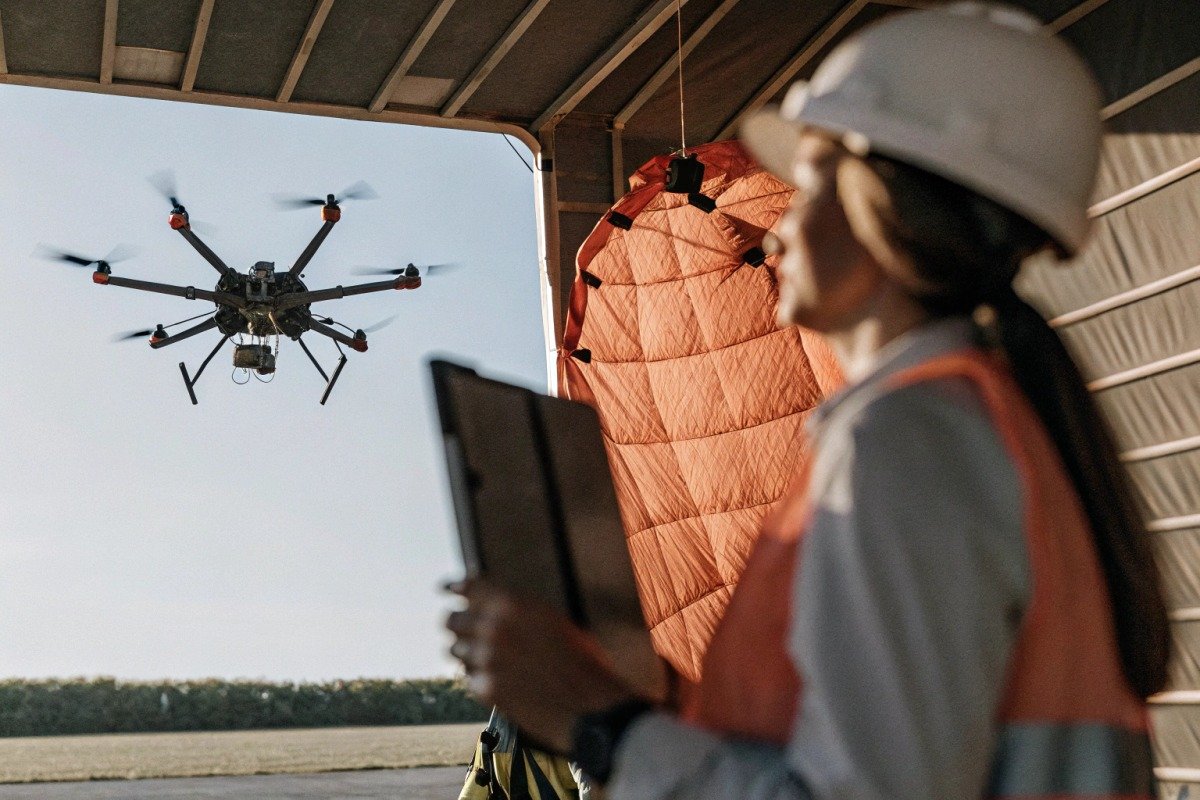
When our engineering team first developed parachute integration for heavy-lift firefighting drones, we witnessed a critical gap in procurement testing protocols. Many buyers trust manufacturer claims without verification. This creates dangerous blind spots.
To test firefighting drone parachute emergency systems for power failure, request ASTM F3322-18 certification documents, conduct simulated power-cut drop tests, verify independent trigger system power sources, and perform real-world deployment exercises under environmental stressors like heat and wind before finalizing bulk procurement orders.
This guide walks you through every verification step. We will cover independent deployment testing, documentation requirements, customization options, and durability evaluation methods.
How can I verify that the parachute deployment system operates independently during a total power failure?
Our factory has tested hundreds of parachute systems over the years. One truth stands out clearly. A parachute tied to your main flight controller is worthless when total power failure 1 strikes. Independence is everything.
Verify independent operation by confirming the parachute system has a dedicated battery, separate sensors, and an Automatic Trigger System (ATS) that functions without any input from the drone’s flight controller. Request live demonstration of deployment during simulated complete power loss scenarios.

Understanding True Independence in Emergency Systems
True independence means complete electrical and logical separation. The parachute system must have its own brain. It needs its own eyes. It needs its own heart.
The brain is the Automatic Trigger System 2. This unit monitors flight parameters constantly. It detects anomalies like sudden altitude drops, excessive roll angles, or motor stoppage. When our engineers calibrate these systems, we ensure the ATS operates on separate processors from the main flight controller.
The eyes are independent sensors. Quality systems include dedicated accelerometers and gyroscopes. These sensors feed data only to the parachute system. They do not share data pathways with flight control sensors. Sharing creates single points of failure.
The heart is the dedicated battery 3. This power source must be isolated from the main drone battery. When we test systems at our facility, we physically disconnect main power. The parachute system must still deploy within 1-2 seconds.
Testing Protocol for Procurement Teams
Here is what you should demand during evaluation:
| Test Type | What to Observe | Pass Criteria |
|---|---|---|
| Power Isolation Test | Disconnect main battery completely | Parachute deploys within 2 seconds |
| Sensor Independence Test | Block main flight controller sensors | ATS still detects anomalies |
| Communication Cut Test | Disable all data links to flight controller | Deployment triggers automatically |
| Battery Health Check | Verify dedicated battery monitoring | Separate voltage indicators function |
Red Flags During Evaluation
Watch for these warning signs. If the manufacturer cannot demonstrate deployment with main power disconnected, walk away. If sensors share circuits with flight control, reject the system. If there is no dedicated battery indicator, the system lacks proper independence.
Some vendors claim software independence. Software alone is not enough. Hardware separation is mandatory for firefighting operations. When you fly over burning structures, total power failure happens without warning. Software cannot save a drone with no electricity.
The Flight Termination Question
Independent systems should also include flight termination. This stops motors before parachute deployment. Without motor shutdown, spinning propellers can shred parachute lines. Our testing shows that systems with integrated flight termination reduce entanglement failures by over 90%.
What specific testing documentation should I request from my manufacturer to prove the emergency system's reliability?
When we prepare export documentation for our US and European clients, certification requirements vary significantly. However, certain documents are universal indicators of quality. Missing paperwork often signals deeper problems with system reliability.
Request ASTM F3322-18 certification, third-party testing reports from accredited agencies, deployment success rate data, impact energy reduction measurements, environmental stress test results, and complete flight data logging specifications to verify emergency system reliability before procurement.

Essential Certification Documents
ASTM F3322-18 is the gold standard. This certification covers parachute recovery systems for small unmanned aircraft 4. Over 90% of successful FAA waiver applicants in 2021 used ASTM-certified parachutes. This certification proves the system meets established deployment reliability standards.
Third-party verification matters more than manufacturer claims. Accredited testing agencies conduct independent evaluations. They verify performance data without bias. Request the testing agency name, accreditation status, and full test reports.
Documentation Checklist for Procurement
| Document Type | What It Proves | Why It Matters |
|---|---|---|
| ASTM F3322-18 Certificate | Meets industry deployment standards | Required for most regulatory waivers |
| Third-Party Test Report | Independent performance verification | Validates manufacturer claims |
| Impact Energy Data | Descent rate and landing force metrics | Proves adequate protection for ground personnel |
| Environmental Test Results | Performance under heat, wind, moisture | Critical for firefighting conditions |
| Flight Data Log Specifications | System monitoring capabilities | Enables incident investigation |
| Deployment Success Records | Historical reliability statistics | Indicates real-world performance |
Understanding Impact Energy Documentation
Impact energy reduction 5 is a critical metric. A 10kg drone falling from 50 meters generates approximately 4,900 joules of impact energy. That is enough to cause serious injury or death. With a properly functioning parachute system, that same drone should land with roughly 80 joules of impact energy.
Request documentation showing:
- Free-fall impact energy calculations
- Parachute-assisted descent rates
- Final impact energy measurements
- Testing altitude ranges
Environmental Stress Test Records
Firefighting operations expose drones to extreme conditions. High heat near flames. Strong thermal updrafts. Smoke reducing visibility. Your parachute system must function in these environments.
Ask for test documentation covering:
- High temperature performance (up to 60°C ambient)
- Wind tunnel results at various speeds
- Light precipitation exposure tests
- Rapid temperature change scenarios
Our quality control team runs these tests on every batch. Systems that pass laboratory conditions but fail field tests create liability risks you cannot afford.
Data Logging Requirements
Modern parachute systems should log critical flight data. This information supports incident investigation and continuous improvement. Request specifications for:
- Pre-deployment flight parameters
- Trigger activation timestamps
- Descent rate measurements
- Impact force recordings
- Post-deployment system status
These logs protect your organization. When incidents occur, data proves whether equipment performed correctly. Without logs, you have no evidence for insurance claims or regulatory inquiries.
Can I customize the parachute trigger sensitivity to ensure my firefighting drone remains safe in high-heat environments?
Our engineering support team receives this question frequently from procurement managers. Firefighting environments create unique challenges. Standard trigger settings designed for normal operations may cause problems near flames. Customization is possible but requires careful calibration.
Yes, reputable manufacturers offer adjustable trigger sensitivity settings for parameters like altitude loss rate, roll angle thresholds, and motor failure detection delays. Customization requires engineering support to balance rapid deployment against false triggers from thermal turbulence common in firefighting environments.

Understanding Trigger Parameters
Parachute systems monitor multiple flight parameters. Each parameter has threshold values that trigger deployment. These thresholds can be adjusted based on mission requirements.
Common adjustable parameters include:
| Parameter | Standard Setting | Firefighting Adjustment | Reason |
|---|---|---|---|
| Altitude Loss Rate | 5 m/s | 7-8 m/s | Thermal updrafts cause rapid altitude changes |
| Roll Angle Threshold | 60 degrees | 70-75 degrees | Aggressive maneuvering near structures |
| Motor Failure Delay | 0.5 seconds | 0.3 seconds | Faster response in critical zones |
| Descent Anomaly Detection | Standard sensitivity | Reduced sensitivity | Smoke and heat create sensor noise |
The False Trigger Problem
High-heat environments create turbulent air. Thermal columns rise rapidly from fires. When your drone flies through these columns, sudden altitude changes occur. Standard trigger sensitivity may interpret this as power failure. False deployments waste time and money.
When we calibrate systems for fire department clients, we typically increase altitude loss thresholds. This prevents false triggers from thermal turbulence 7 while maintaining protection against actual failures. The balance requires flight testing in similar conditions.
Calibration Process Requirements
Customization should follow a structured process:
- Define operational environment parameters
- Review standard trigger settings
- Propose adjusted thresholds
- Conduct controlled testing with new settings
- Document performance changes
- Verify deployment still occurs during actual failures
- Finalize calibration profile
Request that your manufacturer provide engineering support for this process. Generic adjustments without testing create dangerous gaps. What works in one thermal environment may fail in another.
Sensor Considerations for High-Heat Operations
Heat affects sensor accuracy. Accelerometers and gyroscopes may drift at elevated temperatures. Quality systems include temperature compensation algorithms. Ask your manufacturer about:
- Operating temperature range specifications
- Sensor drift compensation methods
- Heat shielding for trigger electronics
- Backup sensor redundancy
Our thermal-rated systems include insulated sensor housings. This maintains accuracy even when ambient temperatures exceed 50°C. Standard commercial sensors may fail or provide false readings in these conditions.
Manual Override Importance
Customized automatic triggers should always include manual override capability. When your pilot recognizes a genuine emergency, they need immediate deployment authority. When the system shows signs of false trigger, they need abort capability.
Ensure your customized system maintains:
- Pilot-initiated instant deployment
- Deployment abort during trigger countdown
- Clear status indication of system state
- Simple override controls accessible under stress
How do I evaluate the long-term durability of the emergency parachute system before placing a bulk order?
Before we ship large orders to distributors, our quality assurance team runs extensive durability testing. Bulk procurement magnifies any reliability problems. One defective unit is manageable. One hundred defective units is a business crisis. Evaluation before ordering protects your investment.
Evaluate long-term durability through accelerated lifecycle testing, repack cycle verification, material degradation analysis, maintenance cost projections, and pilot program deployment with real-world operational stress before committing to bulk procurement orders.

Lifecycle Testing Requirements
Accelerated lifecycle testing 8 simulates years of use in compressed timeframes. Quality manufacturers conduct these tests and document results. Request data on:
- Deployment cycle ratings (how many deployments before replacement)
- Storage duration limits with maintained readiness
- Component wear patterns over repeated use
- Electronic system longevity under vibration stress
Deployment Mechanism Durability
Different deployment mechanisms have different durability profiles. Understanding these differences helps you evaluate long-term costs.
| Deployment Type | Durability Profile | Maintenance Needs | Long-Term Cost Impact |
|---|---|---|---|
| Passive (Spring) | High cycle life, simple mechanism | Low, periodic inspection | Lower long-term costs |
| Ballistic (Gas Generator) | Limited deployments per cartridge | Cartridge replacement after each use | Higher consumable costs |
| Pneumatic | Moderate cycle life | Seal inspection and replacement | Medium maintenance costs |
Ballistic systems offer rapid deployment but require cartridge replacement after each activation. For firefighting operations where deployments may be frequent, these consumable costs add up quickly. Our calculations show passive systems often provide better total cost of ownership 9 over five-year periods despite higher initial prices.
Material Degradation Factors
Parachute materials degrade over time. Heat exposure accelerates this degradation. UV radiation weakens fabric. Moisture promotes mold growth on packed canopies. Request information about:
- Canopy material specifications and ratings
- Recommended replacement intervals
- Storage condition requirements
- Inspection protocols for material condition
For firefighting applications, heat-resistant materials are not optional. Standard nylon canopies may fail if packed while still warm from deployment near flames. Specialized fire-resistant fabrics cost more but last longer in demanding environments.
Pilot Program Strategy
Never commit to bulk orders without pilot program validation. Order a small quantity first. Deploy these units in actual operations. Document everything.
A proper pilot program should include:
- Minimum 90-day operational period
- Various environmental conditions testing
- Multiple deployment exercises
- Maintenance and repack cycle completion
- Documentation of any failures or issues
- Cost tracking for consumables and repairs
Our experience supporting distributor pilot programs shows that 90 days reveals most latent defects. Systems that survive three months of active firefighting support typically provide reliable long-term service.
Maintenance Cost Projections
Request detailed maintenance cost projections from your manufacturer. These projections should cover:
| Cost Category | What to Include | Projection Period |
|---|---|---|
| Scheduled Inspections | Labor hours, inspection tools | Annual |
| Consumable Replacement | Cartridges, seals, batteries | Per deployment and annual |
| Repack Services | Certified technician costs | Per deployment |
| Component Replacement | Sensors, electronics, canopy | 5-year lifecycle |
| Training Requirements | Initial and recurrent training | Annual |
Compare these projections across multiple vendors. The cheapest initial purchase often carries the highest long-term maintenance burden. Our procurement consulting shows that total cost of ownership analysis changes vendor rankings in over 60% of evaluations.
Vendor Support Evaluation
Long-term durability depends partly on vendor support capabilities. Evaluate:
- Parts availability and lead times
- Certified repair technician access
- 24/7 technical support availability
- Firmware update policies
- Training program quality
A durable system with no parts availability becomes worthless when repairs are needed. When we establish distributor partnerships, we commit to maintaining parts inventory for minimum ten years after product discontinuation. Request similar commitments from your vendors.
Conclusion
Testing firefighting drone parachute emergency systems requires systematic verification of independence, documentation, customization options, and durability. Follow this guide before procurement. Your due diligence protects assets, personnel, and mission success.
Footnotes
1. Wikipedia entry that mentions power loss as a vulnerability for UAVs. ↩︎
2. Explains the function and importance of an independent trigger system for drone parachutes. ↩︎
3. Highlights the necessity of an independent power source for emergency parachute systems. ↩︎
4. Official FAA definition of small unmanned aircraft from the Electronic Code of Federal Regulations. ↩︎
5. Explains the importance of reducing impact energy for safety during drone crashes. ↩︎
6. Official ASTM standard page for F3322-18, now accessible. ↩︎
7. Describes atmospheric conditions that can affect drone flight and parachute deployment. ↩︎
8. Wikipedia entry defining and explaining accelerated life testing for product durability. ↩︎
9. Wikipedia entry defining and explaining the concept of total cost of ownership. ↩︎


 English
  Español de México
  Deutsch
  Français
  Русский
  العربية
Comments
No comments yet. Be the first to share your thoughts!
Leave a Comment