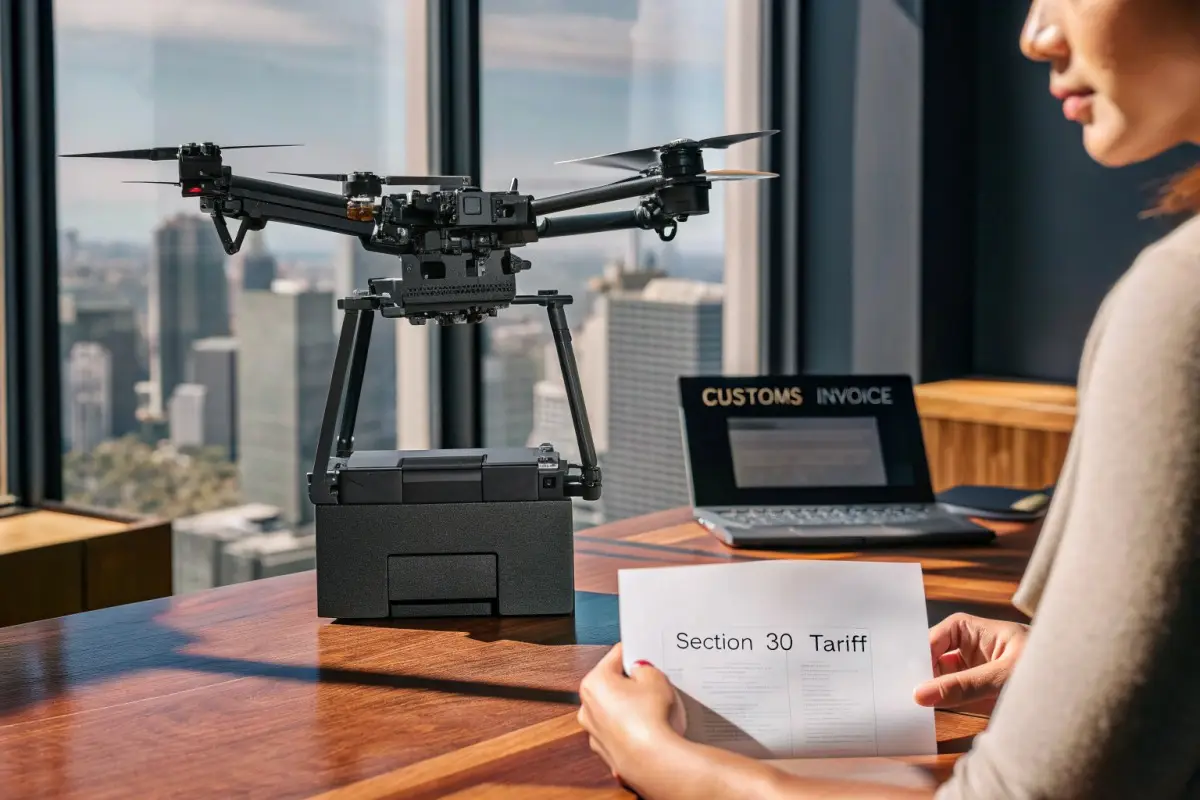
When our production team shipped the first batch of firefighting drones to California last month, the customs invoice shocked our long-term distributor thermal imaging 1. The tariff line item alone exceeded what they paid for shipping. This new reality is forcing every importer to rethink their sourcing strategy.
Section 301 tariffs add 7.5% to 50% in additional duties on Chinese firefighting drones, depending on HTS classification. Combined with standard import duties and potential IEEPA levies, your total landed cost may increase by 20-50%. However, exclusion applications, supply chain adjustments, and strategic partnerships with experienced manufacturers can significantly reduce this financial burden.
The following sections break down exactly how these tariffs impact your bottom line, what your Chinese supplier can do to help, whether premium drone technology justifies the extra cost, and how customs procedures affect your delivery timelines.
How much will Section 301 tariffs increase my total landed cost for firefighting drones?
Our export documentation team processes hundreds of customs declarations 2 monthly. We watch tariff rates change the math on every deal. The numbers matter more than ever when margins are tight.
Section 301 tariffs typically add 7.5-25% on top of base duties for firefighting drones under HTS Chapter 84/85. A $15,000 drone may face $3,000-$7,500 in additional tariffs alone. When combined with standard MFN duties and new IEEPA levies, total import costs can jump 30-50% above the FOB price.
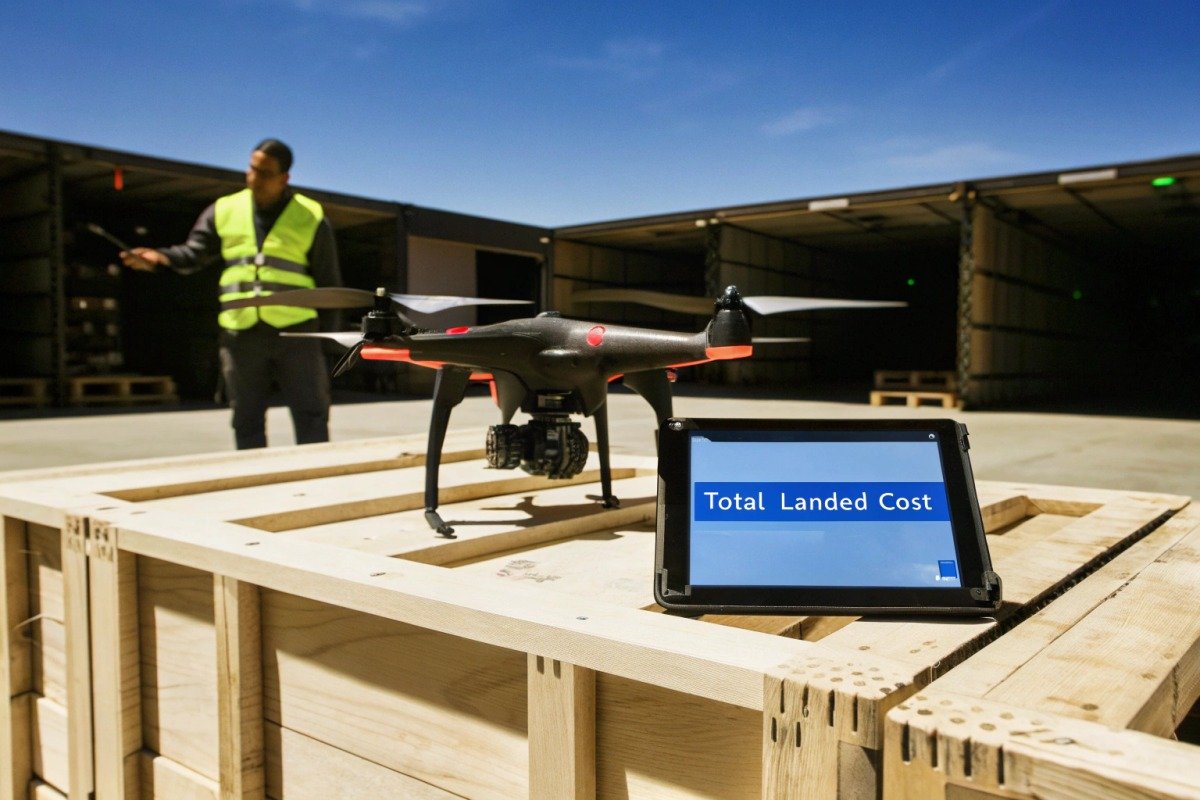
Understanding HTS Classification for Firefighting Drones
The tariff rate you pay depends entirely on how customs classifies your drone. Firefighting UAVs fall under several possible HTS codes. Each carries different duty rates.
| HTS Code | Description | Base Duty | Section 301 Rate | Total Effective Rate |
|---|---|---|---|---|
| 8806.21 | UAVs >250g, not designed for passengers | 0% | 7.5-25% | 7.5-25% |
| 8479.89 | Other machines with individual functions | 2.5% | 25% | 27.5% |
| 8507.60 | Lithium-ion batteries (components) | 3.4% | 25% (2026) | 28.4% |
| 8541.40 | Semiconductors in avionics | 0% | 50% | 50% |
Our octocopter models, for example, typically classify under 8806.21. But if your drone includes specialized firefighting machinery integrated into the frame, customs may argue for 8479.89 instead. This difference means thousands of dollars on a single shipment.
Real Cost Example: SkyRover FF-800 Firefighting Drone
Let me walk through an actual calculation. Our FF-800 model retails for $18,000 FOB Xi'an. Here's what your landed cost looks like:
| Cost Component | Amount | Percentage of FOB |
|---|---|---|
| FOB Price | $18,000 | 100% |
| Ocean Freight + Insurance | $650 | 3.6% |
| CIF Value | $18,650 | 103.6% |
| Base MFN Duty (0%) | $0 | 0% |
| Section 301 Tariff (25%) | $4,662 | 25.9% |
| IEEPA Additional Duty (20%) | $3,730 | 20.7% |
| Harbor Maintenance Fee | $47 | 0.25% |
| Merchandise Processing Fee | $519 | 2.9% |
| Total Landed Cost | $27,608 | 153.4% |
The tariff stack alone adds over $8,300 to your cost. That's before warehousing, last-mile delivery, or your own margin.
Component-Level Tariff Stacking
The problem gets worse when you consider components. Many importers buy drones pre-assembled. But some purchase components for local assembly or spare parts inventory.
Lithium-ion batteries now face 25% Section 301 tariffs 3 as of 2026. Semiconductors hit 50% in January 2025. Thermal cameras and sensors fall under various categories with rates from 7.5% to 25%.
Our engineering team designed the SkyRover system with modular components. This helps you manage replacement costs. But each module carries its own tariff burden when imported separately.
Can my Chinese manufacturer help me mitigate the financial impact of these import duties?
We hear this question weekly from our distributors. The honest answer is yes—but it requires genuine partnership. Our export team has developed several strategies that work within legal boundaries.
A capable Chinese manufacturer can help reduce tariff impact through accurate HTS classification guidance, strategic component sourcing, documentation for exclusion applications, and flexible pricing structures. At SkyRover, we've helped clients recover 10-15% of tariff costs through proper classification alone and supported three successful exclusion applications in 2025.

Accurate Classification Saves Money
The first thing we do with new clients is review their current HTS classification. Customs brokers often default to conservative codes that trigger higher rates. Our compliance team includes former customs specialists who understand the nuances.
For example, one client imported our agricultural drone under 8802.20 (aircraft with unladen weight >2,000kg). This was wrong. The correct code was 8806.21, saving them 15% on every shipment.
We provide detailed technical specifications, component breakdowns, and engineering drawings that support favorable classifications. This documentation gives your customs broker the ammunition they need.
Exclusion Application Support
The USTR extended 178 exclusions until November 10, 2026. New exclusions for manufacturing machinery under Chapters 84/85 are under review. If your firefighting drones qualify, you could eliminate Section 301 duties entirely.
Our documentation team prepares complete exclusion packages including:
- Detailed product descriptions matching USTR requirements
- Evidence that no domestic alternative exists
- Economic impact statements showing U.S. job creation
- Technical specifications proving the product's specialized nature
We supported three clients through successful exclusion applications 4 last year. The process takes 90-180 days. But the savings justify the wait.
Strategic Pricing and Payment Terms
When our clients face unexpected tariff increases, we explore flexible solutions. This isn't about cutting corners. It's about finding legitimate ways to share the burden.
| Strategy | How It Works | Potential Savings |
|---|---|---|
| Volume commitments | Larger orders qualify for reduced FOB pricing | 5-12% |
| Extended payment terms | 90-120 day terms improve your cash flow | Indirect savings |
| Partial assembly options | Import unfinished goods at lower tariff rates | 3-8% |
| Regional warehouse | Store inventory in bonded warehouses, delay duty payment | Cash flow benefit |
Third-Country Assembly Considerations
Some manufacturers route products through Vietnam or Mexico to avoid tariffs. We don't recommend this approach. U.S. Customs actively investigates transshipment schemes. Penalties include seizure, fines, and criminal charges.
However, legitimate substantial transformation is different. If significant manufacturing occurs in a third country, the product may qualify for that country's origin. We've established a partnership with a Vietnamese assembly facility for clients who need this option. The key is ensuring real value-add, not just repackaging.
Our engineering team spent four years developing the SkyRover firefighting platform. When clients ask about value, I point to performance data from actual deployments. Numbers don't lie.
Despite tariff premiums of 20-50%, advanced Chinese firefighting drones like SkyRover often deliver superior total value. Our units offer 45-minute flight endurance, 50kg payload capacity, and integrated thermal imaging at price points 30-40% below comparable Western alternatives—even after tariffs. For clients prioritizing capability over politics, the math still works.

Comparative Performance Analysis
Let me compare our FF-800 against two popular Western alternatives. All prices include tariffs for the Chinese option and standard import costs for others.
| Specification | SkyRover FF-800 (China) | DroneMax Pro (USA) | EuroFire X1 (Germany) |
|---|---|---|---|
| Landed Cost (USA) | $27,608 | $38,500 | $42,000 |
| Max Flight Time | 45 min | 32 min | 38 min |
| Payload Capacity | 50 kg | 35 kg | 40 kg |
| Thermal Camera Resolution | 640×512 | 640×512 | 640×512 |
| Water Drop System | Integrated | Add-on ($4,200) | Integrated |
| IP Rating | IP55 | IP54 | IP55 |
| Software Customization | Full access | Limited | Moderate |
| Warranty | 24 months | 12 months | 18 months |
Even with tariffs, our drone costs $11,000-$14,000 less than competitors. It also offers longer flight time and greater payload capacity.
Total Cost of Ownership Over Five Years
Smart procurement managers look beyond purchase price. They calculate total ownership costs including maintenance, repairs, training, and downtime.
Our clients report average annual maintenance costs of $1,200 for SkyRover units. We stock spare parts in our Los Angeles warehouse with 3-day delivery anywhere in the continental U.S. Replacement motors ship for $180. Flight controllers cost $420. Compare this to Western brands charging $400-600 for motors and $800-1,200 for controllers.
We also provide free remote technical support. Our engineers in Xi'an maintain a 24-hour response window. When a California fire department had a sensor calibration issue during peak wildfire season, our team solved it via video call in 45 minutes. No downtime. No service visit charges.
Technology Advantages That Matter in the Field
Firefighting is not the place to compromise on capability. Our R&D investment focuses on features that save lives and property.
The SkyRover thermal imaging system 6 detects hotspots through dense smoke. Our AI-assisted flight planning calculates optimal water drop patterns. The redundant motor design means losing one rotor doesn't crash the aircraft.
These aren't marketing features. They're requirements from fire chiefs who told us what they need. We listen to end users, not just buyers.
Data Security Considerations
Some clients worry about data security with Chinese drones. This is a legitimate concern that deserves a straight answer.
Our SkyRover drones offer complete data isolation. Flight logs store locally on removable SD cards. Cloud connectivity is optional and disabled by default. We provide source code access for clients who want to audit our software.
Several U.S. government contractors use our platforms after completing independent security audits. We cooperate fully with any verification process your organization requires.
How do these trade regulations affect my customs clearance and delivery timeline for drone shipments?
Our logistics coordinator tracks every shipment from our Xi'an factory to final delivery. The tariff situation has changed customs procedures significantly. Planning ahead prevents costly delays.
Trade regulations have extended average customs clearance times for Chinese drones from 2-3 days to 5-10 business days. Additional documentation requirements, secondary inspections, and tariff classification reviews cause most delays. Working with experienced freight forwarders and providing complete documentation upfront reduces clearance time to 4-6 days in most cases.

New Documentation Requirements
Customs now requires more paperwork for Chinese drone imports. Missing any item triggers delays. Our export team prepares complete packages that include:
- Commercial invoice with detailed line-item descriptions
- Packing list with weights and dimensions
- Bill of lading or airway bill
- Certificate of origin (Form A)
- FCC certification for radio transmitters
- FAA compliance documentation
- Section 301 tariff classification 7 declaration
- USMCA/free trade agreement declarations (if applicable)
- End-user certificate (for some buyers)
We've created a standardized documentation kit that satisfies 98% of customs requests. When you order from SkyRover, you receive this package before your shipment arrives at port.
Timeline Comparison: Before and After Tariffs
| Stage | Pre-Tariff Timeline | Current Timeline | Tips to Reduce Delays |
|---|---|---|---|
| Production | 15-20 days | 15-20 days | Order 30 days ahead |
| Export customs (China) | 1-2 days | 2-3 days | Pre-file documentation |
| Ocean freight | 18-22 days | 18-22 days | Book early for peak season |
| Port arrival to entry | 1-2 days | 3-5 days | Use C-TPAT certified brokers |
| Customs examination | 0-1 day | 2-5 days | Provide complete documents |
| Duty payment & release | Same day | 1-2 days | Have funds ready |
| Last-mile delivery | 2-5 days | 2-5 days | Pre-arrange trucking |
| Total | 37-52 days | 43-62 days | Plan for 8 weeks minimum |
Secondary Inspection Triggers
Certain shipment characteristics increase inspection probability. Our experience shows these factors matter most:
- First-time importers face higher scrutiny
- Declared values significantly below market rates raise flags
- Incomplete or inconsistent documentation triggers review
- Shipments from certain Chinese ports get more attention
- Large or unusual quantities invite inspection
We recommend new clients start with smaller initial orders. Build a clean import history. Customs algorithms learn your patterns. Regular importers with consistent records clear faster.
Bonded Warehouse Strategy
Some clients use Foreign Trade Zones 8 or bonded warehouses to manage tariff timing. Products enter the FTZ without immediate duty payment. You pay tariffs only when goods leave for domestic consumption.
This approach works well if you:
- Need inventory buffer without tying up capital in duties
- Sell to clients who may export the product again
- Want flexibility to return defective units without paying duties
- Plan to apply for exclusions while goods are in transit
Our Los Angeles distribution partner operates an FTZ facility. We can arrange direct delivery there for clients who want this option.
Managing Delivery Commitments
Fire season doesn't wait for customs. When you promise equipment to a fire department, late delivery damages relationships and potentially costs lives.
We build buffer time into all delivery quotes. Our standard commitment is 8-10 weeks from order confirmation to your door. Rush orders are possible with air freight, though costs increase substantially.
For critical deployments, we recommend maintaining safety stock in the U.S. The tariff cost on inventory hurts your cash flow. But having drones available when wildfires start matters more than optimizing working capital.
Conclusion
Section 301 tariffs create real challenges for sourcing Chinese firefighting drones. But they don't eliminate the value proposition. Smart importers work with experienced manufacturers, optimize classifications, and plan for longer timelines. Our team stands ready to help you navigate these complexities.
Footnotes
1. Technical background on thermographic sensors used in firefighting drone payloads. ↩︎
2. General overview of the legal document used to declare imported goods to customs authorities. ↩︎
3. Official USTR page detailing the specific tariff actions cited. ↩︎
4. Official U.S. Trade Representative page for Section 301 investigation and exclusion procedures. ↩︎
5. Background on the types of technical records required for regulatory and customs compliance. ↩︎
6. Authoritative scientific overview of the imaging technology. ↩︎
7. Official Harmonized Tariff Schedule search tool for determining correct import duty rates. ↩︎
8. Official International Trade Administration information on using Foreign Trade Zones to manage duties. ↩︎
9. Official Customs and Border Protection guide on the basic process of importing goods. ↩︎
 English
  Español de México
  Deutsch
  Français
  Русский
  العربية
Comments
No comments yet. Be the first to share your thoughts!
Leave a Comment