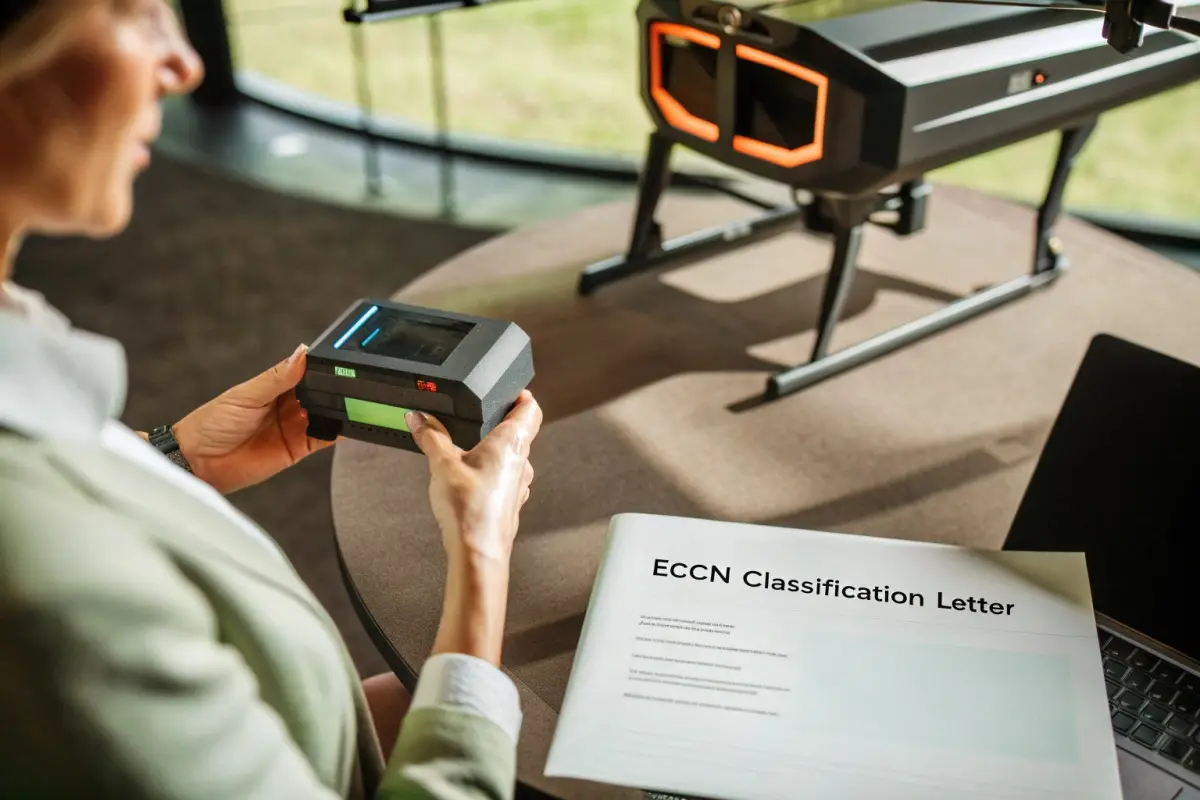
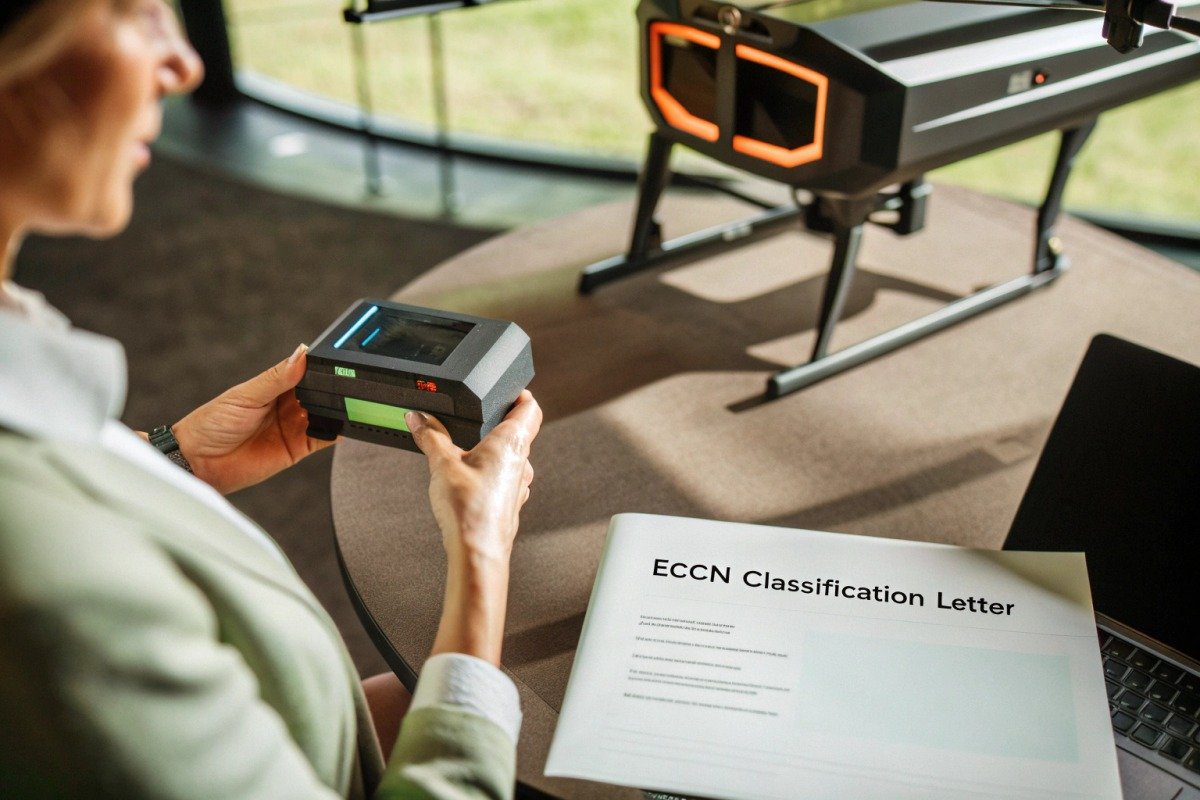
Our engineering team recently faced a challenging situation when a U.S. customer’s shipment of thermal sensors was held at customs for weeks Export Control Classification Number (ECCN) 1. The problem? Incomplete export documentation. This experience taught us that verifying export controls is not optional—it is essential for smooth international trade.
To verify export controls for firefighting drone infrared sensors, you must obtain the Export Control Classification Number (ECCN) from your supplier, confirm the sensors are not on restricted dual-use lists, request proper export licenses, and ensure documentation matches both exporting and importing country regulations.
Let us walk through the specific steps and documents you need to protect your business from costly delays and legal risks.
What specific export licenses should I request from my supplier to ensure my infrared sensors aren't flagged at customs?
When we prepare shipments for our overseas partners, license documentation is always the first checkpoint Commerce Control List (CCL) 2. Missing or incorrect licenses can result in seized goods, fines, or permanent blacklisting. This is a problem no buyer or seller wants to face.
Request the BIS export license or License Exception documentation (such as STA or TMP), the ECCN classification letter, end-use certificates, and the shipper's export declaration. These documents prove your supplier has legal authority to export controlled infrared sensors.

Understanding the Key Export Licenses
The U.S. Bureau of Industry and Security (BIS) 3 controls most dual-use infrared sensors under the Export Administration Regulations (EAR) 4. Some high-performance thermal sensors may fall under ITAR if they have military applications.
Here is what you should request:
| Document Type | Purpose | Who Issues It |
|---|---|---|
| BIS Export License | Authorizes export of controlled items | U.S. Bureau of Industry and Security |
| License Exception (STA, TMP, etc.) | Allows export without full license under specific conditions | Supplier self-declares based on BIS rules |
| ECCN Classification Letter | Shows the sensor's control category | Manufacturer or BIS |
| End-Use Certificate | States the final application (firefighting) | Buyer provides, supplier keeps on file |
| Shipper's Export Declaration (SED) | Customs record for U.S. exports | Supplier files with U.S. Customs |
License Exception STA: A Key Update for 2026
The January 2026 BIS interim final rule expanded License Exception Strategic Trade Authorization (STA) 5. Drones and infrared sensors with less than one hour of endurance now face fewer restrictions. If your sensors fall under ECCN 9A012.a.1 and you are in a Wassenaar Arrangement country 6 (except Russia, Ukraine, or Malta), you may not need a full license.
However, do not assume this applies automatically. Ask your supplier to confirm in writing which exception they are using and why.
Red Flags to Watch For
Be cautious if your supplier:
- Cannot provide an ECCN classification
- Claims "no license needed" without documentation
- Refuses to provide end-use certificates
- Has connections to Entity List companies
These are warning signs of potential compliance failures.
How do I confirm if the infrared sensors I'm sourcing fall under restricted dual-use technology categories?
Our quality control team reviews every sensor specification before procurement. We learned this the hard way after a partner discovered their sensors were classified differently than expected. The technical parameters determine everything.
Check your sensor's resolution, frame rate, and thermal sensitivity against the Commerce Control List (CCL). Sensors meeting ECCN 6A003 thresholds (such as certain focal plane array specifications) are dual-use controlled. Request the manufacturer's ECCN determination letter for confirmation.

The Dual-Use Classification Process
Dual-use items have both civilian and military applications. Infrared sensors are classic examples because the same technology that detects wildfires can also guide missiles.
Classification depends on technical specifications:
| Technical Parameter | Control Threshold | Why It Matters |
|---|---|---|
| Pixel Resolution | >320×240 in some cases | Higher resolution enables military targeting |
| Thermal Sensitivity (NETD) | <50mK for some categories | Better sensitivity aids surveillance |
| Frame Rate | >60Hz for certain uses | Fast rates support weapons guidance |
| Spectral Range | 8-14μm (LWIR) often controlled | This range is standard for military IR |
| Focal Plane Array Type | Cooled vs. uncooled matters | Cooled arrays typically face stricter controls |
Step-by-Step Verification Process
- Obtain full technical specifications from your supplier
- Cross-reference against ECCN 6A003 (infrared cameras and focal plane arrays)
- Check ECCN 6A002 (optical sensors that may overlap)
- Request a formal ECCN determination letter from the manufacturer
- If uncertain, file a classification request with BIS (takes 60+ days)
The "600 Series" Complication
Some infrared sensors originally designed for military use but released for commercial sale fall under EAR "600 series" controls. These require extra scrutiny. If your supplier's sensor shares a design lineage with military equipment, investigate further.
Practical Example
Imagine you are sourcing a 640×512 uncooled thermal sensor with 30mK sensitivity for wildfire detection. This likely falls under ECCN 6A003.b.4. Your supplier should provide documentation confirming this classification and any applicable license exceptions.
When our export department prepares shipments to the U.S. or Europe, we compile extensive documentation packages. Buyers increasingly request this information upfront. The reason is simple: China has its own export controls, and your supplier must comply with both Chinese and destination country rules.
Your Chinese manufacturer must provide China's export license (if required), a dual-use item export permit from MOFCOM, technical specifications with ECCN classification, end-user certificates, and corporate registration proving legal export authority. Without these, your shipment faces seizure risks.

China's Export Control Framework
China implemented updated export control laws in December 2020, covering dual-use items including certain infrared sensors. In August 2023, China added drone-related components to its restricted export list.
Your Chinese supplier needs:
| Document | Issuing Authority | Purpose |
|---|---|---|
| Dual-Use Export Permit | Ministry of Commerce (MOFCOM) 7 | Authorizes export of controlled technology |
| Business License (营业执照) | State Administration for Market Regulation | Proves legal company status |
| Export Qualification Certificate | Customs Administration | Shows company can legally export |
| Technical Data Package | Manufacturer | Details sensor specifications |
| End-User Statement | Buyer provides to supplier | Confirms civilian firefighting use |
Why This Matters for U.S. Importers
Even if your Chinese supplier clears Chinese customs, U.S. CBP will examine whether the goods:
- Originated from an Entity List company
- Contain controlled technology requiring U.S. import licenses
- Have complete and accurate documentation
Vetting Your Chinese Supplier
We recommend these verification steps:
- Check the BIS Entity List for your supplier's name
- Request their MOFCOM export permit for thermal sensors
- Verify their business license is current and covers export trading
- Confirm they are not affiliated with military-linked entities
- Obtain written confirmation of their compliance with China's export controls
The DJI Factor
Some Chinese manufacturers use DJI-linked components or sensors. DJI faces U.S. restrictions, so sensors with DJI connections may trigger enhanced scrutiny. Ask your supplier directly about component origins.
How can I verify that my supplier's export control compliance matches the import regulations of my local government?
Our customer service team frequently guides buyers through this alignment process. We have seen shipments delayed for months because export and import paperwork did not match. The key is early verification before placing orders.
Compare your supplier's ECCN classification with your country's import control list, verify license exception eligibility for your destination, confirm end-use documentation matches both countries' requirements, and establish a Technology Control Plan if non-U.S. persons will access controlled technology.

Creating a Compliance Alignment Checklist
Use this framework to verify alignment:
| Verification Step | Export Side (Supplier) | Import Side (Buyer) |
|---|---|---|
| Classification | ECCN from BIS or China controls | Check against local import control list |
| License Status | BIS license or exception documentation | Import permit if required |
| End-Use Certification | Supplier retains buyer's statement | Buyer may need to file with customs |
| Technical Data | Full specifications provided | Matches import application |
| Parties Screening | Supplier screens buyer | Buyer screens supplier against denied lists |
The "Deemed Export" Challenge
This is where many buyers face unexpected compliance issues. If non-U.S. persons (including your employees) will operate, maintain, or calibrate the infrared sensors, you may trigger "deemed export" rules.
Example: You import sensors to the U.S. Your technician from another country performs calibration. This "use" access may require an export license—even though the sensors never left the U.S.
Technology Control Plans (TCPs)
If your organization employs non-U.S. persons who will access controlled sensor technology, implement a TCP:
- Identify controlled technology in your possession
- Restrict physical access to authorized personnel only
- Secure technical data (manuals, software, specifications)
- Train employees on export control responsibilities
- Document all access for audit purposes
Working with Export Control Officers
Large organizations should have an Export Control Officer (ECO). Before sourcing, consult your ECO to:
- Confirm import licensing requirements
- Review supplier documentation
- Establish access controls
- Plan for compliance audits
Practical Alignment Example
You are sourcing ECCN 6A003.b.4 sensors from China for U.S. firefighting operations:
- Supplier provides ECCN classification letter and Chinese export permit
- You verify ECCN 6A003.b.4 requires no U.S. import license for civilian end-use
- You confirm License Exception STA applies for re-export to allied countries
- You implement TCP because your maintenance technician is Canadian
- You retain all documentation for five years
Conclusion
Export control verification for firefighting drone infrared sensors requires systematic documentation review, technical classification checks, and alignment between export and import regulations. Start early, request complete documentation, and consult compliance experts to protect your business.
Footnotes
1. Defines ECCN as a key identifier for export-controlled items. ↩︎
2. Explains the list categorizing items subject to export licensing authority. ↩︎
3. Identifies the primary U.S. government agency for export controls. ↩︎
4. Provides official information on the regulations governing dual-use items. ↩︎
5. Details a specific export license exception under U.S. regulations. ↩︎
6. Lists member countries of the multilateral export control regime. ↩︎
7. Identifies the Chinese authority for export control policies and permits. ↩︎



 English
  Español de México
  Deutsch
  Français
  Русский
  العربية
Comments
No comments yet. Be the first to share your thoughts!
Leave a Comment