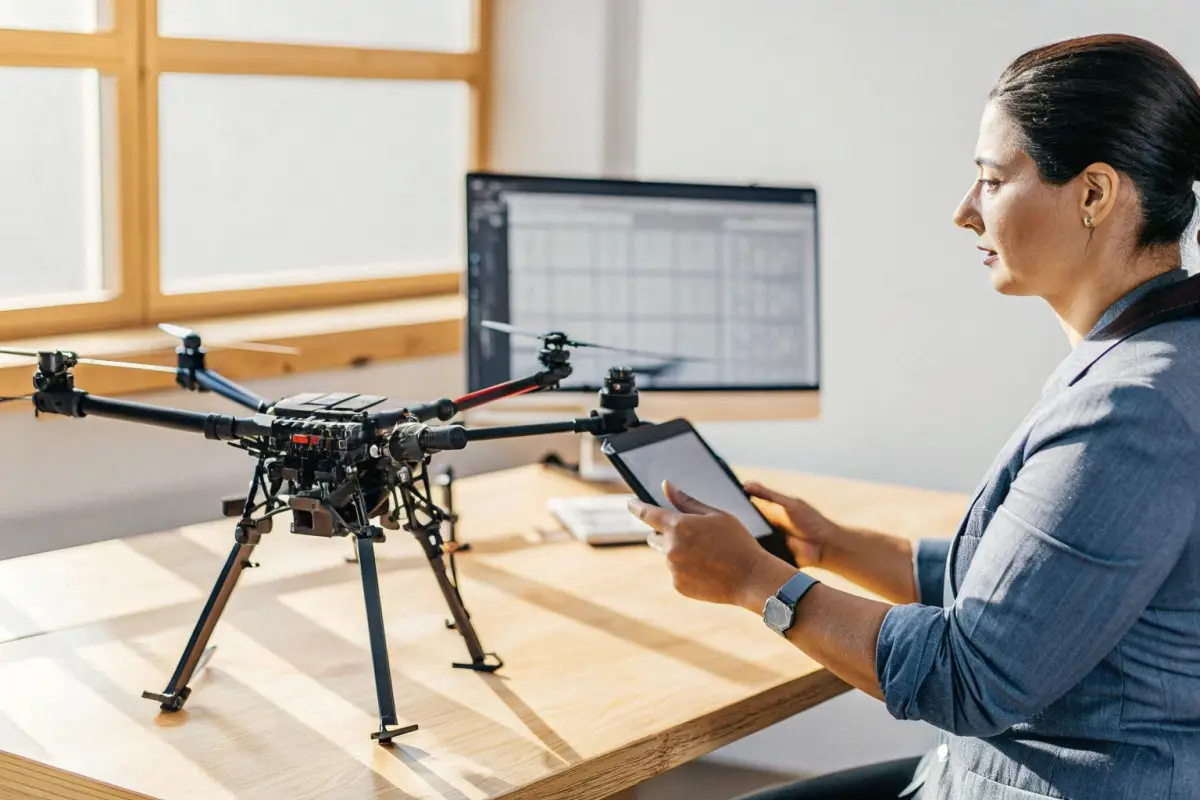

Last year, our quality control team discovered a chilling pattern. UL safety certifications 1 Three overseas buyers reported battery failures in firefighting drones they purchased from uncertified suppliers. These incidents cost them contracts, lawsuits, and damaged reputations. The root cause? Fake UL labels that looked perfect but failed verification.
To verify UL safety certifications for firefighting drones, buyers should search the UL Product iQ database using the product’s file number, cross-check certification scope against drone-specific standards like UL 3030, inspect label authenticity, and confirm ongoing compliance through UL’s surveillance audit records.
This guide walks you through every verification step. We will cover database searches, battery-specific standards, OEM production compliance, and the real business risks of skipping verification. Let’s protect your investment and reputation.
How can I use the UL Product iQ database to verify my drone supplier's safety credentials?
When we ship firefighting drones to American distributors, they always ask one question first: "Can I verify this certification myself?" The answer is yes. But many buyers do not know where to start or what to look for in the database results.
The UL Product iQ database (ul.com/database) allows free searches by file number, company name, or product category. Enter the 8-13 digit file number from your drone's UL label to confirm active certification status, tested standards, and whether the certification covers the complete drone system or only components.
Step-by-Step Database Search Process
The verification process takes about 10 minutes when you know what to look for. Here is exactly how our export team guides buyers through the process.
First, locate the UL mark on your drone. It should appear on the product body, battery pack, or accompanying documentation. Look for the circular UL symbol, the manufacturer's name, and a file number starting with letters like "E" followed by numbers.
Second, visit ul.com/database. The basic search function is free. Enter the file number exactly as it appears on the label. Do not add spaces or change any characters.
Third, review the search results carefully. The database shows the certification holder's name, product category, applicable safety standards, and current status. Pay attention to any suspension or revocation notices.
Understanding Database Results
| Database Field | What It Means | Red Flag Signs |
|---|---|---|
| Status | Active, Suspended, or Revoked | Anything other than "Active" |
| Certification Type | UL Listed, UL Recognized, UL Verified | UL Recognized alone (components only) |
| Standards | Specific UL standards tested | Missing fire or battery standards |
| Issue Date | When certification was granted | Dates more than 5 years old without renewal |
| Scope | Products covered under this file | Scope does not match your drone model |
What If The Search Returns No Results?
No results usually means one of three things. The file number may be fake. The certification may have expired. Or the label may contain typos.
Contact UL directly at their verification hotline. Provide photos of the label and product. UL staff can investigate and confirm whether the certification ever existed.
Our experience shows that roughly 20-30% of imported electronics carry fake or misleading UL marks. For high-risk products like firefighting drones, this percentage may be even higher. Always verify before you commit to any purchase order.
Checking Factory Audit Compliance
UL conducts unannounced factory audits at least twice per year for certified products. Ask your supplier for their most recent audit report. The database may show audit compliance status, but detailed reports require direct supplier cooperation.
Legitimate manufacturers welcome these questions. If a supplier hesitates or refuses to provide audit documentation, consider it a serious warning sign.
What specific UL standards should I demand for my firefighting drone's high-capacity battery system?
Our engineering team spends months testing each battery configuration before production. Why? Because battery failures in firefighting scenarios do not just damage equipment. They endanger firefighters and can cause secondary fires at emergency scenes.
For firefighting drone batteries, demand compliance with UL 3030 (Unmanned Aircraft Systems), UL 2054 (Household and Commercial Batteries), and UL 9540A (Test Method for Evaluating Thermal Runaway Fire Propagation). These standards specifically address overcharge protection, thermal runaway prevention, and fire resistance under extreme heat conditions.
Critical Battery Safety Standards Explained
Lithium-ion batteries 3 pose the greatest safety risk in firefighting drones. They must operate reliably in environments where ambient temperatures can exceed 200°C near active flames. Standard consumer drone batteries are not designed for these conditions.
UL 3030 4 is the most important standard for complete drone systems. It covers electrical system requirements, charging system safety, and overall aircraft integrity. When we design our firefighting models, we reference this standard throughout the development process.
UL 2054 5 focuses specifically on battery cell and pack construction. Tests include overcharge abuse, external short circuit, crush testing, and high-temperature exposure. Batteries that pass these tests have demonstrated they will not explode or catch fire under normal misuse conditions.
UL 9540A 6 addresses what happens when a battery cell does fail. It measures whether thermal runaway in one cell will spread to adjacent cells. For firefighting drones carrying high-capacity packs, this propagation test is critical.
Battery Testing Requirements Comparison
| Test Type | UL 2054 Requirement | Firefighting Drone Need |
|---|---|---|
| Overcharge | 150% rated voltage | Essential for field charging |
| Short Circuit | External short at room temp | Critical for crash scenarios |
| Crush Test | 13kN force applied | Important for payload drops |
| High Temperature | 70°C for 7 hours | Insufficient (need 150°C+) |
| Thermal Runaway | Not specifically covered | Covered under UL 9540A |
| Drop Test | 1 meter onto concrete | Minimum for drone operations |
Additional Standards Worth Requesting
Beyond core battery certifications, consider asking for documentation on these related standards:
IEC 62133 7 covers international battery safety requirements. Many overseas markets require this alongside UL certifications.
UN 38.3 8 is mandatory for shipping lithium batteries by air. Your logistics partner will need this documentation regardless of other certifications.
NFPA 2400 9 specifically addresses small unmanned aircraft systems used for public safety operations. While not a UL standard, it complements UL certifications by covering operational and maintenance requirements.
Real-World Testing Beyond Standard Requirements
When we develop batteries for firefighting applications, standard UL tests represent the minimum threshold. Our internal testing goes further.
We expose battery packs to temperatures exceeding 150°C for extended periods. We simulate water exposure from extinguishing operations. We test performance after repeated exposure to fire retardant chemicals.
Ask your supplier what additional testing they perform beyond minimum certification requirements. Reputable manufacturers will have extensive internal test data they can share.
How do I ensure my custom-designed OEM drone maintains its UL safety certification during production?
Many of our clients come to us with specific feature requests. They want custom camera mounts, specialized payload systems, or modified flight controllers. These modifications raise an important question: does customization void the original UL certification?
OEM modifications to UL-certified drones require re-evaluation when changes affect safety-critical components like batteries, wiring, or structural elements. Work with manufacturers who maintain ongoing UL surveillance agreements and can submit engineering change notices to UL for approval before production modifications begin.
Understanding Certification Scope Limitations
A UL certification covers a specific product configuration. Change that configuration, and you may step outside the certification's scope.
Here is a practical example. We hold UL certification for our standard firefighting drone with a 20-liter water payload. A customer requests a 30-liter tank. This modification affects structural load, battery drain, and flight characteristics. Without re-evaluation, the modified drone no longer falls under our existing certification.
The key principle is simple: any change to safety-critical components requires UL review.
What Changes Require Re-Certification?
| Modification Type | Re-Certification Required? | Reason |
|---|---|---|
| Software updates (non-safety) | Usually No | Does not affect tested hardware |
| Battery capacity increase | Yes | Changes thermal and electrical behavior |
| Frame material change | Yes | Affects structural integrity |
| Custom paint or branding | No | Cosmetic only |
| Different propeller size | Possibly | May affect motor load and safety |
| Alternative charging adapter | Yes | Electrical safety concern |
| Additional camera mount | Possibly | Depends on structural impact |
The Engineering Change Notice Process
When our engineering team develops a modification for an OEM client, we follow a specific process to maintain certification validity.
First, we document every proposed change in detail. This includes engineering drawings, material specifications, and calculated impacts on existing test results.
Second, we submit an engineering change notice to UL. Their engineers review whether the modification falls within the existing certification scope or requires additional testing.
Third, if additional testing is required, we conduct those tests either in our facility or at a UL laboratory. Test results are submitted for review.
Fourth, once approved, UL updates our certification file to include the modified configuration. Only then do we begin production.
This process typically takes 4-8 weeks depending on complexity. We build this timeline into our OEM project schedules.
Maintaining Production Quality Control
Certification is not a one-time event. UL conducts ongoing surveillance audits to ensure production quality matches tested samples.
Our factory maintains detailed production records for every certified product. We track component sources, assembly procedures, and quality test results. When UL auditors visit, they review these records and may pull production samples for verification testing.
Ask your OEM supplier about their surveillance audit history. Request copies of recent audit reports. A manufacturer who cannot produce these documents may not have legitimate ongoing certification.
Working With Your OEM Partner
Clear communication prevents certification problems. Before finalizing any OEM agreement, discuss these points with your manufacturing partner:
What is the exact certification scope of the base product? Request the UL file documentation showing tested configurations.
Which modifications will require re-evaluation? Get a clear answer before committing to custom features.
Who bears the cost and timeline for re-certification? Establish this in your contract.
How will ongoing production quality be verified? Understand the audit schedule and your access to reports.
At our facility, we assign a dedicated compliance engineer to each OEM project. This person tracks certification status throughout development and production, ensuring nothing falls through the cracks.
What are the risks to my business if I import firefighting drones without verified UL safety documentation?
We have watched distribution partners face serious consequences from certification shortcuts. One buyer saved $15,000 by choosing an uncertified supplier. Six months later, they faced a $200,000 product liability lawsuit after a battery failure injured a firefighter during training.
Importing firefighting drones without verified UL documentation exposes your business to product liability lawsuits, regulatory penalties, customs seizure, insurance claim denials, and permanent reputation damage. OSHA and fire authorities increasingly require UL certification for emergency response equipment, making uncertified products difficult or impossible to sell to government agencies.
Legal Liability Exposure
Product liability law holds importers responsible for products they bring into the market. If a drone fails and causes injury, you cannot simply blame the overseas manufacturer. You are in the liability chain.
UL certification provides a documented defense. It shows you performed due diligence in selecting products that meet recognized safety standards. Without this documentation, your legal defense becomes much harder.
Courts have ruled against importers who failed to verify certifications before selling safety-critical equipment. The argument that you "trusted the supplier" does not protect you.
Regulatory Consequences
Multiple regulatory bodies care about drone safety certifications. Understanding their requirements helps you avoid compliance failures.
| Regulatory Body | Certification Expectation | Non-Compliance Consequence |
|---|---|---|
| FAA | Part 107 compliance | Flight operation restrictions |
| OSHA | Safety standards for workplace equipment | Workplace use prohibition |
| CPSC | Consumer product safety verification | Product recall orders |
| Customs & Border Protection | Import documentation | Shipment seizure |
| State Fire Marshals | NFPA compliance | Government contract exclusion |
Insurance Implications
Commercial liability insurance policies typically contain clauses about product certifications. If you sell equipment that lacks required safety certifications, your insurer may deny claims.
Read your policy carefully. Many policies specifically exclude coverage for products that do not meet applicable safety standards. A UL certification helps demonstrate that your products meet those standards.
We have seen importers discover this exclusion only after filing a claim. By then, it is too late to fix the certification gap.
Market Access Restrictions
Government agencies represent major buyers for firefighting drones. Fire departments, emergency management agencies, and public safety organizations all purchase this equipment.
Most government procurement contracts require specific certifications. Without UL documentation, you cannot bid on these contracts. You lose access to a significant market segment.
Private sector buyers increasingly ask for certification documentation as well. Insurance requirements, corporate liability policies, and procurement standards all drive this demand.
Reputation and Business Continuity
A single safety incident can end a distribution business. News travels fast in specialized equipment markets. Fire departments talk to each other. Once your company becomes associated with unsafe products, recovery is extremely difficult.
Consider the math. Proper UL verification might cost you a few thousand dollars per product line. A product recall can cost hundreds of thousands. A serious injury lawsuit can cost millions. Reputation damage is incalculable.
Protecting Your Investment
Before placing any order, demand complete certification documentation. Ask for:
- UL certificate copies with current dates
- File numbers you can independently verify
- Recent factory audit reports
- Test reports for relevant standards
- Compliance declarations from component suppliers
Any supplier who cannot or will not provide these documents should be eliminated from consideration. The short-term savings are not worth the long-term risks.
Our export team prepares complete documentation packages for every order. We know that our customers' businesses depend on having verifiable certifications. This is not optional paperwork. It is fundamental business protection.
Conclusion
Verifying UL certifications protects your business, your customers, and emergency responders who depend on reliable equipment. Use the Product iQ database, demand appropriate battery standards, maintain OEM compliance documentation, and never underestimate import risks. Your due diligence today prevents disasters tomorrow.
Footnotes
1. Explains the importance and process of UL safety certifications for various products. ↩︎
2. Official online database for verifying UL certifications and accessing product information. ↩︎
3. Offers general information on the safety and hazards of lithium-ion batteries. ↩︎
4. Provides the official scope and details for the Unmanned Aircraft Systems standard. ↩︎
5. Details the safety standard for household and commercial battery packs. ↩︎
6. Explains the test method for evaluating thermal runaway fire propagation in battery systems. ↩︎
7. Provides international safety requirements for portable sealed secondary lithium cells and batteries. ↩︎
8. Outlines the international testing requirements for safe transport of lithium batteries by air. ↩︎
9. Defines standards for small unmanned aircraft systems used in public safety operations. ↩︎

 English
  Español de México
  Deutsch
  Français
  Русский
  العربية
Comments
No comments yet. Be the first to share your thoughts!
Leave a Comment