
When we design avionics for European markets, the biggest headache isn’t flight time; it’s the strict fines for mishandling video data during emergency operations.
To verify GDPR compliance, check that the drone offers AES-256 encryption for both data at rest and in transit. Ensure the manufacturer provides specific DPIA documentation, EU-based server options for cloud storage, and automated features like real-time face blurring to minimize personal data collection during flights.
Here is exactly how to audit your next fleet purchase to avoid legal pitfalls.
What specific data encryption features do I need in firefighting drone cameras to ensure GDPR compliance?
While testing our latest thermal payloads, we realized standard video feeds thermal payloads 1 are vulnerable to interception, exposing you to massive regulatory penalties.
You need AES-256 encryption for the video downlink to prevent interception during live transmission. Additionally, the drone must encrypt the internal SD card or SSD to ensure that if the hardware is lost or stolen during a mission, unauthorized personnel cannot access the recorded footage.

When you are procuring a large quadcopter for emergency services, the hardware specifications often focus on lift capacity and thermal sensitivity. However, from our experience on the production floor, the security of the data pipeline is where GDPR compliance is won or lost. Firefighting missions often occur in chaotic environments where drones can crash or be temporarily lost. If that drone contains unencrypted footage of victims or private property, you have just created a data breach.
Securing Data at Rest
The first line of defense is the storage media. On our assembly line, we integrate encryption chips that lock the onboard SSD or SD card. You must verify that the drone utilizes AES-256 bit encryption for data at rest. This means that if a drone crashes into a burning building and is recovered by a civilian or a bad actor, the footage remains inaccessible without the decryption key. Simple password protection is not enough; the file system itself must be encrypted.
Protecting the Video Downlink
The second critical area is the "data in transit." data in transit 2 This is the live video feed sent from the drone to the ground station. In early generations of industrial drones, this signal was often analog industrial drones 3 or unencrypted digital, meaning anyone with a receiver nearby could watch the feed. For GDPR compliance, this is unacceptable. You must confirm that the video transmission system uses robust encryption protocols. This prevents "snooping" where unauthorized parties intercept the live view of a rescue operation, which often contains sensitive personal data.
Comparison of Encryption Standards
Use the table below to evaluate vendor specifications during your procurement process:
| Encryption Type | Security Level | GDPR Suitability | Recommended Use Case |
|---|---|---|---|
| No Encryption | Low | Non-Compliant | Toy drones only. Never for public safety. |
| AES-128 | Medium | Borderline | Acceptable for general scouting, but aging technology. |
| AES-256 | High | Compliant | Mandatory for firefighting and surveillance involving people. |
| Proprietary | Unknown | Risky | Avoid unless the vendor provides third-party audit verification. |
By insisting on these standards, you protect your agency from the reputational and financial damage of a data leak. It transforms the drone from a liability into a secure tool.
How can I confirm that the drone's data transmission and storage protocols meet European privacy standards?
Our software engineers spend weeks ensuring telemetry doesn’t accidentally route through non-compliant servers, which would immediately fail a European privacy audit.
Confirm compliance by auditing the data flow documentation to ensure no flight logs or video feeds are routed through servers outside the EEA. Verify that the system supports role-based access control and that the manufacturer uses ISO 27001-certified cloud providers for any necessary data backup or processing.
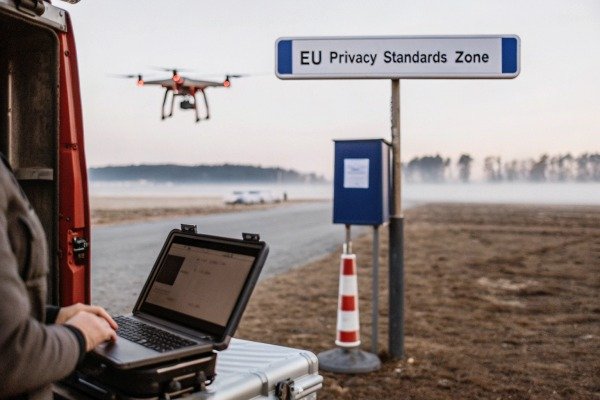
Verifying where your data goes is just as important as how it is encrypted. In the global drone market, many systems are designed to sync flight logs and media automatically to the cloud. As a supplier, we often have to disable these default "phone home" features for our European clients to meet local regulations. If a firefighting drone automatically uploads footage to a server in a country without an adequacy decision from the EU, you are violating GDPR restrictions on international data transfers.
Data Residency and Sovereignty
You must ask the manufacturer explicitly: "Where are the servers located?" For a compliant firefighting operation, the answer should be within the European Economic Area (EEA) or a country European Economic Area 4 with a rigid data protection agreement. If the drone uses a mobile app for flight control, check if that app processes data locally on the tablet or sends it to a cloud backend. We recommend systems that allow for Local Data Mode, where no data leaves the device unless you physically export it. This "air-gapped" approach is the safest route for sensitive public safety operations.
Role-Based Access Control (RBAC)
GDPR requires that personal data is only accessible to those who need it for their specific job function. A compliant drone system should offer granular access controls.
- The Pilot: Needs access to live flight telemetry and video for safety.
- The Incident Commander: Needs access to the live stream for decision-making.
- The IT Admin: Needs access to logs for maintenance but perhaps not the video footage.
If the drone software has a single "admin" login that everyone shares, it fails the accountability principle. You need a system that logs who viewed the footage and when.
Audit Checklist for Data Protocols
When speaking with a sales representative, use this checklist to verify their backend protocols:
| Protocol Feature | Requirement for GDPR | Why it Matters |
|---|---|---|
| Server Location | EU/EEA Based | Prevents illegal cross-border data transfer. |
| Data Sync | Opt-In (Default Off) | Prevents accidental upload of sensitive mission data. |
| User Accounts | Individual Logins | Ensures accountability for who accesses data. |
| Audit Logs | Immutable (Read-Only) | Provides a legal trail if data is misused. |
| Cloud Provider | ISO 27001 Certified | Proves the vendor's cloud partner is secure (e.g., AWS Frankfurt). |
Which specific certifications or documentation should I request from the manufacturer to prove GDPR adherence?
We often see buyers settle for a generic “GDPR Ready” sticker, but that offers zero legal protection when regulators investigate a data breach.
Request a specific Data Processing Agreement (DPA) that outlines the manufacturer’s role as a processor. Additionally, ask for third-party penetration test reports, ISO 27001 certifications for information security, and a completed technical template to support your organization’s mandatory Data Protection Impact Assessment (DPIA).

Documentation is the shield that protects your procurement decision. In our dealings with government contracts, we have learned that a brochure saying "Secure" means nothing. You need evidentiary support. A firefighting drone is not just a flying camera; it is a data collection device. Therefore, the paperwork must reflect the rigor applied to any IT system handling personal data.
The Data Protection Impact Assessment (DPIA) Support
Under GDPR, high-risk processing—which includes aerial surveillance by fire departments—requires a DPIA. You cannot complete this assessment alone because you do not know the internal architecture of the drone. You must demand a Product Security Whitepaper or a DPIA Support Template from the manufacturer. This document should detail exactly what data is collected (e.g., MAC addresses of bystander phones, faces, GPS tags) and how long it is retained. If a vendor cannot provide this map of data flow, they have likely not considered privacy in their engineering.
Third-Party Penetration Testing
Do not take our word for it—or any manufacturer's word. Ask for a recent Penetration Test Report from an independent security firm. This report shows that ethical hackers tried to break into the drone's system ethical hackers 5 and failed (or that vulnerabilities were fixed). This is crucial for proving "State of the Art" security measures, a requirement under GDPR Article 32. GDPR Article 32 6
Essential Documentation Table
Ensure these specific documents are included in your tender or purchase contract:
| Document Name | Purpose | Red Flag If Missing |
|---|---|---|
| Data Processing Agreement (DPA) | Defines legal responsibilities if the vendor processes any data. | Vendor claims no responsibility for data leaks. |
| ISO 27001 Certificate | Proves the vendor has an information security management system. | Vendor lacks formal security policies. |
| DPIA Technical Template | Helps you assess privacy risks for your specific operation. | Vendor doesn't know how their product processes data. |
| Letter of Volatility | Explains how to wipe memory permanently before disposal/repair. | You cannot safely retire or repair the drone. |
| Cybersecurity Audit Report | Independent verification of encryption and firewall strength. | Reliance solely on marketing claims. |
Does the drone's flight software offer real-time blurring or anonymization tools to protect bystander privacy?
In our flight simulations over populated areas, high-definition zoom cameras capture faces unintentionally, creating immediate liability risks for the operator without automated redaction tools.
Look for flight software that includes AI-driven real-time anonymization. This feature automatically detects and blurs faces or license plates in the live video feed before the data is saved or transmitted, ensuring adherence to the GDPR principle of data minimization without requiring manual post-processing.
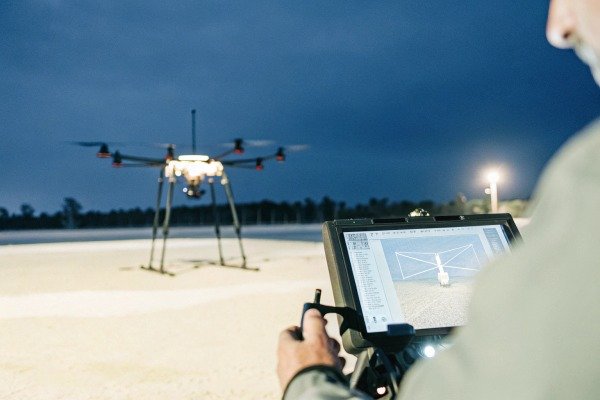
The principle of "Data Minimization" is central to GDPR. Data Minimization 7 It states that you should only collect the data necessary for your purpose. In firefighting, your purpose is to locate the fire or the victim, not to record the faces of bystanders watching from the street. However, high-resolution cameras capture everything. This is where "Privacy by Design" features in the software become your best asset.
Real-Time AI Redaction
Advanced industrial drones now come equipped with AI processors capable of object recognition. We are seeing a shift where the drone processes the video frame before it leaves the camera buffer. The software identifies human faces or vehicle license plates and applies a Gaussian blur. Gaussian blur 8 This means the footage recorded to the SD card and sent to the pilot is already anonymized. This drastically reduces your compliance burden because you are not collecting identifiable personal data in the first place, except perhaps for the specific victim you are rescuing (which falls under vital interest exemptions).
Operational Balance and Thermal Imaging
While anonymization is great for visible light cameras, you must also verify how it interacts with thermal imaging. Usually, thermal cameras do not capture enough detail to identify a face, so they are naturally more privacy-compliant. However, modern drones overlay thermal and RGB images. You need to verify that the anonymization applies to the RGB layer even when in "fusion" mode.
Furthermore, ensure that this feature can be toggled by authorized personnel. In a search and rescue mission, seeing a face is necessary. search and rescue mission 9 The system should allow the pilot to disable blurring for the mission target while keeping it active for the surrounding environment, or allow for an unblurred "evidence" copy to be stored in a secure, encrypted partition while the public stream remains blurred.
Feature Verification Checklist
- Latency Impact: Does the blurring add delay to the video feed? (It should be under 200ms).
- Detection Accuracy: Does it work on profile views or just frontal faces?
- Metadata Scrubbing: Does the system automatically remove GPS location data from images before they are shared to public media channels?
Conclusion
Verifying GDPR compliance is not just about checking a box; it involves a deep look at the hardware's encryption, the software's data routing, and the manufacturer's transparency. By demanding AES-256 encryption, local data storage options AES-256 encryption 10, comprehensive DPIA support, and active anonymization tools, you ensure your firefighting fleet saves lives without compromising privacy rights.
Footnotes
1. Leading manufacturer of thermal imaging technology for public safety. ↩︎
2. Cybersecurity institute explaining data in transit protection. ↩︎
3. Major manufacturer of industrial drones for emergency services. ↩︎
4. Official definition of the EEA member countries. ↩︎
5. Certification body defining standards for ethical hacking. ↩︎
6. Official EU guidance on security of processing data. ↩︎
7. Industry association resource explaining data minimization principles. ↩︎
8. General explanation of the image processing technique. ↩︎
9. Educational research on drone technology in search and rescue. ↩︎
10. Official US government standard defining AES encryption. ↩︎
 English
  Español de México
  Deutsch
  Français
  Русский
  العربية
Comments
No comments yet. Be the first to share your thoughts!
Leave a Comment