
Buying a standardized industrial drone for complex firefighting missions often leads to disappointment. We have seen too many procurement managers struggle with off-the-shelf units that fail in high winds or cannot integrate with local extinguishing agents. The frustration of investing in equipment that does not fit your specific terrain or regulatory environment is real and costly. However, by engaging with our engineering team early in the process, you can transform a standard quadcopter into a specialized tool tailored for your region.
To ensure firefighting drones align with local markets, buyers must participate in the design phase by defining operational scenarios, specifying payload compatibility for local extinguishing agents, mandating firmware compliance for regional aviation laws, and requiring environmental stress testing. This collaborative approach guarantees the final hardware matches local infrastructure, weather patterns, and legal standards.
Active participation involves four critical areas where your input directly shapes the success of the final product.
What specific hardware and software features can I customize to suit local firefighting operations?
When we configure flight controllers for our international clients, we often notice that a “one-size-fits-all” approach fails in extreme conditions. A drone built for a calm agricultural field will struggle in the turbulent heat of a structural fire structural fire 1. You need to know exactly which components can be swapped or modified to meet your operational reality.
You can customize hardware features such as payload release mechanisms for specific fire suppressants, obstacle avoidance sensors for urban density, and thermal resistant propellers. On the software side, customization includes localized user interfaces, specific flight modes for smoke penetration, and data encryption protocols that align with your agency’s security standards.

Tailoring the Airframe and Propulsion
The physical build of a large quadcopter is the first area ripe for customization. While the base frame provides the structure, the propulsion system—motors, Electronic Speed Controllers (ESCs), and propellers—must be tuned to your environment.
For instance, if your market involves high-rise urban firefighting, you face narrow spaces and turbulent wind tunnels between buildings. In this scenario, we recommend customizing the drone with high-torque motors and smaller, stiffer propellers (such as 10-inch carbon fiber props) to improve responsiveness and stability. Conversely, for forest fire applications where endurance covers large areas, we would prioritize efficient, lower-kV motors with larger propellers to maximize flight time.
Heat resistance is another non-negotiable hardware feature. Standard plastic casings melt near active fires. You should request the integration of heat-resistant materials for the frame arms and landing gear. We can also install internal cooling fans for the battery compartment if you operate in regions with high ambient temperatures, ensuring the power system does not overheat during a mission.
Sensor Suites and Obstacle Avoidance
A major friction point for local operators is sensor incompatibility. A standard visual camera is useless in thick smoke. During the design phase, you must specify the need for multi-spectrum sensor suites.
- Thermal Imaging: Request high-resolution thermal cameras thermal cameras 2 (e.g., 640×512 resolution) calibrated to your local temperature ranges. This allows operators to see through smoke and identify hotspots.
- LIDAR and Radar: For urban markets, visual obstacle avoidance fails at night or in smoke. We can integrate millimeter-wave radar or LIDAR LIDAR 3 modules millimeter-wave radar 4 that function regardless of visibility. This ensures the drone detects power lines and building edges even in pitch-black smoke conditions.
Software Localization
The Ground Control Station (GCS) software is the pilot's primary interface. If the UI is in the wrong language or uses metric units when your team is trained in imperial, accidents happen. You can request a full UI localization. This goes beyond just translation; it involves adjusting the symbology and warning systems to match local firefighter training standards.
Furthermore, we can customize the flight control firmware. For example, we can program specific "position hold" gains that are more aggressive for windy coastal cities, or "smooth" modes for precise indoor inspections.
Payload Compatibility Table
Different regions use different suppression methods. A customized design ensures your drone carries what you actually use.
| Operational Scenario | Recommended Customization | Benefit |
|---|---|---|
| High-Rise Rescue | Glass-breaking payload + Voice speaker | Allows entry and communication with trapped victims. |
| Forest Wildfire | Dry powder balls + Granular dispenser | Rapidly suppresses ground fires over wide areas. |
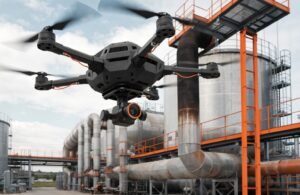
| Industrial/Chemical | Liquid hose nozzle + Gas detector | Targets specific chemical fires while monitoring toxicity. |
How do I effectively communicate my market's unique requirements to the engineering team?
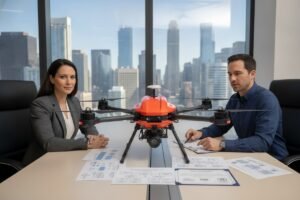
We often receive emails simply asking for “long range” or “heavy lift,” which leaves our engineers guessing at the true requirements. This ambiguity delays development and leads to prototypes that miss the mark. To get the best product from our factory, you must bridge the gap between operational needs and engineering specifications.
Effective communication requires submitting a detailed “Concept of Operations” document that translates field needs into technical data, such as specifying exact wind resistance ratings and payload dimensions. You should also demand a modular architecture that supports local maintenance, ensuring your team can swap parts without shipping the unit back to the factory.

The Power of Operational Scenarios
Engineers think in numbers, not adjectives. Instead of saying "we need a durable drone," you should describe the operational scenario. For example, tell us: "The drone must deploy from a truck in under 2 minutes, fly 3 kilometers in 12 m/s winds, drop a 3kg payload, and return with 20% battery remaining."
This level of detail allows us to run simulations. We can calculate the exact lift-to-drag ratio needed lift-to-drag ratio 5 and select the correct battery voltage (e.g., 6S vs. 12S) to meet your power requirements. When you provide specific scenarios, you move from buying a product to co-designing a solution.
Defining Modularity for Maintenance
One of the biggest pain points for importers is after-sales support. If a motor arm breaks, you cannot afford to ship the drone back to China. You must communicate a requirement for "Field Replaceable Units" (FRUs).
During the design phase, insist on a modular hardware architecture. Ask for quick-release connectors on motor arms and landing gear. Require that the camera gimbal uses standard mounting ports rather than proprietary integrated circuits. This ensures that your local technicians can swap critical components using standard tools. This design philosophy not only increases the product's lifespan but also builds trust with your local customers who fear downtime.
Checklist for Technical Communication
To ensure nothing gets lost in translation, use a structured approach when submitting your requirements. This helps our team prioritize features that matter most to your market.
| Feature Category | Vague Request (Avoid) | Specific Engineering Request (Preferred) |
|---|---|---|
| Endurance | "Long flight time" | "Minimum 35 minutes hover time with 5kg payload at 25°C." |
| Range | "Good signal" | "Stable video transmission at 5km LOS with frequency hopping enabled." |
| Durability | "Strong frame" | "Carbon fiber frame capable of withstanding 15 m/s wind gusts and IP54 water resistance." |
| Maintenance | "Easy to fix" | "Modular arms with plug-and-play ESC connections; no soldering required for motor replacement." |
Standardizing Data Protocols
If your market uses specific software for command and control (like ATAK in the US) ATAK 6, you must communicate this early. We need to know if the drone needs to output video via RTSP or another protocol RTSP 7. Don't assume standard video feeds will work with your local specialized software. Explicitly stating "Must support RTSP stream over port 554" saves weeks of software revisions later.
How can I ensure the final design complies with the aviation regulations in my specific region?
Shipping a drone to the US or Europe is not just about logistics; it is about legality. We have seen shipments stuck at customs or grounded by local authorities because the firmware lacked necessary compliance features. Integrating these legal constraints into the design phase is cheaper and safer than trying to patch them later.
You can ensure compliance by mandating the integration of Remote ID modules, configuring firmware-level geofencing to prevent flight in restricted zones, and establishing data sovereignty protocols. These features must be embedded directly into the flight controller’s architecture to satisfy aviation authorities like the FAA or EASA.

Firmware-Level Geofencing and Limits
Aviation authorities are strict about where drones can fly. In your design requirements, you should request pre-configured geofencing. This involves programming the flight controller to recognize "No-Fly Zones" No-Fly Zones 8 (NFZs) specific to your country, such as airports or government buildings.
For the US market, this often means integrating with databases that update NFZs dynamically. Additionally, you should specify altitude limits. If your local regulation caps drone flights at 120 meters (400 feet), we can hard-code this limit into the firmware. This protects your customers from accidental violations and reduces liability for your company.
Remote ID and Identification
Most developed markets now require Remote ID for industrial drones. This acts as a "digital license plate." Do not treat this as an add-on; it should be integrated into the chassis.
- US Market (FAA): You must verify that the broadcast module complies with FAA Standard Remote ID. We can install compliant modules during assembly so the user does not need to attach external dongles.
- EU Market (EASA): The requirements differ slightly regarding the specific class markings (C-class). You must instruct us to apply the correct physical labels and ensure the firmware broadcasts the required serial number format.
Data Sovereignty and Security
For firefighting and government clients, where data is stored is a deal-breaker. Many Western buyers are wary of flight logs or video feeds going to servers outside their country.
To address this, you must demand "Data Sovereignty" in the software architecture. This means:
- Local Mode: The drone functions 100% offline without requiring an internet connection to arm or fly.
- Server Selection: If cloud sync is used, the data must point to domestic servers (e.g., AWS US-East) AWS US-East 9 rather than our default servers in Asia.
- Encryption: Video feeds and control links should use AES-256 encryption to prevent interception during sensitive operations.
Regulatory Compliance Matrix
Different regions have different priorities. Use this guide to tell us what to prioritize for your build.
| Feature | United States (FAA) | European Union (EASA) |
|---|---|---|
| Remote ID | Mandatory Standard Remote ID (Broadcast) | Direct Remote ID (DRI) required for Specific Category |
| Lighting | Anti-collision lights visible for 3 statute miles | Green flashing light for night ops; specific color coding |
| Failsafe | Return-to-Home (RTH) required on signal loss | RTH plus rapid flight termination system (FTS) for high risk |
| Data Privacy | High sensitivity (NDAA compliance often requested) | GDPR compliance required for video storage |
Can I request a prototype to validate the product's performance before mass production begins?
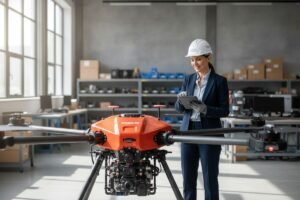
Our production line is efficient, but jumping straight to a 500-unit order is a gamble we advise against. We always encourage our partners to test a “golden sample” first. This step is the only way to verify that the theoretical specs on our datasheets actually translate to performance in your local environment.
You should absolutely request a prototype to validate critical performance metrics through “micro-climate simulation,” ensuring the drone withstands your specific environmental stressors like extreme heat or coastal salt spray. This validation phase also confirms that the payload release mechanisms function correctly under real-world aerodynamic loads.

The Importance of Micro-Climate Simulation
A drone that flies perfectly in Xi'an might fail in the humidity of Florida or the dry heat of Arizona. When you receive a prototype, you shouldn't just fly it on a sunny day. You need to perform "micro-climate simulations."
If your market is coastal, test the prototype in salty air conditions to check for corrosion on the motor windings. If you sell to desert regions, test the drone's dust resistance. We can use materials like conformal coating on PCBs (Printed Circuit Boards), but you must validate that this coating holds up against your local elements. This is your chance to catch failures before they reach your customers.
Validating Payload Aerodynamics
Firefighting payloads, like fire extinguishing balls or liquid tanks, change the center of gravity (CG) of the aircraft. A specification sheet cannot predict exactly how the drone will handle when a 3kg payload is suddenly dropped, causing a massive shift in weight.
Use the prototype to test the "release stability." When the payload is dropped, does the drone lurch dangerously? Does the flight controller compensate quickly enough? If not, we can adjust the PID (Proportional-Integral-Derivative) gain settings remotely PID (Proportional-Integral-Derivative) 10. This iterative loop ensures that when you order the mass production batch, the flight characteristics are tuned for safety.
Verification Steps Before Mass Production
Before giving us the green light for the full order, run through this final validation protocol with the prototype.
- Endurance Check: Fly the drone to 10% battery capacity with a full payload. Does the flight time match the spec sheet? Batteries behave differently in different temperatures.
- Thermal Stress Test: Run the drone at high throttle for 10 minutes. Land and immediately measure the temperature of the motors and ESCs using an infrared gun. If they are over 80°C, we need to redesign the cooling airflow.
- Transmission Interference: Fly the drone near cell towers or high-voltage lines (safely) to test the anti-interference capabilities of the radio link.
By treating the prototype as a test bench rather than a demo unit, you protect your investment and ensure your reputation as a supplier of reliable equipment.
Conclusion
Participating in the design phase is the most effective way to secure a firefighting drone that truly serves your local market. By customizing hardware for specific environments, clearly communicating operational needs, embedding regulatory compliance, and rigorously testing prototypes, you minimize risk and maximize performance. We are ready to adapt our engineering to your insights, ensuring that the final product is not just a machine we made, but a solution we created together.
Footnotes
1. Authoritative source on fire safety standards and definitions. ↩︎
2. Leading manufacturer of thermal imaging sensors for public safety. ↩︎
3. Major manufacturer of LIDAR sensors for industrial automation. ↩︎
4. Technical overview of the technology from a professional organization. ↩︎
5. Educational explanation of aerodynamic principles by NASA. ↩︎
6. Official government site for the Android Team Awareness Kit. ↩︎
7. General definition of the streaming protocol. ↩︎
8. Official regulation regarding restricted airspace. ↩︎
9. Documentation for the specific cloud region mentioned. ↩︎
10. Academic resource explaining control loop mechanisms. ↩︎
 English
  Español de México
  Deutsch
  Français
  Русский
  العربية
Comments
No comments yet. Be the first to share your thoughts!
Leave a Comment