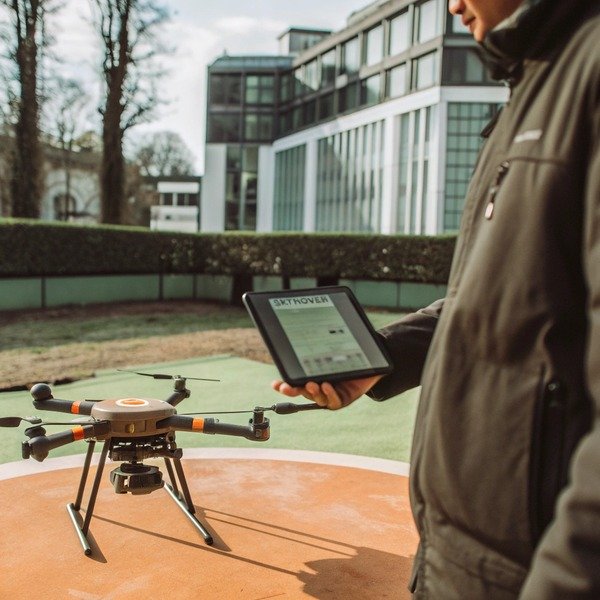
When our engineering team configures heavy-lift drones for European clients, we often encounter a common frustration: the technology is ready, but the paperwork is not. You might have a high-performance aircraft sitting in your hangar, but without the correct regulatory approval, it cannot legally assist in an emergency. Strict EASA regulations can ground your fleet indefinitely if you do not navigate the authorization process correctly.
You primarily need an Operational Authorization under the EASA Specific category. This requires submitting a Specific Operations Risk Assessment (SORA) to the National Aviation Authority where you are registered. Alternatively, you can apply for a Light UAS Operator Certificate (LUC) to self-authorize missions without seeking individual permits for every flight.
Let’s break down the specific steps and documents required to get your fleet airborne legally and safely.
How do I determine if my firefighting drone falls under the EASA Specific or Certified category?
During our durability tests in Xi'an, we always classify our large quadcopters based on potential risk levels before shipping them abroad. Misidentifying your drone's category early in the procurement process can lead to rejected applications and costly delays for your department when you need to deploy rapidly.
Most firefighting operations fall under the Specific category because they involve BVLOS flights or dropping materials. However, if your drone transports people, carries dangerous goods causing high risk, or exceeds 3 meters in dimension over crowds, it shifts to the Certified category, requiring manned aviation-level airworthiness certification.

Determining the correct operational category is the foundation of your legal compliance. In Europe, the European Union Aviation Safety Agency (EASA) divides drone operations into three main buckets European Union Aviation Safety Agency (EASA) 1: Open, Specific, and Certified. For industrial firefighting applications, the "Open" category is almost never applicable. This is because the Open category is designed for low-risk, visual line-of-sight (VLOS) flights with lighter drones that do not drop materials.
Why the Specific Category is standard for firefighting
The "Specific" category is where the vast majority of professional firefighting drone operations live. This category covers activities that pose a higher risk than the Open category can accommodate. Several key features of firefighting missions trigger this classification:
- Dropping Cargo: Firefighting drones are built to release payloads. Whether you are dropping fire extinguishing balls or spraying water fire extinguishing balls 2, the act of releasing an object from the aircraft automatically disqualifies you from the Open category in most scenarios.
- BVLOS Operations: Smoke and large wildfires often require pilots to fly Beyond Visual Line of Sight (BVLOS). Beyond Visual Line of Sight (BVLOS) 3 Any flight where the pilot cannot see the drone with their own eyes requires Specific category authorization.
- Weight and Energy: Our heavy-lift drones often exceed the 25kg limit typical of the Open category A3 subcategory, or they operate closer to people than standard rules allow.
When operations escalate to the Certified Category
While rare for current autonomous systems, some operations push into the "Certified" category. This is the strictest level of regulation, comparable to piloting a manned helicopter. You would only face this requirement if your operation involves extreme risks. For example, if you plan to transport people (like conducting a rescue lift) or if you are flying over large assemblies of people with a drone larger than 3 meters, you enter this territory.
Additionally, carrying "dangerous goods" can trigger this. While water is safe, certain chemical retardants might be classified as high-risk dangerous goods. If a crash could release toxic chemicals into a crowd, authorities may demand Certified category approval.
Future-proofing with Class C5 and C6
Starting January 1, 2026, regulations regarding hardware certification will tighten. Operations under standard scenarios (STS) in the Specific category will require drones with a Class C5 or C6 marking. At our factory, we are already preparing for this shift. It is vital that you check if your equipment lists these class markings to ensure long-term compliance.
| Feature | Specific Category | Certified Category |
|---|---|---|
| Primary Use Case | Industrial work, BVLOS, dropping water/balls | Transporting people, extreme risk flights |
| Risk Assessment | SORA or Pre-defined Risk Assessment (PDRA) | Manned aviation standards |
| Drone Markings | Typically Class C5 or C6 (mandatory for STS by 2026) | Full Airworthiness Certificate |
| Pilot Requirement | Remote Pilot Competency (STS/BVLOS) | Licensed Pilot (similar to manned aviation) |
| Authorization Body | National Aviation Authority (NAA) | EASA & NAA |
What steps must I take to complete the Specific Operations Risk Assessment (SORA) for heavy-lift drones?
We assist many procurement managers in gathering technical data specifically for their SORA files. Without a solid risk assessment that uses accurate engineering data, your request to fly heavy payloads over sensitive areas will almost certainly fail during the review process.
You must define your Concept of Operations (ConOps) and determine the Ground Risk Class (GRC) and Air Risk Class (ARC). Then, you propose specific mitigation measures, such as parachutes or flight termination systems, to lower the Specific Assurance and Integrity Level (SAIL) to an acceptable safety standard.

The SORA process is a multi-step methodology developed to ensure that your specific drone mission is safe. It is not just a form you fill out; it is a comprehensive safety case. Since firefighting drones often operate near people or in complex airspace, the SORA helps you prove to the National Aviation Authority (NAA) that you have identified all dangers National Aviation Authority (NAA) 4 and have a plan to handle them.
Step 1: Concept of Operations (ConOps)
Everything starts here. You must write a detailed document describing exactly what you intend to do. This includes the drone model (technical specs provided by us), the flight path, the pilots involved, and the nature of the emergency. For firefighting, you must explicitly state how you will drop water or retardants and how you will coordinate with ground crews.
Step 2: Determine Ground and Air Risk
You need to calculate two numbers:
- Ground Risk Class (GRC): This score reflects the danger to people on the ground. Flying over a remote forest has a low GRC. Flying over a burning building in a suburb has a high GRC.
- Air Risk Class (ARC): This score measures the risk of colliding with other aircraft. If you are flying in controlled airspace (near airports) or where manned firefighting helicopters are active, your ARC will be high.
Step 3: Mitigation and SAIL
Once you have your initial risk scores, you can apply "mitigations" to lower them. This is where hardware features matter. For instance, installing an EASA-compliant Flight Termination System (FTS) or a parachute can significantly lower Flight Termination System (FTS) 5 your Ground Risk Class.
After applying mitigations, you arrive at a SAIL score (Specific Assurance and Integrity Level). The SAIL level (ranging from I to VI) dictates how strict the requirements are for your operation. A higher SAIL means you need more robust systems, more pilot training, and more detailed operational manuals.
Coordination with Emergency Services
For firefighting specifically, a critical part of your risk assessment is the "Coordination Protocol." You cannot simply fly into a fire zone. Your SORA must detail how you communicate with the Incident Commander. You need to prove that your drone will not interfere with manned water-bomber aircraft. Often, this requires a signed protocol with local Civil Protection agencies before the NAA will grant your permit.
Data Protection
Don't forget the cameras. Firefighting drones use thermal and RGB cameras. thermal and RGB cameras 6 Your SORA submission must also briefly address privacy risks, ensuring you comply with GDPR if you accidentally record people during an operation. comply with GDPR 7
| SORA Step | Description | Key Consideration for Firefighting |
|---|---|---|
| ConOps | Description of mission and tech | Must detail payload dropping mechanisms |
| GRC Analysis | Risk to people on ground | Risk of falling debris/water on ground crews |
| ARC Analysis | Risk of mid-air collision | Conflict with manned water-bombers |
| Mitigation | Safety features to lower risk | Parachutes, FTS, Geofencing |
| Verification | Proving compliance | Third-party verification for high SAIL scores |
Do I need a Light UAS Operator Certificate (LUC) to streamline operations across different European countries?
Our export team frequently advises large agencies on how to avoid repetitive paperwork battles. Applying for individual permits for every single emergency fire response is inefficient and slows down critical deployment times when every second counts.
Yes, a Light UAS Operator Certificate (LUC) is highly recommended for frequent operators. It grants your organization the privilege to self-authorize operations without submitting declarations for every mission. While valid across EASA member states, you must still coordinate with local authorities for cross-border airspace and geography specifics.

If you are a fire department or a private contractor dedicated to emergency response, the standard authorization process is too slow. You cannot wait weeks for an NAA to approve a flight plan when a forest is burning today. This is where the Light UAS Operator Certificate (LUC) becomes a game-changer.
What is the LUC?
Think of the LUC as a "trusted operator" badge. Instead of asking for permission for every flight, you ask for permission to manage yourself. Once an NAA grants you an LUC, they are essentially saying, "We trust your internal safety procedures enough to let you approve your own flights." This allows you to deploy immediately when an emergency call comes in.
The Investment Required
Getting an LUC is not easy. It requires your organization to implement a robust Safety Management System (SMS). You must document how you train pilots, how you maintain drones (like the ones we manufacture), and how you log safety incidents. It is similar to the certification airlines undergo. You need to prove you have a structure in place to manage risks continuously.
Cross-Border Operations
One of the biggest advantages of EASA regulations is the harmonization across member states. If you hold an LUC in Germany, it is recognized in France, Italy, and Spain. However, this does not mean you have a "free flight" pass everywhere.
When you cross a border to help a neighboring country fight a wildfire, you must still submit a cross-border operation notification. You do not need a new permit, but you must respect the geographical zones of the host country. Each country maps out its own no-fly zones, military areas, and sensitive infrastructure. Your LUC covers your competency, but local geography dictates where you can physically fly.
Strategic De-confliction
In the future, LUC holders will likely integrate with U-Space service providers. U-Space 8 These are digital systems that manage drone traffic. Even with an LUC, operating in complex environments (like near cities) will require you to log into these networks to ensure you are not conflicting with other airspace users.
What specific remote pilot competency certificates are required for conducting emergency response missions?
When we train pilots on our new flight control systems, we emphasize that basic licenses are simply not enough. Emergency situations demand advanced skills that go far beyond standard recreational operational standards or basic commercial flights.
Remote pilots operating in the Specific category need advanced theoretical knowledge and practical skill accreditation, typically STS-01 or STS-02 certificates. Firefighting missions often require additional Crew Resource Management (CRM) training and specific dangerous goods handling certification if the drone deploys chemical retardants rather than just water.

Hardware is only as good as the person controlling it. In the high-pressure environment of a wildfire, pilot error can be catastrophic. Therefore, EASA mandates a tiered structure of pilot competence that you must navigate.
Beyond the Basics
Every pilot starts with the "Open" category training (A1/A3 and A2). This covers the basics of air law and safety. However, for firefighting in the Specific category, this is just the prerequisite. Pilots must obtain specific accreditations depending on the Standard Scenario (STS) they fly under:
- STS-01: This covers VLOS operations over a controlled ground area. It involves a theoretical exam and practical skill training on a C5 class drone.
- STS-02: This covers BVLOS operations. If your fire crews need to fly the drone up to 2km away to inspect a fire line, your pilots need this certification, which includes training on C6 class drones.
Practical Skill Assessment
Unlike the online tests for recreational drones, Specific category training requires hands-on assessment. Pilots must demonstrate their ability to handle abnormal situations. For example, what happens if the GPS fails due to smoke interference? What if the command link is lost? Our drones have return-to-home functions, but pilots must demonstrate they can manually recover the aircraft if automation fails.
Crew Resource Management (CRM)
Firefighting is a team sport. It is rarely just one pilot with a remote. There is usually a pilot, a payload operator (managing the thermal camera or water drop), and a visual observer. CRM training teaches these crew members how to communicate effectively. CRM training 9 Misunderstanding a command like "drop payload" can endanger ground troops.
Dangerous Goods Certification
This is a niche but critical requirement. If your operation involves dropping chemical fire retardant spheres, these may be classified as dangerous goods. The pilot and the ground crew handling these materials may need certification in the transport and handling of dangerous goods by air. handling of dangerous goods 10 This ensures they know how to safely load and secure the chemicals onto the drone.
| Certification Level | Scope | Typical Application |
|---|---|---|
| Open A1/A3 | Basic Safety & Law | Recreational / Low risk |
| Open A2 | Closer to people | Light commercial / Surveying |
| STS-01 | Specific Category VLOS | Urban firefighting / Controlled area |
| STS-02 | Specific Category BVLOS | Forest fire monitoring / Search & Rescue |
| CRM Training | Multi-crew coordination | Complex emergency response teams |
Conclusion
Operating firefighting drones in Europe requires navigating the EASA Specific category. You must secure an Operational Authorization via a SORA or obtain a Light UAS Operator Certificate (LUC) for flexibility. Ensure your pilots hold STS-level certifications and your hardware meets upcoming Class C5/C6 standards to maintain legal compliance.
Footnotes
1. Official agency website defining the regulatory framework for drones in Europe. ↩︎
2. Manufacturer website for the specific firefighting payload mentioned. ↩︎
3. Academic overview of BVLOS operational concepts and technologies. ↩︎
4. Official EASA list of National Aviation Authorities across member states. ↩︎
5. Manufacturer of drone safety systems including flight termination solutions. ↩︎
6. Leading manufacturer of thermal imaging sensors used in firefighting drones. ↩︎
7. Official European Commission page regarding data protection laws. ↩︎
8. General background information on the European drone airspace management system. ↩︎
9. Authoritative aviation safety knowledge base explaining Crew Resource Management. ↩︎
10. International standards body for dangerous goods regulations in aviation. ↩︎
 English
  Español de México
  Deutsch
  Français
  Русский
  العربية
Comments
No comments yet. Be the first to share your thoughts!
Leave a Comment