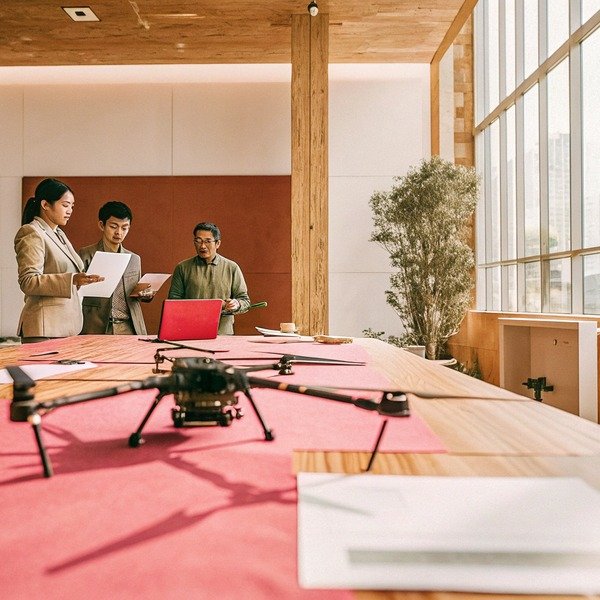
Watching urban fires destroy property drives us to engineer better solutions on our assembly floor every day, knowing that speed and technology save lives.
To track China’s firefighting drone trends, monitor R&D outputs from Shenzhen-based hubs focusing on heavy-lift eVTOLs and AI thermal imaging ISO 9001 1. Follow key trade shows like the Shenzhen International UAV Expo and analyze patent filings for autonomous “drone-in-a-box” systems and fire-suppressing missile technologies.
Let’s explore the specific technologies and channels you need to watch to stay ahead in this rapidly evolving industry.
What specific technical innovations are currently shaping the Chinese firefighting drone market?
When we test our newest flight controllers, we see how rapidly safety requirements are pushing technical boundaries toward autonomous and high-capacity systems.
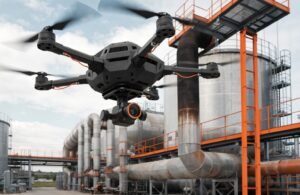
Current innovations focus on heavy-lift drones capable of carrying over 50kg of fire suppressants and window-breaking projectiles for high-rise access. Additionally, AI-driven swarm technology now enables coordinated autonomous flights for 3D mapping and heat source detection without direct pilot intervention.

The landscape of aerial firefighting in China is shifting from simple surveillance aerial firefighting 2 to active combat. In the past, drones were primarily eyes in the sky. Today, they are the hands that fight the fire. This shift is driven by the unique urban density of Chinese cities, where ladder trucks often cannot reach the upper floors of residential skyscrapers.
Heavy-Lift and Projectile Systems
The most significant trend is the increase in payload capacity. payload capacity 3 Early models struggled to carry enough water or foam to make a difference. Now, we see frames engineered to lift 50kg to 100kg of suppressants. This allows for the deployment of dry powder bombs or fire-extinguishing balls.
A critical innovation here is the "window-breaking" capability. High-rise fires often occur indoors, behind toughened glass. New drones are equipped with pneumatic launchers. These launchers fire a projectile to shatter the glass, followed by a fire-suppressing missile that detonates inside the room. This technology allows firefighters to attack the source of the fire from the outside, significantly reducing the risk to human personnel.
Autonomous "Drone-in-a-Box" Infrastructure
Another game-changer is the "Drone-in-a-Box" concept. This system places a drone hangar on a rooftop. The drone monitors the area automatically. If sensors detect smoke or heat, the drone launches without a human pilot. It flies to the scene, assesses the situation, and sends data back to the command center. After the mission, it returns to the box to recharge. This automation reduces response time from minutes to seconds.
Heat Resistance and Durability
Flying near a fire requires extreme durability. Standard consumer drones melt or fail when exposed to high temperatures. The latest industrial drones use composite materials capable of withstanding temperatures composite materials 4 exceeding 500°C for short periods. This allows the drone to get close enough to spray suppressants effectively.
Comparison of Tech Specs
The table below illustrates the rapid evolution of these specifications over the last few years.
| Feature | Legacy Models (2020) | Modern Trends (2024-2025) | Primary Benefit |
|---|---|---|---|
| Payload Capacity | 5kg – 10kg | 25kg – 100kg+ | Delivers meaningful amounts of suppressant. |
| Glass Breakers | Non-existent | Pneumatic/Missile Launchers | Accesses internal fires in skyscrapers. |
| Operation Mode | Manual Pilot (LOS) | AI Autonomous / Swarm | Reduces human error and pilot fatigue. |
| Heat Resistance | Standard Plastic | Carbon Fiber Composites (>500°C) | Allows closer proximity to the blaze. |
| Power Source | Battery (20 min) | Hybrid / Tethered (Hours) | Sustains long rescue operations. |
How can I identify manufacturers with strong R&D capabilities for strong drone solutions?
We know that sourcing reliable partners is stressful, especially when custom engineering is required for your fleet and generic products fail to meet specific needs.
Identify strong R&D partners by verifying their in-house software development teams and ability to customize flight algorithms. Look for suppliers who hold active patents in stability control or heavy-lift mechanisms and offer clear evidence of ISO quality management certifications.

Finding a supplier is easy; finding a partner with true Research and Development (R&D) power is difficult. Many companies in the market are simply assemblers. They buy parts from various factories and screw them together. They cannot change the software or improve the hardware if you have a problem.
Assessing the Engineering Team
To distinguish a manufacturer from an assembler, look at their team structure. A strong manufacturer will have a dedicated team for flight control algorithms. flight control algorithms 5 Ask potential suppliers about their ability to modify the SDK (Software Development Kit). If they say they cannot touch the code, they likely do not own the core technology.
In our interactions with clients, we find that the ability to customize the "brain" of the drone is crucial. For example, if you need the drone to fly in a specific pattern for agricultural spraying or fire mapping, the flight controller must be programmed for that task. Assemblers cannot do this.
Certifications and Stress Testing
Quality control is another indicator of R&D strength. A company that invests in R&D will also invest in testing facilities. Ask to see videos of their stress tests. Do they test the drone in wind tunnels? Do they perform water resistance tests (IP ratings)? Do they have drop tests IP ratings 6 for the landing gear?
Valid certifications are essential. Look for ISO 9001 for quality management. For specific markets like the US or Europe, check for CE and FCC certifications. FCC certifications 7 These are not just stickers; they prove the electronic components meet safety standards.
Patent Portfolios
Finally, check their intellectual property. Manufacturers with strong R&D will hold patents. These might be for a unique folding mechanism, a cooling system for the motors, or a nozzle design for the sprayer. A lack of patents often suggests a lack of innovation.
| Verification Step | What to Ask For | What It Proves |
|---|---|---|
| Team Structure | Organizational chart or team bios. | Shows ratio of engineers to sales staff. |
| Testing Facilities | Video tours or live video calls. | Verifies in-house quality control hardware. |
| Software Access | API/SDK documentation availability. | Confirms ownership of flight control code. |
| Patents | Patent numbers or certificates. | Proves original innovation vs. copying. |
| Client Projects | Case studies of custom modifications. | Demonstrates problem-solving capability. |
Which digital channels or trade shows are best for tracking China's industrial drone developments?
Staying updated is hard, but attending the right expos helps us benchmark our technology against the industry’s best and see where the market is heading.
The Shenzhen International UAV Expo and the China International Emergency Management Exhibition are premier events for hardware debuts. For digital tracking, follow specific hashtags on Douyin for field tests and monitor official WeChat accounts of major manufacturers for real-time operational updates.
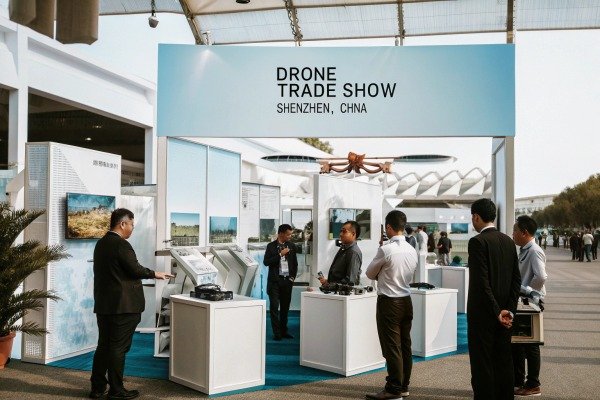
To truly understand the trends, you must look where the manufacturers look. Western media often lags behind the actual release of technology in China by several months.
Key Trade Shows
The physical center of the drone world is Shenzhen. The Shenzhen International UAV Expo is the most important event. Here, you will see prototypes that will not reach the global market for another year. It covers everything from tiny inspection drones to massive cargo carriers.
Another critical event is the China International Emergency Management Exhibition (CIEME). This show focuses specifically on disaster relief. You will see how drones integrate with fire trucks, command centers, and rescue teams. It is less about the drone itself and more about the solution.
Digital Platforms: Go Where the Engineers Are
Don't rely solely on LinkedIn or YouTube. The real action happens on Chinese platforms.
- Douyin (Chinese TikTok): This is where engineers and field testers post raw footage. Search for terms like "firefighting drone test" or "heavy lift drone" in Chinese characters. You will see crash tests, load tests, and real fire scenarios that never make it to polished marketing brochures.
- WeChat Official Accounts: Every major manufacturer runs a WeChat Official Account. They publish technical articles, software update logs, and customer success stories here first. It is often more detailed than their English websites.
Using Industry Reports
If you cannot browse Chinese social media, rely on specialized market research. Reports from firms that focus on the APAC region often provide data on government procurement trends. Understanding what the Chinese government is buying gives you a clue about what technology is maturing.
Comparison of Information Sources
| Channel | Best For | Timeliness | Language Barrier |
|---|---|---|---|
| Shenzhen UAV Expo | Seeing physical prototypes and meeting engineers. | High (Annual) | Low (Interpreters available) |
| Douyin (TikTok) | Raw field test footage and operational reality. | Real-time | High (Need Chinese keywords) |
| WeChat Accounts | Detailed technical specs and company announcements. | Weekly/Daily | Medium (Translation tools work) |
| Western Tech Blogs | General overviews and polished reviews. | Delayed (Months) | None |
| Gov't Tenders | Understanding regulatory direction and demand. | Quarterly | High |
Can I collaborate with Chinese suppliers to integrate new technologies into my custom drone orders?
Clients often ask us if they can modify payload interfaces, and we understand that off-the-shelf solutions rarely fit perfectly into established workflows.
Yes, you can collaborate with suppliers to integrate specific technologies like custom thermal sensors or tethered power systems. Success requires choosing a manufacturer that offers OEM services and has a dedicated engineering team willing to modify flight controllers and airframe structures.

Customization is the key to winning in the industrial drone market. A "one-size-fits-all" drone rarely excels at specific tasks like high-rise firefighting or hazardous material detection. Collaborating with a Chinese supplier allows you to build a product that fits your exact needs.
The OEM/ODM Process
There are two main ways to collaborate: OEM and ODM. OEM and ODM 8
- OEM (Original Equipment Manufacturing): You buy an existing drone model, but the factory paints it your color, puts your logo on it, and perhaps changes the packaging. This builds your brand but does not change the technology.
- ODM (Original Design Manufacturing): This is true technological collaboration. You go to the supplier with a requirement: "I need a drone that carries a specific 5kg sensor and flies for 40 minutes." The supplier's engineering team then modifies the frame, motors, and battery placement to make this happen.
Defining Technical Requirements
To succeed, you must be specific. Do not just say "I want a better camera." You must specify the interface (HDMI, Ethernet), the voltage input, and the weight. If you want to integrate a US-made thermal camera onto a Chinese drone frame thermal camera 9, the gimbal must be custom-designed.
We often work with clients who need to integrate 4G or 5G modules for communication. 5G modules 10 Since frequency bands differ between China and the US, this requires careful hardware selection. A capable supplier will guide you through this, ensuring the drone is legal and functional in your region.
Solving the Spare Parts Issue
One major pain point for buyers is spare parts. When you customize a drone, standard parts might not fit anymore. Part of your collaboration agreement must include a "Spare Parts Kit." You should negotiate to buy extra arms, motors, and ESCs (Electronic Speed Controllers) along with the main order. This ensures that if a custom drone crashes, you have the specific parts needed to fix it immediately, without waiting weeks for shipping.
Collaboration Roadmap
| Phase | Action Item | Duration (Est.) |
|---|---|---|
| 1. Discovery | Define payload weight, flight time, and sensor type. | 1-2 Weeks |
| 2. Design | Supplier provides CAD drawings and 3D renderings. | 2-3 Weeks |
| 3. Prototyping | Manufacturing a single unit for testing. | 3-4 Weeks |
| 4. Validation | Flight tests, load tests, and video verification. | 2 Weeks |
| 5. Production | Batch manufacturing and quality control. | 4-6 Weeks |
Conclusion
Staying ahead in the firefighting drone industry means watching the shift toward heavy-lift technology and finding partners who build, not just assemble. By monitoring the right channels and vetting R&D capabilities, you can secure advanced tools that save lives.
Footnotes
1. Official ISO standard page for quality management systems. ↩︎
2. Official US Forest Service page detailing aerial firefighting operations. ↩︎
3. Product page for a heavy-lift drone demonstrating high payload capacity. ↩︎
4. Scientific overview of composite materials properties and applications. ↩︎
5. MIT OpenCourseWare material on control systems used in flight algorithms. ↩︎
6. Official International Electrotechnical Commission page defining IP ratings. ↩︎
7. Official FCC page regarding equipment authorization and certification requirements. ↩︎
8. General definition of the manufacturing terms OEM and ODM. ↩︎
9. Industry leader explaining thermal imaging applications in firefighting. ↩︎
10. Official site of the organization setting global 5G standards. ↩︎
 English
  Español de México
  Deutsch
  Français
  Русский
  العربية
Comments
No comments yet. Be the first to share your thoughts!
Leave a Comment