Currency volatility often disrupts budget planning for our budget planning 1 international partners. At our Xi’an facility, we see how unstable exchange rates can erode margins on high-value equipment if proper hedging is not in place.
To lock in costs for long-term procurement, utilize forward currency contracts to fix exchange rates for 12 to 24 months. Simultaneously, negotiate fixed-price agreements with manufacturers that include currency adjustment clauses or component-linked pricing to stabilize margins against both market volatility and raw material shifts.
Let’s examine the specific mechanisms you can use to secure your pricing structure.
Can I negotiate fixed-price contracts with Chinese manufacturers to avoid currency risks?
When we draft contracts for our US partners, we often see hesitation about locking prices. Volatility feels scary, but leaving costs open-ended exposes your budget to much higher risks.
Yes, you can negotiate fixed-price contracts by establishing multi-year agreements with price escalation caps. These contracts typically lock base unit prices for 12 to 24 months while using specific indices to regulate adjustments, effectively shielding your budget from immediate currency spikes or short-term market inflation.

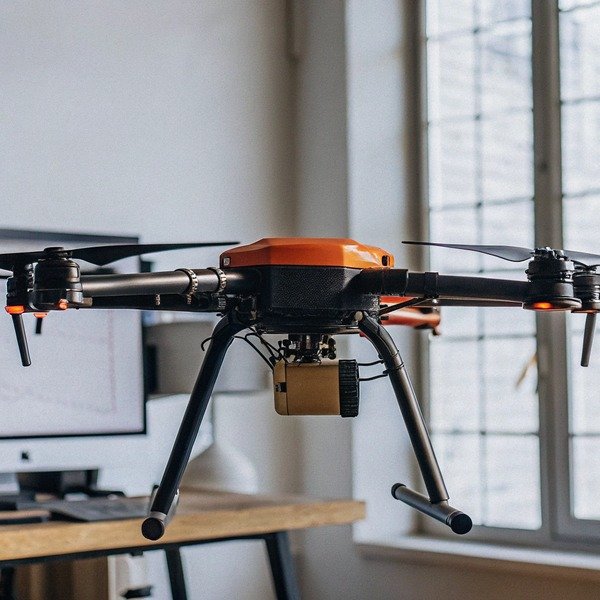
Creating a stable contract requires understanding what drives our manufacturing costs. In the drone industry, particularly for specialized firefighting models with heavy payload capacities, a significant portion of the cost comes from advanced components advanced components 2 like thermal sensors, flight controllers, and carbon fiber frames. By the time a drone reaches the assembly line in Chengdu, the cost of materials is already set. This reality allows us to offer fixed pricing, provided the contract is structured correctly.
Structuring Long-Term Agreements
A standard spot-purchase order leaves you vulnerable to the exchange rate of the day. Instead, you should push for a Long-Term Supply Agreement (LTSA). In our experience, an LTSA works best when it covers a 12 to 24-month period. This duration allows us to plan our supply chain and lock in prices with our own sub-suppliers.
You should request a "Price Escalation Cap." This clause states that the price will remain fixed unless specific, verifiable indices move beyond a certain percentage. For example, if the cost of lithium batteries or labor remains lithium batteries 3 within a 5% fluctuation range, your price stays flat. This prevents suppliers from raising prices arbitrarily due to minor market jitters.
Managing Force Majeure and Tariffs
Recent trade environments have introduced high tariffs, sometimes reaching combined rates of nearly 170%. A robust fixed-price contract must separate product cost from landed cost. You can lock in the Ex Works (EXW) or Free on Board (FOB) price of the drone. However, duties and tariffs are usually the buyer's responsibility.
To manage this, we recommend including a clause that defines how tariff changes are handled. While we cannot control US customs policy, we can sometimes agree to share the burden of sudden tariff hikes for a limited time to maintain the relationship. This is only possible if the base product price is secured through a strong contract.
Comparison of Contract Models
Below is a breakdown of how different contract structures impact your risk exposure.
| Contract Type | Price Stability | Risk Allocation | Best For |
|---|---|---|---|
| Spot Market Purchase | Low | 100% on Buyer (Immediate Rate) | One-off, small orders |
| Fixed-Price (12 Months) | High | Risk Shared (Supplier hedges) | Annual budget certainty |
| Component-Linked Pricing | Medium | Variable based on Index | Volatile raw material markets |
| Escalation Cap Agreement | Very High | Buyer protected up to Cap | Long-term institutional sourcing |
Is it better to pay in USD or RMB when importing industrial drones to stabilize costs?
We process payments daily from global clients and often notice a hidden cost in USD transfers. Choosing the wrong currency can force partners to pay invisible conversion buffers they never anticipated.
Paying in RMB (CNY) is often better for stability if you utilize forward contracts to lock rates early. While USD shifts currency risk to the supplier, they may buffer prices to protect themselves. Controlling the exchange yourself via CNY payments often yields the most transparent, lower-cost results.

Many procurement managers assume paying in USD is safer because it is their home currency. However, paying in USD often results in a higher final cost. When we quote a price in USD, we must anticipate how the exchange rate might move between the quote date and the payment date. If the RMB strengthens against the dollar, our revenue in local currency drops.
The Supplier Buffer
To protect our margins, manufacturers typically add a "safety buffer" to USD quotes. This buffer usually ranges from 3% to 5%. If the exchange rate remains stable, this buffer becomes extra profit for the supplier and an extra cost for you. If you negotiate a price of $5,000 for a firefighting drone, the "real" price might be closer to $4,800 if converted at the spot rate. By paying in USD, you are effectively paying an insurance premium to the supplier to handle the currency risk for you.
Taking Control with RMB
When you agree to pay in RMB (CNY), we can quote you the exact price based on our local production costs. There is no need for us to add a buffer because we are receiving our functional currency. This moves the responsibility of currency exchange to you, but it also gives you the power to control it.
You can work with your bank or a fintech provider to buy RMB when rates are favorable. If the dollar is strong today, you can purchase enough RMB for your next three shipments and hold it in a multi-currency account. multi-currency account 4 This strategy removes the supplier's hidden margin and allows you to capitalize on market movements directly.
Cost Implications of Currency Choice
The following table illustrates the potential savings when switching from USD to RMB invoicing for a batch of high-end drones.
| Invoice Currency | Quote Price (Per Unit) | Hidden Buffer | Actual Cost to Buyer | Risk Holder |
|---|---|---|---|---|
| USD | $5,250 | ~5% ($250) | $5,250 | Supplier |
| RMB (CNY) | ¥35,000 (~$5,000) | 0% | ~$5,000 + small FX fee | Buyer |
The Neutral Zone Strategy
If you must pay in USD due to company policy, you can propose a "Currency Neutral Zone" or "Currency Adjustment Clause." This agreement states that the USD price remains fixed as long as the exchange rate stays within a defined band (e.g., +/- 3%). If the rate moves outside this band, the price is adjusted accordingly. This eliminates the need for a large safety buffer while still sharing the risk fairly between both parties.
What financial strategies can I use to hedge against exchange rate volatility during long-term procurement?
Our financial team monitors the forex market constantly forex market 5 to ensure our production remains profitable. Without a solid strategy, profit margins on high-end SkyRover units can vanish overnight due to sudden rate shifts.
Effective financial strategies include using forward contracts to fix future exchange rates and maintaining multi-currency accounts to time your conversions. Additionally, employing currency options gives you the right to exchange at a set rate without the obligation, protecting you against downside risk while allowing upside participation.

Hedging sounds complex, but for drone procurement, it comes down to locking in value. Since firefighting drones are high-ticket items—often costing several thousand dollars per unit—a small percentage shift in currency can equal hundreds of dollars in losses per drone.
Forward Contracts
The most common tool is the Forward Contract. This is a binding agreement with your bank or FX provider to buy a specific amount of currency at a fixed rate on a future date.
Imagine you place an order for 20 firefighting drones to be delivered in six months. You know you will owe ¥500,000 upon delivery. You can sign a forward contract today to buy forward contract 6 forward contract 7 that ¥500,000 at today's rate. No matter what happens to the dollar or yuan in the next six months, your cost in USD is locked. You know exactly how much budget to set aside. This provides 100% certainty, which is vital for government contracts or strict corporate budgets.
Currency Options
For more flexibility, you can use Currency Options. Unlike a forward contract, which obligates you to exchange money, an option gives you the right to do so. You pay a small premium for this right.
If the exchange rate moves against you (the RMB gets more expensive), you exercise your option and buy at the protected lower rate. If the exchange rate moves in your favor (the RMB gets cheaper), you let the option expire and buy currency at the better market spot rate. This strategy protects you from bad news while letting you benefit from good news.
Escrow and Milestone Payments
Another strategy involves using an Escrow Account denominated in CNY. You fund the account at the start of the project when the exchange rate is known. The funds are held securely and only released to us as we meet production milestones (e.g., completion of the airframe, successful flight testing, final packaging).
This approach accomplishes two things. First, it locks your currency cost immediately. You are not waiting months to convert your cash. Second, it protects your capital. You are not paying 100% upfront, but the money is already converted and ready, eliminating future volatility.
Strategy Comparison Matrix
| Strategy | Certainty | Flexibility | Cost |
|---|---|---|---|
| Spot Market | None | High | Low (unless rates spike) |
| Forward Contract | 100% Fixed | Low | Low (fees built into rate) |
| Currency Option | High Downside Protection | High | Medium (premium required) |
| CNY Escrow | 100% Fixed | Medium | Low (banking fees) |
Will committing to an annual purchase volume help me secure stable pricing despite market fluctuations?
When we see a confirmed annual schedule, our production planning in Chengdu becomes much more efficient. This efficiency allows us to reduce waste and translate those savings directly into your unit cost.
Committing to an annual purchase volume significantly stabilizes pricing by allowing manufacturers to pre-order raw materials at current rates. High-volume orders, typically exceeding 50 units, empower you to negotiate tariff-sharing agreements or bulk discounts that act as a buffer against future exchange rate volatility or regulatory costs.

Volume is the single biggest lever you have in negotiation. In the industrial drone sector, manufacturing is not industrial drone sector 8 always "just-in-time." We often have to batch our production runs to ensure quality consistency, especially for complex components like the orange housing molds or the carbon fiber arms. carbon fiber arms 9
Pre-ordering Raw Materials
When a client commits to purchasing 50 or 100 units over the course of a year, we can immediately go to our upstream suppliers. We can buy the flight controllers, motors, and batteries for the entire year's allocation at today's prices.
This "Component-Linked" lock-in means that even if inflation hits the raw material market six months later, your price is safe. We have already physically secured the goods. This effectively removes the inflationary variable from the equation. We are happy to pass this stability on to you because it guarantees our factory utilization rate.
Tariff Mitigation
High volume also helps with the tariff issue. As mentioned, import duties on Chinese drones can be severe. If you are buying a single unit, there is no room for negotiation. However, for a large annual contract, we can look at creative solutions.
For example, with enough volume, we might agree to a "Landed Cost" model where we absorb a portion of the tariff impact to keep your business. Alternatively, volume commitments justify the logistics of shipping components separately for final assembly in a third country or a bonded zone, which can sometimes alter the tariff classification or value basis.
Inventory Strategies
Buying in bulk also allows you to use a Bonded Warehousing strategy. You can purchase a year's worth of stock now to lock in the current exchange rate and manufacturing price. We ship the goods to a bonded warehouse in your country (or a free trade zone) free trade zone 10. You do not pay the import duties until you actually remove the drones from the warehouse for deployment.
This separates your capital outlay for the goods from your tax liability. You secure the asset at a known price but defer the government fees until you have the cash flow or specific customer demand to cover them.
Volume Impact on Cost Structure
The table below demonstrates how increasing order volume impacts different cost elements.
| Annual Volume | Material Cost | Pricing Model | Tariff Negotiation |
|---|---|---|---|
| 1-10 Units | Spot Market | Standard List Price | None |
| 10-50 Units | Reserved Stock | Small Discount (2-5%) | Minimal |
| 50+ Units | Pre-purchased | Fixed Annual Price | Partial Absorption Possible |
| 100+ Units | Dedicated Line | Cost-Plus Model | Custom Logistics Solutions |
Conclusion
To secure stable pricing for firefighting drones, you must combine financial tools with strategic sourcing. Use forward contracts to lock exchange rates and negotiate multi-year, fixed-price agreements rooted in annual volume commitments. This dual approach neutralizes volatility and ensures budget predictability.
Footnotes
1. Official central bank data for monitoring exchange rates and economic indicators. ↩︎
2. Technical documentation for high-end sensors used in industrial firefighting drone applications. ↩︎
3. Academic resource explaining the chemical composition and market factors of lithium-ion cells. ↩︎
4. General background on how businesses manage multiple currencies to mitigate exchange risk. ↩︎
5. Real-time financial news and analysis of global currency market movements. ↩︎
6. Official government guidance on using contracts to manage currency risk. ↩︎
7. Global standard-setting body for derivatives and forward contracts used in hedging. ↩︎
8. Leading industry organization providing standards and advocacy for unmanned systems technology. ↩︎
9. Manufacturer specifications for high-strength materials used in drone airframe construction. ↩︎
10. Official resource on using Foreign-Trade Zones to defer duties. ↩︎

 English
  Español de México
  Deutsch
  Français
  Русский
  العربية
