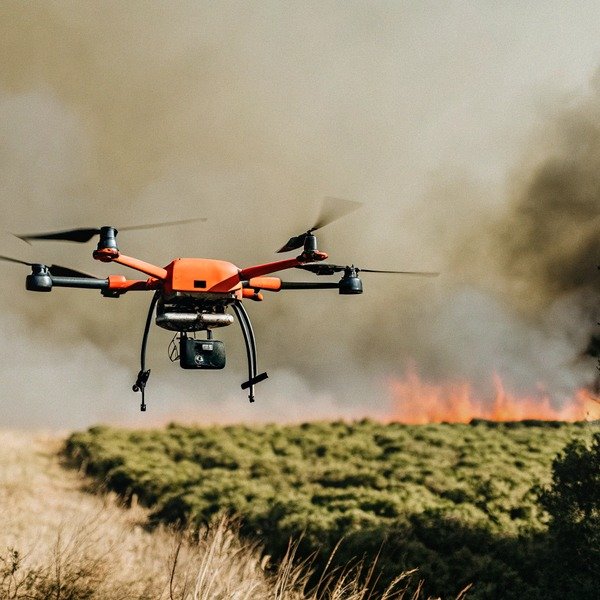
When we ship a fleet of our SkyRover drones to a client, the transaction often ends there, but the technology keeps evolving rapidly. If you stop talking to us after the sale, you risk missing critical firmware updates or safety protocols that could save lives during a fire operation.
To establish effective regular communication, verify that your supplier contract mandates quarterly business reviews and designates a specific technical liaison. You should also subscribe to their official engineering bulletins and integrate their API for automated maintenance alerts, ensuring you receive real-time intelligence on firmware upgrades and safety protocols.
Here are the specific strategies to build a robust information pipeline with your supplier.
How frequently should I schedule check-ins with my drone manufacturer to track industry trends?
Our engineering team in Xi’an constantly iterates on flight algorithms, yet many clients operate with outdated software flight algorithms 1 because they only contact us when a part breaks. This reactive approach leaves your firefighting fleet vulnerable to preventable failures.
Schedule quarterly business reviews (QBRs) with your account manager to align on product roadmaps and lifecycle management. Supplement these formal meetings with monthly email digests regarding minor firmware patches and bi-annual strategic planning sessions to discuss major hardware iterations like improved thermal imaging payloads.

The Importance of Quarterly Business Reviews (QBRs)
In the industrial drone sector, technology moves faster than in traditional aviation. traditional aviation 2 At our factory, we often release significant software optimizations every three to four months. If you only speak with your supplier once a year during contract renewal, you are already behind.
A Quarterly Business Review is the most effective tool for staying aligned. During these sessions, you should not just discuss current orders. You must ask about the "Roadmap." For example, we might be testing a new high-torque motor for our black quadcopter frame that increases payload stability in high winds. high-torque motor 3 If you know this is coming in Q3, you can delay a procurement order to get the latest version.
Creating a Communication Calendar
To avoid overwhelming your team or ours, we recommend structuring your communication based on the type of information you need. Not every update requires a video call. We find that clients who stick to a schedule get the best support because our team can prepare the data beforehand.
Below is a recommended schedule for interaction with a drone manufacturer:
| Communication Type | Frequency radio frequency compliance 4 | Purpose | Who Should Attend |
|---|---|---|---|
| Technical Bulletin | Monthly | Firmware updates, minor bug fixes, safety notices. | Tech Liaison / Maintenance Chief |
| Business Review (QBR) | Quarterly | Product roadmap, inventory planning, lifecycle discussion. | Procurement Manager / Account Manager |
| Strategic Summit | Annually | Long-term partnership, custom R&D requests, contract negotiation. | Agency Director / Factory CEO |
| Emergency Alert | Real-time | Critical safety warnings (e.g., battery anomalies). | All Users |
Aligning with Production Cycles
Understanding our production cycle helps you time your check-ins. We typically finalize design updates for the coming year in late Q4. Therefore, scheduling a call in January or February is ideal for learning about new "Year Model" features.
For instance, the bright orange housing on our central drone body was a direct result of user feedback gathered during QBRs. Clients told us the black frame was hard to see against smoke, but they liked the stealth of the black arms. We updated the design to include the orange center for visibility. Clients who checked in frequently knew this change was coming and planned their fleet upgrades accordingly.
What specific market insights should I request from my industrial drone partner?
We possess massive amounts of data regarding component longevity and sensor performance, but we rarely share it unless a partner specifically asks. If you do not request these deep market insights, you are making purchasing decisions based on incomplete information.
You must explicitly request data on upcoming sensor integrations, battery density improvements, and changes in regional export regulations. Ask for specific reports on component obsolescence risks and “end-of-life” timelines for current models to prevent unexpected gaps in your fleet’s operational readiness.

Hardware Lifecycle and Obsolescence
One of the biggest risks for a procurement manager is buying a fleet of drones only to find out six months later that the motors are discontinued. This happens frequently in the electronics supply chain. You need to ask your supplier for a "Bill of Materials (BOM) Health Report." Bill of Materials 5
When we source components for our cross-shaped frames, we look at the lifecycle of chips and sensors. You should ask us: "Are any key components in this drone scheduled for 'End of Life' (EOL) in the next 24 months?" This insight allows you to stock up on spare parts before they disappear from the market.
Regulatory and Export Intelligence
Since we export to the United States and Europe, we constantly monitor changes in trade tariffs United States and Europe 6, battery transport regulations, and radio frequency compliance. A good supplier acts as a regulatory consultant.
For example, battery regulations for air freight change often. We recently had to adjust the packaging for our slender landing gear and battery sets to meet new IATA standards. IATA standards 7 meet new IATA standards 8 By asking for these insights, you can prepare your logistics team for smoother customs clearance.
Performance Benchmarking Data
Don't just ask for a brochure. Ask for the raw data. Marketing materials might say "30 minutes flight time," but engineering data will show you the curve of flight time versus payload weight.
Request the following specific data points to gauge true market standing:
| Insight Category | Specific Data to Request | Why It Matters |
|---|---|---|
| Power Systems | Cycle life charts for batteries under 80% load. | Predicts accurate replacement costs for your budget. |
| Sensor Tech | Thermal camera sensitivity (NETD) roadmaps. | Ensures you don't buy old sensors right before a new gen launch. |
| Supply Chain | Lead time trends for critical repair parts. | Helps you plan inventory and avoid downtime during fire season. |
| Compliance | Remote ID and Green UAS certification status. | Critical for legal operation in US airspace. |
The "Why" Behind the Design
Ask why we made certain design choices. For instance, our drone features a camera gimbal suspended beneath the central body. We placed it there for center-of-gravity optimization. Understanding these engineering decisions helps you understand the market trend toward stability over raw speed in industrial applications. This knowledge makes you a smarter buyer and allows you to filter out marketing fluff from other vendors.
Our R&D team loves to innovate, but we are careful about who sees our prototypes to protect our intellectual property. intellectual property 9 If you want a sneak peek at the future, you need to prove that you are a partner, not just a one-time buyer.
Secure early access by negotiating a “Joint Development Partnership” where you provide real-world flight data in exchange for R&D previews. Formalize this in your contract with a clause for “first-look rights” on experimental features, such as AI-driven hotspot detection or heavy-lift suppression systems.

Establishing a Joint Development Partnership
The best way to get inside information is to become valuable to the manufacturer. We often look for "Beta Test Partners." These are agencies willing to fly pre-production units and report bugs.
If you propose a "Joint Development Partnership" (JDP), we are more likely to open our doors. In this arrangement, you agree to share your flight logs and operational challenges. In return, we give you early access to new tech. For example, before we finalized the symmetrical arm design on our latest model, we sent prototypes to a partner in Europe. Their feedback on wind resistance directly influenced the final mold. Because they helped, they got the first batch off the line.
Non-Disclosure Agreements (NDAs)
Trust is the currency of innovation. If you want us to tell you about the new AI targeting system we are building for high-rise fires, we need legal protection.
Do not wait for us to ask. Propose a mutual NDA specifically for "Future Technology Roadmaps." This signals that you are professional and serious about confidentiality. Once an NDA is signed, our engineers feel safe sharing screen shares of CAD designs or videos of test flights that are not yet public.
The Role of User Advisory Groups
We pay close attention to User Advisory Groups. If you can organize a group of fire departments in your region to provide collective feedback, you become a powerful voice.
Suppliers listen to volume. If ten agencies say, "We need the orange housing to be reflective for night ops," we will prioritize that feature. Being the leader of such a group gives you direct access to our product managers.
Structuring the "First-Look" Agreement
You can formalize this access in your procurement contract. Here is how you might differentiate a standard relationship from a strategic one:
| Feature | Standard Customer | Strategic Partner (You) |
|---|---|---|
| New Product News | Received via public press release. | Received via private briefing 3 months prior. |
| Hardware Access | Orders filled FIFO (First In, First Out). | Priority allocation for first production batch. |
| Software Features | Standard stable release only. | Option to enable "Beta" features in settings. |
| Input Channel | General support email. | Direct line to Product Manager. |
By positioning yourself as a Strategic Partner, you ensure that when we develop a new payload that can penetrate thick smoke, you are the first to know, giving your agency a tactical advantage.
Which communication channels work best for receiving timely updates from Chinese drone factories?
Time zones and firewalls can make communication between the US and China frustrating if you use the wrong tools. We have seen emails get buried for days while critical shipment updates sit unread because the client wasn’t using a direct channel.
Dedicated digital portals and instant messaging apps like WeChat or WhatsApp offer the fastest response times for technical queries. However, for official documentation and firmware release notes, rely on structured email newsletters and secure cloud-based repositories to ensure data integrity and easy archival.

Instant Messaging vs. Email
In the Chinese manufacturing culture, speed is everything. We use tools like WeChat and WhatsApp extensively for internal operations. For our international clients, we highly recommend establishing a group chat for "Quick Response" items.
If you have a drone grounded because a propeller motor won't spin, sending an email might take 24 hours to get a reply due to the 12-hour time difference. A message in a dedicated WhatsApp group often gets a reply from one of our engineers before they go to sleep or right when they wake up.
Best Practice: Use Instant Messaging for troubleshooting and logistics tracking. Use Email for contracts, pricing, and official technical bulletins.
Digital Portals and Cloud Repositories
For market information and technical specs, you should not rely on attachments in emails. Files get lost, and versions get confused.
Ask your supplier for access to their "Dealer Portal" or a shared cloud drive (like Google Drive or Dropbox, provided it works through the firewall). We upload our latest manuals, marketing photos, and compliance certificates to a secure portal. This allows you to pull the information you need, when you need it, without waiting for a rep to reply.
The Dedicated "Tech Liaison"
You should appoint one person on your team to be the "Tech Liaison." If five people from your department email us separately, communication gets fragmented.
The Tech Liaison builds a personal relationship with our support team. Over time, they learn how we work. For example, they will know that our factory in Chengdu releases software notes on Fridays. They can translate our technical "Chinglish" into clear instructions for your pilots.
Automating Intelligence with APIs
For the most advanced setup, look into API integrations. API integrations 10 We are starting to offer API access to our inventory and support systems.
- Inventory API: Your system can automatically check if we have spare landing gear legs in stock.
- Maintenance API: If you use fleet management software, we can push alerts directly to your dashboard when a new firmware version is available for the black quadcopter series.
This removes the human error element entirely. You don't need to remember to ask; the system tells you.
Summary of Channel Effectiveness
| Channel | Speed | Best Use Case | Risk |
|---|---|---|---|
| WeChat / WhatsApp | Very High | Urgent repairs, shipping status, quick questions. | Informal, hard to archive or search later. |
| Email / Newsletter | Medium | Official quotes, contracts, monthly market reports. | Can get buried in spam or overlooked. |
| Supplier Portal | On-Demand | Downloading manuals, high-res images, certificates. | Requires proactive login; easy to forget. |
| Video Conference | Low (Scheduled) | Quarterly reviews, relationship building, complex demos. | Hard to schedule due to time zones. |
Conclusion
Establishing a regular communication mechanism is not just about being polite; it is a strategic necessity for maintaining a capable firefighting fleet. By enforcing Quarterly Business Reviews, demanding raw lifecycle data, and utilizing fast channels like instant messaging, you ensure your agency is never blindsided by obsolescence or missed innovations.
Footnotes
1. Research from Stanford University’s Robotics Lab on autonomous flight control and advanced algorithms. ↩︎
2. ISO technical committee responsible for developing international standards for unmanned aircraft systems. ↩︎
3. Official product announcement from DJI regarding high-torque motors and propulsion systems for industrial drones. ↩︎
4. IEEE standards for radio frequency and spectrum management in wireless communication systems. ↩︎
5. Wikipedia entry explaining the structure and importance of a Bill of Materials in manufacturing. ↩︎
6. Official US government resource for understanding commercial guides and trade regulations in international markets. ↩︎
7. Official IATA guidelines and regulations for the safe air transport of lithium batteries. ↩︎
8. Official regulations for shipping lithium batteries, directly relevant to drone transport compliance. ↩︎
9. Wikipedia overview of intellectual property rights and their role in protecting technological innovations. ↩︎
10. Technical documentation from Microsoft explaining the purpose and implementation of REST API integrations. ↩︎



 English
  Español de México
  Deutsch
  Français
  Русский
  العربية
Comments
No comments yet. Be the first to share your thoughts!
Leave a Comment